
 joyce@taisenfurniture.com
 0086 15356090777


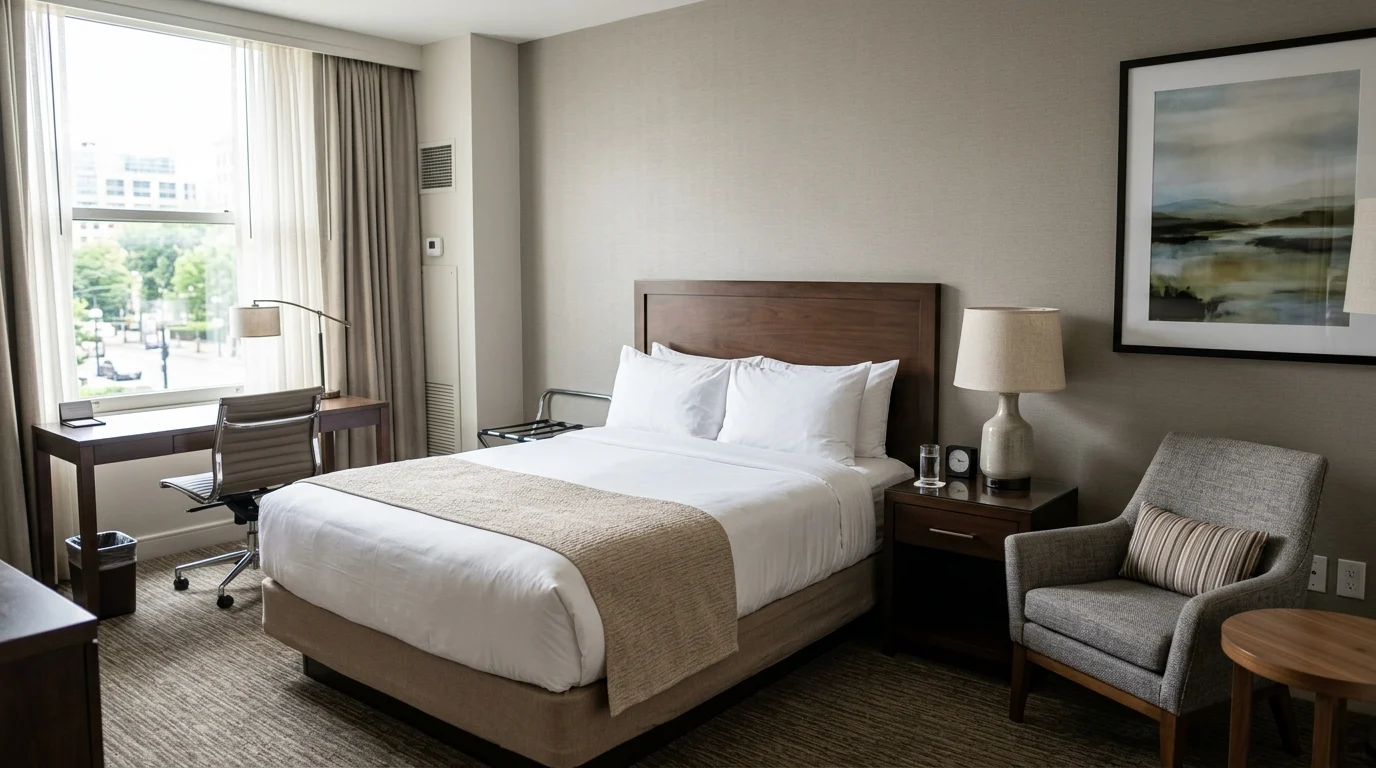
Why Signia by Hilton Material Standards Matter
Signia by Hilton represents a premium tier in the hospitality sector, specifically engineered to cater to sophisticated meetings, events, and discerning business travelers. Operating in this upper-upscale segment requires strict adherence to comprehensive material standards for hotel guest-room furniture. Because exact brand specifications are proprietary and confidential to approved vendors, the metrics and standards discussed here reflect illustrative upper-upscale industry benchmarks, common hospitality engineering norms, and best practices rather than published Hilton mandates. Furthermore, specific FF&E requirements may differ depending on whether a project is a new-build or a property conversion.
When procuring furniture, fixtures, and equipment (FF&E) for a Signia property, stakeholders must navigate a complex matrix of brand expectations, structural integrity requirements, and lifecycle economics. Understanding the foundational reasons behind these material specifications is the first step toward executing a successful hotel development or renovation project.
Brand Consistency and Guest Experience
At the core of the Signia brand is a commitment to delivering a flawless, premium guest experience across all global properties. Brand consistency dictates that a guest checking into a Signia in Atlanta must experience the same premium material quality and refined aesthetic as one in San Jose. Material standards enforce this uniformity by guiding acceptable wood species, veneer cut methods, and upholstery textures.
This consistency directly impacts guest satisfaction scores. High-quality materials convey an immediate sense of value and care, reinforcing the brand’s premium positioning and justifying higher Average Daily Rates (ADR), which typically command a 15% to 25% premium over standard upscale properties. Inconsistent or substandard materials, conversely, disrupt the brand narrative and can lead to negative reviews regarding room quality. Catering heavily to meetings and events, Signia properties also require work surfaces and communal furniture that maintain this flawless aesthetic even under intense daily use.
Durability Expectations for Luxury Hotel Rooms
Premium hotel rooms experience significantly higher wear and tear than residential spaces, driven by property-level occupancy targets that historically range from 75% to 85% in competitive markets. Furthermore, upper-upscale wear patterns differ significantly from select-service properties; the frequent hosting of meetings and events means guest-room workspaces and lounge areas see extended, intensive daily use that pure occupancy percentages do not fully capture. Furniture must be engineered to withstand this constant use, luggage impacts, and frequent rigorous cleaning protocols that can exceed 365 room turns per year.
Upper-upscale brands typically target a standard FF&E lifecycle of 7 to 10 years before a major renovation or soft goods replacement is permitted. To survive this decade-long cycle without visual degradation or structural failure, materials must exceed standard commercial thresholds. This includes utilizing scratch-resistant topcoats on casegoods and high-resilience foam in seating that resists compression over thousands of uses.
Cost, Maintenance, and Lifecycle Planning
While premium materials demand a higher initial capital expenditure (CapEx), they fundamentally optimize long-term operational expenditure (OpEx). Inferior materials inevitably lead to premature failures, necessitating costly one-off replacements, increased maintenance labor, and out-of-order rooms that result in lost revenue.
Lifecycle planning relies heavily on material durability. By investing in highly specified, brand-approved materials, property owners can potentially reduce furniture replacement and repair costs by an estimated 20% to 30% over the property’s renovation cycle, while targeting an initial manufacturing defect rate of less than 1.5%, according to illustrative industry financial models. Furthermore, materials designed for easy maintenance—such as inherently stain-resistant textiles or modular furniture components—allow housekeeping and engineering staff to turn rooms over more efficiently, directly impacting the property’s bottom line.
Core Material Specifications for Guest Room Furniture
Wood Veneers, Engineered Substrates, and Laminates
Casegoods, including wardrobes, nightstands, and desks, rely heavily on the integrity of their core substrates. Industry best practices for upper-upscale properties strictly prohibit the use of low-density particleboard for structural components. Instead, manufacturers typically utilize Medium Density Fiberboard (MDF) or multi-ply hardwood plywood with an illustrative benchmark density of 45 lbs/cu.ft and a moisture content strictly kiln-dried to a 6% to 8% range to ensure adequate screw-holding power and resistance to warping.
Exposed surfaces often feature architectural-grade wood veneers or High-Pressure Laminates (HPL). When veneers are specified, they must be finished with commercial-grade, catalyzed polyurethane or conversion varnish topcoats to prevent moisture penetration. Given Signia’s meetings-and-events positioning, desks and work surfaces must also integrate durable cable-management channels and enhanced wear-resistant topcoats to accommodate business travelers. For high-impact horizontal surfaces, HPL with a benchmark thickness of 0.7mm to 1.0mm is frequently utilized to provide superior scratch and heat resistance while mimicking the aesthetic of natural wood.
Upholstery Fabrics, Leather Alternatives, and Foams
Lounge chairs, desk seating, and headboards require upholstery materials that balance guest comfort with extreme resilience. Polyurethane foams used in guest room seating should possess a benchmark density of 1.8 to 2.5 lbs/cu.ft and an Indentation Load Deflection (ILD) of 30 to 40 lbs for optimal support. Foam with lower density will rapidly compress and lose its shape, failing prematurely under heavy commercial use.
Upholstery covers must be specified as commercial grade. While genuine leather may be used in select suite applications, premium synthetic leathers (polyurethanes and vinyls) are often preferred for standard guest rooms due to their superior cleanability and resistance to cracking. All fabrics must be treated with or inherently possess soil and stain repellency.
Metal, Stone, Glass, Resin, and Hardware
Accents and structural supports frequently utilize metals, stones, and glass to elevate the room’s design. Metal components, particularly those in damp environments or coastal properties, should be manufactured from 304-grade stainless steel or extruded aluminum to prevent oxidation and rust. Powder-coated finishes must meet strict adhesion standards, typically applied at a dry film thickness of 2.0 to 3.0 mils.
Glass used in any furniture application—such as desk tops or shower partitions—must be fully tempered for safety, with a minimum thickness of 6mm for standard applications and up to 10mm for structural elements. Stone surfaces, including vanity tops and nightstand inserts, heavily favor engineered quartz over natural marble. Quartz provides negligible porosity, eliminating the need for periodic sealing and drastically reducing the risk of permanent staining from guest spills.
| Material Category | Key Specification Standard | Illustrative Minimum Requirement |
|---|---|---|
| Engineered Substrate | Density (MDF/Plywood) | 45 lbs/cu.ft |
| Upholstery Foam | High-Resilience Density | 1.8 – 2.5 lbs/cu.ft |
| Glass Components | Safety and Thickness | Tempered, 6mm minimum |
| Metal Accents | Corrosion Resistance | 304 Stainless Steel or Aluminum |
| Powder Coating | Dry Film Thickness | 2.0 – 3.0 mils |
How to Compare Furniture Materials for Performance
Selecting the right materials for a Signia by Hilton property requires moving beyond visual appeal and evaluating objective performance metrics. Hospitality environments are uniquely demanding, and materials must be systematically compared using standardized testing criteria to guarantee they will perform under the stress of daily guest interactions.
Abrasion, Impact, Moisture, and Stain Resistance
The performance of a material is largely defined by its resistance to environmental and physical stressors. Abrasion resistance is critical for fabrics and floor-contacting furniture legs. Impact resistance is paramount for luggage benches and the edges of dressers, where hard-shell suitcases frequently cause chipping or denting.
Moisture and stain resistance dictate the longevity of horizontal surfaces and soft goods. Casegoods located near wet zones, such as beverage centers or bathroom vanities, must feature edge-banding sealed with polyurethane reactive (PUR) adhesives to prevent water ingress, which causes substrate swelling (often limited to < 5% thickness swell over 24 hours). Fabrics must resist common hospitality stains, including coffee, wine, and cosmetics, without degrading the material’s color or structural integrity.
Relevant Testing Benchmarks for Hotel Furniture
To objectively compare materials, the industry relies on standardized testing protocols. For upholstery fabrics, the Wyzenbeek abrasion test is the gold standard in North America. While standard commercial fabrics might pass at 30,000 double rubs, premium hospitality applications frequently require textiles rated between 50,000 and 100,000 double rubs to ensure longevity.
Seating and structural furniture must comply with BIFMA (Business and Institutional Furniture Manufacturers Association) standards. For instance, standard guest room seating must be load-tested to safely support a minimum of 300 lbs—though specific proprietary brand standards may dictate up to 400 lbs static load thresholds—with drop tests and back-pull tests confirming the integrity of the joinery. Finishes on wood and laminate are evaluated using ASTM standards for chemical resistance, ensuring they will not cloud or strip when exposed to commercial-grade cleaning solvents.
| Performance Metric | Industry Standard Test | Upper-Upscale Target Range |
|---|---|---|
| Fabric Abrasion | Wyzenbeek (ASTM D4157) | 50,000 – 100,000+ double rubs |
| Seating Static Load | ANSI/BIFMA X5.1 | 300 – 400 lbs minimum |
| Finish Chemical Resistance | ASTM D1308 | No visual effect (standard solvents) |
| Edge-banding Adhesion | Cross-cut Tape Test (ASTM D3359) | 4B or 5B classification |
Maintenance, Repair, and Refinishing Potential
Even the most durable materials will eventually suffer damage; therefore, comparing materials based on their repairability is crucial for lifecycle management. While solid woods and thick veneers offer high refinishing potential for minor scratches, operational hotels often restrict extensive on-site refinishing due to strict VOC/odor policies (often capping on-site finish applications at < 50 g/L VOCs) and the revenue loss associated with room-out-of-order downtime. Consequently, modular furniture designs that allow for the swift swapping of damaged components are often more practical than on-site repair.
Conversely, laminates and engineered surfaces offer immense initial durability but possess near-zero refinishing potential; once an HPL surface is deeply gouged, the entire component typically must be replaced. Upholstery is often evaluated by its cleanability codes (W, S, or WS). Materials that can be cleaned with standard water-based solvents (Code W) drastically reduce the maintenance burden on hotel housekeeping compared to dry-cleaning-only (Code S) fabrics.
Sourcing, Compliance, and Approval Requirements
Procuring furniture for a Signia by Hilton property involves navigating a highly structured supply chain and approval process, guided by brand standard manuals and approved manufacturer lists. Brand compliance is non-negotiable, and manufacturers must demonstrate their capability to meet exact specifications, safety codes, and logistical requirements before mass production can begin.
Design Intent, Shop Drawings, and Finish Samples
The procurement journey begins with the translation of the interior designer’s intent into executable manufacturing documents. Manufacturers must submit detailed shop drawings for every furniture piece. These drawings detail dimensions, joinery methods, hardware specifications, and material callouts, typically requiring a 3-to-4-week review and revision cycle with the ownership teams and the Hilton Design Review process.
Simultaneously, physical finish samples—commonly referred to as control samples—must be submitted for approval. These include wood strike-offs, metal finishes, and fabric swatches. Once approved, these samples serve as the absolute baseline for quality control during mass production. For full room renovations, a model room or mock-up is constructed (usually 8 to 12 weeks prior to mass production) to evaluate the spatial relationship and build quality of the furniture before the full order is released.
Fire Safety, Sustainability, and Brand Compliance
Safety and environmental compliance are strictly enforced. All upholstered furniture must meet rigorous fire safety standards, most notably the CAL 117-2013 flammability standard, which mandates smolder resistance for cover fabrics, barrier materials, and resilient filling. However, fire codes and sustainability mandates vary significantly by jurisdiction, and strict local municipal fire codes always supersede baseline brand standards.
Sustainability is an increasingly critical component of Hilton’s global corporate responsibility strategy. Procurement standards heavily favor or mandate the use of FSC-certified (Forest Stewardship Council) wood products (often targeting 75% to 100% certified content), ensuring responsible forestry practices. Additionally, paints, adhesives, and composite woods must comply with low-VOC (Volatile Organic Compound) emission limits, often verified by GREENGUARD Gold certifications, to maintain high indoor air quality for guests.
How to Choose the Right Furniture Materials
Selecting materials for luxury hotel guest‑room furniture requires balancing high-end aesthetics with commercial-grade resilience. For hospitality environments aligning with Signia by Hilton standards, procurement teams must evaluate substrates, veneers, and finishes against the realities of rigorous daily use and stringent safety codes.
Step-by-Step Material Selection Workflow
- Define Brand Standards: Identify the specific design narrative. Luxury tiers require premium textures; engineered woods must feature high-grade veneers, and any high-pressure laminates (HPL) must utilize advanced synchronized texturing to replicate natural grain.
- Assess Environmental Stressors: Evaluate regional climates to specify appropriate core materials. Properties in high-humidity or coastal zones require marine-grade plywood or moisture-resistant MDF to prevent swelling and delamination.
- Review Compliance and Safety: Ensure all upholstery fabrics, foams, and finishing materials meet commercial fire codes (such as NFPA 260 or CAL 117) and low-VOC (Volatile Organic Compound) emissions standards.
- Prototype and Stress Test: Commission mock-up rooms to subject material samples to standard housekeeping chemicals, luggage impact, and prolonged UV exposure.
Decision Matrix for Appearance, Cost, and Durability
To streamline the specification of hotel guest‑room furniture, procurement directors rely on a weighted matrix to balance capital expenditure against lifecycle longevity.
| Material Type | Appearance Standard | Cost Impact | Durability & Maintenance |
|---|---|---|---|
| Solid Hardwood | Premium (Authentic grain) | High | Moderate (Prone to scratching; requires refinishing) |
| HPL / Melamine | High (Advanced texturing) | Low to Medium | Excellent (Scratch, heat, and moisture resistant) |
| Sintered Stone | Ultra-Premium (Modern luxury) | High | Excellent (Stain and impact resistant) |
| Powder-Coated Metal | Industrial / Modern accents | Medium | High (Resists chipping and corrosion) |
Final Procurement Checklist
Before finalizing manufacturing contracts for hotel guest‑room furniture, project managers should verify the following technical specifications to ensure alignment with luxury brand standards:
- Substrate Density: Confirm that MDF or plywood cores meet minimum commercial density ratings to prevent hardware failure and hinge pull-out.
- Finish Specifications: Require a durable commercial-grade topcoat—such as a catalyzed polyurethane finish—on all exposed wood surfaces to ensure resistance against industrial cleaning agents.
- Sustainability Certifications: Verify FSC (Forest Stewardship Council) chain-of-custody documentation for all wood-based components to meet corporate ESG (Environmental, Social, and Governance) targets.
- Warranty Terms: Secure a minimum five-year commercial warranty explicitly covering veneer delamination, joint failure, and edge-banding separation.
Key Takeaways
- Treat exact Signia FF&E specifications as confidential and verify all requirements with Hilton-approved project teams or vendors before procurement.
- Specify guest-room furniture for a 7- to 10-year upper-upscale lifecycle to reduce premature replacement and visible degradation.
- Use scratch-resistant finishes, durable veneers, and high-resilience seating components to withstand high occupancy and intensive business-traveler use.
- Plan materials around operational realities such as 75% to 85% occupancy targets and cleaning cycles that may exceed 365 room turns per year.
- Evaluate FF&E by total lifecycle cost, not just initial CapEx, because inferior materials can increase repairs, room downtime, and replacement costs.
- Account for project type early, since new-build and conversion properties may face different furniture, layout, and brand-approval requirements.
Frequently Asked Questions
Are Signia by Hilton guest-room furniture standards publicly available?
No. Exact brand specifications are proprietary and typically shared only with approved project teams and vendors. Public guidance should be treated as illustrative, based on upper-upscale hospitality benchmarks and common FF&E engineering practices.
Why do material standards matter for upper-upscale hotel rooms?
They protect brand consistency, guest satisfaction, durability, and long-term operating costs. Premium materials help rooms maintain a refined look despite high occupancy, frequent cleaning, and heavy business-traveler use.
How long should luxury hotel guest-room furniture last?
Upper-upscale properties commonly plan for a 7- to 10-year FF&E lifecycle before major renovation or replacement. Furniture materials should be selected to resist structural failure and visible wear through that period.
What wear conditions should guest-room furniture be designed for?
Furniture should withstand high occupancy, luggage impacts, daily workspace use, and cleaning protocols that may exceed 365 room turns per year. Meeting-focused hotels also place extra demand on desks, seating, and lounge pieces.
Do new-builds and conversions follow the same FF&E requirements?
Not always. Brand expectations may vary by project type, existing building conditions, budget, and approval pathway. Conversions often require additional coordination to align legacy layouts with current upper-upscale standards.
Post time: Aug-12-2026