
 joyce@taisenfurniture.com
 0086 15356090777


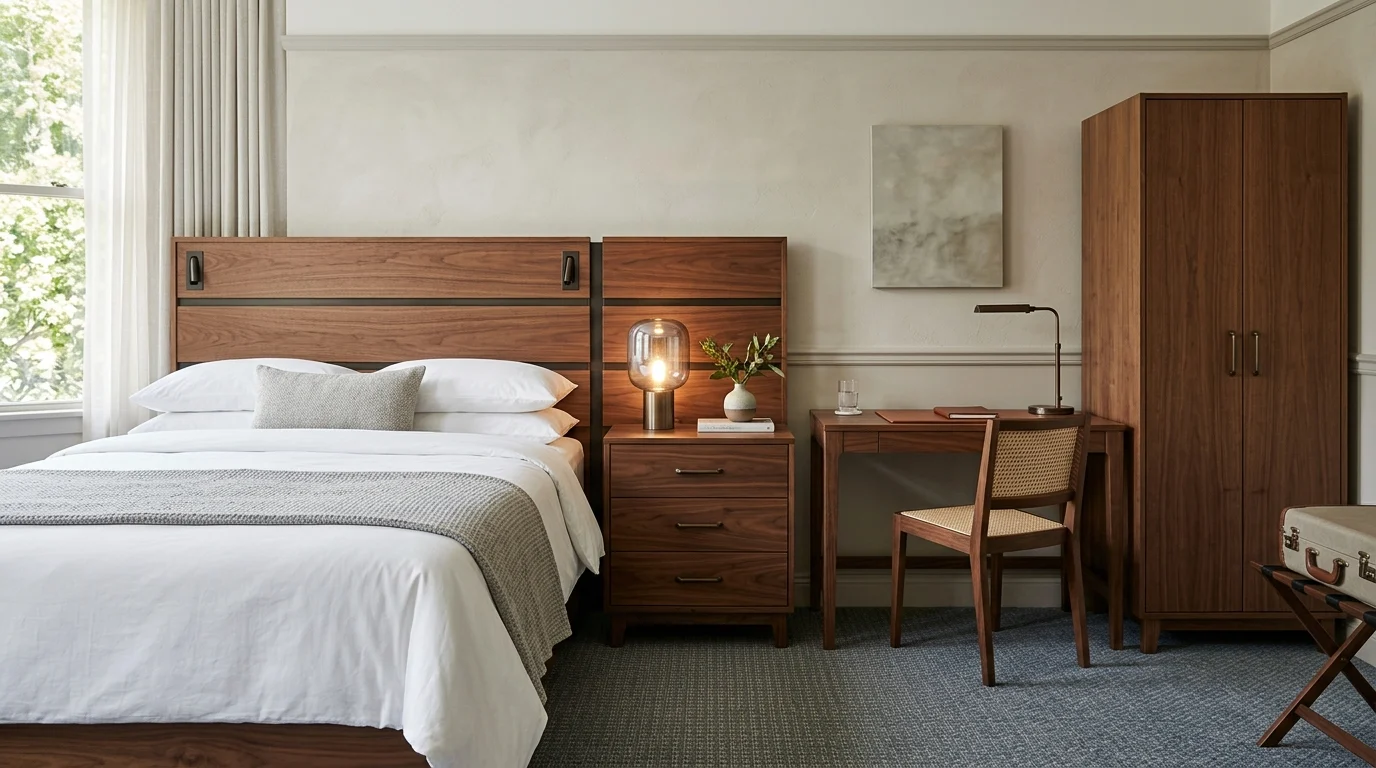
Why Durable Hotel Casegoods Matter
Procuring hotel casegoods demands a strategic balance of aesthetic appeal and commercial-grade engineering. For hospitality asset managers, ownership groups, and procurement agencies, casegoods represent a substantial capital expenditure during any property improvement plan (PIP) or new build. Selecting robust materials directly influences the asset’s net operating income and long-term viability.
As brand standards evolve and guest expectations rise, the margin for error in furniture specification continues to shrink. A poorly engineered dresser or desk not only degrades the visual appeal of the room but also creates operational bottlenecks, ultimately impacting the property’s bottom line.
Defining Hotel Casegoods and Furniture Scope
In commercial hospitality, casegoods encompass all primarily wood, wood-like, or solid-surface non-upholstered furniture. This scope typically includes headboards, nightstands, dressers, media consoles, desks, luggage benches, and wardrobes. Modern hotel designs increasingly blur the line between freestanding furniture and integrated millwork, requiring highly precise manufacturing to ensure seamless installation against guest room walls.
Unlike residential furniture, hotel casegoods must endure a rigorous commercial lifecycle. Industry standards dictate a 12 to 15-year operational lifespan for casegoods, compared to the 5 to 7-year cycle typical of soft goods like drapery and upholstery. Consequently, these hard assets often consume 25% to 35% of the total Furniture, Fixtures, and Equipment (FF&E) budget. Because they are expected to last through multiple minor room refreshes, getting the initial specification right is critical to the overall financial viability of the renovation project.
Key Guest Room Performance Risks
The guest room environment introduces severe performance risks that rapidly degrade inferior furniture. Hoteliers must account for blunt force impacts from hard-shell luggage, sustained exposure to industrial-grade housekeeping solvents, and fluctuating HVAC moisture levels. A standard business or resort hotel room experiences upward of 200 to 250 guest turnovers annually, subjecting the furniture to constant, unpredictable wear.
Without commercial-grade construction, vulnerable areas fail quickly. Horizontal surfaces suffer from water rings left by condensation from cold drinks, while exposed edges face chipping from housekeeping carts and vacuum cleaners. If a nightstand or dresser lacks the structural integrity to withstand this daily abuse, properties will experience delamination, scratching, and structural joint failure within the first three years of deployment, leading to costly premature replacements and increased daily maintenance burdens.
Specifications That Predict Long-Term Durability
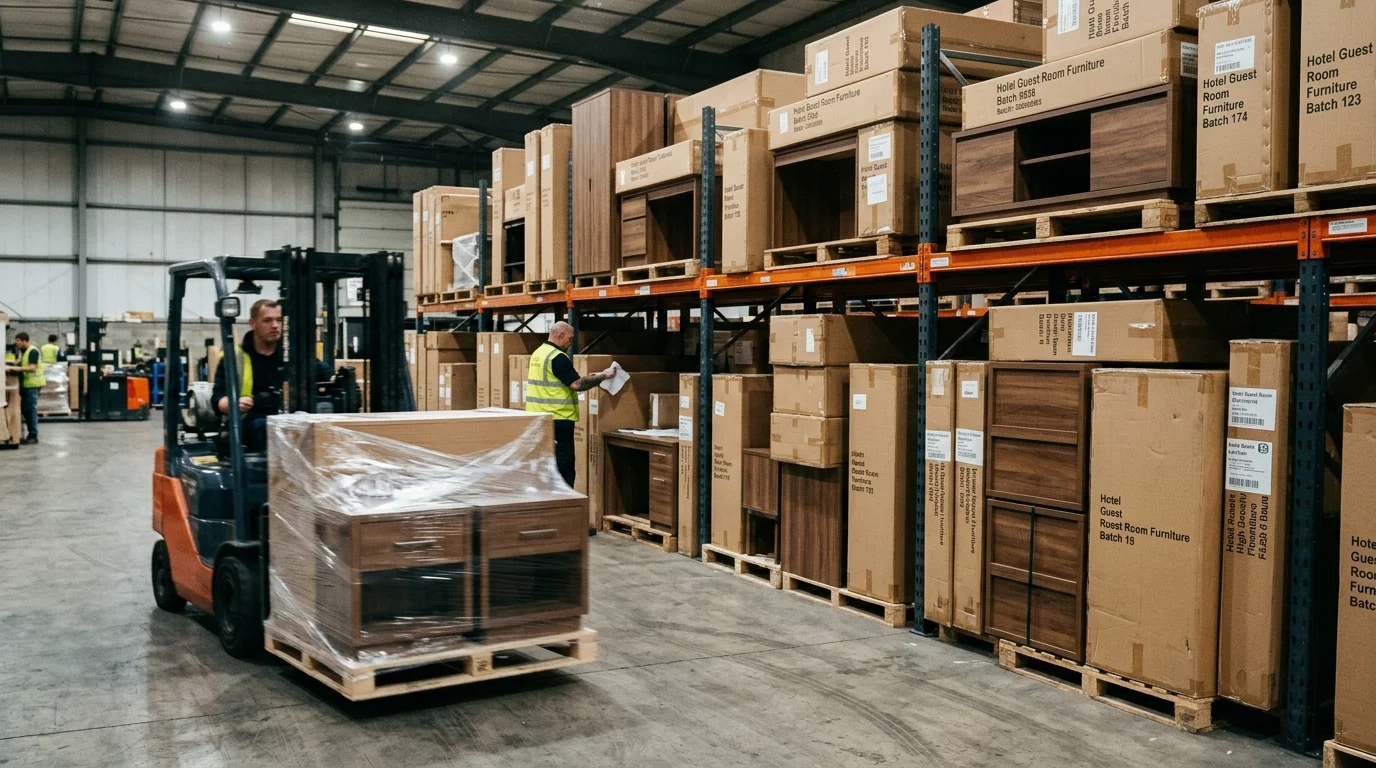
Mitigating performance risks requires translating architectural design concepts into stringent engineering specifications. Procurement teams must mandate precise material tolerances and construction methodologies to ensure the final product withstands continuous commercial use without compromising the interior designer’s vision. Relying solely on aesthetic renderings is a fast track to product failure.
Core Materials, Veneers, Laminates, and Solid Surfaces
The foundation of any durable casegood lies in its core substrate and exterior surfacing. High-density medium-density fiberboard (MDF) or multi-ply hardwood plywood are the industry standards for core construction, offering superior screw-holding capacity and warp resistance compared to standard commercial particleboard. For exterior surfaces, High-Pressure Laminate (HPL) provides exceptional scratch and impact resistance compared to natural wood veneers, which are significantly softer and more susceptible to gouging.
Where budgets permit, integrating solid surfaces like quartz or sintered stone for horizontal tops drastically increases longevity. These materials are impervious to moisture and highly resistant to scratching, making them ideal for high-traffic zones like nightstands and hospitality centers. However, stakeholders must acknowledge that these heavy materials significantly increase shipping costs and installation complexity.
| Material | Typical Spec / Thickness | Primary Application | Durability / Impact Resistance |
|---|---|---|---|
| HPL (High-Pressure Laminate) | 0.8mm – 1.2mm (decorative sheet) | Desktops, Nightstand tops | Very High |
| Natural Wood Veneer | 0.4mm – 0.6mm | Vertical drawer fronts, Headboards | Moderate |
| MDF Core | 680 – 730 kg/m³ density | Substrates for laminates/veneers | High (as a structural substrate) |
| Quartz / Solid Surface | 20mm (3/4 inch) | Vanity tops, Hospitality centers | Extremely High |
| Melamine (LPL) | 0.1mm – 0.2mm | Wardrobe interiors, concealed panels | Low to Moderate |
Finish, Edge, Moisture, and Load Requirements
Surface finishes and edge treatments serve as the primary defense against moisture ingress and physical chipping. Exposed edges on all horizontal surfaces must utilize high-impact PVC or ABS edge banding, ideally specified at a minimum thickness of 2.0mm. While highly durable, designers should note that 2.0mm banding may not suit all sleek design aesthetics, sometimes creating tension with brand standards. This banding must be applied using moisture-resistant polyurethane (PUR) adhesives to prevent peeling in humid climates or when placed adjacent to bathroom doors. For painted or veneered surfaces, catalyzed polyurethane or UV-cured topcoats are mandatory to resist chemical degradation from daily cleaning.
Internal mechanics are equally vital to long-term durability. Drawer glides should specify full-extension, ball-bearing mechanisms with a minimum dynamic load rating of 75 to 100 pounds to prevent sagging under the weight of guest belongings. Cabinet hinges must be commercial-grade, often requiring 110-degree to 170-degree opening capacities, and should meet BHMA/ANSI Grade 1 certification standards for durability. Incorporating soft-close mechanisms further protects the wooden frames from the structural shock of slamming doors.
Sourcing and Approving Hotel Casegoods
Identifying the right manufacturing partner and navigating the approval process is just as critical as the technical specifications. Effective procurement strategies bridge the gap between architectural intent and factory floor execution, ensuring high-quality consistency across hundreds of guest rooms. This begins with strict vendor qualification criteria, including comprehensive factory audits, verified hospitality references, and robust warranty terms.
Practical Steps for Owners, Designers, and Procurement Teams
The procurement cycle relies heavily on the model room review. Project stakeholders must evaluate a fully finished prototype in a mockup room to verify scale, finish accuracy, and structural integrity before authorizing mass production. During this phase, engineering teams review detailed shop drawings to confirm joint construction, mandating the use of dowels, corner blocks, and mortise-and-tenon joinery over simple glued-and-screwed assembly.
Once mass production commences, rigorous quality control protocols are essential.
Key Takeaways
- Specify hotel casegoods for a 12- to 15-year lifecycle because they must outlast multiple soft-goods refresh cycles.
- Prioritize high-density MDF or multi-ply hardwood plywood cores to improve screw-holding strength and reduce warping in guest room conditions.
- Use high-pressure laminate, durable veneers, or solid-surface materials on high-contact areas to resist moisture, scratches, heat, and cleaning chemicals.
- Protect edges and joints carefully because luggage impacts, housekeeping carts, and vacuum cleaners commonly cause chipping and structural failure.
- Treat casegoods as a major capital decision since they can account for 25% to 35% of a hotel FF&E budget.
- Evaluate furniture against real operating conditions, including 200 to 250 annual guest turnovers per room, not just design renderings.
Frequently Asked Questions
What are hotel casegoods?
Hotel casegoods are non-upholstered guest room furniture such as headboards, nightstands, dressers, desks, media consoles, wardrobes, and luggage benches. They are typically wood, wood-like, or solid-surface pieces built for commercial use.
How long should durable hotel casegoods last?
Commercial hotel casegoods are generally expected to perform for 12 to 15 years, far longer than soft goods such as upholstery or drapery, which often refresh every 5 to 7 years.
Which materials are best for hotel guest room furniture?
High-density MDF, multi-ply hardwood plywood, high-pressure laminate, durable veneers, and solid-surface tops are common choices because they improve screw holding, resist warping, and withstand daily guest and housekeeping wear.
Why is high-pressure laminate often used in hotel furniture?
High-pressure laminate is valued for resisting scratches, moisture, heat, and cleaning chemicals, making it suitable for desktops, nightstands, dressers, and other high-contact guest room surfaces.
What causes hotel casegoods to fail early?
Common causes include weak substrates, poor edge protection, inadequate joint construction, moisture exposure, chemical damage, and repeated impacts from luggage, vacuums, and housekeeping carts.
Post time: Jun-26-2026