
 joyce@taisenfurniture.com
 0086 15356090777


Why Hardware Quality Matters for Hotel Furniture Lifespan
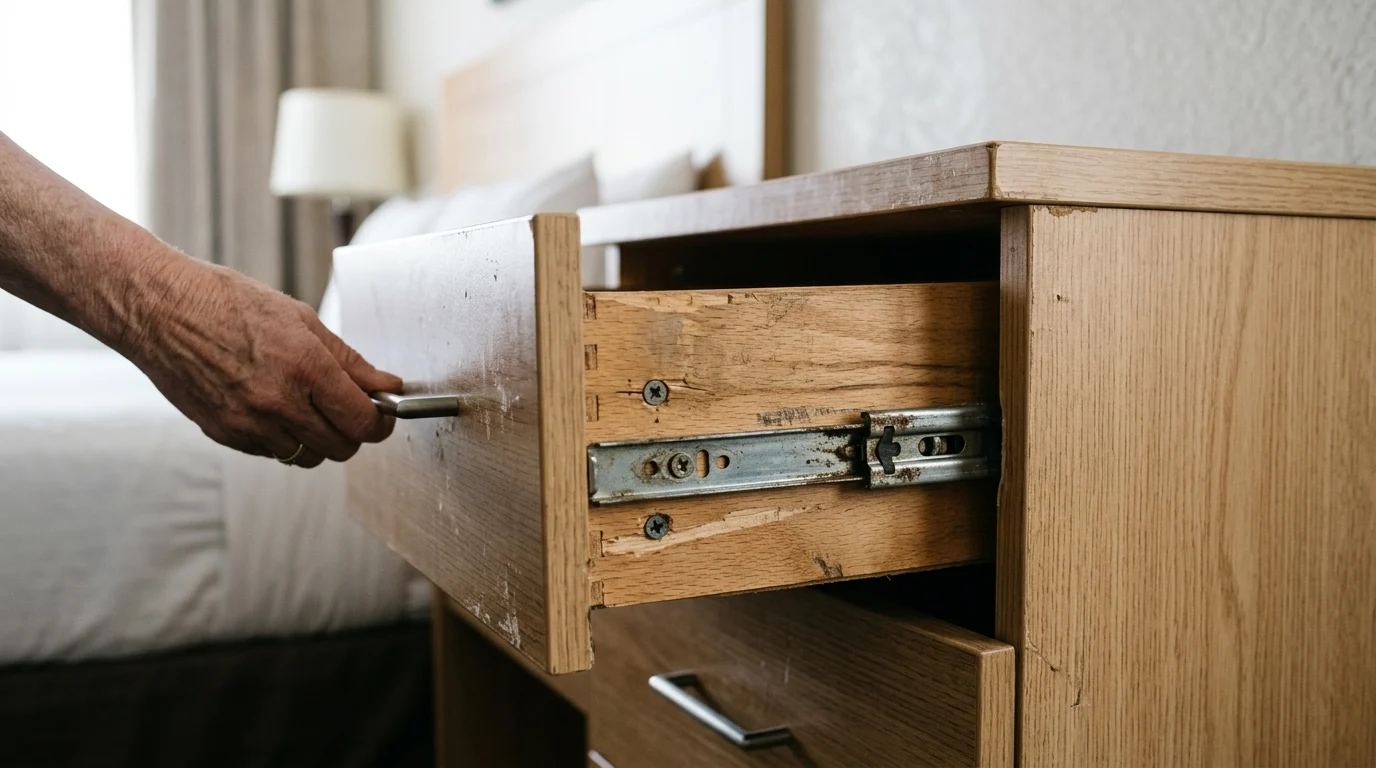
The foundation of hospitality asset management relies on maximizing the lifecycle of capital investments. While aesthetic design and space planning often dominate procurement discussions, the mechanical integrity of hotel furniture is heavily dependent on its hardware.
Of course, hardware longevity is also contingent on substrate density, joinery quality, and installation precision—not solely on the hardware grade. Yet, in commercial environments subject to relentless use, hardware acts as the structural spine of casegoods, seating, and millwork. When these hidden components fail, the entire piece of furniture is compromised, regardless of how premium the exterior veneers or upholstery may be.
Understanding the profound impact of hardware requires shifting focus from initial acquisition costs to long-term performance. While renovation cycles are sometimes dictated by aesthetic obsolescence rather than hardware failure—especially in high-design zones like lobbies—mechanical integrity remains a primary driver of asset lifespan. Hoteliers and procurement agents who prioritize high-grade mechanical components consistently achieve longer intervals between these cycles, protecting capital expenditures and ensuring a reliable guest experience.
What hotel furniture hardware includes
Hotel furniture hardware encompasses all metallic and composite mechanical components integrated into the construction and operation of hospitality assets. In a standard guestroom, this includes concealed hinges on wardrobes, ball-bearing or undermount drawer slides in nightstands and dressers, structural fasteners like cam locks and dowels, wardrobe hanging rails, heavy-duty adjustable levelers, and all exterior pulls and knobs.
Beyond the guestroom, hospitality hardware extends to heavy-duty table bases in dining areas, pivot hinges on lobby console doors, and specialized banquette structural brackets. Unlike residential hardware, which is engineered for light, predictable use by a single family, commercial hotel hardware must be manufactured to withstand unpredictable, often abusive interaction from thousands of different guests annually. The scope of this hardware dictates not just how a piece operates on opening day, but how it will function a decade later.
How poor hardware increases lifecycle costs
Substandard hardware directly accelerates the depreciation of hospitality assets. While luxury properties typically project a 10- to 12-year lifespan for casegoods, limited-service hotels may operate on shorter 5- to 7-year cycles. Regardless of the tier, when value-engineered hardware is utilized, mechanical failures often begin within the first 18 to 24 months of operation.
Premature hardware failure carries a steep sustainability and operational cost. When a hinge mounting plate strips out of a weak substrate, perfectly viable engineered wood cores often end up in landfills long before the scheduled property renovation. Furthermore, constantly triaging failing components places a heavy, recurring strain on the property’s maintenance resources, shifting focus away from preventative care and toward endless daily repairs.
Key Hardware Specifications That Extend Furniture Life
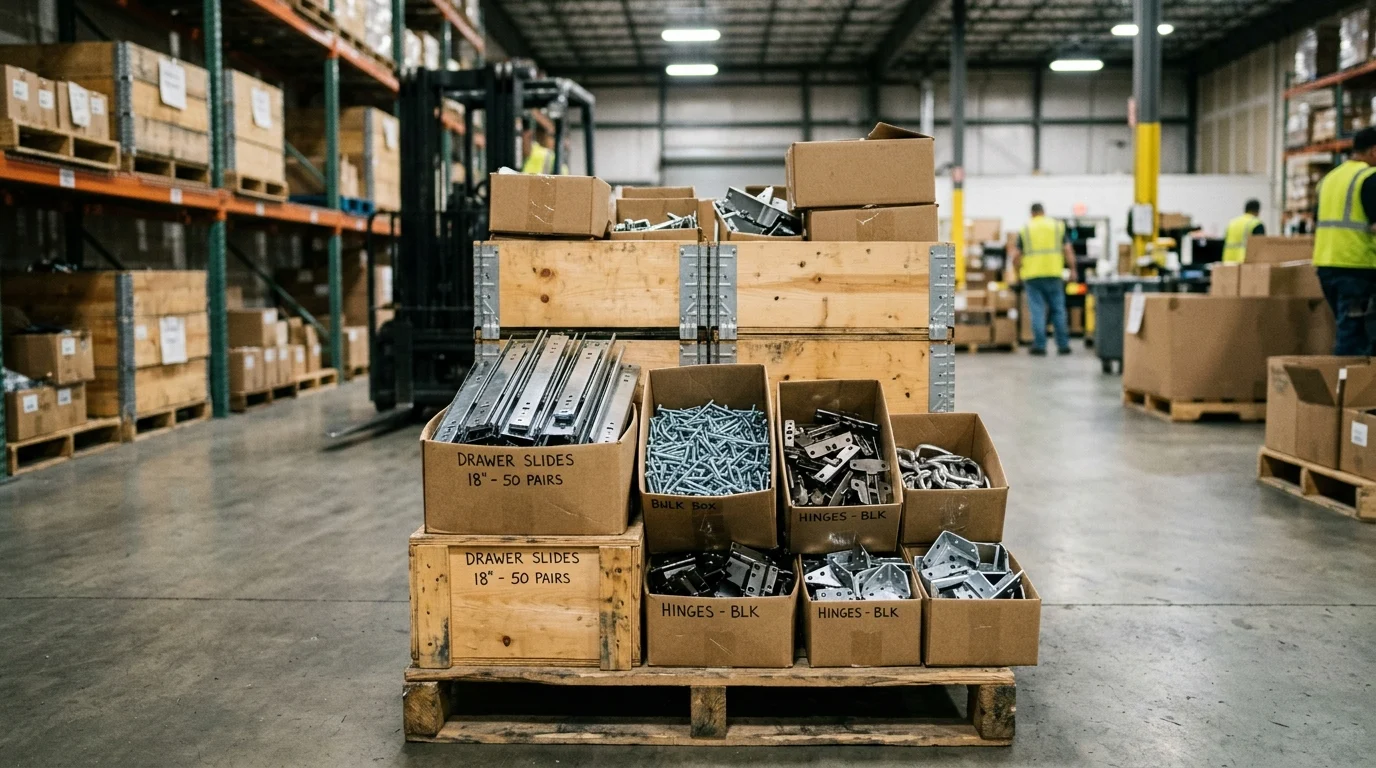
Establishing rigorous technical specifications is the most reliable method for preventing premature hardware failure in commercial environments. Procurement teams must move beyond subjective descriptions of quality and mandate precise engineering metrics. By defining clear benchmarks for load capacity, cycle endurance, and environmental resistance, hoteliers can ensure that the specified components will survive the grueling realities of hospitality usage.
Load ratings, cycle testing, corrosion resistance, and finish durability
Mechanical endurance requires strict load and cycle benchmarks tailored to commercial realities. Drawer slides in hospitality environments are typically benchmarked at dynamic load ratings of at least 100 lbs (45 kg) to account for guests leaning heavily on open drawers or overpacking them with luggage. Standard residential slides rated for 50 lbs will warp under such stress.
Cycle testing is equally critical. Premium hotel guestroom hinges and slides frequently target certifications for 50,000 to 100,000 continuous open-and-close cycles without loss of function. High-traffic zones, such as restaurants, demand even higher thresholds, often exceeding 150,000 cycles to account for constant daily use by staff and patrons. Additionally, environmental resilience must be quantified through salt spray testing. For properties in coastal regions or humid climates, hardware finishes should withstand a recommended 96-hour Neutral Salt Spray (NSS) test to ensure they do not pit, rust, or degrade over their projected lifespan.
Relevant standards, certifications, and supplier test reports
Procurement documentation must mandate compliance with recognized industry standards to verify manufacturer claims. In North America, standards established by ANSI/BIFMA (American National Standards Institute / Business and Institutional Furniture Manufacturers Association) or BHMA (Builders Hardware Manufacturers Association) serve as highly reliable benchmarks for commercial durability.
Passing the ANSI/BIFMA X5.5 standard for desk and table products, or BHMA ANSI A156.9 for cabinet hardware, requires components to survive rigorous pull, drop, and racking tests. Hoteliers should avoid relying solely on internal factory assurances of quality; instead, they should request independent, third-party supplier test reports from certified laboratories such as SGS, Intertek, or TÜV Rheinland. These reports provide empirical proof that the hardware meets the specified dynamic load and cycle thresholds.
Material choices such as stainless steel, zinc, and brass
Material composition fundamentally dictates both the structural yield strength and the environmental resilience of the hardware. The choice of base material determines how the component will react to stress, moisture, and cleaning chemicals over its lifecycle.
| Material | Corrosion Resistance | Cost Index | Primary Hospitality Application |
|---|---|---|---|
| 304 / 316 Stainless Steel | Very High | Premium | Wet areas, coastal properties, outdoor FF&E |
| Aluminum Alloys | High | Medium | Lightweight structural frames, modern extrusions |
| Zinc Alloy (Zamak) | Moderate | Medium | Guestroom handles, decorative pulls, lock bodies |
| Solid Brass | High | High | Luxury touchpoints, lobby accents, premium hinges |
| Cold-Rolled Steel | Low (unless heavy plated) | Low | Concealed internal hinges in climate-controlled zones |
| Engineered Polymers | Very High | Low to Medium | Slide housings, quiet rollers, dampeners |
For structural integrity, heavy-gauge cold-rolled steel is standard for concealed hinges, provided it is heavily nickel-plated to resist ambient humidity. For visible hardware and wet zones, 304-grade stainless steel is a common baseline, while 316-grade is highly recommended for beachfront resort properties due to its molybdenum content, which drastically reduces chloride pitting. Modern non-metal alternatives, such as high-performance engineered polymers (e.g., glass-filled nylon), are increasingly common for slide housings and dampeners. Solid brass and Zamak (a zinc-aluminum alloy) offer excellent casting properties for intricate decorative pulls, balancing aesthetic weight with structural density.
How Hardware Needs Vary by Hotel Area
A standardized approach to hardware across an entire hotel property often leads to either costly over-specification in low-traffic zones or catastrophic under-specification in high-stress areas. The operational stress placed on a lobby reception console differs vastly from the daily wear on a guestroom wardrobe or the brutal environment of a back-of-house storage unit. Zoning the hotel’s hardware requirements ensures optimal capital allocation and performance.
Guestroom, lobby, restaurant, and back-of-house requirements
Guestrooms require hardware optimized for acoustic dampening and moderate, repetitive use. Mechanisms here must prioritize guest comfort, utilizing soft-close hinges and undermount slides that operate silently to prevent noise transfer between adjoining rooms. Conversely, lobby furniture demands architectural-grade finishes and heavy-duty pivot hinges capable of managing oversized, heavy decorative doors that are accessed frequently by staff.
Restaurant and food-service areas introduce a different set of stressors, requiring hardware that can withstand high cycle rates, heavy impact, and constant exposure to commercial cleaning agents and food spills. Back-of-house (BOH) requirements strip away aesthetic concerns entirely, focusing purely on heavy-duty function; BOH shelving and storage drawers routinely require industrial slides with dynamic load benchmarks exceeding 150 lbs (68 kg) to support tools, linens, and bulk supplies.
Common failure modes by usage intensity
Understanding zone-specific failure modes allows procurement teams to implement targeted specification upgrades. In guestrooms, the most frequent failure involves stripped hinge screws caused by guests utilizing wardrobe doors as support structures or hanging heavy luggage bags over them. This necessitates the use of reinforced mounting plates and specialized substrate fasteners.
In restaurant environments, the primary failure mode is the corrosion and binding of hinges due to the ingress of acidic food spills and harsh, bleach-based cleaning chemicals. This requires upgrading to sealed, stainless-steel mechanisms. In back-of-house zones, the most common failure is the catastrophic bending of drawer slide tracks caused by severe overloading, which can only be mitigated by specifying heavy-gauge steel profiles and oversized ball-bearing races.
Balancing durability, appearance, and guest experience
The intersection of durability and guest experience requires careful calibration. While a heavy-duty industrial hinge might offer superior longevity, its exposed mechanical profile and loud operation would shatter the luxury ambiance of a five-star guestroom. Hoteliers must balance structural needs with sensory feedback.
| Hotel Zone | Primary Hardware Type | Critical Performance Metric | Common Failure Risk |
|---|---|---|---|
| Guestroom | Soft-close hinges/slides | Near-silent acoustic operation | Sagging doors, stripped screws |
| Lobby | Heavy-duty pivots, brass pulls | Finish durability (96h salt spray) | Tarnishing, finish abrasion |
| Restaurant | Table bases, banquette brackets | Recommended cycle count (150,000+) | Hinge binding from spills/chemicals |
| Back-of-House | Heavy-duty ball-bearing slides | Dynamic load benchmark (150+ lbs) | Bent tracks from overloading |
To achieve this balance, manufacturers utilize advanced concealed hardware. For example, modern guestroom drawer slides are mounted underneath the drawer box rather than on the sides, hiding the mechanism from view while providing superior support and achieving near-silent operation upon closure. This approach delivers the high cycle life required by the property’s asset managers without compromising the visual and auditory experience expected by the guest.
Sourcing, Installation, and Maintenance Best Practices
The longevity of commercial hardware is not determined solely at the point of manufacture; it is heavily influenced by the precision of installation and the consistency of ongoing maintenance. Even the most robust, expensively engineered components will fail prematurely if they are improperly mounted into weak substrates or neglected by property operations teams. Aligning procurement specifications with installation controls and maintenance protocols is essential for achieving the projected lifespan of the furniture.
Converting performance needs into clear specifications
Vague procurement language invariably leads to substandard component substitution during the manufacturing bidding process. If a specification sheet simply requests a “soft-close drawer,” manufacturers may source the cheapest available mechanism that meets that loose definition, likely resulting in a component that fails within two years.
Converting performance needs into rigid specifications requires detailing exact metrics. A proper specification should read: “Full-extension undermount soft-close slide, cold-rolled steel with zinc plating, minimum 100-lb dynamic load capacity, certified to 80,000 cycles per ANSI/BIFMA X5.5, with 3-dimensional adjustability.” This level of granularity eliminates ambiguity, forces suppliers to quote apples-to-apples, and ensures the delivered hardware possesses the necessary mechanical integrity.
Installation controls that prevent premature failure
Factory-level installation controls are critical to preventing latent defects that destroy furniture from the inside out. When mounting hardware to engineered wood substrates like MDF or industrial particleboard, manufacturers must utilize specialized fasteners. Using standard tapered wood screws in MDF displaces the fibers, creating a weak joint that will inevitably pull out under stress. Instead, factories should specify 5mm Euro screws or expanding dowel systems designed specifically for composite boards.
Furthermore, assembly lines must enforce strict torque limits during installation. Pneumatic or electric drills used to drive hinge plates should typically be calibrated to manufacturer-specified torque limits—often ranging from 3 to 4 Nm for standard composite boards—to prevent over-tightening. Exceeding this torque limit instantly strips the engineered wood substrate, destroying the holding power of the screw.
Beyond factory controls, field installation presents significant risks. Much hotel FF&E is mounted on-site by general contractors rather than specialized factory technicians. To mitigate the dangers of site-installed hardware failing in weak drywall or composite substrates, procurement teams should specify factory-preinstalled mounting plates and heavy-duty wall cleats wherever possible.
Preventive maintenance and spare parts planning
Operational longevity relies on proactive maintenance protocols and strategic inventory management by the property’s engineering department. Hardware failure is rarely sudden; it is usually preceded by misalignment, friction, or loose fasteners. Engineering teams should implement semi-annual inspection and lubrication schedules utilizing dry PTFE or silicone-based lubricants, strictly avoiding oil-based products that attract abrasive dust and degrade internal plastic dampeners.
Equally important is spare parts planning. Custom hardware finishes and proprietary hinge systems can become obsolete or face massive lead times years after the initial installation. To protect the asset lifecycle, properties should mandate a 2% to 5% spare parts overage (Minimum Order Quantity buffer) for all critical moving hardware components during the initial FF&E procurement. Storing these exact-match replacements on-site ensures that a single broken hinge does not render a room out-of-order for months while awaiting international shipping.
Choosing the Right Hardware Quality Level
Determining the appropriate quality tier for hotel hardware is a complex calculation that balances initial Capital Expenditure (CAPEX) against long-term Operational Expenditure (OPEX). In the highly competitive hospitality sector, the temptation to value-engineer hardware during the procurement phase is immense. However, experienced asset managers understand that the initial cost of hardware represents only a fraction of its true financial impact over a decade of hotel operations.
Total cost of ownership for standard versus premium hardware
The Total Cost of Ownership (TCO) heavily favors premium hardware over standard commercial grades for long-term holds. This becomes clear when evaluating costs over a standard renovation cycle. Consider the economics of a standard drawer slide costing $5 versus a premium slide costing $15. The standard slide saves $10 per drawer upfront, but it is statistically likely to fail after 3 to 4 years of heavy guest use.
When failure occurs, the property incurs engineering labor to diagnose and replace the part. More critically, malfunctioning hardware directly impacts guest satisfaction scores. A jammed drawer or a sagging wardrobe door can lead to negative reviews, potential front-desk compensation, and progressive damage to the furniture’s substrate as guests force the component. Therefore, saving $10 in CAPEX can easily generate hundreds of dollars in OPEX, remediation, and reputational damage.
A premium $15 slide effectively acts as an insurance policy against these recurring operational penalties, making it essential for assets intended to last a full 10- to 12-year cycle. However, it is worth noting that mid-grade hardware can be economically rational for limited-service properties with confirmed 3- to 5-year refresh cycles or temporary installations, where paying for a 12-year premium component yields diminishing returns.
When to standardize hardware across hotel properties
While zone-specific hardware is necessary for performance, standardizing internal, concealed components across a hotel portfolio yields significant economies of scale. Hotel groups managing 10 or more properties can drastically reduce their engineering inventory holding costs by standardizing on a single brand and model of concealed hinge and drawer slide for all standard guestroom casegoods.
By standardizing these hidden components, a portfolio can reduce its hardware SKU count by up to 30%, simplifying maintenance training and allowing procurement teams to negotiate deeper volume discounts with hardware manufacturers. Standardization also means that engineering teams can cannibalize parts from decommissioned furniture during rolling renovations to service older rooms. However, standardization efforts should strictly avoid proprietary or custom-exclusive mechanisms. These can create spare-parts scarcity and repair complexity, directly contradicting the goal of maintenance ease.
How hardware quality supports longer furniture lifespan
Ultimately, the quality of the hardware dictates the survival of the furniture substrate. High-grade hinges with robust 3-dimensional adjustability allow maintenance teams to periodically realign heavy MDF wardrobe doors. This preventative alignment stops doors from sagging and dragging against the bottom of the cabinet casing. Such dragging is a common issue that causes irreparable chipping to expensive wood veneers and laminates.
By ensuring mechanical components remain rigid, smooth, and aligned, hoteliers protect the structural envelope of the furniture. Quality hardware absorbs the kinetic energy of guest interactions, preventing stress from transferring into the glued joints and composite boards of the casegoods. Investing in premium hardware is not merely about ensuring a door closes softly; it is the definitive strategy for ensuring the entire furniture asset confidently reaches its projected lifecycle. Whether planning for a 7-year refresh or a 12-year overhaul, appropriate hardware specification maximizes the return on the property’s initial capital investment.
Key Takeaways
- Specify commercial-grade hardware because hinges, slides, fasteners, and levelers carry the mechanical load that determines how long hotel furniture remains usable.
- Plan furniture lifecycle budgets around property tier, with luxury casegoods often targeting 10 to 12 years and limited-service hotels commonly operating on 5 to 7 years.
- Avoid value-engineered hardware that can begin failing within 18 to 24 months in high-use hotel environments.
- Evaluate hardware together with substrate density, joinery quality, and installation precision to prevent stripped mounting points and premature structural failure.
- Use precise technical specifications in procurement instead of vague quality descriptions to reduce repairs, downtime, and early replacement costs.
Frequently Asked Questions
Q Why does hardware quality matter so much in hotel furniture?
Hardware functions as the mechanical backbone of casegoods, seating, and millwork. Even if veneers or upholstery look premium, weak hinges, slides, fasteners, or levelers can cause drawers, doors, and structures to fail early under heavy guest use.
Q What types of hardware are used in hotel furniture?
Common hotel furniture hardware includes concealed hinges, drawer slides, cam locks, dowels, wardrobe rails, adjustable levelers, pulls, knobs, table bases, pivot hinges, and structural brackets used in guestrooms, dining areas, lobbies, and banquettes.
Q How long should hotel furniture typically last?
Luxury hotel casegoods are often expected to last 10 to 12 years, while limited-service properties may plan for 5 to 7 years. Poor hardware can shorten these cycles by causing mechanical failures far earlier than planned.
Q When do failures usually appear if low-grade hardware is used?
In high-use hotel environments, value-engineered or substandard hardware may begin failing within the first 18 to 24 months, creating maintenance burdens and accelerating furniture replacement.
Q Is hardware quality the only factor affecting furniture lifespan?
No. Hardware performance also depends on substrate density, joinery quality, correct installation, and how the furniture is used. However, high-grade hardware is one of the most important controllable factors in extending service life.
Post time: Aug-24-2026