
 joyce@taisenfurniture.com
 0086 15356090777


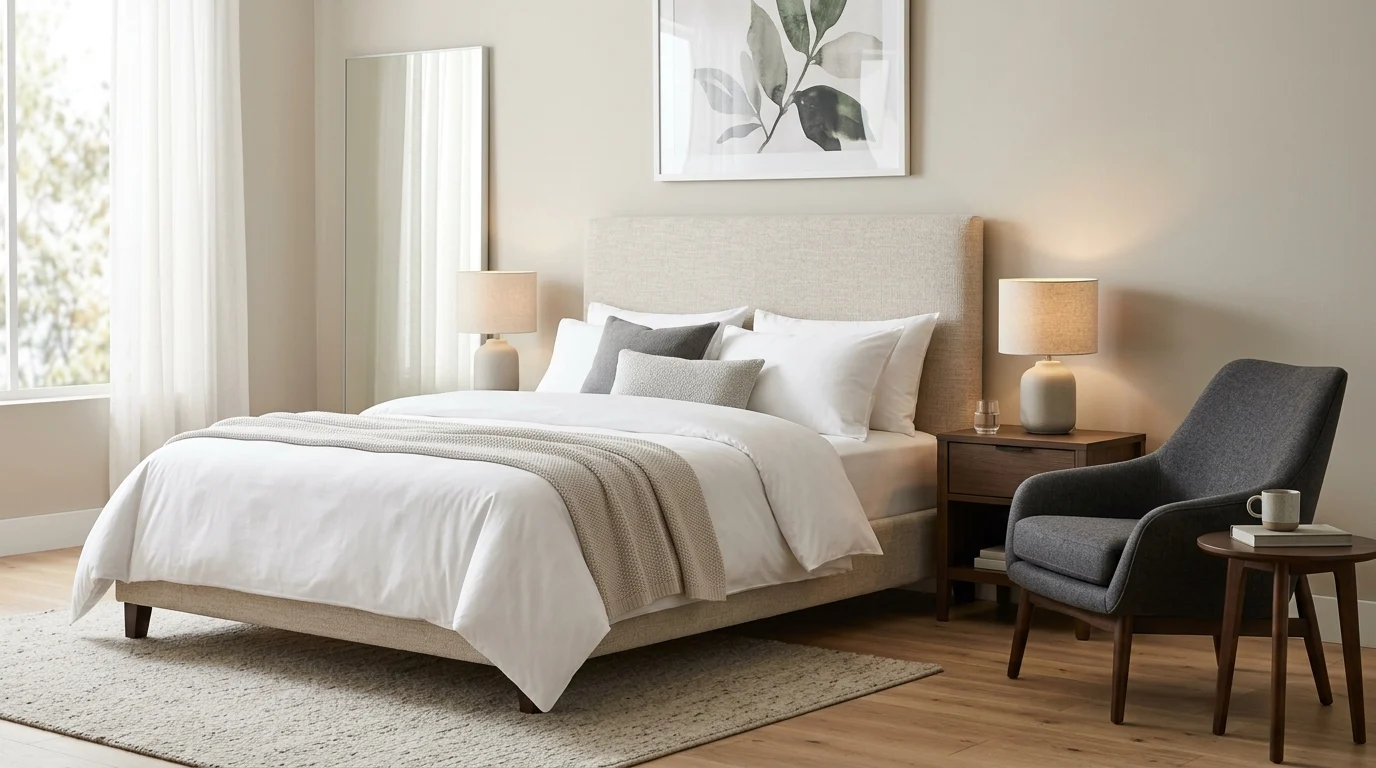
Why Stain-Resistant Neutrals Matter in Hotel Furniture
The commercial hospitality sector operates under demanding conditions, where interior design must balance aesthetic appeal with heavy daily use. In recent years, the industry has seen a pronounced shift toward stain-resistant neutral palettes in hotel furnishings. Given that the standard soft-goods refresh cycle commonly ranges from 5 to 7 years in luxury and mid-scale properties—though this timeline varies significantly by brand tier, geography, and asset type—specifying durable, light-colored upholstery is no longer a design risk but a strategic asset.
Historically, hoteliers relied on dark, heavily patterned fabrics to conceal wear and tear. However, modern textile engineering has decoupled color from durability. Today, advanced performance fabrics allow properties to leverage the psychological benefits of light, airy environments while maintaining strict asset protection standards.
How Neutral Palettes Support Brand Consistency
Neutral palettes act as an architectural blank canvas, allowing hospitality brands to maintain consistency across diverse property portfolios. By utilizing core furniture pieces in subdued tones, designers can effortlessly update localized accent colors or seasonal decor without undertaking a comprehensive renovation.
This modular approach to color strategy ensures that the foundational aesthetic remains aligned with overarching brand identity guidelines while accommodating regional design nuances. A consistent neutral baseline across global locations reinforces brand recognition, ensuring guests experience a unified visual standard whether they are in a flagship urban high-rise or a resort destination.
What Stain Resistance Means for Commercial Use
In a commercial context, stain resistance is a quantifiable performance metric rather than a mere fabric treatment. Hospitality-grade upholstery must withstand exposure to food, beverages, cosmetics, and harsh chemical cleaning agents.
High-performance neutral fabrics are typically engineered with moisture barriers and advanced topical treatments, achieving Wyzenbeek abrasion ratings exceeding 100,000 double rubs. This level of durability ensures that lighter shades do not succumb to premature graying or permanent discoloration from daily guest interactions, preserving the asset’s visual integrity throughout its intended lifecycle.
Key Neutral Color Trends for Hotels

Warm Grays, Greige, Taupe, Sand, and Stone
Contemporary specifications heavily feature warm grays, greige, taupe, sand, and stone. These specific shades typically exhibit a Light Reflectance Value (LRV) between 40% and 60%, striking an optimal balance between brightening a space and masking minor surface dust.
Greige, in particular, has emerged as a dominant choice. It offers the crispness of gray with the inviting warmth of beige, making it highly adaptable to both natural and artificial lighting schemes.
Where to Use Stain-Resistant Neutral Shades
Strategic placement of stain-resistant neutral shades maximizes their visual impact without compromising operational efficiency. Lobbies, lounge areas, and guestroom headboards are prime locations for these fabrics, as they immediately convey a sense of premium cleanliness.
Dining chairs and banquettes, traditionally specified in dark colors to hide spills, are now frequently upholstered in high-performance taupe or stone, provided the fabric features a robust polyurethane backing to prevent fluid penetration into the cushion core. However, neutral palettes are not a universal solution. In high-traffic airport hotels, properties with poor natural lighting, or budget segments where labor cost savings cannot offset premium fabric prices, darker or patterned textiles often remain the more practical choice.
Balancing Timeless Design with Current Trends
Achieving longevity in interior design requires balancing ephemeral trends with timeless foundational elements. While hyper-specific seasonal colors may date a property within three years, neutral tones provide a stable backdrop that absorbs shifting trends gracefully.
The table below outlines the functional and psychological profiles of prevailing neutral specifications in commercial settings.
| Neutral Shade | Typical LRV Range | Ideal Hospitality Application | Psychological Impact |
|---|---|---|---|
| Warm Gray | 45% – 55% | Lobby lounge seating, guestroom sofas | Sophistication, calm stability |
| Greige | 50% – 60% | Dining banquettes, task chairs | Warmth, residential comfort |
| Taupe | 35% – 45% | Headboards, heavy-traffic corridors | Groundedness, luxury |
| Sand / Stone | 55% – 65% | Accent chairs, spa waiting areas | Cleanliness, visual lightness |
Specifications for Durable Neutral Hotel Furniture
Specifying light-colored commercial furnishings requires careful attention to technical details. Without stringent performance criteria, neutral fabrics are highly vulnerable to premature degradation, rendering their aesthetic benefits moot.
Performance Standards and Testing
Commercial upholstery must comply with established industry benchmarks, such as those set by the Association for Contract Textiles (ACT). For stain-resistant neutral fabrics, critical testing includes the AATCC 16 standard for colorfastness to light (mandating a minimum Grade 4 at 40 hours) and NFPA 260 for Class A fire resistance.
Furthermore, fabrics must demonstrate high resistance to pilling (ASTM D3511, Class 4 minimum) to ensure that the smooth, clean appearance of light-colored textiles is maintained over thousands of guest uses without developing unsightly fuzz or trapped lint.
Material Choices for Stain Resistance
The foundation of a stain-resistant neutral palette lies in the molecular structure of the upholstery material. Solution-dyed acrylics and advanced polyurethanes (PU) are highly favored because the color is integrated directly into the fiber prior to extrusion, making it impervious to bleaching from commercial cleaning agents. However, this performance comes with a sustainability trade-off: these petroleum-based materials raise end-of-life disposal concerns. To address this, environmentally conscious brands are increasingly specifying fabrics with recycled content, exploring emerging bio-based performance fibers, or partnering with manufacturers that offer end-of-life take-back programs.
For woven fabrics, treatments that provide high liquid repellency at the fiber level—rather than just a topical spray that degrades after 20 commercial washes—are essential for maintaining the integrity of sand and stone-colored furniture. Nevertheless, properties must account for real-world performance limitations: stain-resistant treatments inevitably degrade over time, “100% liquid repellency” claims often require strict re-treatment protocols, and certain oil-based stains or prolonged exposures can still penetrate the fibers despite marketing language.
Finish Details, Seams, and Edge Protection
Beyond the fabric itself, the construction of the furniture dictates its vulnerability to staining and wear. Finish details such as welt cords, double-needle stitching, and edge sealing play a critical role in preventing fluid ingress at structural vulnerability points.
Specifications must mandate strict adherence to seam slippage standards (ASTM D4034, demanding a minimum of 25 lbs of resistance), ensuring that the structural seams of tightly upholstered light fabrics do not separate and trap dirt or moisture.
How to Source Stain-Resistant Neutral Furniture
Executing a flawless rollout of neutral-toned furnishings requires a careful procurement strategy. From the initial design concept to final installation, supply chain management must prioritize quality control to ensure color accuracy and material performance.
Procurement Steps from Samples to Approval
The procurement lifecycle for custom commercial furnishings typically spans 12 to 16 weeks and demands thorough validation phases. Purchasing agents must require Cutting for Approval (CFA) samples to verify that the dye lot of the stain-resistant fabric matches the approved master sample exactly.
Following CFAs, the production of a complete mock-up room is a critical milestone. This step allows stakeholders to evaluate how the neutral fabrics interact with the property’s specific lighting and spatial constraints before full-scale manufacturing commences.
Evaluating Suppliers for Consistency and Customization
Selecting the right manufacturing partner is essential when dealing with high-performance light fabrics, where flaws or inconsistencies are immediately visible. Procurement teams should prioritize suppliers with ISO 9001 certifications and those capable of offering comprehensive warranties—typically 3 to 5 years for commercial frames and upholstery—that specifically account for the performance of treated textiles.
Furthermore, suppliers must demonstrate the capability to handle Minimum Order Quantities (MOQs), which often hover between 50 and 100 units for custom-treated neutral textiles, without compromising batch-to-batch color consistency across specialized dye lots.
Logistics Risks in Neutral Furniture Programs
The logistics of transporting light-colored furniture introduce specific risk factors that must be mitigated through contractual packaging standards. Unlike darker pieces that might hide minor transit dust, neutral upholstery is highly susceptible to visible soiling; therefore, manufacturers must utilize multi-layer protective packaging, including polyethylene moisture barriers and reinforced corner protectors.
Additionally, white-glove delivery and installation protocols are essential to prevent cross-contamination from construction dust, dirty hands, or improper handling during the final placement of these pristine assets.
How to Decide if Neutral Furniture Delivers Value
Ultimately, the decision to implement a stain-resistant neutral color scheme must be justified through financial and operational analysis. When executed correctly, these furnishings offer a compelling return on investment by optimizing both lifecycle costs and brand perception.
When Neutral Shades Lower Total Cost of Ownership
Stain-resistant neutral shades directly influence the Total Cost of Ownership (TCO) by significantly reducing daily maintenance burdens. Advanced liquid-repellent treatments allow housekeeping staff to address spills with simple wiping rather than intensive extraction cleaning.
As an illustrative estimate rather than a verified technical standard, this efficiency can save roughly 3 to 5 minutes of labor per room during turnover. Across a hypothetical 200-room property operating at 75% occupancy, this reduction in maintenance time translates to notable annual labor cost savings and minimizes the operational downtime of out-of-order rooms.
Upfront Price vs. Design Longevity
While high-performance, stain-resistant fabrics command an upfront price premium of 15% to 30% compared to standard commercial upholstery, their design longevity alters the financial equation.
Standard fabrics in light colors often require replacement or professional restoration within 2 to 3 years due to irreversible soiling. In contrast, engineered neutral fabrics extend the aesthetic lifecycle to 5 or more years, effectively deferring capital expenditure for replacement furniture and yielding a lower annualized cost.
Aligning Color Strategy with Hotel Brand Goals
Aligning the color strategy with overarching brand goals requires evaluating the intersection of guest expectations and financial reality. A pristine, neutral environment implicitly communicates a standard of luxury and exacting cleanliness that elevates the guest experience.
The comparative analysis below illustrates the financial divergence between untreated standard light fabrics and treated high-performance neutral specifications over a standard hospitality lifecycle.
| Cost Component | Untreated Standard Light Upholstery | Treated High-Performance Neutral Upholstery | TCO Impact (7-Year Cycle) |
|---|---|---|---|
| Initial Procurement Cost | Baseline ($) | Baseline + 15-30% Premium | Higher initial CapEx |
| Routine Maintenance Labor | High (frequent deep cleaning) | Low (spot cleaning only) | Significant OpEx reduction |
| Fabric Replacement Cycle | 2 – 3 Years | 5 – 7 Years | Eliminates 1-2 replacement cycles |
| Guest Perception / Downtime | High risk of visible wear | Consistently pristine | Protects RevPAR and brand equity |
Key Takeaways
- Specify stain-resistant neutral upholstery to combine a lighter hospitality aesthetic with the durability required for daily commercial use.
- Use warm grays, greige, taupe, sand, and stone to support biophilic, residential-inspired hotel interiors without relying on stark whites or heavy browns.
- Target neutral fabrics with a Light Reflectance Value of about 40% to 60% to brighten interiors while helping conceal minor dust and surface wear.
- Request commercial performance data such as Wyzenbeek abrasion ratings above 100,000 double rubs, moisture barriers, and chemical cleanability before approving upholstery.
- Apply neutral stain-resistant furniture in high-impact areas such as lobbies, lounges, headboards, dining chairs, and banquettes to preserve a clean premium impression.
- Build brand consistency by using neutral core furniture pieces, then refresh local character through accents, accessories, and seasonal decor rather than full renovations.
Frequently Asked Questions
Why are neutral shades popular in hotel furniture?
Neutral shades create a clean, flexible foundation that supports brand consistency across properties. They also let designers update accent colors, artwork, or seasonal decor without replacing major furniture pieces.
Are light-colored hotel fabrics practical for high-traffic areas?
Yes, when specified as hospitality-grade performance fabrics. Modern stain-resistant upholstery can resist food, beverages, cosmetics, and cleaning chemicals while maintaining a lighter, more open visual style.
What stain resistance standard should hotel buyers look for?
For commercial upholstery, look for documented performance data such as Wyzenbeek abrasion ratings above 100,000 double rubs, moisture barriers, and cleanability testing suitable for hospitality use.
Which neutral colors work best for hotel interiors?
Warm grays, greige, taupe, sand, and stone are strong choices. Shades with a Light Reflectance Value around 40% to 60% help brighten spaces while still masking minor dust and daily wear.
Where should stain-resistant neutral furniture be used in hotels?
Use it in lobbies, lounges, guestroom headboards, dining chairs, and banquettes. These areas receive frequent guest contact and benefit from colors that signal cleanliness while resisting stains.
Post time: Sep-23-2026