
 joyce@taisenfurniture.com
 0086 15356090777


Introduction
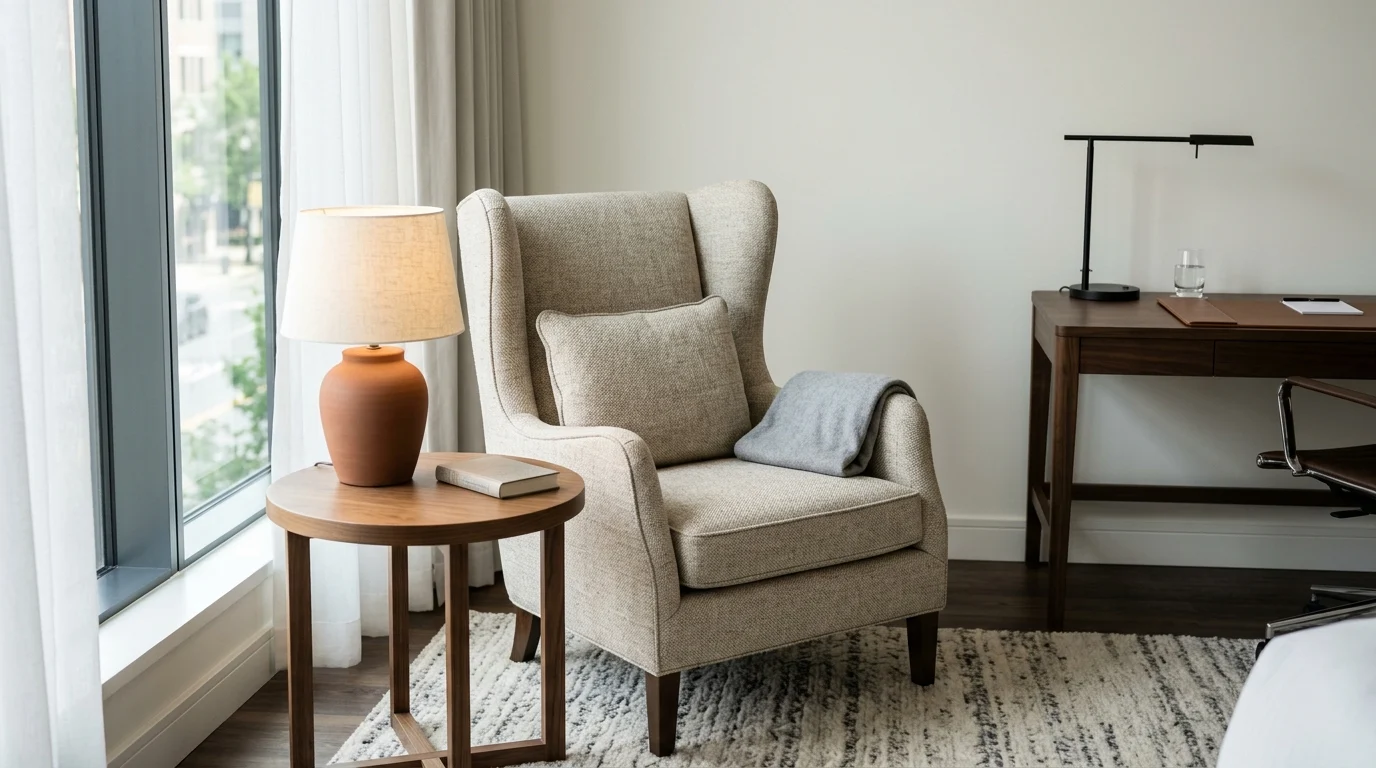
Hotel FF&E shapes far more than a property’s look: it affects guest comfort, brand consistency, durability, maintenance costs, and opening budgets. From guestroom casegoods and seating to lighting, textiles, and decorative elements, every specification must balance design intent with commercial performance. This guide explains the core material choices, the standards that influence safety and longevity, and the practical best practices used to control cost, quality, and procurement risk. By the end, readers will have a clearer framework for evaluating FF&E decisions that support both daily operations and long-term asset value.
Why Hotel FF&E Matters
In the highly competitive hospitality sector, Furniture, Fixtures, and Equipment (FF&E) represents a critical intersection of brand identity, guest experience, and capital expenditure. Effective FF&E strategies directly influence a property’s asset valuation, dictating both initial development costs and the long-term operational viability of the hotel.
Defining Furniture, Fixtures, and Equipment
FF&E encompasses all movable items within a hotel that are not permanently attached to the building’s core structure. This includes guestroom casegoods, lobby seating, decorative lighting, window treatments, broadloom carpets, and curated artwork. It is functionally distinct from Operating Supplies and Equipment (OS&E), which covers consumable or frequently replaced operational items such as bed linens, bath amenities, glassware, and staff uniforms.
From a financial perspective, FF&E typically consumes a substantial portion of development capital, often accounting for 10% to 15% of the total project budget in new hotel builds. Managing this expenditure requires precise technical specifications to ensure selected items can withstand high-traffic commercial use without unnecessarily inflating the initial capital outlay or delaying the property’s opening schedule.
Key Trade-Offs for Brand Standards and CapEx
Hotel owners and operators constantly navigate the tension between stringent brand standards and hard capital expenditure (CapEx) limits. Major franchisors mandate specific design aesthetics to maintain global brand consistency, rigorously enforcing Property Improvement Plans (PIPs) during ownership transfers, franchise renewals, or brand repositioning efforts. To fund these mandates, owners typically maintain a CapEx reserve account funded by 4% to 5% of the hotel’s gross annual revenue.
Industry standards dictate a rigid and cyclical replacement schedule to maintain market competitiveness. Soft goods renovations—encompassing wallcoverings, window treatments, and upholstery—typically occur every 5 to 7 years. Conversely, comprehensive hard goods and casegoods replacements are scheduled on a 10-to-14-year horizon. Strategic value engineering, which involves substituting materials to achieve the same brand aesthetic at a lower cost, is essential to preserving target returns on investment during these capital-intensive cycles.
Materials, Performance, and Compliance
Translating a conceptual interior design into viable hotel FF&E requires a rigorous, data-driven approach to material selection. Hospitality environments demand products that can endure severe, continuous wear while simultaneously satisfying strict regulatory frameworks and safety codes.
Material Choices for Durability and Cost
Material specification directly impacts both upfront procurement pricing and long-term operational maintenance. For casegoods, high-pressure laminate (HPL) is frequently specified over standard veneers due to its superior resistance to scratching, moisture, and thermal shock. For upholstered seating, commercial-grade fabrics must achieve a minimum of 50,000 double rubs on the Wyzenbeek testing scale, with high-traffic lobby applications demanding 100,000 double rubs to guarantee longevity. Hardware components, such as drawer glides, must also be commercial-grade, typically rated to support dynamic loads of 75 to 100 pounds.
The following table outlines standard material trade-offs for commercial hotel casegoods:
| Material | Upfront Cost | Durability Profile | Typical Hospitality Application |
|---|---|---|---|
| High-Pressure Laminate (HPL) | Low to Medium | High (Scratch/Stain Resistant) | Midscale to Upscale Guestrooms |
| Wood Veneer | Medium to High | Moderate (Requires Maintenance) | Upper Upscale to Luxury Properties |
| Solid Wood | Very High | High (Can be Refinished) | Luxury Suites and Executive Areas |
| Melamine (LPL) | Low | Low to Moderate | Economy Wardrobes and Interiors |
Fire Safety, Accessibility, and Sustainability Standards
Compliance with local fire safety and accessibility codes is non-negotiable in FF&E procurement. Upholstered furniture must meet stringent flammability standards, such as California Technical Bulletin 117-2013 (CAL 117) or the NFPA 260 standard for cigarette ignition resistance. In public spaces and designated accessible guestrooms, the Americans with Disabilities Act (ADA) mandates highly precise dimensions. For instance, accessible writing desks must offer a minimum 27-inch vertical knee clearance, a minimum 30-inch width, and a functional surface height situated between 28 and 34 inches from the floor.
Furthermore, environmental sustainability has rapidly transitioned from a niche preference to a core brand standard. Procurement teams increasingly mandate FSC-certified wood products, low-VOC finishes to protect indoor air quality, and textiles manufactured from recycled PET plastics. These specifications not only align with corporate Environmental, Social, and Governance (ESG) targets but can also contribute essential points toward LEED building certifications.
Procurement, Quality Control, and Installation
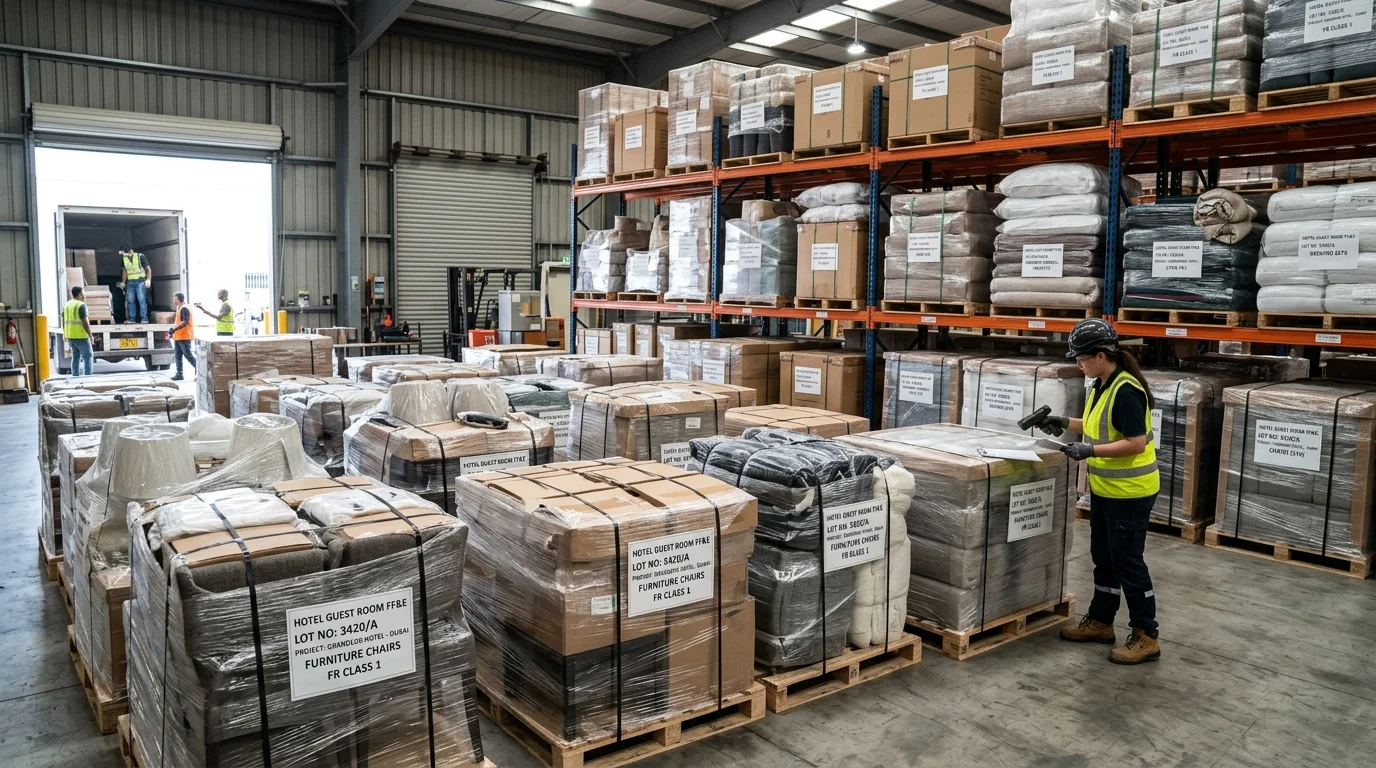
The execution phase of a hospitality FF&E program involves the orchestration of complex global supply chains, rigorous quality assurance protocols, and tightly synchronized installation schedules. Missteps in this logistical phase can severely delay hotel openings, triggering cascading financial penalties and lost revenue.
Vendor Selection and Risk Reduction
Selecting the right manufacturing partners involves meticulously evaluating their production capacity, financial stability, and historical performance in delivering to the hospitality sector. Standard overseas procurement typically requires minimum order quantities (MOQs) of 50 to 100 room sets to achieve economies of scale. Production and shipping lead times are substantial, generally ranging from 12 to 16 weeks for standard catalog items, and extending up to 20 to 24 weeks for bespoke, custom-designed pieces.
To systematically mitigate supply chain risk, expert procurement agencies implement strict Quality Control (QC) frameworks. This process includes requiring detailed shop drawings, constructing prototype model rooms for stakeholder approval, and conducting independent third-party inspections at the factory level. Utilizing the Acceptable Quality Limit (AQL) standard, inspectors typically target a major defect rate of less than 2.5% before authorizing the loading of shipping containers.
Owner and Operator Decision-Making
Owners and operators must evaluate the Total Cost of Ownership (TCO) rather than focusing exclusively on the factory-gate unit price. Offshore manufacturing often yields a 20% to 30% reduction in unit costs compared to domestic production; however, these savings must be carefully weighed against escalating freight rates, which can easily fluctuate between $4,000 and $8,000 per 40-foot container. Additionally, buyers must account for import tariffs, port drayage, and localized warehousing fees.
Ultimately, successful FF&E delivery hinges on transparent communication and strategic forecasting.
Key Takeaways
- The most important conclusions and rationale for Hotel FF&E
- Specs, compliance, and risk checks worth validating before you commit
- Practical next steps and caveats readers can apply immediately
Frequently Asked Questions
What is included in hotel FF&E?
Hotel FF&E includes movable items like guestroom casegoods, lobby seating, lighting, window treatments, carpets, and artwork. It does not include OS&E such as linens, amenities, glassware, or uniforms.
Which material is best for durable hotel casegoods?
High-pressure laminate (HPL) is a practical choice for many hotels because it resists scratches, moisture, and heat better than standard veneer while helping control project costs.
What fabric performance should hotel upholstery meet?
Specify commercial fabrics tested to at least 50,000 Wyzenbeek double rubs for guestrooms and around 100,000 double rubs for high-traffic lobby seating.
What compliance standards should hotel FF&E meet?
Hotel FF&E should meet flammability rules like CAL 117-2013 or NFPA 260, plus ADA dimensional requirements for accessible rooms and public-space furniture.
How can Taisen Furniture help with hotel FF&E projects?
Taisen Furniture can support hotel projects with custom guestroom casegoods and bedroom sets, helping align materials, durability targets, and brand style with budget needs.
Post time: Jun-05-2026