
 joyce@taisenfurniture.com
 0086 15356090777


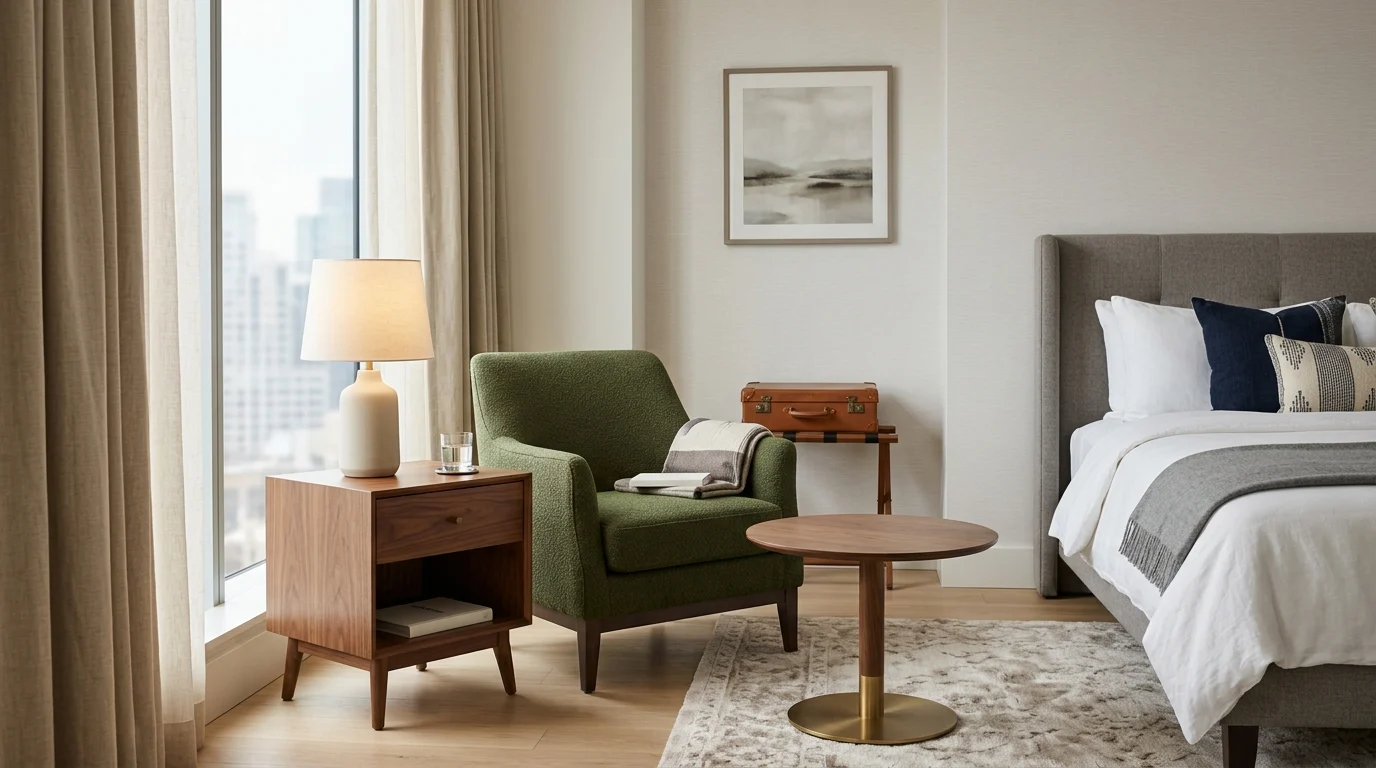
Why Mold Prevention Matters for Island Hotel Furniture
Developing luxury hospitality properties in tropical island environments introduces severe environmental stresses to interior fit-outs. Unlike urban business hotels operating in tightly regulated climates, island resorts face constant exposure to high relative humidity (RH), saline aerosols, and extreme temperature fluctuations. Left unaddressed during the procurement phase, these environmental factors frequently lead to severe material failures, significantly impacting guest experience and forcing premature capital expenditure cycles.
Humidity, Salt Air, and Seasonal Closure Risks
The fundamental challenge for island properties is the aggressive nature of coastal atmospheric conditions. Coastal regions frequently experience ambient relative humidity exceeding 85% for prolonged periods. When combined with salt-laden air, the environment becomes highly corrosive and hygroscopic. Salt particles deposited on surfaces actively attract and retain atmospheric moisture, creating micro-environments where moisture levels remain continuously elevated.
Seasonal closures compound these risks significantly. Many island resorts shut down operations during monsoon or hurricane seasons to reduce overhead. During these periods, central HVAC systems are often deactivated or run at minimal setpoints. Without continuous dehumidification and proper building envelope management, indoor RH can rapidly spike above 90%, creating an incubation chamber for biological growth and accelerating the physical deformation of hygroscopic materials.
Common Damage: Mold, Swelling, Warping, and Veneer Lifting
When interior elements are not engineered for high-humidity conditions, the resulting damage follows a predictable and destructive progression. Mold spores, which remain dormant in dry conditions, rapidly germinate when surface humidity exceeds 70% for more than 48 hours. Beyond biological degradation, the physical absorption of moisture causes drastic dimensional changes. Standard wood composites swell, with standard Medium Density Fiberboard (MDF) expanding significantly in thickness when exposed to severe moisture. This expansion creates immense shear stress on surface finishes, leading to severe warping, structural joint failure, and the widespread delamination or lifting of wood veneers.
Key Terms Project Teams Should Define Early
To mitigate these risks, procurement teams must define specific technical parameters long before issuing Requests for Proposals (RFPs). The most critical metric is the Equilibrium Moisture Content (EMC). For standard indoor environments, wood is typically kiln-dried to an EMC of 6% to 8%. However, for tropical island resorts, specifying an EMC target of 12% to 14% is mandatory to prevent massive expansion upon delivery. Additionally, project specifications must clearly define requirements for Moisture Resistant (MR) board ratings and specify modern Marine-grade classifications (such as BS 1088 or EN 314 Class 3) for exterior-adjacent elements to ensure all bidding manufacturers baseline their pricing on appropriate raw materials.
Best Materials and Specifications for Mold Resistance
Solid Wood, Plywood, and Moisture-Resistant MDF Options
Solid wood selection must prioritize species with high natural oil content and tight grain structures, such as Teak, Mahogany, or Iroko, which inherently resist moisture penetration. Conversely, porous species like Ash or open-grain Oak should be avoided unless heavily stabilized. However, because solid wood will always attempt to reach equilibrium with the surrounding humidity, large continuous panels should be minimized in favor of engineered substrates.
For paneling and casework, standard particleboard and MDF must be entirely eliminated from the specification. Marine-grade plywood utilizing phenolic resins that meet EN 314 Class 3 or BS 1088 standards offers the highest stability. Where budget constraints necessitate MDF, only Moisture-Resistant MDF (MR-MDF) tested to the EN 321 standard (commonly referred to as V313) should be utilized. V313 MR-MDF is engineered with specialized melamine-urea resins that restrict 24-hour water immersion swelling to strictly less than 8%, compared to the >15% swelling seen in standard boards.
Finishes, Sealers, Edge Treatments, and Adhesives
Surface finishes and edge banding act as the final barrier against vapor transmission. Open-pore finishes or standard nitrocellulose (NC) lacquers fail rapidly in coastal environments. Specifications should mandate closed-pore Polyurethane (PU) or advanced acrylic finishes, applied with a minimum of three topcoats to achieve a low Moisture Vapor Transmission Rate (MVTR). Even more critical is the edge banding adhesive. Traditional Ethylene Vinyl Acetate (EVA) hot-melt glues are highly susceptible to moisture and ambient heat. High-humidity specifications must mandate Polyurethane Reactive (PUR) adhesives. PUR undergoes a chemical cross-linking process, creating an irreversible waterproof bond that withstands extreme temperatures and completely seals panel edges from vapor intrusion.
Material Comparison Criteria for Hotel Projects
Specifying commercial furniture for tropical resorts requires a strict comparative analysis of core materials. Procurement teams must weigh the upfront cost index against the performance metrics of each substrate.
| Material Substrate | Adhesive Standard | Max Swelling (24h Immersion) | Relative Cost Index |
|---|---|---|---|
| Standard Commercial MDF | Urea-Formaldehyde (UF) | > 15.0% | 1.0x (Baseline) |
| Moisture-Resistant MDF (V313) | Melamine-Urea | < 8.0% | 1.3x – 1.5x |
| Standard Plywood | Melamine Glue | < 5.0% | 1.6x – 1.8x |
| Marine-Grade Plywood | Phenolic (EN 314-3 / BS 1088) | < 2.0% | 2.2x – 2.5x |
Engineering, Manufacturing, and Quality Control
Premium materials will still fail if the underlying engineering and manufacturing processes do not account for dimensional volatility. Manufacturers producing assets for island resorts must employ specialized construction methodologies and maintain rigorous internal climate controls throughout the fabrication lifecycle.
Construction Details That Reduce Deformation
Engineering for high humidity requires designing for movement rather than attempting to rigidly restrict it. Solid wood components must utilize floating panel construction, allowing the wood to expand and contract within a frame without causing structural fractures. Expansion gaps must be mathematically calculated based on the specific wood species’ tangential and radial shrinkage coefficients; a standard allowance of 3mm to 5mm per linear meter is typically required for tropical environments. Furthermore, architectural details must eliminate flat horizontal surfaces where condensation can pool, and all concealed surfaces—including the undersides of tables, the backs of headboards, and the bottoms of legs—must be fully sealed with the same protective coating as the visible faces.
Factory Controls for High-Humidity Environments
A manufacturer’s internal environmental control is just as critical as their craftsmanship. Facilities producing goods for tropical destinations must segregate these production lines. Raw timber must be kiln-dried and then acclimatized in holding rooms maintained at the target EMC established in the project specifications for a minimum of 72 hours prior to milling. If wood is milled at a 6% EMC and subsequently shipped to an 85% RH environment, the rapid expansion will shear joints and split veneers regardless of construction quality. Additionally, finishing booths must be strictly climate-controlled, as applying PU lacquers in high ambient humidity leads to “blushing”—a defect where trapped moisture creates a cloudy, compromised finish.
Inspection and Testing Before Shipment
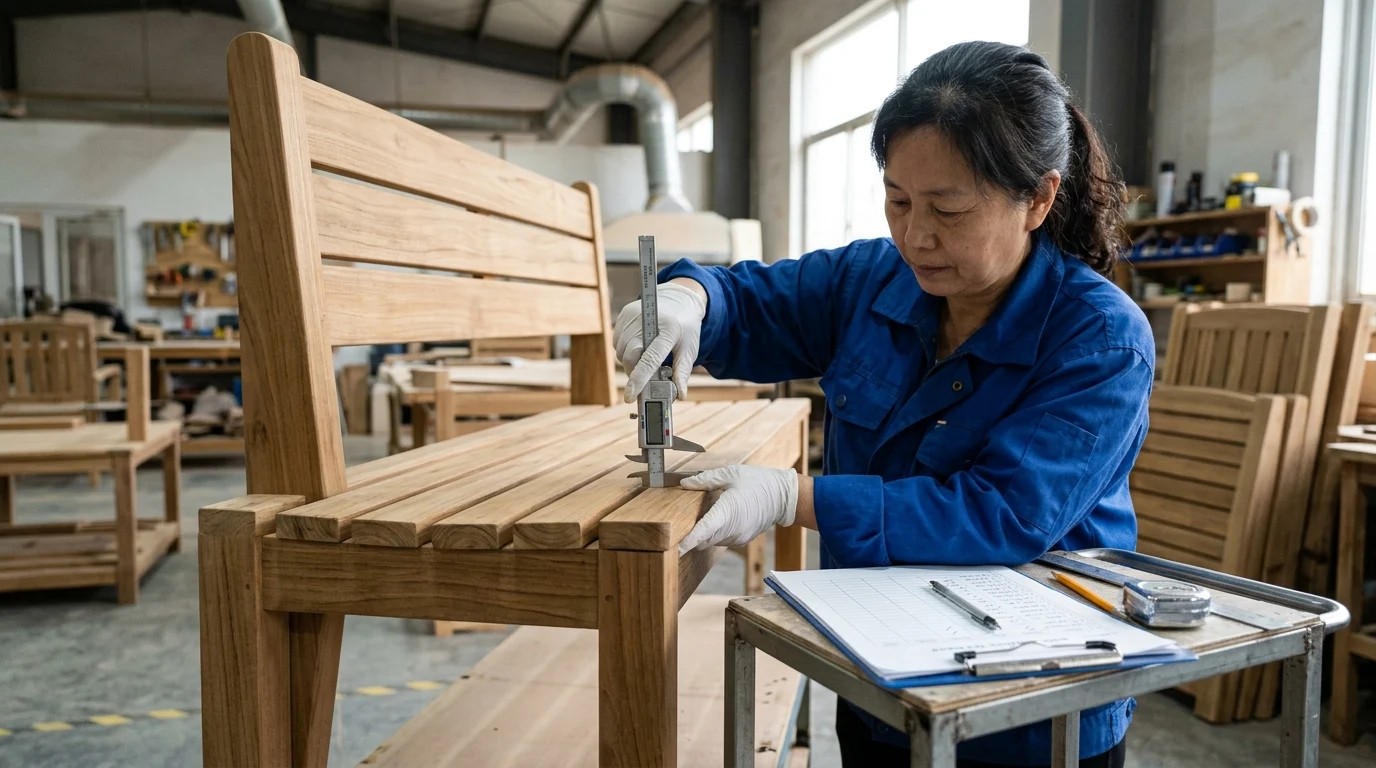
Rigorous Pre-Shipment Inspections (PSI) are the final safeguard before goods enter the volatile logistics chain. Inspectors must utilize calibrated pin-type moisture meters to verify that the internal moisture content of the finished goods precisely matches the specified project target. A strict compliance policy must be enforced for any deviations in moisture content.
Physical testing should also include the ASTM D3359 cross-hatch adhesion test to verify that finishes have bonded correctly to the substrate and are not compromised by microscopic moisture barriers. Acceptable Quality Limit (AQL) standards should be tightened for island projects, often shifting from an industry-standard AQL 2.5 for major defects to a more stringent AQL 1.5. This requires stricter sampling inspection per ISO 2859-1, ensuring a higher probability that edge banding and veneer seams meet quality standards before being subjected to maritime transport.
Logistics, Storage, Installation, and Maintenance
The period between factory dispatch and final room installation represents the highest point of vulnerability for hotel interior assets. Logistics chains involving ocean freight and uncontrolled construction sites routinely subject materials to extreme micro-climates, often introducing irreversible moisture damage before the property even opens.
Ocean Freight and Site Storage Controls
Ocean freight exposes cargo to severe diurnal temperature swings, resulting in “container rain”—a phenomenon where condensation forms on the interior ceiling of shipping containers and drips onto the cargo. To combat this, logistics protocols must mandate the use of high-capacity desiccants, typically requiring 2kg to 3kg of calcium chloride absorbents per 40-foot High Cube (40HQ) container. Once unloaded at the island site, goods must never be stored on bare concrete. Site storage protocols must dictate that all pallets remain a minimum of 100mm off the ground in a fully enclosed, dry facility. If the building envelope is not sealed, temporary industrial dehumidifiers must be deployed to maintain ambient RH below 65%.
Installation Steps That Prevent Moisture Damage
Installation sequences must be carefully orchestrated to prevent moisture entrapment. Before any piece is permanently fixed, the items must be unwrapped and allowed to acclimatize to the specific room’s environment for 48 to 72 hours. During installation, casework and headboards should never be mounted perfectly flush against exterior-facing masonry walls. Installers must utilize nylon or marine-grade plywood spacers to maintain a minimum 15mm to 20mm air gap between the wall and the back of the fixture. This continuous air channel prevents interstitial condensation from transferring from cold masonry into the wooden substrate.
Maintenance Practices for Humid Hotel Conditions
Long-term asset preservation relies heavily on the property’s operational maintenance protocols. While furniture specifications are critical, they rely on the building’s continuous dehumidification and occupancy-driven RH control as preconditions for success. Housekeeping and engineering departments must collaborate to manage indoor climates, particularly during low-occupancy periods. HVAC systems should be programmed with a dedicated dehumidification mode to ensure room RH never exceeds 60%, even when cooling is not actively required. Routine maintenance should also include the bi-annual inspection of concealed spaces and the application of commercial-grade fungicidal treatments to the unexposed backs of heavy casework to proactively neutralize dormant mold spores.
Supplier Selection and Repair Decisions
Procuring interior assets for aggressive climates requires a shift from standard purchasing paradigms to total lifecycle cost analysis. Selecting the right manufacturing partner and structuring robust commercial contracts are critical steps in mitigating financial risk and ensuring long-term operational viability.
Supplier Qualification Criteria for Humid Climates
Evaluating suppliers for island projects requires looking past aesthetic portfolios to audit their technical supply chain. Qualification criteria must verify a manufacturer’s access to premium moisture-resistant raw materials. Because MR-MDF and marine-grade plywood are not standard inventory for many commercial factories, suppliers must often meet high Minimum Order Quantities (MOQs) from board mills—frequently 500 to 1,000 sheets. Procurement teams must ensure the selected vendor has the financial scale to absorb these MOQs or the existing supply chain velocity to source these specific substrates without defaulting to inferior substitute materials.
Contract Clauses That Reduce Disputes
Standard commercial warranties are generally voided by the environmental extremes of tropical islands. Therefore, purchase orders must include customized contract clauses that explicitly cover high-humidity environments. Contracts should stipulate a minimum 24-month warranty against veneer delamination, edge banding separation, and internal substrate swelling, explicitly citing the intended destination’s climate data. Furthermore, the contract must mandate the use of specified waterproof adhesives and EMC targets, establishing these as binding technical parameters that, if violated and discovered during third-party lab testing, trigger mandatory replacement at the supplier’s expense.
Prevention, Remediation, and Replacement Cost Comparison
Ultimately, the decision to upgrade specifications must be viewed through the lens of remediation economics. The cost of replacing failed fixtures in a remote island location includes not only the manufacturing cost but also exorbitant LCL (Less than Container Load) shipping rates, import duties, specialized labor, and the severe opportunity cost of taking a revenue-generating room out of inventory. While exact figures vary by project, illustrative industry estimates highlight the stark contrast in lifecycle costs:
| Financial Phase | Standard Specification | High-Humidity Specification (MR + PUR) |
|---|---|---|
| Upfront Procurement Cost | Baseline ($0) | + 15% to 20% Premium |
| Year 2 Defect Rate | High (Illustrative: 15%–25%) | Low (Illustrative: < 2%) |
| Remediation/Replacement Cost | Up to 3x original item cost | Negligible |
| Room Downtime Impact | High (7-14 days per room) | Minimal (Standard maintenance) |
By mandating moisture-resistant substrates, thermally stable adhesives, and strict logistical climate controls, hotel developers transform interior furnishings from vulnerable, depreciating liabilities into durable assets capable of withstanding the rigors of tropical island hospitality.
Key Takeaways
- Specify an equilibrium moisture content of 12% to 14% for tropical island hotel furniture to reduce post-installation swelling and deformation.
- Maintain dehumidification during seasonal closures because indoor relative humidity can exceed 90% when HVAC systems are shut down or minimized.
- Treat mold prevention as a procurement requirement, since mold can germinate when surface humidity stays above 70% for more than 48 hours.
- Use moisture-resistant substrates and marine-grade plywood standards such as BS 1088 or EN 314 Class 3 for exterior-adjacent furniture elements.
- Account for salt-laden coastal air in furniture specifications because salt deposits attract moisture and create localized high-humidity conditions on surfaces.
Frequently Asked Questions
Why is island hotel furniture more vulnerable to mold?
Island hotels often face relative humidity above 85%, salt-laden air, and seasonal HVAC shutdowns. Salt particles retain moisture on surfaces, while high indoor RH allows mold spores to germinate and spread across wood, upholstery, and composite substrates.
At what humidity level does mold become a serious risk?
Mold can begin germinating when surface humidity exceeds 70% for more than 48 hours. During seasonal closures, indoor RH can rise above 90% if dehumidification is reduced, making furniture and interior fit-outs highly vulnerable.
What wood moisture content should be specified for tropical resorts?
For tropical island hotel projects, furniture specifications should target an equilibrium moisture content of about 12% to 14%. Standard 6% to 8% indoor kiln-dried wood may expand significantly after delivery to a high-humidity environment.
Which materials are better for high-humidity hotel furniture?
Moisture-resistant boards, suitable solid wood species, and marine-grade plywood are safer choices than standard MDF. Exterior-adjacent or highly exposed elements should reference marine-grade standards such as BS 1088 or EN 314 Class 3.
Why does veneer lift or furniture warp in coastal hotels?
Wood composites absorb moisture, swell, and create stress beneath surface finishes. This can cause veneer lifting, warping, joint failure, and delamination, especially when substrates, adhesives, and finishes are not specified for high-humidity conditions.
Post time: Sep-21-2026