
 joyce@taisenfurniture.com
 0086 15356090777


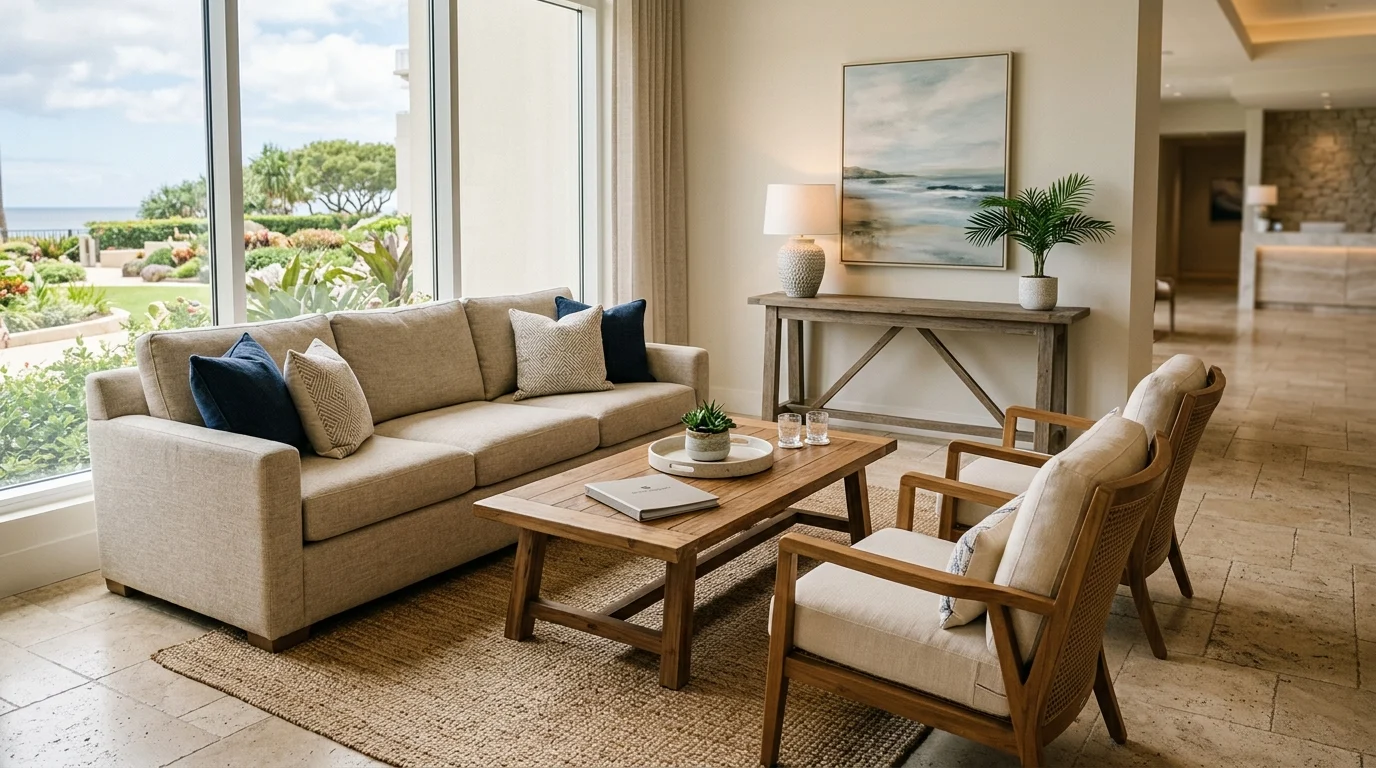
Furniture Selection Priorities for Wyndham Resort Hotels
Procuring FF&E (Furniture, Fixtures, and Equipment) for Wyndham resort properties requires a strategic balance between aesthetic appeal, operational durability, and strict adherence to brand standards. With the global hospitality market demanding elevated guest experiences, resort procurement teams must navigate complex design narratives specific to sub-brands like Wyndham Grand or Wyndham Alltra.
Unlike standard transit or urban hotels, resort environments face unique operational pressures. Guests typically exhibit longer dwell times, utilizing room assets more frequently and intensively. Consequently, the selection process must prioritize commercial-grade engineering without compromising the localized, immersive design aesthetic expected of a premium vacation destination.
Brand Positioning and Guest Expectations
Wyndham’s resort portfolio spans multiple tiers, from upper-upscale luxury to vibrant family-centric all-inclusive properties. Guest expectations in these environments dictate a higher standard of comfort and spatial utilization compared to standard roadside or corporate properties. Procurement strategies must account for extended guest dwell times, necessitating ergonomic seating and expansive casegoods.
The standard FF&E lifecycle in these high-traffic resort environments typically ranges from 7 to 10 years. This relatively long lifecycle requires an upfront investment in high-yield assets to prevent premature visual and structural degradation. Furniture must align with the brand’s specific narrative—whether that involves the sophisticated, localized luxury of a Wyndham Grand or the durable, family-friendly utility required by a Wyndham Alltra.
Key Furniture Categories for Resort Properties
Resort properties demand specialized categories beyond standard guestroom casegoods. Essential categories include oversized lounge seating, robust dining sets, and high-performance outdoor cabana fixtures. Given the diverse demographic of resort guests, structural integrity is paramount; for instance, commercial lounge seating must routinely meet or exceed dynamic load testing of 400 pounds per seat to ensure long-term safety and viability.
Furthermore, versatile storage solutions in guestrooms must accommodate extended-stay luggage and recreational gear. This often requires specifying minimum wardrobe widths of 48 inches and integrating heavy-duty drawer glides rated for at least 100 pounds of dynamic load. By categorizing furniture needs based on specific resort activities, procurement teams can allocate budget more effectively toward high-impact, high-wear items.
Furniture Specifications for Resort Environments
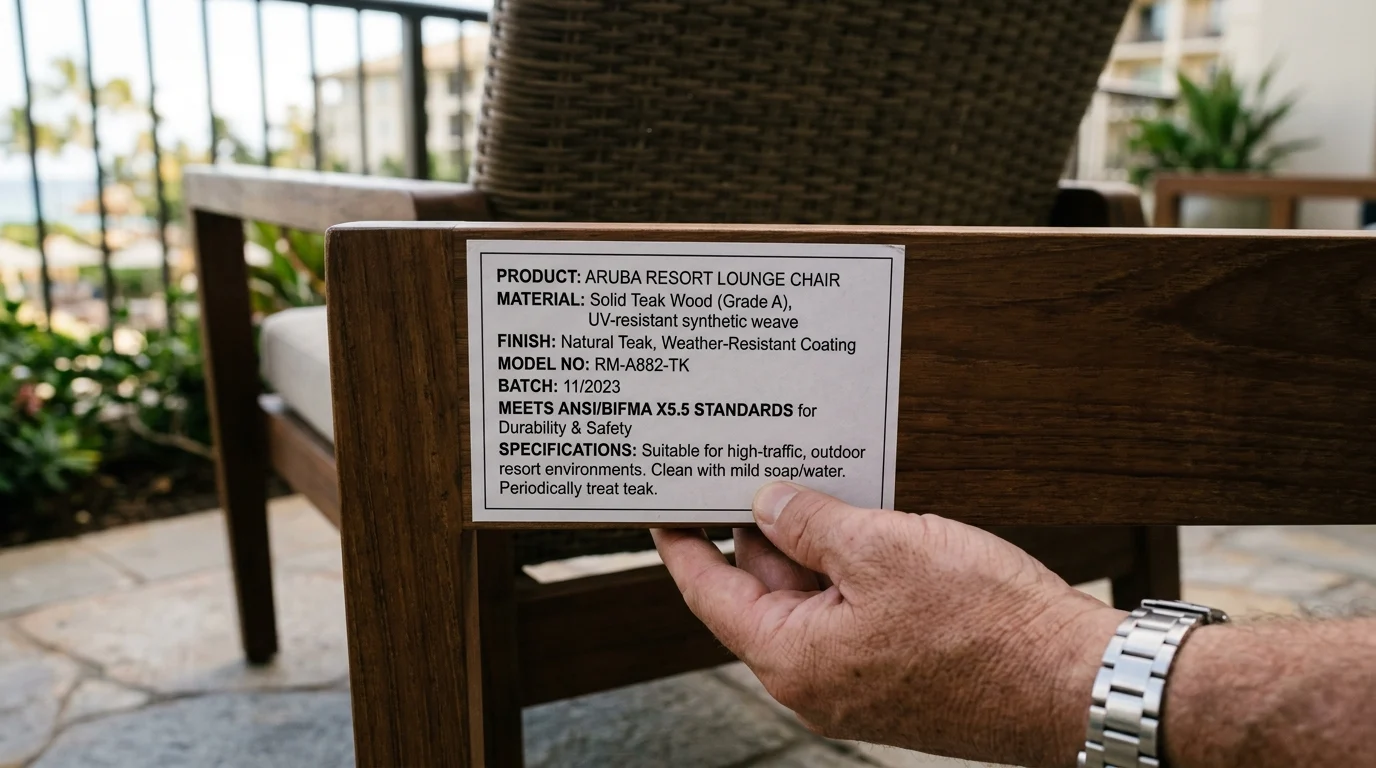
The transition from conceptual design to technical specification is critical in resort environments. Fixtures in these locations are routinely subjected to harsh microclimates, high ambient humidity, direct sunlight, and intensive daily use. Consequently, aesthetic preferences must be underpinned by rigorous material engineering.
Durability, Materials, and Finishes
Material selection dictates both the aesthetic longevity and the maintenance schedule of the property. High-traffic upholstery must achieve a minimum of 50,000 Wyzenbeek double rubs to withstand the rigors of resort occupancy, with lobby and dining seating often pushed to 100,000 double rubs.
Substrates in tropical or coastal resorts must utilize marine-grade plywood or moisture-resistant MDF (Medium-Density Fiberboard) to prevent warping and delamination in humid environments. Additionally, casegood surfaces require high-pressure laminates (HPL) or thermally fused laminates (TFL) with a minimum thickness of 1.2mm for superior scratch and impact resistance against luggage and daily wear.
Indoor, Outdoor, Poolside, Spa, and Restaurant Requirements
Environmental zoning within a resort dictates specific material engineering. Poolside and outdoor fixtures require powder-coated, rust-proof extruded aluminum frames with a minimum wall thickness of 1.5mm to withstand salt air and continuous chlorine exposure. Inferior metals or thin-walled frames will rapidly corrode, creating safety hazards and driving up replacement costs.
Outdoor fabrics must be solution-dyed acrylics, engineered to withstand at least 2,000 hours of direct UV exposure without fading or structural degradation. Spa environments demand non-porous, antimicrobial surfaces capable of resisting constant high humidity (often exceeding 80% relative humidity) and frequent chemical sanitization without degrading the finish.
Comparison of Wood, Laminate, Metal, and Upholstery Options
Formulating a matrix of material performance helps procurement managers evaluate lifecycle value against initial capital expenditure. The following table outlines the comparative performance of standard resort furniture materials:
| Material | Primary Application | Lifecycle Expectancy | Cost Index | Key Performance Metric |
|---|---|---|---|---|
| Wood Veneer | Guestroom Casegoods | 7-10 Years | $$$ | Requires UV-cured topcoat for 40% higher scratch resistance |
| HPL / Laminate | High-Traffic Surfaces | 10-15 Years | $$ | Exceeds 400 NEMA wear resistance cycles |
| Powder-Coated Metal | Outdoor / Poolside | 10+ Years | $$$ | Withstands 3,000+ hours salt spray testing |
| Solution-Dyed Acrylic | Outdoor Upholstery | 5-7 Years | $$ | 2,000+ hours UV colorfastness without degradation |
Brand Compliance, Design, and Budget Planning
Successful execution of a Wyndham resort project relies on harmonizing the brand’s stringent Property Improvement Plan (PIP) mandates with localized design narratives and rigid capital expenditure limits. A disciplined approach to budget planning ensures that design aspirations do not compromise operational feasibility.
Aligning with Wyndham Brand Standards
Aligning with Wyndham’s proprietary design schemes requires strict adherence to approved finish palettes, hardware specifications, and spatial layouts. Franchisees undergoing a PIP or executing a new build must submit comprehensive design packages to the brand’s architecture and construction division for formal approval.
Deviations from the standard FF&E matrix require formal variances, which are rarely granted unless the substitute meets an equivalent or superior commercial grade. Standard guestroom configurations often mandate specific ergonomic clearances, such as maintaining a minimum 36-inch radius around primary seating zones to ensure uncluttered navigation for guests.
Balancing Purchase Price, Lifecycle Cost, and Maintenance
Budgeting for resort FF&E involves calculating the Total Cost of Ownership (TCO) rather than merely the initial purchase price. For upper-upscale Wyndham resort properties, the FF&E cost per key typically ranges between $18,000 and $28,000, depending on the geographic location, resort tier, and freight logistics.
Opting for unverified, lower-cost fixtures often results in accelerated replacement cycles, driving up the TCO through continuous maintenance and room downtime. Preventive maintenance protocols and the specification of modular components—where individual damaged parts, such as a chair leg or a drawer front, can be replaced without discarding the entire unit—are critical strategies for controlling long-term operational expenditures.
Sustainability, Fire Safety, and Accessibility Requirements
Regulatory compliance forms the baseline of any procurement contract. Upholstered seating must strictly adhere to CAL 117-2013 flammability standards, and in certain high-occupancy jurisdictions, the more stringent TB 133 standards. Sustainability initiatives across the Wyndham portfolio increasingly prioritize FSC-certified woods and low-VOC (Volatile Organic Compound) finishes emitting less than 50 grams per liter.
Furthermore, ADA (Americans with Disabilities Act) compliance is non-negotiable. Accessible resort guestrooms must feature beds with a maximum height of 20 to 22 inches from the floor to the top of the mattress. Work desks and dining tables must provide a minimum knee clearance of 27 inches vertically and 30 inches horizontally to accommodate mobility devices seamlessly.
Sourcing and Procurement Best Practices
The logistical complexities of outfitting a resort require a highly vetted supply chain capable of scaling production while maintaining exacting quality control standards. Inefficient procurement can lead to delayed openings, compromised quality, and severe budget overruns.
Qualifying Furniture Manufacturers and Suppliers
Qualifying manufacturing partners involves rigorous due diligence. Procurement teams must prioritize factories with ISO 9001 quality management certifications and verifiable experience in high-volume hospitality production. A standard qualification metric requires the manufacturer to demonstrate a dedicated production capacity exceeding 500 keys per month to ensure they can meet tight project schedules.
Financial stability, ethical labor practices, and the ability to source raw materials globally without significant disruption are equally critical criteria. Auditing the supplier’s sub-tier vendors—particularly those supplying foams, fabrics, and specialized hardware—prevents bottleneck delays during mass production.
Managing Mock-Ups, Samples, and Shop Drawings
The model room, or mock-up phase, is an indispensable risk mitigation tool. Typically scheduled 60 to 90 days prior to mass production, this phase involves reviewing physical prototypes of all custom casegoods and seating within a localized environment.
Stakeholders assess ergonomic comfort, dimensional accuracy against shop drawings, and finish consistency under actual hotel lighting. During this review, it is common to identify necessary adjustments, such as increasing foam density from 1.8 lbs/cu.ft. to 2.2 lbs/cu.ft. for enhanced seat resilience, before committing to a multi-million dollar production run.
Reducing Risk During Resort Renovations
Renovating an active resort introduces significant logistical risks, primarily concerning lead times and phased installations. Standard overseas FF&E lead times span 14 to 18 weeks, encompassing production, consolidation, and ocean freight. To mitigate delays caused by supply chain volatility, project managers must build a contingency buffer of at least 15% into the schedule.
Furthermore, procuring a 3% to 5% attic stock (spare inventory) of highly vulnerable items—such as dining chairs, luggage racks, and custom hardware—ensures immediate replacements are available. This proactive strategy prevents the need to place rooms out-of-order during peak revenue seasons due to minor furniture damage.
Final Decision Framework
Consolidating the technical specifications, compliance requirements, and logistical data culminates in a structured final decision framework. This ensures every piece of FF&E delivers maximum value to the property owner and an uncompromised experience to the Wyndham guest.
Furniture Selection Matrix for Brand Fit and Guest Experience
Utilizing a weighted selection matrix allows procurement teams to objectively evaluate competing bids. This matrix should balance brand compliance, guest ergonomics, and lifecycle durability against the proposed capital outlay, stripping emotional bias from the purchasing decision.
| Evaluation Criteria | Weight (%) | Minimum Acceptable Standard | Target Metric |
|---|---|---|---|
| Brand Compliance | 30% | Meets Wyndham PIP guidelines | Pre-approved by brand architecture team |
| Durability & Specs | 25% | Commercial grade, 50k double rubs | 100k+ double rubs, marine-grade substrates |
| Cost per Key | 20% | Within 10% of baseline budget | >5% under budget via value engineering |
| Lead Time | 15% | 16 weeks maximum | 12 weeks with guaranteed freight routing |
| Warranty | 10% | 3-year limited warranty | 5-year comprehensive commercial warranty |
By applying this matrix, stakeholders can easily identify vendors who offer the best intersection of quality, speed, and cost, rather than defaulting to the lowest initial bidder whose products may fail prematurely.
Building a Long-Term Resort Furniture Package
Building a cohesive, long-term package requires viewing the property not as a collection of individual rooms, but as a unified hospitality environment. The integration of robust warranties—mandating a minimum 5-year commercial guarantee on casegood construction and a 3-year guarantee on seating frames—protects the asset’s value.
By partnering with specialized manufacturers who understand the nuanced demands of resort hospitality, developers can secure high-quality furniture that elevates the Wyndham brand standard. Ultimately, a disciplined procurement framework minimizes operational friction, controls capital expenditure, and ensures the resort remains competitive and visually compelling throughout its operational lifecycle.
Key Takeaways
- Specify resort FF&E for a 7- to 10-year lifecycle by investing upfront in commercial-grade construction and durable finishes.
- Choose upholstery rated at a minimum of 50,000 Wyzenbeek double rubs, and increase to 100,000 double rubs for lobby and dining seating.
- Use marine-grade plywood or moisture-resistant MDF in humid or coastal resorts to reduce warping, swelling, and delamination.
- Protect guestroom casegoods with HPL or TFL surfaces at least 1.2mm thick to resist scratches, impacts, and luggage wear.
- Plan guestroom storage around resort behavior by specifying 48-inch wardrobes and drawer glides rated for at least 100 pounds.
- Match furniture choices to each Wyndham sub-brand’s positioning, from refined Wyndham Grand settings to durable family-focused Wyndham Alltra spaces.
Frequently Asked Questions
What should Wyndham resort hotels prioritize when selecting furniture?
Prioritize brand alignment, commercial-grade durability, guest comfort, and lifecycle value. Resort guests use furniture more intensively during longer stays, so FF&E must support both the design narrative and heavy daily wear.
How long should resort hotel FF&E typically last?
In high-traffic resort environments, the expected FF&E lifecycle is typically 7 to 10 years. Selecting durable materials and reinforced construction upfront helps prevent premature replacement.
What upholstery durability is recommended for resort seating?
High-traffic upholstery should meet at least 50,000 Wyzenbeek double rubs. Lobby, restaurant, and other intensive-use seating may require 100,000 double rubs for longer performance.
Which materials work best for coastal or humid resort locations?
Use marine-grade plywood or moisture-resistant MDF to reduce warping and delamination. Casegoods should also use HPL or TFL surfaces with at least 1.2mm thickness for scratch and impact resistance.
Why do resort guestrooms need larger storage solutions?
Resort guests often travel with extended-stay luggage, recreational gear, and family items. Wardrobes of at least 48 inches and drawer glides rated for 100 pounds help improve usability and durability.
Post time: Sep-10-2026