
 joyce@taisenfurniture.com
 0086 15356090777



Sustainability specification has become a non-negotiable clause in modern hotel FF&E procurement. Many hotel brands, interior designers, and procurement teams include FSC requirements within tender documents, but confusion between FSC controlled wood and FSC certified wood regularly leads to non-compliant deliveries, rejected samples, failed third-party audits, and unexpected delays in hotel renovation or new-build projects.
A common misunderstanding is treating FSC controlled wood as equivalent to FSC certified wood. This mistake creates a critical specification gap: a supplier may deliver furniture made with FSC controlled wood, label the product FSC Mix, while the hotel’s tender requirement actually demands FSC 100% certified wood. Once the furniture is manufactured, rework or replacement is costly for both sides. For FF&E specifiers, it is essential to clearly define the difference, acceptable use cases, label rules, chain of custody obligations, and project eligibility for LEED, BREEAM, and brand sustainability standards.
This guide breaks down the core definitions, compliance boundaries, labeling rules, procurement language, and risk points for hotel FF&E projects. It includes two authoritative comparison tables, practical tender wording examples, and a checklist for verifying supplier documentation before production and shipment.
What Is FSC Certified Wood?
FSC certified wood comes from forests independently audited against FSC forest management standards. Forest management units must meet strict environmental and social criteria, covering biodiversity protection, indigenous rights, worker safety, long-term yield planning, water and soil protection, and restricted use of harmful pesticides.
For hotel furniture, FSC certified wood enters the supply chain under a chain of custody (CoC) system. Every processor, veneer mill, plywood factory, and furniture manufacturer must hold valid FSC CoC certification. Material traceability is enforced from forest to finished guestroom furniture, lobby cabinetry, restaurant tabletops, and public area millwork.
FSC certified wood supports two label categories: FSC 100% and FSC Recycled.
- FSC 100%: All virgin wood fibre in the finished product originates from FSC-certified managed forests. This carries the highest sustainability value and is required by many luxury hotel brands and premium green building schemes.
- FSC Recycled: All wood content is post-consumer or pre-consumer recycled wood, verified through FSC chain of custody. Recycled wood is also fully certifiable and widely accepted for FF&E.
When a hotel specification states “FSC certified wood” without clarification, the strict interpretation is FSC 100% or FSC Recycled. It does not automatically include controlled wood.
What Is FSC Controlled Wood?
FSC controlled wood is not FSC certified wood. It is a risk-mitigated material category for non-certified forest sources, designed to exclude five unacceptable source categories: illegally harvested timber, timber harvested in violation of traditional and human rights, timber from forests where high conservation values are threatened, timber from genetically modified tree plantations, and timber from forests converted to plantations or non-forest land useForest Ste….
Controlled wood can only be blended with FSC certified or FSC recycled material to produce products carrying the FSC Mix label. Under FSC rules, controlled wood cannot be sold, marketed, or labeled on its own as FSC certified wood. It is a low-risk filter, not a proof of responsible forest management.
In practical hotel FF&E production, controlled wood is often used when certified timber species are limited, supply lead times are long, or budget constraints apply. It allows factories to maintain FSC Mix certification while sourcing a limited percentage of non-certified but low-risk wood fibre. Most common FSC Mix formulations cap controlled wood content at 30% of the total wood material in the finished productadria-balk….
Table 1: Core Comparison — FSC Certified Wood vs FSC Controlled Wood
| Item | FSC Certified Wood | FSC Controlled Wood |
|---|---|---|
| Forest Source | Independently audited FSC FM certified forest | Non-FSC certified forest, passed risk assessment |
| Core Standard | FSC Forest Management Standard | FSC Controlled Wood Standard (FSC-STD-40-005) |
| Allowed Label | FSC 100%, FSC Recycled | Only usable in FSC Mix products; cannot carry standalone FSC label |
| Scope of Assurance | Full social and environmental forest management | Excludes only five unacceptable high-risk sources; no requirement for full sustainable management |
| Traceability | Full chain of custody tracking for every batch | Supplier risk assessment, origin documentation, risk mitigation records |
| Typical Hotel FF&E Use | Luxury brand requirements, LEED v4 high-priority credits, ESG flagship projects | Mid-range sustainable projects, FSC Mix specifications, when certified timber supply is limited |
| Marketing Claim | Can state “made from FSC certified wood” | Cannot claim “FSC certified wood”; allowed claim: “contains FSC controlled wood within FSC Mix product” |
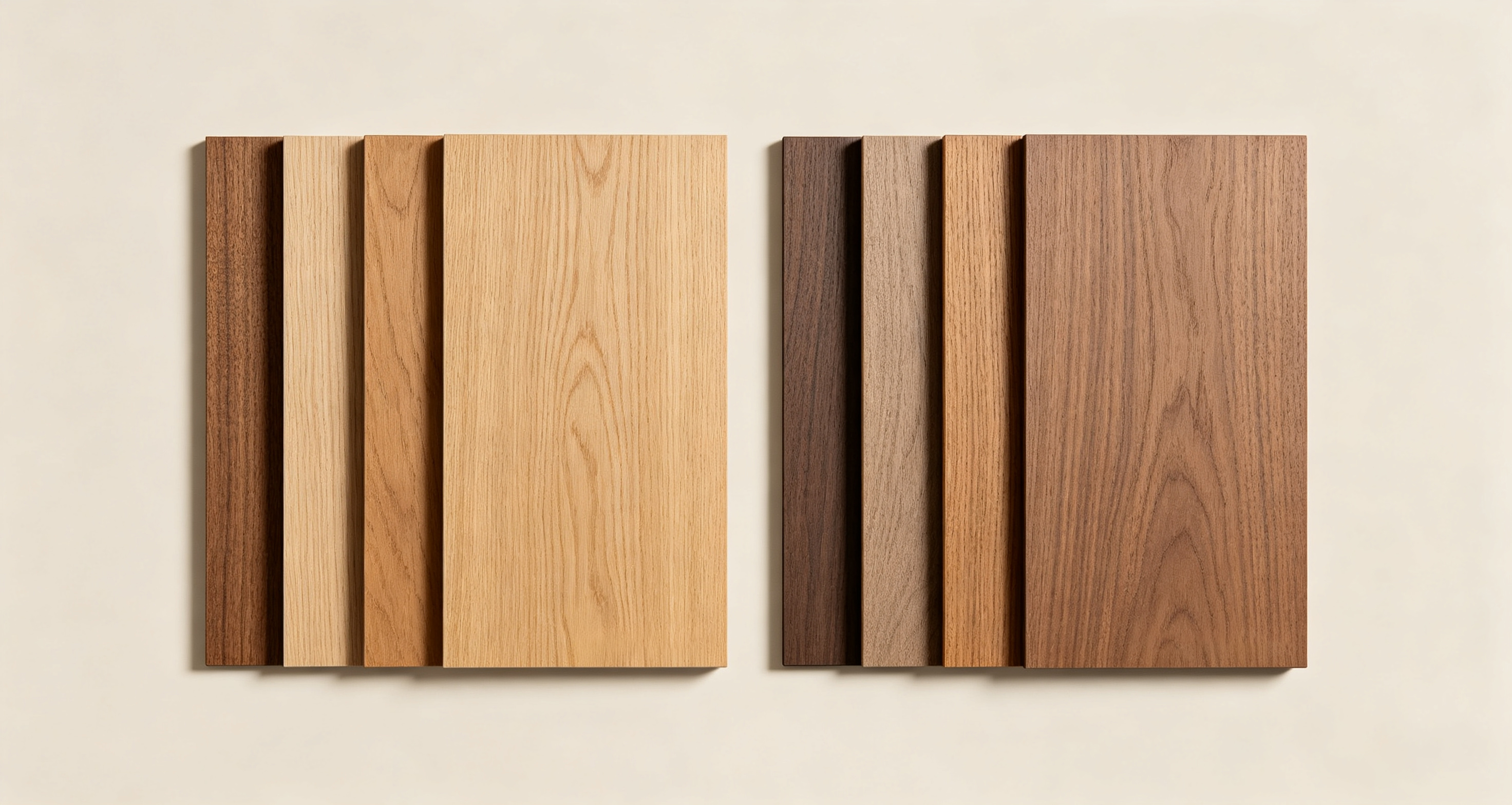
FSC Label Types Relevant to Hotel FF&E
Three labels regularly appear in hotel furniture quotations, and misreading them is the top cause of specification disputes.
- FSC 100%: 100% virgin wood fibre from FSC certified forests. This is the gold standard for brand sustainability reporting.
- FSC Recycled: 100% recycled wood fibre. It performs equally well for most green building credits and is preferred for circular economy storytelling.
- FSC Mix: A blend of FSC certified wood, FSC recycled wood, and limited percentage of FSC controlled wood. The controlled wood fraction must be risk-verified and documented.
Many suppliers quote “FSC wood” and deliver FSC Mix, assuming the hotel buyer accepts controlled wood within the mix. This is why the tender document must explicitly state whether FSC Mix is permitted or prohibited.
Eligibility for Green Building Certifications: LEED, BREEAM, and Hotel Brand ESG
Green building credit rules treat FSC certified wood and controlled wood differently. LEED v4 and v4.1 award Material Resources credits for FSC certified wood, while FSC Mix products that include controlled wood are accepted in many cases but may not satisfy the highest tier sustainable sourcing requirements of premium hotel groups.
Some global hotel brands publish internal FF&E standards that explicitly ban controlled wood from guestroom furniture, requiring only FSC 100% or FSC Recycled. Other mid-tier and select-service hotel chains allow FSC Mix as a baseline sustainable option, balancing cost and sustainability targets.
Specifiers must cross-reference three documents: the project green building checklist, the hotel brand FF&E manual, and the FSC scope of the supplier’s CoC certificate. A supplier with FSC CoC certification is still not automatically qualified if the certificate scope excludes the timber species, veneer, plywood, or furniture product category listed in the purchase order.
Specification Language: Tender and Purchase Order Best Practices
Vague wording such as “FSC wood furniture” creates ambiguity. Below are robust specification clauses for hotel FF&E documents.
Strict requirement (no controlled wood allowed):
All wood, veneer, plywood and engineered wood substrates in FF&E furniture shall be FSC 100% or FSC Recycled. FSC Mix and FSC controlled wood are not permitted for this project. Supplier shall provide valid FSC CoC certificate, batch transfer document and product verification report prior to shipment.
Flexible requirement (FSC Mix permitted):
FF&E wood components shall be FSC Mix. The maximum percentage of FSC controlled wood in the finished product shall not exceed 30%. Supplier shall submit controlled wood risk assessment records, source documentation and chain of custody transfer documentation for review before production.
If the buyer only accepts FSC certified wood but the supplier substitutes controlled wood under FSC Mix, the buyer has grounds to reject the goods without penalty. This is a frequent dispute point in large hotel renovation projects.
Supplier Documentation Audit Checklist
Before approving pre-production samples and mass production, procurement teams must verify more than just a certificate PDF. The table below lists the documents that should be collected and reviewed.
Table 2: Required Documentation Checklist
| Document | Required for FSC 100% / Recycled | Required for FSC Mix with Controlled Wood | Key Verification Point |
|---|---|---|---|
| Valid FSC Chain of Custody Certificate | Yes | Yes | Certificate scope covers product type, species, processing site |
| FSC Transfer Document for each batch | Yes | Yes | Matches PO, species, volume, label type |
| Controlled Wood Risk Assessment Report | No | Yes | Documents origin, risk rating and mitigation measures |
| Source supplier declaration for controlled wood | No | Yes | Confirms timber is not from the five unacceptable categories |
| Third-party audit report (if specified) | Optional | Optional | Brand or green building program requirement |
| Sample label mock-up | Yes | Yes | Label matches the approved FSC claim |
Common red flags: expired CoC certificates, certificates covering only paper products not wood furniture, transfer documents listing FSC Mix when the tender required FSC 100%, missing risk assessment files for controlled wood.
Common Misconceptions in Hotel FF&E Sourcing
Misconception 1: FSC controlled wood is a lower tier of FSC certification. Correction: Controlled wood is not a certification level. It is a risk screening mechanism for non-certified timber used only inside FSC Mix products. It cannot stand alone as a certified material.
Misconception 2: If a factory has FSC CoC certification, all wood they use is FSC certified. Correction: CoC certification allows the factory to handle FSC certified, FSC recycled and controlled wood under separate tracked stock pools. The factory may still produce non-FSC furniture from ordinary timber. The certificate only proves they have the system to track FSC material, not that every product is FSC.
Misconception 3: FSC Mix is always accepted by LEED and hotel brands. Correction: Many luxury brand FF&E manuals restrict controlled wood, even if LEED technically accepts FSC Mix. Brand internal standards often override baseline green building rules.
Misconception 4: Controlled wood means illegal timber has been approved. Correction: Exactly the opposite. Controlled wood rules are designed to rule out illegal, high conservation value threatening, human-rights violating sources. But it does not verify the full set of sustainable forest management obligations required for FSC certified forests.
Practical Guidance for FF&E Specifiers
For high-end resort, luxury branded hotel, and flagship ESG projects: Specify FSC 100% or FSC Recycled, explicitly exclude FSC Mix and controlled wood. This aligns with brand sustainability storytelling and the strictest audit requirements.
For mid-scale hotel, limited-service renovation, budget-conscious green projects: FSC Mix with controlled wood up to 30% is a practical compromise. The specification must lock in the percentage cap and require full risk documentation.
For all projects: Require the supplier to state the FSC label type on quotation, shop drawing, and packing list. Do not rely on verbal confirmation. Request sample documentation at the pre-sample stage, not only before shipment.
Design teams should also communicate with timber suppliers early. Some hardwood species have limited FSC-certified supply, with longer lead times and higher pricing. If the design calls for a rare veneer with low certified availability, the project team can decide whether to adjust the material or formally approve FSC Mix.
Final Summary
FSC certified wood and FSC controlled wood serve different purposes within the FSC system. FSC certified wood comes from independently audited responsibly managed forests, with full traceability and social-environmental forest management compliance. FSC controlled wood is a risk-filtered non-certified material that can only be blended into FSC Mix products and cannot be marketed as FSC certified wood.
For hotel FF&E procurement, the core solution is precise written specification. Ambiguous “FSC wood” wording creates costly substitution risks. Clearly define whether FSC 100%, FSC Recycled, or FSC Mix is permitted, set controlled wood percentage limits where applicable, and enforce a documentation review process before production. This workflow protects the hotel project from audit failures, material substitution, and costly rework, while keeping the sustainability specification aligned with brand promises and green building requirements.
FAQ
Q: Can furniture made purely from FSC controlled wood carry the FSC logo?
A: No. Controlled wood alone cannot use FSC labeling. It may only be blended into FSC Mix products alongside FSC certified or recycled wood.
Q: What is the maximum allowed proportion of controlled wood in FSC Mix?
A: Standard FSC Mix rules limit controlled wood to 30% of total wood fibre content in the product.
Q: Does LEED accept FSC Mix furniture with controlled wood?
A: LEED generally accepts FSC Mix, but individual hotel brand FF&E standards may prohibit controlled wood regardless of LEED rules.
Q: If a supplier holds FSC CoC, can I assume all their furniture is FSC certified?
A: No. CoC certification means the factory can track FSC material; they may also produce non-FSC furniture. Always check the transfer document and product claim.
Q: Should I write FSC controlled wood into my tender if I do not intend to accept FSC Mix?
A: No. If your requirement is FSC certified wood, add an explicit clause rejecting FSC Mix and controlled wood.
Post time: Nov-20-2026