
 joyce@taisenfurniture.com
 0086 15356090777


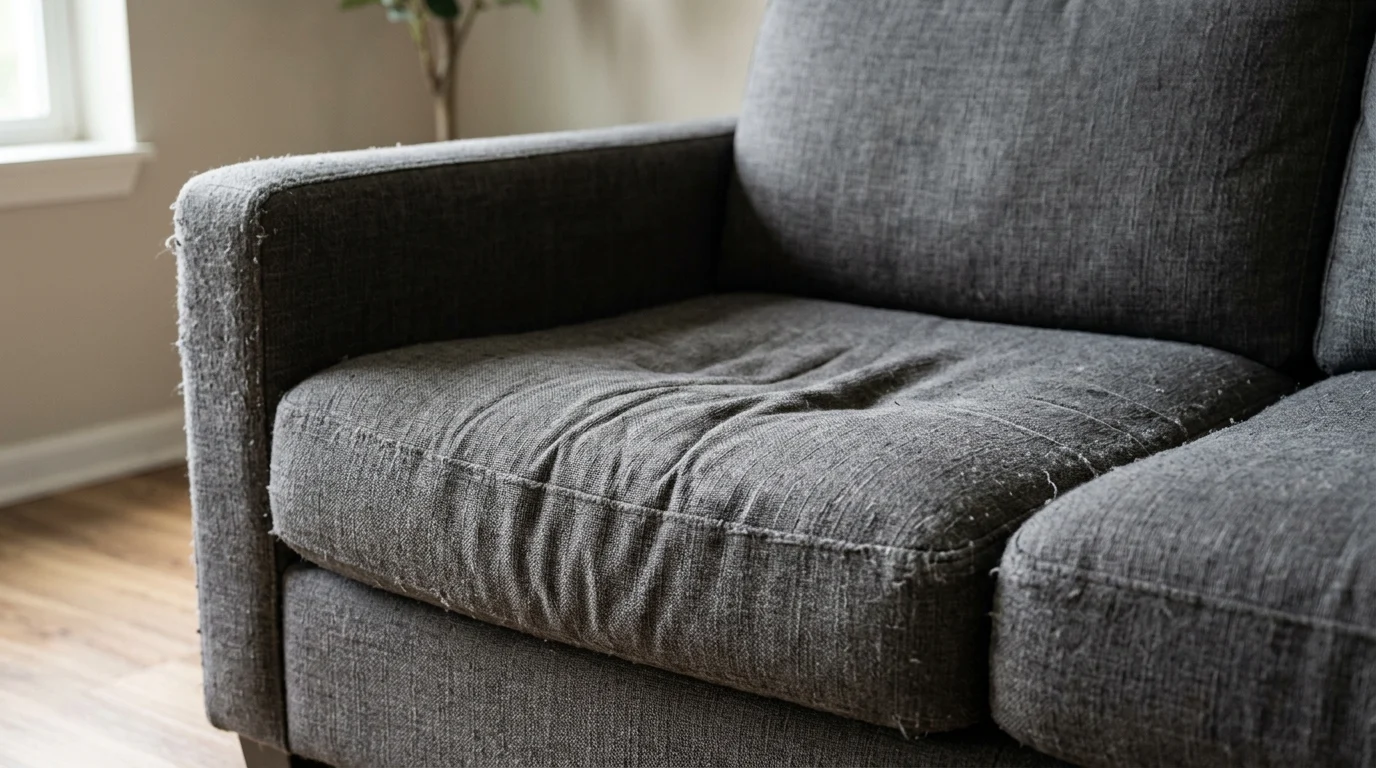
Why Foam and Fabric Defects Cause Furniture Failure
Understanding the mechanics behind Foam and Fabric Defects: Why Sofas and Chairs Quickly Sag and Get Worn‑Out requires examining the physical properties of upholstery materials. When manufacturers compromise on polyurethane specifications or textile integrity, the resulting defects directly compromise the lifecycle of the furniture.
Common foam and fabric defects
The most frequent catalyst for premature sagging is insufficient polyurethane foam density. According to testing standards outlined by ASTM International (specifically ASTM D3574 for flexible cellular materials), high-resiliency residential seating foam should maintain a density of at least 1.8 to 2.0 lbs/ft³. Defective or low-grade foams frequently fall below 1.5 lbs/ft³ and possess thin cell walls that permanently rupture under sustained compression.
Fabric defects typically manifest as poor abrasion resistance and low seam slippage thresholds. Textiles that fail to withstand standard Wyzenbeek or Martindale rub tests degrade rapidly, while loose synthetic weaves allow yarns to separate when subjected to tension.
| Material Component | Standard Quality Metric | Defect / Failure Indicator |
|---|---|---|
| PU Foam Density | > 1.8 lbs/ft³ | < 1.5 lbs/ft³ (rapid cell collapse) |
| Fabric Abrasion | > 15,000 double rubs | < 10,000 double rubs (early fraying) |
| Foam IFD | < 20% loss over 5 years | > 30% loss in first year (severe sagging) |
How construction and user load affect durability
Material longevity is inextricably linked to furniture construction and dynamic user load. When a sofa’s suspension system—such as sinuous springs or elastomeric webbing—lacks adequate tension, the upholstery foam is forced to absorb the entirety of the structural load. This improper weight distribution accelerates dynamic fatigue. Furthermore, concentrated user load in localized areas exacerbates the mechanical breakdown of both the foam core and the fabric envelope, particularly if the textile lacks sufficient structural backing to recover its original shape.
Early signs of material failure
Quality control inspectors and buyers can identify impending furniture failure through several quantifiable early indicators:
- Puddling: The fabric begins to stretch, wrinkle, and pool on the seat cushion, indicating a simultaneous loss of textile recovery and underlying foam volume.
- Pilling: Short, broken fibers migrate to the surface of the fabric, signaling that low-quality yarn twists are breaking under standard friction.
- IFD Degradation: A sudden drop in Indentation Force Deflection (IFD) causes the cushion to “bottom out,” allowing users to feel the rigid wooden frame or springs beneath the seat.
Identifying these early signs allows importers to isolate manufacturing defects and update technical specifications before large-scale shipments reach the consumer market.
Foam Specifications That Predict Sofa and Chair Durability

Specifying the correct foam is the single most critical factor in preventing premature upholstery failure. While external textiles dictate visual wear, the internal polyurethane core determines the structural lifespan of the seating. Buyers and manufacturers must navigate complex technical specifications to predict how a cushion will perform over a five- to ten-year lifecycle.
It is important to note that while standardized lab metrics are excellent predictive indicators, they are not absolute guarantees of real-world lifespan. Misinterpreting these specifications often leads to seating that feels comfortable in a showroom but collapses within months of real-world application.
Foam density, firmness, and resilience
The durability of polyurethane foam is fundamentally anchored in its density, measured in pounds per cubic foot (lbs/ft³). Density dictates the amount of actual chemical material present in the foam versus the amount of air; higher density means more structural material to resist cellular fatigue. For standard residential seating, a minimum density of 1.8 lbs/ft³ is generally recommended to prevent rapid sagging, while commercial or premium applications demand High Resiliency (HR) foams with densities of 2.5 lbs/ft³ or greater.
Firmness, conversely, is measured by Indentation Force Deflection (IFD)—the amount of force required to compress a 4-inch-thick foam sample by 25%. A typical IFD range for seat cushions falls between 25 and 35. It is a common misconception that high IFD (firmness) equates to high durability. A low-density foam can be manufactured with a high IFD, resulting in a cushion that feels stiff initially but will quickly break down and sag under continuous use.
Risks of low-density foam and poor curing
Utilizing low-density foam (below 1.5 lbs/ft³) in load-bearing seating is a primary cause of rapid furniture failure. These foams contain excessive air voids and insufficient polymer mass. Under repeated compression, the thin cell walls rupture, leading to a permanent loss of volume and the complete elimination of ergonomic support.
Beyond density, poor curing processes during foam manufacturing introduce chemical instabilities. If foam blocks are cut and sealed before the exothermic curing reaction is complete, the material can suffer from severe oxidation and outgassing. This not only degrades the structural integrity of the polymer chains, resulting in shrinkage rates that can sometimes exceed 5% in severe cases, but also compromises indoor air quality and accelerates the yellowing and crumbling of the cushion core.
How to compare polyurethane foam grades
To effectively evaluate foam longevity, procurement teams must cross-reference density and IFD against the intended application. The table below outlines standard polyurethane foam grades and their predictive performance metrics.
| Foam Grade | Density (lbs/ft³) | Typical IFD | Expected Lifespan | Best Application |
|---|---|---|---|---|
| Standard Polyurethane | 1.2 – 1.5 | 20 – 30 | 1 – 2 Years | Decorative backs, budget residential |
| High Density (HD) | 1.8 – 2.0 | 28 – 38 | 3 – 5 Years | Everyday residential sofas |
| High Resiliency (HR) | 2.5 – 3.0+ | 35 – 50 | 7 – 10+ Years | Commercial lobbies, premium seating |
By mandating High Resiliency grades for high-traffic environments, specifiers ensure that the cellular structure possesses the necessary elasticity to endure millions of compression cycles without suffering permanent height loss.
Fabric Defects That Make Furniture Wear Out Early
While foam failure dictates structural sagging, fabric degradation is responsible for the visible aging and aesthetic ruin of upholstered furniture. The textile cover serves as the primary barrier against friction, tension, and environmental contaminants. Evaluating fabric durability requires analyzing its mechanical resistance to surface wear and structural pulling. Textiles that lack the appropriate engineering for their intended environment will quickly exhibit fraying, balding, and thread separation.
Abrasion, pilling, and seam slippage
Abrasion resistance is the most heavily scrutinized metric in upholstery textiles, quantified through Wyzenbeek (double rubs) or Martindale (cycles) testing. While these scales are not interchangeable, both serve as predictive benchmarks for surface wear. Fabrics that fail prematurely often have low abrasion thresholds, causing the face fibers to break and shear away, leaving bald patches. Pilling—the entanglement of loose surface fibers into small balls—is another common defect, measured on a scale of Class 1 (severe pilling) to Class 5 (no pilling).
Seam slippage occurs when the tension applied to a sewn seam causes the underlying fabric yarns to pull apart without breaking the thread itself. Assessed using standards such as ASTM D4034, a durable upholstery fabric is generally expected to resist a standardized force—often around 25 pounds—before exhibiting seam slippage. Fabrics falling below this threshold will quickly unravel at the cushions and structural joints under normal sitting pressure.
Problems from loose weave and weak backing
The architectural construction of the textile heavily influences its vulnerability to wear. Loose weaves, characterized by a low pick count (the number of weft yarns per inch), lack the structural density to hold fibers in place. When subjected to dynamic friction, these loose yarns shift, creating gaps in the fabric and accelerating both seam slippage and localized tearing.
To compensate for loose weaves, manufacturers often apply synthetic backings, such as acrylic or latex. However, if the backing application is inconsistent or uses substandard chemical binders, it will crystallize and flake off over time. Once the weak backing deteriorates, the loose weave is left entirely unsupported, leading to rapid dimensional distortion and fabric puddling across the seating surface.
Fabric choices for residential and commercial use
Selecting the appropriate textile requires matching the fabric’s mechanical thresholds to the expected environmental stress. Residential fabrics prioritize tactile comfort and require lower abrasion resistance, whereas commercial environments demand heavily reinforced synthetics.
| Usage Grade | Wyzenbeek Rating (Double Rubs) | Martindale Rating (Cycles) | Ideal Environment |
|---|---|---|---|
| Light Duty | < 10,000 | < 15,000 | Decorative pillows, formal living rooms |
| Medium Duty | 15,000 – 30,000 | 20,000 – 40,000 | Everyday family rooms, private offices |
| Heavy Duty / Commercial | 50,000 – 100,000+ | 60,000 – 100,000+ | Hospitality, public transit, lobbies |
Performance fabrics utilizing solution-dyed acrylics or high-denier polyesters offer the best defense against premature wear in heavy-duty applications, combining high abrasion resistance with inherent structural stability.
How Quality Control Prevents Foam and Fabric Problems
Preventing the premature failure of sofas and chairs requires rigorous quality control (QC) protocols implemented long before the final assembly. Robust QC bridges the gap between theoretical material specifications and actual manufacturing execution. By enforcing strict auditing of incoming raw materials and subjecting prototypes to aggressive mechanical testing, manufacturers can identify and eliminate structural vulnerabilities that would otherwise result in costly warranty claims and dissatisfied end-users.
Supplier documents and test reports to review
The foundation of reliable upholstery manufacturing lies in validating supplier claims. Quality assurance teams must review certified test reports for every batch of foam and fabric entering the facility. For polyurethane foam, certifications such as CertiPUR-US ensure the material is free from ozone depleters and heavy metals, while also verifying density and IFD tolerances.
For textiles, incoming shipments must be accompanied by independent laboratory reports detailing ISO 12947 (Martindale abrasion) and ASTM D4034 (seam slippage) results. Furthermore, colorfastness and tensile strength must be verified per batch, as variations in the dying and weaving processes can compromise the fabric’s mechanical integrity.
Prototype testing for cyclic loading
Before full-scale production begins, prototypes must undergo destructive and non-destructive testing to simulate years of user wear. Standardized testing frameworks, such as the BIFMA X5.4 standard for lounge seating, are critical for uncovering design flaws.
A key prototype test, modeled after standards like BIFMA X5.4, often involves cyclic loading where a mechanical rig repeatedly drops a standardized weight (for example, 125 pounds) onto the seat cushion for tens of thousands of continuous cycles (frequently up to 100,000). This aggressive simulation tests the entire structural ecosystem—the suspension springs, the foam core’s compression set, and the fabric’s abrasion resistance—ensuring the assembly can withstand severe dynamic forces without exhibiting permanent sagging.
Production steps that reduce sagging and wear
During the active manufacturing phase, precise execution of assembly steps dictates the final durability of the product.
How Buyers Should Balance Cost and Durability
A framework for comparing material cost and lifespan
Evaluating furniture procurement requires shifting from initial unit pricing to a Total Cost of Ownership (TCO) model. Sourcing low-density polyurethane (PU) foam and low-abrasion textiles reduces manufacturing costs but exponentially increases warranty claims. To understand the core drivers behind foam and fabric defects: why sofas and chairs quickly sag and get worn-out, buyers must calculate the cost-per-year of the material’s expected lifecycle.
| Material Grade | Average Foam Density (lbs/cu ft) | Fabric Abrasion (Wyzenbeek) | Estimated Lifespan | Lifecycle Cost Efficiency |
|---|---|---|---|---|
| Economy | < 1.8 | < 15,000 rubs | 1–3 Years | Low (High replacement rate) |
| Standard | 1.8 – 2.0 | 15,000 – 30,000 rubs | 3–5 Years | Moderate |
| Premium / Commercial | 2.5+ (HR Foam) | 50,000+ rubs | 7–10+ Years | High (Lowest TCO) |
When upgraded foam or reinforced fabric is worth it
Upgraded materials become economically necessary in high-traffic commercial environments, hospitality sectors, and premium retail markets. For instance, commercial seating must typically comply with Business and Institutional Furniture Manufacturers Association (BIFMA) standards, which demand heavy-duty fabrics exceeding 50,000 double rubs and High-Resiliency (HR) foam that resists structural fatigue under constant compression. In these scenarios, paying an upfront premium of 15% to 30% for reinforced textiles and high-density foam prevents catastrophic margin erosion caused by Return Merchandise Authorizations (RMAs) and the brand damage associated with premature material failure.
Key takeaways for choosing durable furniture materials
To avoid the operational pitfalls of rapid furniture degradation, procurement professionals must move beyond subjective visual inspections and mandate strict material specifications in supplier agreements. Purchase orders should explicitly define the required Indentation Force Deflection (IFD), exact foam density metrics, and standardized textile abrasion resistance levels. By establishing these quantifiable parameters during the sourcing phase, buyers ensure structural integrity, align manufacturing outputs with consumer durability expectations, and permanently reduce the risk of structural sagging and fabric wear.
Key Takeaways
- Choose upholstery foam with proven resilience and low compression set to reduce the risk of cushions losing height after repeated use.
- Inspect fabric backing quality because delamination of latex or acrylic backing can cause stretching, warping, and premature surface distortion.
- Avoid seating with widely spaced springs or weak webbing, since poor suspension concentrates loads and accelerates localized foam collapse.
- Account for dynamic use, as dropping into a seat can generate forces far above a typical static design load of about 250 pounds per seat.
- Evaluate foam, fabric, and frame support together because premature sagging usually results from several material and construction weaknesses acting at once.
Frequently Asked Questions
Why do sofa cushions start sagging so quickly?
Fast sagging is often caused by low-quality polyurethane foam, poor curing, or weak internal cell structure. Repeated sitting compresses the foam until it develops a compression set, meaning it no longer returns fully to its original height.
What is compression set in upholstery foam?
Compression set measures how much height foam permanently loses after being compressed. In quality testing, noticeable loss near or above about 15% can indicate poor resilience and a higher risk of visible sagging.
Can fabric defects make a chair look worn out early?
Yes. Weak backing adhesion, uneven yarn twist, and poor textile construction can cause stretching, warping, abrasion, and surface wear. Even if the foam is acceptable, defective fabric can make seating look aged quickly.
How does the seat suspension affect cushion durability?
Widely spaced springs or low-tension webbing create concentrated pressure points. These localized loads force parts of the foam to absorb more stress, accelerating cell collapse and uneven sagging.
How much weight is a typical residential sofa seat designed to support?
Many residential sofa seats are engineered around a static load of roughly 250 pounds per seat, though limits vary by manufacturer, region, and testing standard. Dynamic impacts can create much higher forces.
Post time: Sep-20-2026