
 joyce@taisenfurniture.com
 0086 15356090777


Introduction
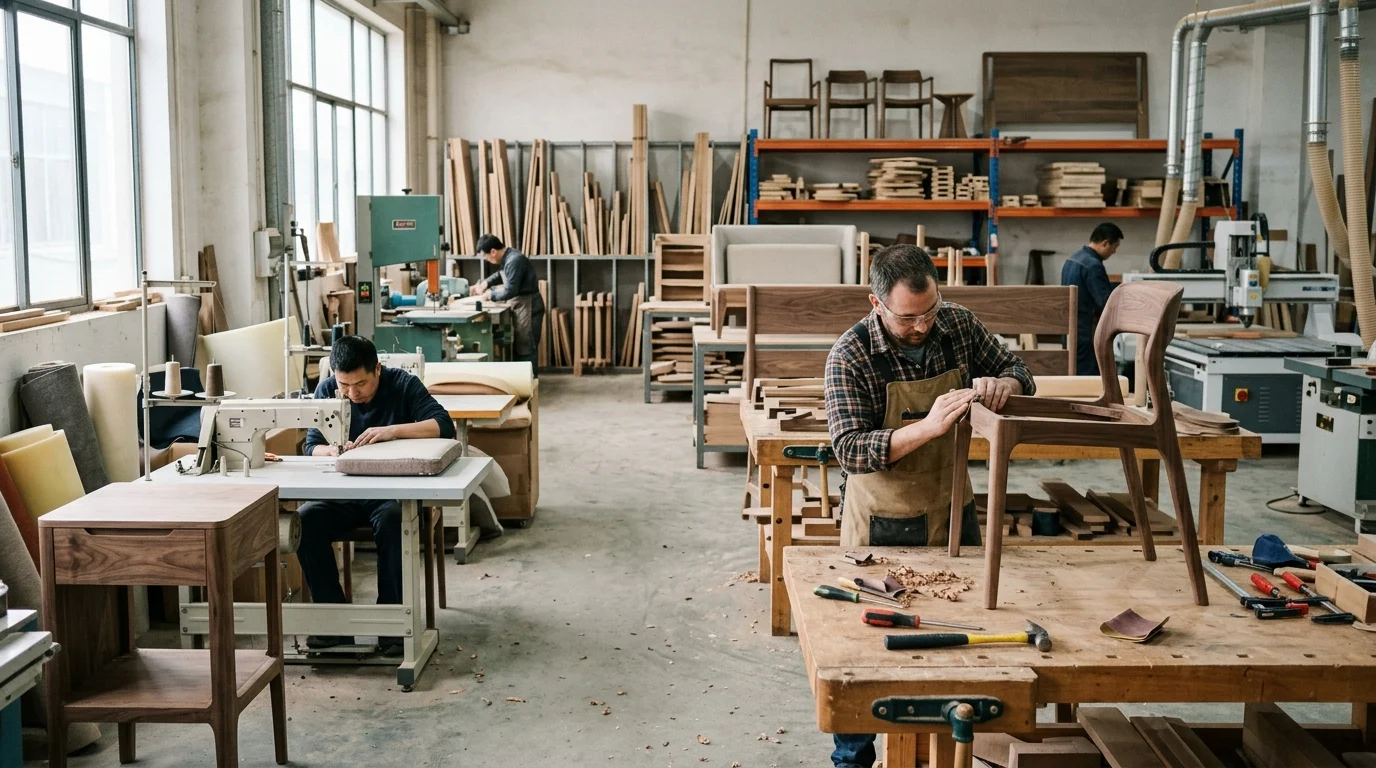
Choosing a manufacturing base for hotel furniture is less about unit price than about delivering consistent quality, compliance, and project coordination at scale. China continues to lead because its supplier networks, material integration capabilities, and production infrastructure are built for complex hospitality programs, from guestroom casegoods to upholstered seating and public-area pieces. This article explains the practical reasons buyers still prioritize Chinese manufacturers, including engineering depth, commercial-grade standards, lead-time control, and sourcing efficiency. It also sets out what these advantages mean for developers, designers, and procurement teams managing large hotel projects with tight timelines and brand requirements.
Why China Remains the Strategic Benchmark for Hotel Furniture
Global hospitality procurement relies heavily on centralized supply chains to meet rigorous design and operational standards. For decades, the Asian manufacturing sector has dominated the production of Furniture, Fixtures, and Equipment (FF&E), offering an unmatched combination of scale, infrastructure, and technical expertise. The industry has evolved from basic assembly to highly sophisticated, technology-driven production. Despite shifting global trade dynamics, tariff fluctuations, and the rise of alternative manufacturing hubs, the infrastructure supporting hotel furniture production in East Asia remains structurally superior for complex, large-scale projects requiring multi-material integration.
What defines hotel furniture manufacturing
The production of hospitality furniture diverges significantly from residential manufacturing due to stringent commercial requirements and lifecycle expectations. Contract-grade furniture must withstand extreme wear, requiring robust structural engineering, commercial-grade finishes, and strict compliance with global fire safety regulations such as CAL 117 or BS 5852. Upholstery fabrics utilized in high-traffic hotel environments typically demand minimum abrasion resistance ratings of 30,000 to 50,000 Wyzenbeek double rubs.
Hotel casegoods also require specialized material processing. Solid woods and veneers must be strictly kiln-dried to a precise moisture content of 8% to 10% to prevent warping or cracking when shipped to different global climates. These pieces necessitate heavy-duty hardware rated for tens of thousands of open-close cycles, alongside high-pressure laminate (HPL) or catalyzed polyurethane finishes engineered to resist scratching, moisture, and harsh chemical cleaners.
Why China leads in clustering, supplier depth, and project
execution
The competitive advantage of Chinese manufacturing is rooted in its massive industrial clustering, particularly within the Pearl River Delta. Guangdong province, encompassing industrial powerhouses like Foshan and Dongguan, operates as the world’s most integrated furniture manufacturing ecosystem. Foshan alone houses over 3,000 specialized furniture factories and a sprawling 3-million-square-meter material wholesale market.
This extreme concentration means raw materials—from specialized acoustic panels and custom metal extrusions to rare stone tops—can be sourced and delivered to assembly facilities in under 48 hours. This deep supplier network eliminates the logistical bottlenecks that plague emerging manufacturing regions. Combined with proximity to world-class deep-water ports like Yantian and Nansha, this ecosystem allows for rapid prototyping, seamless execution of multi-million-dollar FF&E contracts, and unparalleled efficiency in consolidating complex, multi-category shipments.
What Comparison Points Matter Most When Evaluating China

Evaluating manufacturing partners requires moving beyond base unit costs to analyze the total cost of ownership, logistical reliability, and the capacity for bespoke engineering. Procurement teams must weigh these variables—including tariffs, freight insurance, and raw material indices—against project timelines and brand standards to ensure viable execution.
How cost, customization, and quality control compare
When comparing global sourcing hubs, China consistently outperforms competitors in balancing cost-efficiency with high-level customization. While emerging markets in Southeast Asia offer competitive labor rates, they often lack the advanced 5-axis CNC machinery, automated finishing lines, and skilled engineering talent required for complex, bespoke hotel casegoods. Eastern European manufacturers provide excellent proximity to EU markets but struggle to match the volume capacity and aggressive pricing models of Asian facilities. The ability to integrate mixed materials—such as brass, marble, and tempered glass—into a single furniture piece without outsourcing to disparate regions remains a unique advantage of the Chinese supply chain.
| Evaluation Metric | China | Southeast Asia | Eastern Europe / Americas |
|---|---|---|---|
| Customization Capacity | Very High | Low to Medium | High |
| Cost Efficiency | High (Scale dependent) | Very High (Standardized items) | Low to Medium |
| Supply Chain Integration | Complete Ecosystem | Fragmented | Highly Developed |
| Tooling & Engineering Speed | 10–14 Days | 21–30 Days | 14–21 Days |
Which metrics best clarify lead times, MOQs, and materials
Quantifiable metrics are critical for establishing realistic procurement schedules and budget allocations. For custom hotel casegoods manufactured in China, standard Minimum Order Quantities (MOQs) typically range from 20 to 50 rooms. Boutique domestic manufacturers might accommodate smaller production runs, but often at a 40% to 60% price premium.
Standard production lead times in primary Chinese hubs average 35 to 45 days post-approval of shop drawings and finish samples, while initial mock-up room prototypes generally take 15 to 20 days to engineer and build. Ocean freight adds an additional 25 to 40 days depending on the destination port and current maritime traffic. By understanding these baseline metrics, project managers can accurately sequence construction milestones with FF&E delivery schedules, successfully mitigating the risk of costly onsite delays.
How Buyers Should Decide on Hotel Furniture Manufacturing
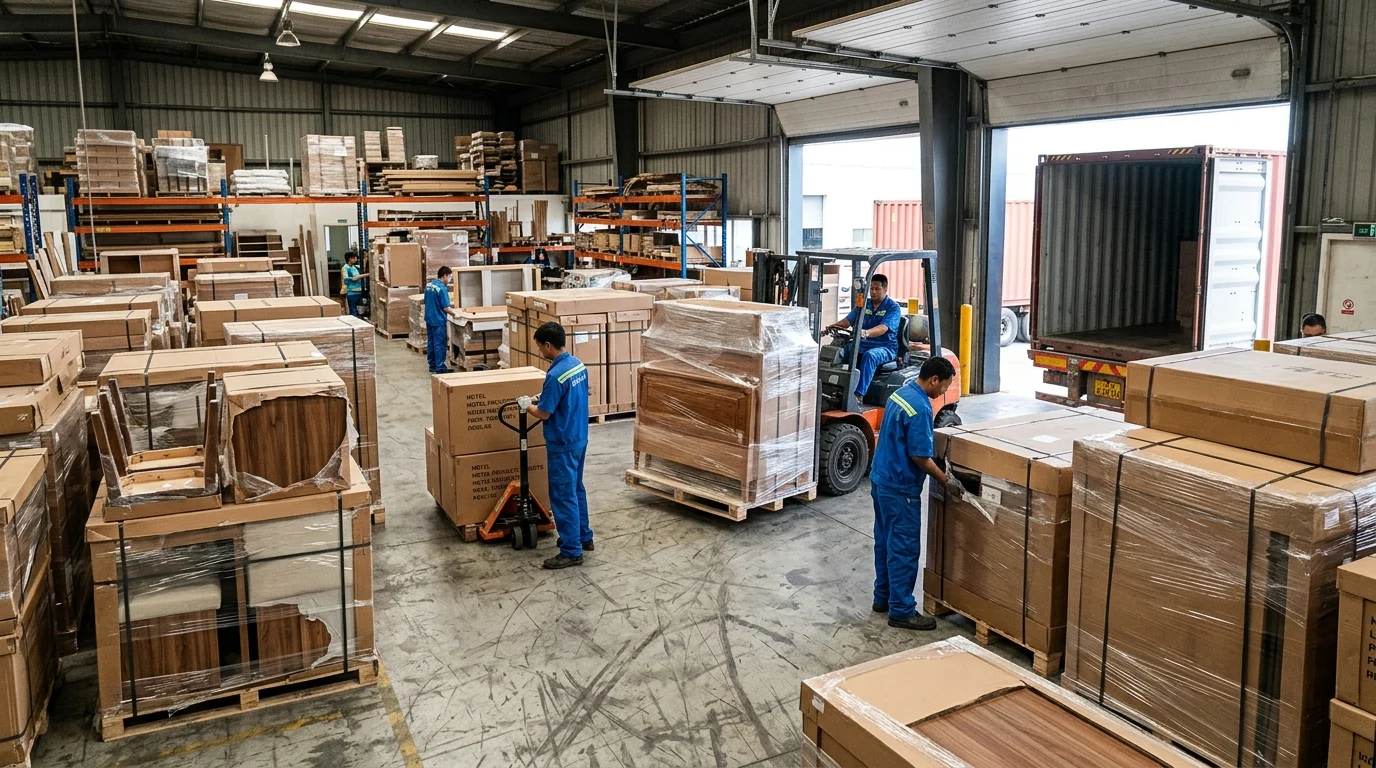
Selecting a manufacturing origin is a strategic decision that impacts the entire lifecycle and profitability of a hospitality asset. Buyers must implement rigorous vendor qualification frameworks, establish clear intellectual property protections, and align their sourcing strategy with the specific architectural and operational demands of the property.
What sourcing steps reduce risk
Mitigating risk in international procurement necessitates a structured, multi-tiered approach to quality assurance and supplier validation. The process must begin with comprehensive factory audits evaluating financial stability, machinery capabilities, and ISO 9001 compliance. Developing a fully finished mock-up room is a non-negotiable milestone, allowing stakeholders to review ergonomics, finish durability, and spatial proportions before authorizing mass production.
During the manufacturing phase, implementing an Acceptable Quality Limit (AQL) standard—typically setting thresholds at 2.5 for major defects and 4.0 for minor defects—ensures that large-scale FF&E rollouts maintain strict brand consistency. Third-party inspection teams should conduct During Production (DUPRO) checks and Final Random Inspections (FRI) prior to container loading to prevent defective units from entering the global supply chain.
How to determine whether China is the best fit
Determining the optimal manufacturing fit relies heavily on the scale, customization requirements, and renovation cycles of the hospitality project.
Key Takeaways
- The most important conclusions and rationale for Hotel Furniture Manufacturing
- Specs, compliance, and risk checks worth validating before you commit
- Practical next steps and caveats readers can apply immediately
Frequently Asked Questions
Why is China still the best choice for hotel furniture manufacturing?
China combines large factory clusters, fast material sourcing, strong customization, and efficient ports, making it ideal for complex hotel FF&E projects.
What makes hotel furniture different from residential furniture?
Hotel furniture must meet commercial durability and safety standards, using stronger hardware, wear-resistant finishes, and fire-compliant materials for heavy daily use.
What lead times are typical for custom hotel furniture from China?
After shop drawings and finish samples are approved, production usually takes about 35 to 45 days in major Chinese manufacturing hubs.
What MOQ should buyers expect for custom hotel casegoods?
Typical MOQs are around 20 to 50 rooms for custom hotel casegoods, depending on design complexity, materials, and factory capacity.
Can Taisen Furniture handle bespoke hotel furniture with mixed materials?
Yes, Taisen Furniture can support custom hotel projects that combine wood, metal, stone, glass, and upholstery for coordinated guestroom furniture packages.
Post time: May-13-2026