
 joyce@taisenfurniture.com
 0086 15356090777


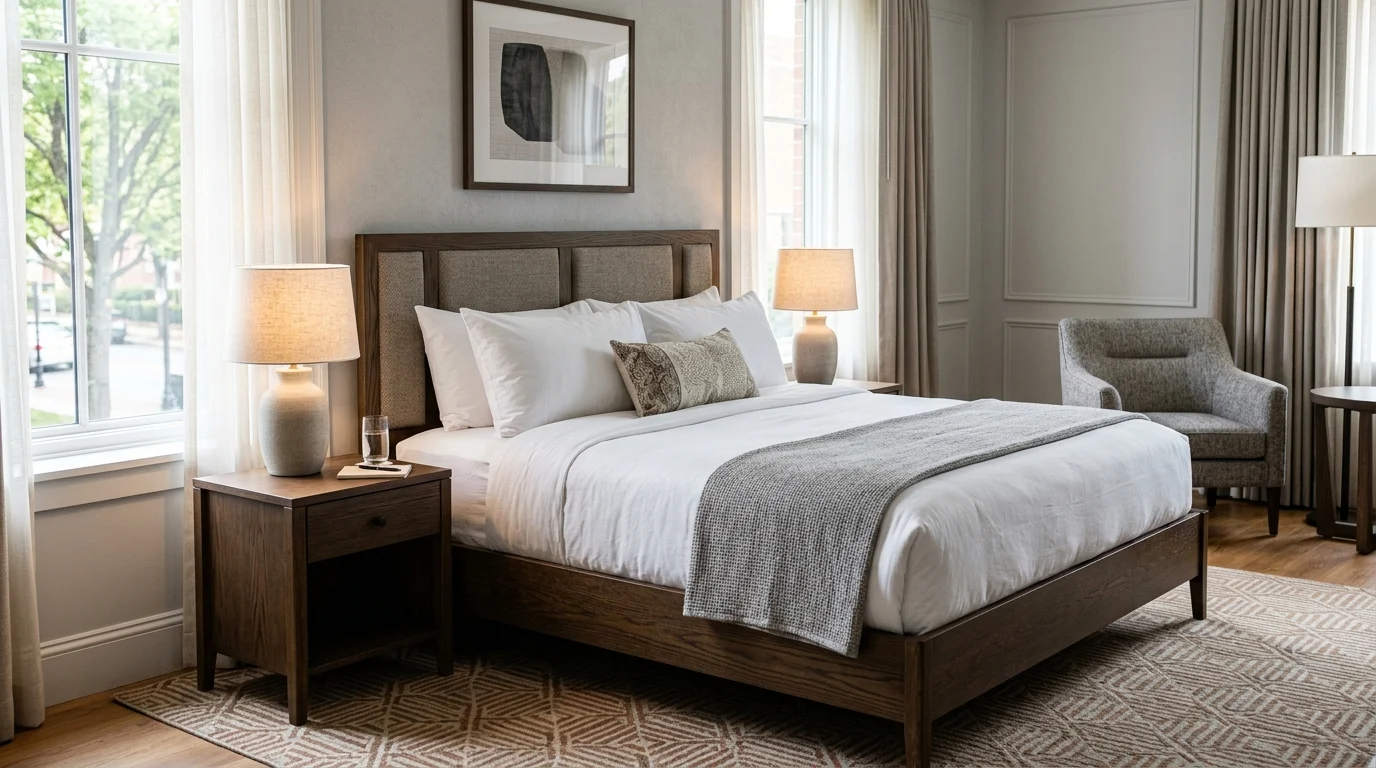
Introduction
Choosing a hotel furniture supplier for a large project affects far more than product selection: it influences budget control, brand consistency, construction sequencing, and opening readiness. For owners, developers, and procurement teams, the key is to assess whether a supplier can deliver at scale while meeting design intent, durability standards, and hospitality-specific operational demands. This introduction outlines the practical criteria that matter most, from manufacturing capability and customization to quality assurance, logistics, and project coordination. With those factors in view, the rest of the article will help you evaluate suppliers more confidently and reduce the risk of delays, cost overruns, and inconsistent guestroom or public-area results.
Why the Right Hotel Furniture Supplier Matters
Procuring Furniture, Fixtures, and Equipment (FF&E) for large-scale hospitality developments requires strategic alignment with a specialized hotel furniture supplier.
https://www.taisenfurniture.com/about-us/)
The sheer scale and complexity of these capital investments demand rigorous vetting, as the supplier acts as a critical node in the broader construction and pre-opening timeline.
Supplier Role and Scope
The supplier’s scope extends far beyond basic manufacturing. A premier hotel furniture supplier is responsible for value engineering, prototyping, material sourcing, and localized logistics. In the current market, a typical mid-scale to upscale hotel project allocates between $15,000 and $35,000 per key strictly for FF&E. Engaging a supplier capable of consolidating custom millwork, modular casegoods, and ergonomic seating under a single manufacturing roof significantly mitigates supply chain fragmentation and coordination failures among disparate sub-contractors.
The lifecycle of commercial hotel furniture typically spans 7 to 10 years before a soft goods renovation is required, making the initial procurement a long-term operational asset rather than a simple commodity purchase. A supplier’s ability to interpret architectural blueprints and translate them into scalable, manufacturable products determines the overall durability and aesthetic fidelity of the property.
Commercial Risks of a Poor Choice
Selecting an underqualified vendor introduces severe commercial liabilities. Manufacturing defects, supply chain bottlenecks, or poor packaging directly impact the critical path of construction, often delaying the issuance of the Certificate of Occupancy. The financial ramifications of such delays are substantial and immediate.
For instance, a mere 30-day delay in opening a 200-room property operating at an Average Daily Rate (ADR) of $150 results in $900,000 of deferred gross revenue, not accounting for extended carrying costs and labor overhead. Furthermore, non-compliant materials that fail regional fire codes may necessitate total replacement, effectively doubling capital expenditures and severely damaging investor returns. Mitigating these risks requires partnering with a supplier who possesses a proven track record of on-time delivery in the commercial sector.
What to Compare When Evaluating Suppliers
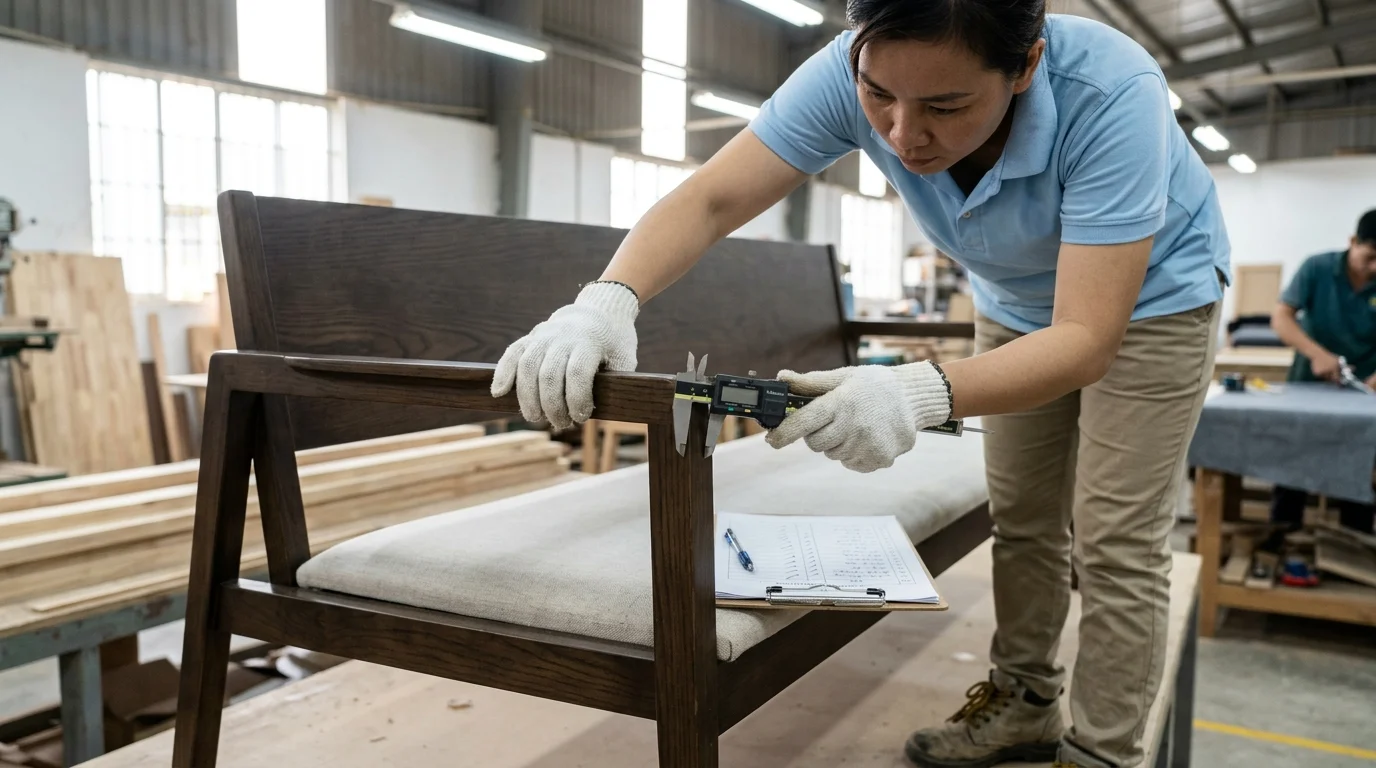
Evaluating a prospective hotel furniture supplier requires looking beyond superficial aesthetics to critically analyze their technical capabilities, regulatory compliance, and supply chain resilience. Procurement teams must establish strict benchmarks to filter out vendors incapable of meeting rigorous commercial standards.
Specifications, Compliance, and Quality Control
Contract-grade furniture must withstand relentless commercial use, requiring specifications far exceeding residential standards. Evaluators must verify that upholstery fabrics meet or exceed 50,000 Wyzenbeek double rubs and comply with stringent regional fire safety codes, such as CAL 117 in North America or BS 7176 in the UK. Casegoods require high-pressure laminate (HPL) or thermally fused laminate (TFL) surfaces with a minimum thickness of 0.8mm to resist scratching, moisture degradation, and harsh chemical cleaning agents.
Structural hardware, such as soft-close drawer glides and heavy-duty hinges, must be rated for at least 100,000 open/close cycles to prevent premature failure. Leading suppliers must demonstrate robust internal quality control across three distinct phases: Incoming Quality Control (IQC) for raw materials, In-Process Quality Control (IPQC), and Final Quality Control (FQC), ideally maintaining a defect rate strictly below 1.5% during mass production.
Lead Times, Capacity, Logistics, and Installation
Production capacity and logistics are equally critical when assessing a hotel furniture supplier. A competent factory must comfortably handle Minimum Order Quantities (MOQs) exceeding 100 to 300 rooms without extending standard production timelines. Furthermore, buyers must evaluate the supplier’s proficiency in global freight, container optimization, and Incoterms (e.g., FOB versus DDP). Proper export packaging, utilizing reinforced edge protectors and moisture-barrier wrapping, is essential to prevent transit damage.
| Project Phase | Typical Duration | Key Supplier Deliverables |
|---|---|---|
| Shop Drawings & Prototyping | 4–6 Weeks | CAD drawings, material swatches, 1:1 model room |
| Mass Production | 8–12 Weeks | IPQC/FQC reports, casegoods, seating, lighting |
| Freight & Customs | 4–8 Weeks | Bill of lading, commercial invoices, tax clearance |
| Logistics & Installation | 2–4 Weeks | Phased delivery, staging, white-glove assembly |
How to Select the Best Hotel Furniture Supplier
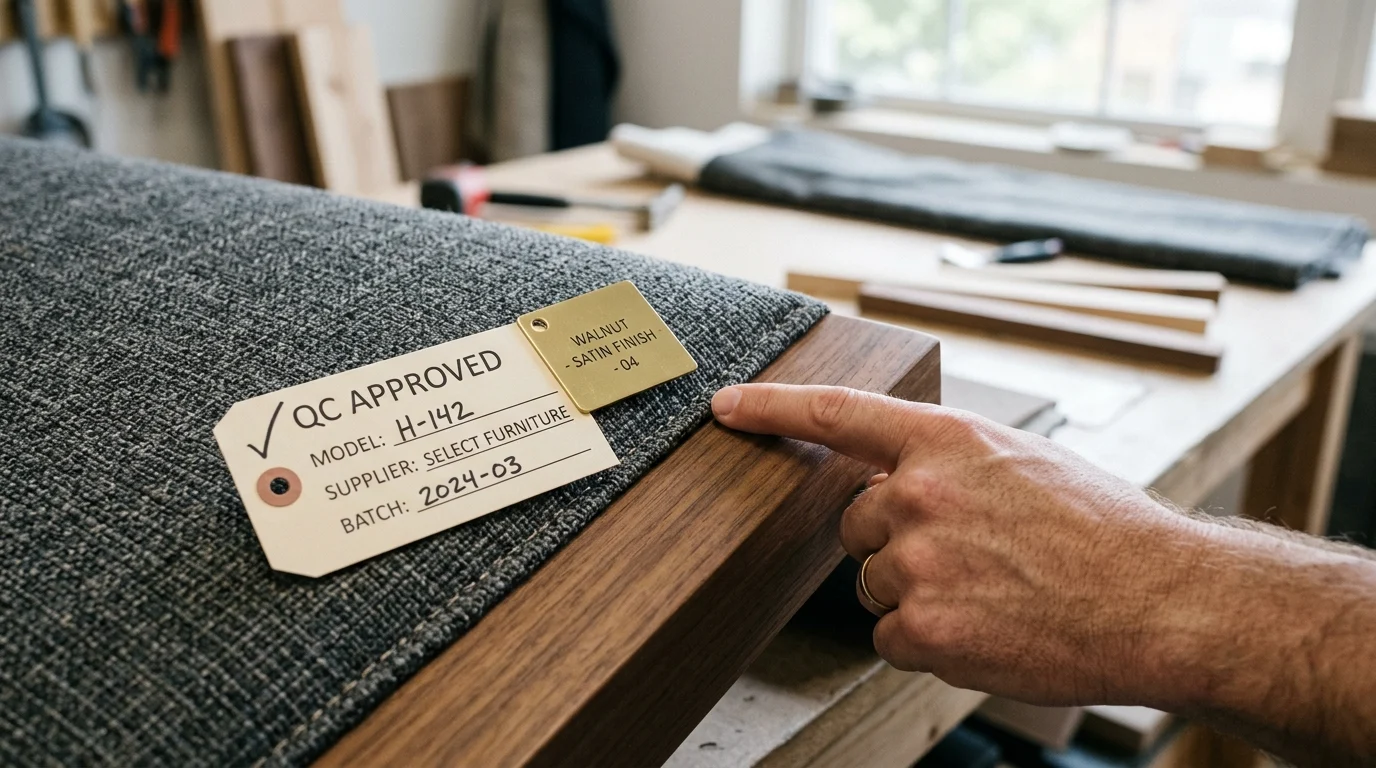
The final selection phase transitions from technical evaluation to comprehensive due diligence, ensuring the chosen partner possesses the financial and operational stability to successfully execute a multi-million-dollar contract.
Due Diligence and Shortlisting
Shortlisting necessitates rigorous background checks and, whenever feasible, physical site visits. Procurement teams should mandate independent third-party factory audits to verify machinery capabilities, ethical labor conditions, and ISO 9001 quality management certifications. Evaluating the supplier’s portfolio over the past 5 to 10 years provides invaluable insight into their historical performance on projects of similar scale and complexity.
Assessing their financial health is paramount; the supplier must possess the working capital and liquidity necessary to procure raw materials upfront for purchase orders frequently exceeding $2 million. Additionally, the production of a physical mock-up room is a mandatory due diligence step, allowing stakeholders to rigorously inspect ergonomics, finish quality, and dimensional accuracy before authorizing mass production.
Decision Criteria and Final Selection
Final selection relies on a structured evaluation matrix rather than capital cost alone. Sophisticated procurement criteria typically weight total landed cost (40%), verified quality and compliance (30%), schedule reliability (20%), and ESG (Environmental, Social, and Governance) commitments, such as FSC-certified wood usage (10%). Effective communication is also a critical indicator of competence; a supplier providing a dedicated point of contact with weekly production telemetry prevents costly surprises.
Suppliers offering comprehensive commercial warranties of 5 to 10 years on structural integrity demonstrate profound confidence in their manufacturing processes. Ultimately, establishing a robust service-level agreement (SLA) that includes liquidated damages for unexcused delays solidifies expectations, ensuring the project transitions seamlessly from initial design intent to a fully operational, revenue-generating hospitality asset.
Key Takeaways
- The most important conclusions and rationale for Hotel Furniture Supplier
- Specs, compliance, and risk checks worth validating before you commit
- Practical next steps and caveats readers can apply immediately
Frequently Asked Questions
What certifications should a hotel furniture supplier provide?
Ask for fire-code compliance documents like CAL 117 or BS 7176, fabric test reports, and contract-grade durability data such as 50,000+ Wyzenbeek double rubs.
How can I verify a supplier can handle a large hotel project?
Check whether they have completed 100–300+ room projects, can share case studies, and offer integrated production for casegoods, seating, and custom millwork.
What lead time should I expect for hotel furniture orders?
Typical timelines are 4–6 weeks for drawings and prototypes, 8–12 weeks for production, and 4–8 weeks for shipping, depending on scope and destination.
Why is quality control so important in hotel furniture supply?
Strong IQC, IPQC, and FQC processes reduce defects, delays, and replacement costs. Request inspection reports and target a mass-production defect rate below 1.5%.
How can Taisen Furniture support large hospitality projects?
Taisen Furniture offers hotel-focused manufacturing, custom product development, and consolidated FF&E sourcing to help streamline procurement, logistics, and project coordination.
Post time: May-18-2026