
 joyce@taisenfurniture.com
 0086 15356090777


Introduction
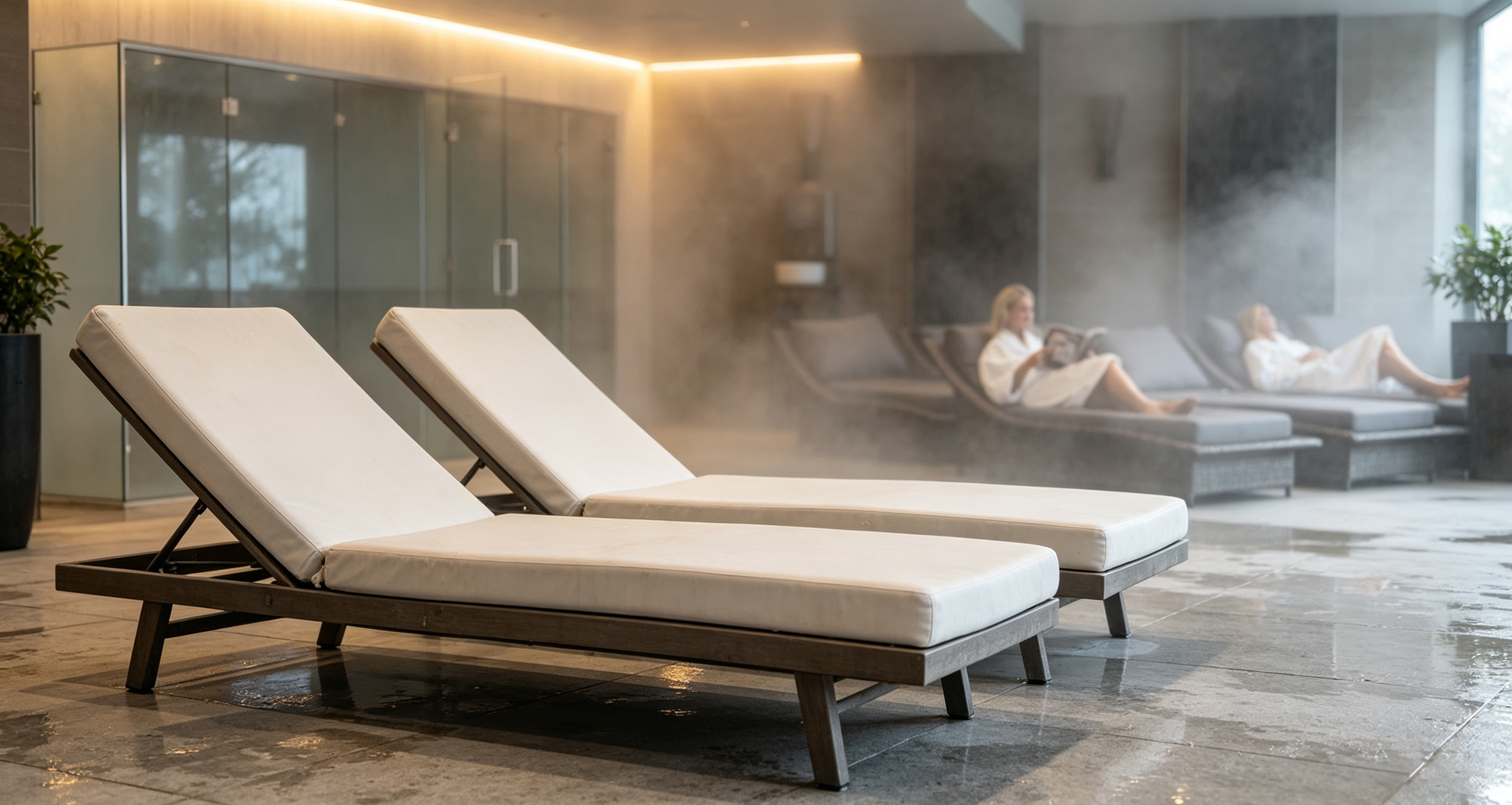
Wellness spa lounges exist in one of the harshest indoor commercial environments in hospitality. Constant steam, splashing water, body oils, lotions, chlorine traces, and repeated sanitizing cycles create a perfect set of challenges for furniture. A lounge that feels comfortable in a dry hotel lobby can quickly fail inside a spa: foam turns soggy, fabric grows mildew, wooden members warp, metal frames corrode, and hidden joints degrade silently between guest visits.
For FF&E specifiers, spa lounge furniture is not just about aesthetics. It must balance guest comfort, hygiene, long service life, and low operational maintenance. The two most critical components are the cushion assembly and the supporting frame. Many suppliers advertise “waterproof” spa furniture, but the term is often vague. True spa-grade performance requires defined standards for fabric, foam, liners, seams, drainage, frame material, coatings, hardware, and joint construction. This guide breaks down the technical requirements, testing benchmarks, material trade-offs, and procurement checkpoints to help you specify reliable spa lounge furniture for wellness zones, thermal suites, poolside relaxation areas, and treatment aftercare lounges.
Spa operators face tangible financial risks from poor specification. Mold-contaminated cushions often need full replacement within months. Rusting frames create safety hazards and lead to costly service interruptions. Stained, slow-drying upholstery also damages the premium wellness brand experience that guests expect. Investing in properly engineered water-resistant cushions and frames reduces replacement frequency, cuts daily cleaning labor, and maintains consistent hygiene standards across years of heavy commercial use.
Understanding the Spa Microclimate and Failure Modes
Before reviewing material specifications, it helps to map the environmental stresses inside a typical wellness spa. Relative humidity regularly climbs above 70%, and in steam rooms or thermal circuit zones, it can stay near saturation for hours. Water is not clean fresh water: it carries mineral deposits, sanitizing chemicals, massage oils, sunscreen residues, and organic body oils. These contaminants do more than stain surfaces; they accelerate microbial growth and break down protective coatings on frames and textiles.
Common cushion failure modes include trapped moisture inside foam cores, unsewn seam leakage, non-breathable barriers that trap condensation, and fabrics that absorb oils permanently. When water cannot drain or evaporate quickly, mildew and bacteria form inside the cushion, even if the top surface appears dry. For frames, the main failures are corrosion at fastener points, wood swelling and delamination, coating chipping from frequent wiping, and hidden joint rot where water accumulates and cannot escape.
A frequent specification mistake is selecting outdoor patio furniture for indoor spa use. Outdoor furniture is built for rain and UV exposure, but it is not always formulated to withstand repeated exposure to spa chemicals, oil residues, and daily disinfectant wiping. Conversely, standard indoor lounge furniture has no barrier against liquid penetration and should never be placed in splash zones or high-humidity spa relaxation rooms.
Core Requirements for Water-Resistant Spa Cushions
A spa-grade cushion is a multi-layer system, not simply one waterproof fabric cover. Each layer has a defined function: the outer performance fabric repels liquids and resists staining, the barrier liner prevents liquid penetration into foam, the foam core allows rapid drainage and drying, and the construction details ensure water cannot pool inside the cushion enclosure.
Outer Upholstery Fabric
The top fabric must satisfy three groups of requirements: liquid repellency, cleanability, and commercial durability. Solution-dyed performance acrylic, marine-grade vinyl, coated polyester, and high-performance olefin are the most common options for spa environments. Natural fabrics such as cotton, linen, and standard wool are generally unsuitable, as they absorb water and oils and are extremely difficult to sanitize fully.
Key fabric benchmarks include water beading performance, chemical resistance to spa sanitizers, oil repellency, abrasion resistance, and colorfastness. For commercial hospitality, Wyzenbeek abrasion ratings above 30,000 cycles are a practical baseline, while premium spa projects often specify 40,000 cycles or higher. The fabric should also resist repeated wiping with quaternary ammonium cleaners, hydrogen peroxide sanitizers, and diluted chlorine solutions without cracking, discoloring, or losing its water-repellent finish.
Seam construction is equally important. Even excellent fabric fails if stitches create open pathways for water penetration. Spa cushions require sealed seams, taped seams, or coated thread construction. Standard woven thread without sealing allows capillary action, pulling moisture through the stitch line into the cushion interior. Removable covers are strongly preferred because they can be laundered, disinfected, or replaced independently without discarding the entire cushion core.
Barrier Liners and Foam Core
The liner sits between the outer cover and foam core. It should be water-resistant while remaining sufficiently vapor-permeable to prevent trapped condensation. Fully non-breathable plastic liners can trap moisture and accelerate mildew growth, so breathable monolithic membranes or laminated barrier textiles are better suited for continuous humid spa use.
The foam core differentiates ordinary cushions from spa cushions. Closed-cell foam repels water but can feel hard and less comfortable. Open-cell reticulated quick-dry foam allows water to pass through and drain away, which is the standard choice for splash-zone spa lounges. Some specifications combine layered foam: supportive high-density foam for structure and open-cell drainage foam near the base. Foam should also meet local commercial flammability standards, as wellness spaces often fall under strict upholstered furniture fire codes.
The following table summarizes typical cushion system options and their suitability for different spa zones.
| Cushion System | Primary Material | Best Spa Location | Main Advantage | Limitation |
|---|---|---|---|---|
| Quick-dry reticulated foam + taped-seam performance fabric | Open-cell drainage foam, solution-dyed acrylic | General relaxation lounges, poolside, thermal exit zones | Drains rapidly, comfortable, easy to maintain | Higher material cost than standard foam |
| Marine-grade vinyl cushion with sealed seams | Reinforced vinyl, closed-cell foam | Wet splash zones, massage wet rooms | Very easy to wipe clean, strong chemical resistance | Can feel warm and sticky under direct body contact |
| Removable liner + coated polyester | Coated polyester, PU barrier liner | Moderate humidity waiting lounges | Balances cost and water resistance | Oil stains may be harder to remove than acrylic |
| Standard indoor polyurethane foam | Conventional high-density foam | Dry spa reception seating only | Lowest upfront cost | Risk of mildew, slow drying, not for splash zones |
Testing Standards for Cushion Performance
When evaluating supplier samples, request documented test reports aligned with widely recognized commercial standards. Water repellency can be referenced through spray rating tests, stain and cleanability through industry textile test methods, and microbial resistance through mildew growth testing. Abrasion, colorfastness, and seam strength should also be included in the FF&E submittal package.
It is important to distinguish between water-repellent and fully waterproof. Water-repellent fabrics shed light splashes but may eventually saturate under prolonged exposure. Waterproof assemblies are engineered to contain liquid, but they still require drainage paths to avoid pooling inside the cushion. For most wellness spas, a well-engineered water-resistant, quick-dry system is more practical than a fully sealed waterproof cushion, because sealed designs often trap humidity and become unhygienic without proper airflow.
Frame Requirements for Spa Lounge Furniture
The frame carries structural load and must survive the same humid, chemically active environment as the cushions. Frame specification should start by defining the zone: dry waiting lounge, humid relaxation room, thermal circuit exit, direct splash zone, or saltwater pool adjacent area. Each zone demands a different material grade and hardware specification.
Metal Frames
Powder-coated aluminum is one of the most popular spa frame materials. It is lightweight, structurally efficient, and naturally corrosion-resistant when the coating is intact. The powder coating must be a commercial-grade architectural powder, applied after proper surface pretreatment. Thin, low-quality coatings chip easily during moving, cleaning, or guest impact, exposing bare aluminum to chemical attack.
Stainless steel is another common selection, but the grade matters greatly. 304 stainless steel works well in indoor spas with low chlorine exposure. Marine-grade 316 stainless steel, with added molybdenum, is specified for zones near saltwater, mineral thermal water, or consistent high chlorine vapor. Standard carbon steel and ordinary galvanized steel should be avoided in spa splash zones, as they corrode rapidly once the zinc coating fails.
All fasteners, brackets, and hidden joinery hardware must match or exceed the corrosion grade of the main frame. A common specification error is using cheap plated screws on an aluminum or 316 stainless frame; those small fasteners become the first failure point, creating rust streaks on the visible furniture surface.
Wood and Composite Frames
Natural hardwood can be used in spa lounges, but only with careful selection and finishing. Grade A teak has natural oils that help resist moisture and fungal growth, but it still requires regular maintenance and can gray unevenly in humid indoor environments. Acetylated wood, thermally modified wood, and marine-grade plywood complying with standards such as BS 1088 offer improved dimensional stability and decay resistance compared with ordinary timber.
Standard MDF, particleboard, and unmodified softwood are poor choices for spa humid zones. They swell, delaminate, and lose structural integrity quickly once moisture penetrates protective paint or veneer. If wood is used, finishes must be non-porous, chemical-resistant, and fully sealed at all cut edges. Edge sealing is often overlooked, yet cut ends are the fastest entry point for water.
Solid surface, high-pressure compact laminate, and resin composite frames are increasingly used in modern wellness spas. These non-porous materials resist water, oils, and repeated sanitizing, and they have no grain or edge pores to trap contaminants. They are excellent for minimalist spa lounges where hygiene and zero-maintenance are top priorities, though they can carry a higher initial material price.
Frame Construction, Joints and Drainage
Even the best material fails with poor construction. Spa lounge frames should avoid flat horizontal ledges and enclosed hollow cavities that collect standing water. Welded metal joints must be fully sealed and ground smooth, with no crevices where biofilm can accumulate. Wooden and composite joints should use waterproof structural adhesives in addition to mechanical fasteners.
Elevated base design is a simple but powerful requirement. The lounge should sit high enough above the floor to allow air circulation beneath, preventing the bottom cushion and frame base from resting on damp tile or stone. Foot caps should be non-staining, slip-resistant, and resistant to frequent wet cleaning.
The next table compares frame material performance for typical spa wellness applications.
| Frame Material | Recommended Spa Zone | Corrosion / Moisture Resistance | Maintenance Expectation |
|---|---|---|---|
| Powder-coated structural aluminum | General spa relaxation lounges, dry and moderate splash zones | Good, dependent on coating quality | Periodic inspection for chipping, touch-up coating available |
| 304 stainless steel | Indoor spas, low-chlorine wellness rooms | Excellent for standard spa conditions | Wipe clean, avoid prolonged salt exposure |
| 316 marine-grade stainless steel | Saltwater, mineral thermal pools, high chlorine zones | Superior against chloride corrosion | Low maintenance, premium specification |
| Grade A teak or acetylated wood | Luxury dry-to-moderate humidity wellness lounges | Good natural resistance, not impervious | Regular oiling and inspection required |
| Marine plywood with fully sealed finish | Moderate humidity lounge structures | Acceptable if fully sealed and edge-treated | Seal touch-up needed over time |
| HPL / solid surface composite | Wet splash zones, minimalist hygiene-focused lounges | Excellent, non-porous | Very low maintenance, easy sanitizing |
| Standard MDF, particleboard, carbon steel | Not recommended for humid or splash spa zones | Poor | High risk of rapid failure |
Hygiene, Safety and Operational Considerations
Wellness spas operate with high sanitation expectations, so the entire lounge design should support cleaning protocols. Cushion covers should be easy to remove without hidden staples or permanently sewn closures. Frame surfaces should be smooth, without deep grooves, decorative crevices, or textured pockets that trap oils, hair, and residue.
Slip resistance is another safety factor. When the lounge base, armrests, or footrests become wet, guests may slip while repositioning. Non-slip feet and stable wide-base frames reduce tipping risk when guests shift weight after bathing.
Indoor air quality is also relevant. In a humid enclosed space, low-emission materials help maintain comfortable air quality. Suppliers should provide documentation for low-VOC coatings, adhesives, and foam, consistent with commercial indoor air standards. Mold and mildew resistance testing should be requested as part of the submittal, not just assumed from the material description.
Weight capacity is easy to overlook. Spa lounges are often used by guests in relaxed postures, sometimes with two people sharing a modular lounge. Commercial load testing should confirm that the frame, support slats, and cushion retain structural integrity under rated static and dynamic load without permanent deformation or squeaking.
Procurement and Supplier Verification Checklist
When sending specifications to manufacturers, avoid vague language such as “waterproof spa furniture.” Write measurable requirements instead. The spec package should define the intended zone, fabric performance criteria, seam construction, foam type, liner vapor permeability, frame material grade, fastener grade, coating specification, removable cover requirement, flammability compliance, and required test reports.
Before approving mass production, request a physical sample placed through a site simulation test. Spray the sample with spa sanitizer mixed with mineral water and body oil substitutes, then allow it to sit in high humidity for several days. Inspect for staining, odor, mildew, coating degradation, and trapped moisture inside the cushion. This practical test reveals real-world weaknesses that laboratory data alone may not show.
Lead time and replacement part availability matter for spa operations. Choose suppliers who can provide separate replacement covers and cushion inserts, rather than requiring the entire lounge to be replaced after localized damage. For multi-location hotel wellness programs, standardized SKUs simplify inventory and emergency replacement.
Common Specification Pitfalls
One frequent mistake is confusing water-resistant with stain-proof. No spa furniture is permanently stain-proof against heavy massage oil, artificial tanning products, or pigmented body treatments. The correct expectation is that the surface can be cleaned within a reasonable window before staining sets in.
A second pitfall is prioritizing low upfront cost. Cheaper vinyl, thin powder coating, and standard foam reduce initial capital expense but increase recurring operational spending. Spa furniture is a high-wear FF&E category, and the total cost of ownership often favors a higher-grade initial specification.
A third pitfall is ignoring hidden moisture paths. Even when the cushion cover and frame look correct, poor drainage, sealed bottoms, or trapped condensation can create failure points. Good spa furniture design actively moves moisture out rather than simply trying to block it forever.
Conclusion
Wellness spa lounge furniture is a specialized FF&E category where comfort, design, hygiene, and material engineering must work together. The cushion assembly is not a passive soft surface; it is a layered system of performance fabric, sealed seams, breathable barriers, and quick-drying foam that manages splashes, oils, and humidity. The frame must be selected and built according to the spa’s specific chemical and moisture exposure, with matching corrosion-resistant hardware, sealed joints, and drainage-friendly geometry.
By specifying measurable performance standards, reviewing independent test documentation, and validating samples under realistic spa conditions, specifiers can avoid premature replacement, reduce cleaning labor, protect guest safety, and preserve the premium wellness atmosphere. For hotel and resort spa projects, investing in properly engineered water-resistant cushions and frames is not a luxury add-on; it is the foundation of a durable, hygienic, and profitable wellness space.
FAQ
Q: Is waterproof the same as water-resistant for spa cushions? A: No. Waterproof means liquid cannot pass through the assembly. Water-resistant means the material repels or slows water penetration while allowing drainage or vapor transmission. For most spas, a well-designed water-resistant quick-dry system performs better than a fully sealed waterproof cushion that traps internal condensation.
Q: Can I use outdoor patio lounge furniture inside my spa? A: Sometimes, but it is not automatic. Outdoor furniture is built for rain and UV, while spa furniture must resist oils, repeated chemical sanitizing, and continuous high humidity. Check fabric oil resistance, seam sealing, and foam drainage before approving outdoor pieces for indoor spa splash zones.
Q: Which frame grade is best for thermal mineral spas with high chlorine vapor? A: Marine-grade 316 stainless steel is the typical premium choice for these aggressive zones. If aluminum is preferred, specify a high-quality architectural powder coating with strict pretreatment and regular inspection for chipping.
Q: How often should spa lounge cushion covers be replaced? A: Lifespan depends on material, cleaning frequency, and guest volume. Performance acrylic covers in medium-volume spas may last multiple years, while vinyl covers in heavy wet zones may need replacement sooner. Removable covers allow staged replacement without replacing the foam and frame.
Q: Are natural fabrics acceptable in spa relaxation zones? A: Natural fabrics such as cotton and linen are generally not suitable for humid or splash spa zones because they absorb liquids and organic residues and are difficult to fully sanitize. They may only be considered for completely dry, low-contact waiting areas.
Post time: Nov-23-2026