
 joyce@taisenfurniture.com
 0086 15356090777


Introduction
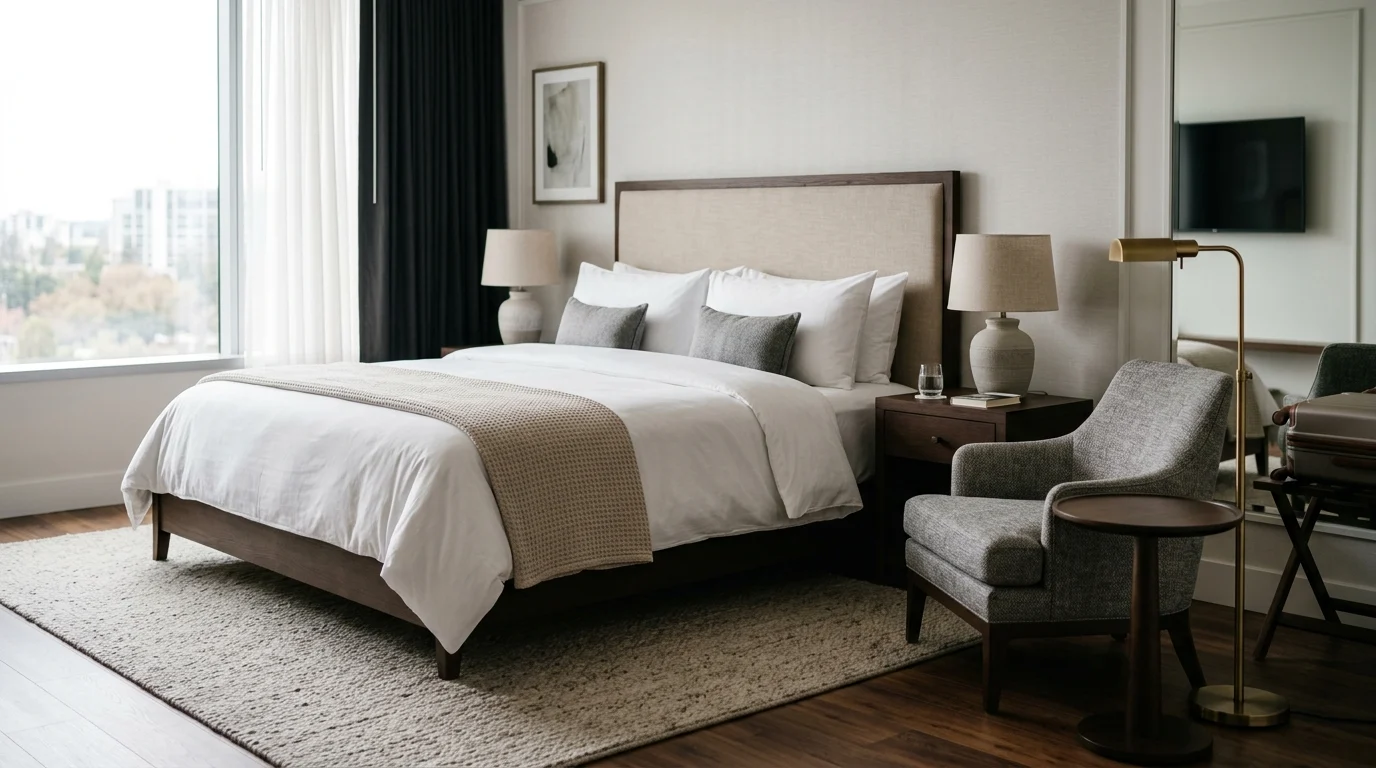
Moving a hotel brand from prototype to opening day depends on turning design intent into clear, enforceable FF&E specifications. For chain owners, hotel furniture is not just a style decision; it affects brand consistency, lifecycle cost, procurement control, and day-to-day operations across multiple properties. This guide explains how to define scope, document standards, and evaluate furniture against commercial metrics such as durability, compliance, lead times, and replacement planning. By the end, readers will understand how strong specifications reduce costly substitutions, protect the guest experience, and create a smoother path from concept approval to property-level execution.
Why hotel furniture specifications matter
For chain hotel owners, the transition from a conceptual brand prototype to a fully operational property hinges on precision. Furniture, Fixtures, and Equipment (FF&E) represents a significant capital expenditure that dictates the guest experience. Without rigorous specifications, properties risk brand dilution, accelerated asset wear, and severe cost overruns. Establishing a definitive specification framework ensures that every piece of hotel furniture meets exact operational, aesthetic, and financial targets, effectively bridging the gap between high-level architectural design and daily hospitality operations.
Defining FF&E scope for brand consistency
Brand consistency relies on a tightly defined FF&E scope that leaves no room for interpretation by regional procurement teams or general contractors. A comprehensive scope delineates every physical element within the property, from casegoods and seating to integrated lighting and window treatments. For a standard midscale to upscale chain property, FF&E typically consumes 12% to 15% of the total project development budget. Maintaining strict control over this substantial spend requires detailed control documents that map the prototype design intent directly to manufacturable items. When owners fail to enforce this strict scope, properties inevitably suffer from unauthorized value engineering—a process that compromises the brand’s visual identity and degrades the overall guest experience.
Key commercial metrics for evaluation
Evaluating hotel furniture extends far beyond initial unit pricing. Expert procurement teams analyze the total cost of ownership (TCO), factoring in freight, installation, daily maintenance, and expected lifespan. Contract-grade casegoods are engineered to withstand a 12- to 14-year lifespan, typically bridging two soft-goods renovation cycles. Metrics such as replacement frequency, warranty coverage durations, and daily maintenance labor costs must be quantified during the specification phase. For instance, specifying a high-pressure laminate (HPL) surface over a traditional wood veneer may increase upfront material costs by 8% to 12%, but the resulting reduction in housekeeping damage and touch-up labor yields a substantially higher return on investment over the asset’s lifespan. Contracts should also mandate a delivery defect rate under 2% to protect the project’s commercial viability.
How to build a hotel furniture specification
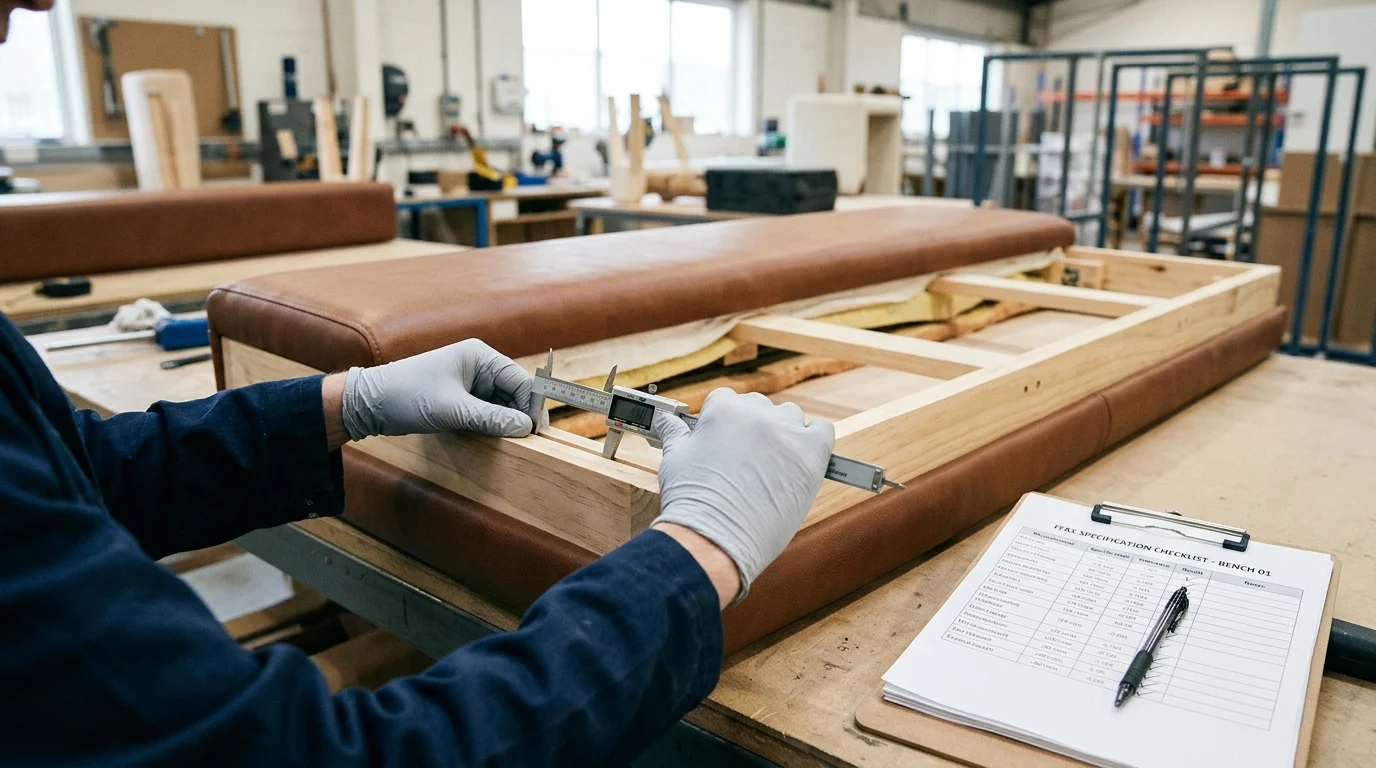
Translating a design prototype into a manufacturable reality requires a highly robust specification package. This documentation serves as the binding technical and legal contract between the hotel owner, the purchasing agent, and the furniture manufacturer. It must seamlessly synthesize the aesthetic vision of the brand with structural integrity, material science, and regulatory compliance.
What a professional specification should include
A professional specification sheet—often referred to as a spec or cut sheet—must detail precise dimensions, core materials, joinery methods, finish schedules, and hardware. It must also mandate specific performance testing standards for commercial use. For example, solid wood must be kiln-dried to a 6% to 8% moisture content to prevent warping. Commercial lounge seating upholstery must clearly state a Wyzenbeek test requirement of at least 50,000 double rubs, alongside CAL 117 or BS 5852 fire retardancy compliance.
| Feature | Retail Furniture | Contract Hotel Furniture |
|---|---|---|
| Core Material | Particleboard / Standard MDF | Marine-grade Plywood / High-Density MDF |
| Joinery Methods | Screws, staples, and basic glue | Dowelled, glued, and heavy corner-blocked |
| Upholstery Durability | 10,000 – 15,000 double rubs | 50,000+ double rubs |
| Finish Tolerance | Standard commercial lacquer | Catalyzed polyurethane or HPL surfaces |
Providing this level of granular detail prevents manufacturers from substituting inferior materials during the prototyping and mass production phases, ensuring the final product matches the approved control sample.
Balancing prototype standards and local adaptation
While brand standard manuals dictate the overarching prototype, individual properties frequently require specification adjustments due to architectural anomalies or regional regulations. A standard king room prototype might assume a 350-square-foot footprint, but adaptive reuse projects or urban infill sites frequently present structural columns or reduced square footage. Hotel owners must establish guidelines for scaling casegoods—such as reducing a standard 72-inch credenza to 60 inches—without violating brand proportions or ergonomic standards. Furthermore, local building codes necessitate functional adaptations. Specifications must account for localized compliance, such as ensuring all desk heights and pathway clearances maintain the strict 36-inch minimum required by the Americans with Disabilities Act (ADA) in the United States, or equivalent regional accessibility frameworks. Electrical integrations within headboards and desks must also be adapted for regional voltage standards and plug types without altering the structural envelope.
How sourcing and logistics affect outcomes
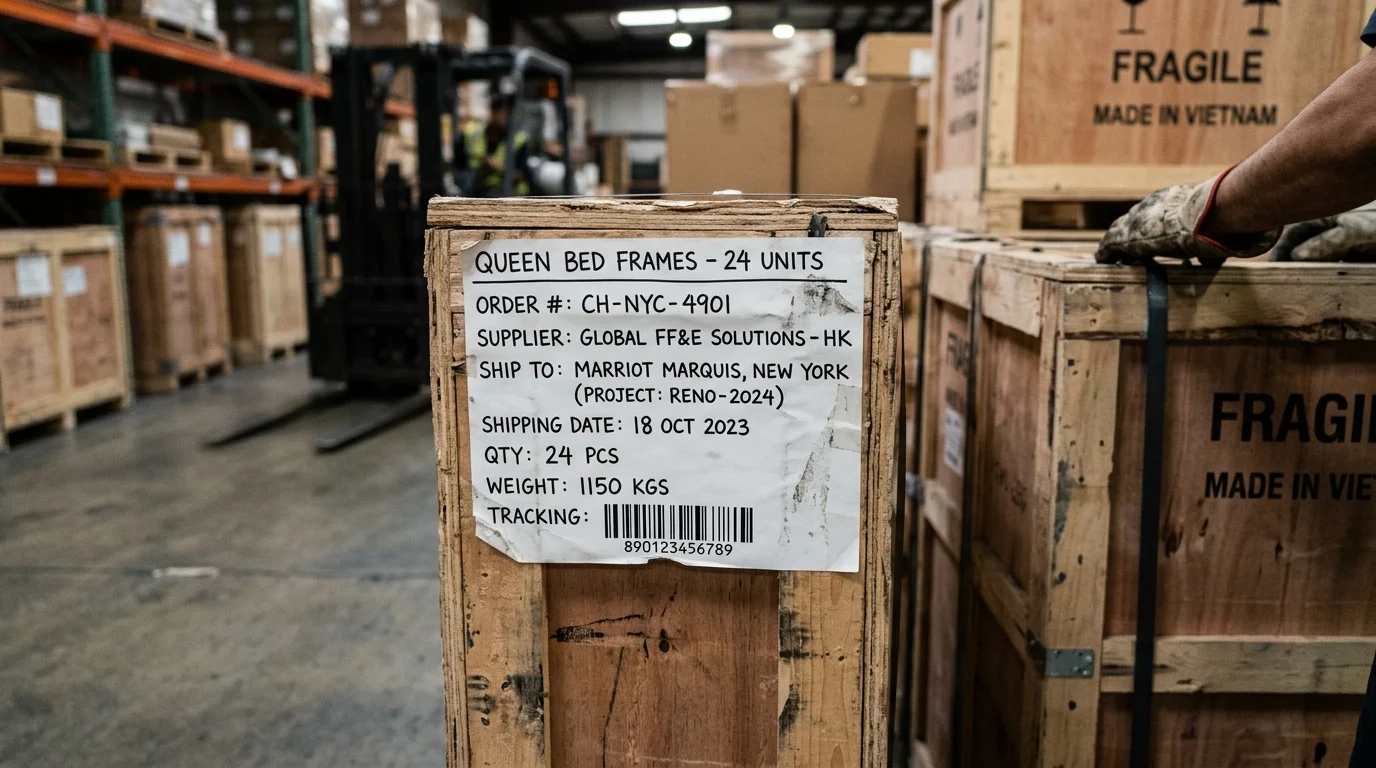
Even the most rigorous specifications hold little value if the sourcing strategy and supply chain logistics fail to execute the vision. Hotel owners must align their procurement schedules with construction milestones to ensure that FF&E arrives precisely when the property is ready for installation, avoiding costly project delays, damaged goods, or excessive third-party storage fees.
How to assess suppliers and bids
Evaluating suppliers requires a forensic analysis of their manufacturing capabilities, financial stability, and historical performance in the hospitality sector. Owners and purchasing agents must scrutinize Minimum Order Quantities (MOQs) alongside unit costs. Custom hotel casegoods typically demand an MOQ of 50 to 100 keys; failing to meet this threshold can trigger surcharges of up to 20% per unit. Bids must be leveled accurately, ensuring that all manufacturers are quoting the exact same specification package. A bid that appears 15% lower than competitors often masks omissions in hardware quality, edge-banding thickness, or highly variable freight terms. Procurement teams must clarify incoterms early in the bidding process, comparing Delivered Duty Paid (DDP) against Free on Board (FOB) to uncover hidden costs. Thorough factory audits and the production of a physical model room are mandatory steps before authorizing mass production.
Moving from bid to delivery with control
The logistical journey from the factory floor to the guestroom requires meticulous sequencing and real-time tracking to ensure the final installation successfully reflects the approved prototype.
Key Takeaways
- The most important conclusions and rationale for hotel furniture
- Specs, compliance, and risk checks worth validating before you commit
- Practical next steps and caveats readers can apply immediately
Frequently Asked Questions
What should a hotel FF&E specification include?
List exact dimensions, core materials, joinery, finish schedule, hardware, and required testing standards so every property matches the approved prototype.
How can chain hotel owners keep furniture consistent across properties?
Use one master spec package tied to the brand prototype, then control any local changes through formal approvals and updated cut sheets.
Which durability standards matter most for hotel furniture?
Focus on contract-grade construction, 50,000+ Wyzenbeek double rubs for upholstery, proper fire compliance, and moisture-controlled wood to reduce failures.
How should hotel owners compare furniture costs beyond unit price?
Evaluate total cost of ownership: freight, installation, maintenance labor, warranty length, replacement cycle, and defect rate, not just the initial quote.
Can Taisen Furniture support prototype-to-property hotel furniture production?
Yes. Taisen Furniture can align manufacturing with detailed hotel specs, helping owners standardize materials, finishes, and quality across multiple properties.

Post time: Apr-29-2026