
 joyce@taisenfurniture.com
 0086 15356090777


Introduction
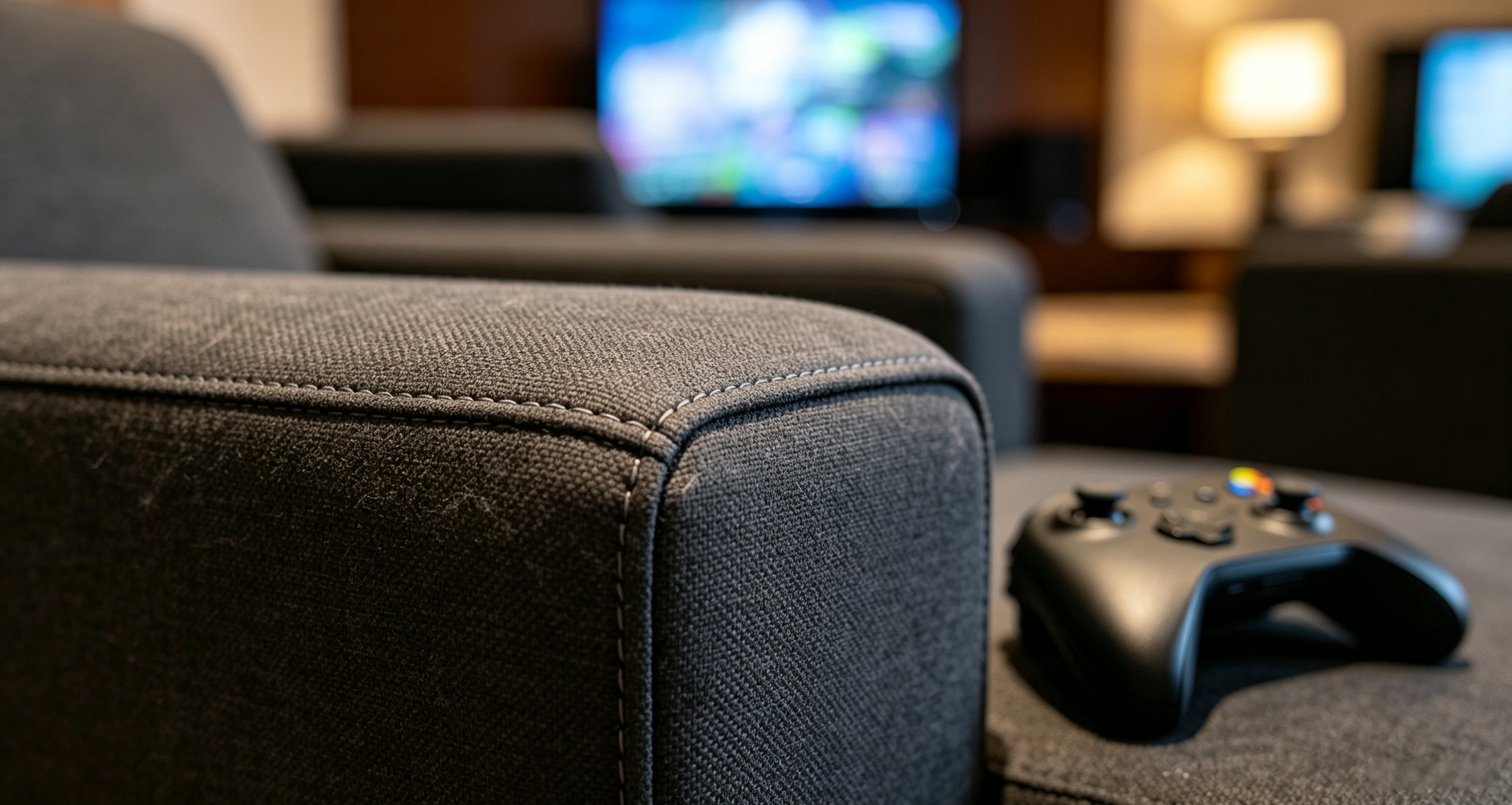
Modern hotel media rooms and gaming lounges have evolved from occasional bonus amenities into high-value guest experience zones. These spaces combine large-screen displays, gaming consoles, streaming hardware, wireless headsets, controllers, and densely packed electronic accessories. Guests sit for hours on upholstered seating, shift positions frequently, slide across cushions, and interact constantly with plastic and synthetic devices that easily build up static electric charge.
Many FF&E specifiers treat “anti-static” as a minor, optional add-on for lounge upholstery. This approach creates avoidable operational headaches: painful static shocks to guests, intermittent signal glitches for sensitive electronics, dust clinging persistently to seating surfaces, and in extreme cases, risk to internal components of gaming and AV hardware. It is critical to distinguish static-dissipative upholstery from basic anti-static treatments and fully conductive materials.
Static-dissipative fabrics safely move electrostatic charge away from the user at a controlled rate, without the ultra-low resistance of fully conductive material that can create other hazards. This makes them the sweet spot for hotel media and gaming lounges: comfortable, decor-friendly, commercially durable, and engineered to manage static buildup in dry indoor heating seasons, heavily air-conditioned spaces, and high-turnover shared seating.
This guide explains the static challenges unique to hotel gaming and media zones, clarifies the technical definitions and testing standards, compares fabric construction methods, lays out combined performance requirements for hospitality use, provides a procurement specification framework, and addresses common mistakes when ordering static-control upholstery for these specialized guest spaces.
Why Media and Gaming Lounges Generate Static
Static electricity forms through triboelectric charging: different materials rub together and exchange electrical charge. Gaming lounges create perfect conditions for this effect. Synthetic console casings, plastic controllers, polyester hoodies, fleece blankets, and standard polyester upholstery fabrics sit in the same environment. Low relative humidity amplifies the effect significantly; indoor spaces heated in cool seasons often drop below 40% RH, making static shocks far more frequent.
For hotel operators, the impacts fall into three categories: guest comfort, electronic reliability, and cleaning burden. A sudden static shock when a guest picks up a controller or touches a screen creates an immediate negative impression. Repeated static discharge near HDMI ports, wireless receivers, and internal circuit boards can cause momentary dropouts, screen flicker, or premature degradation of sensitive consumer electronics. Static also attracts fine dust and lint, making seating look dusty even after routine vacuuming, which increases housekeeping workload.
It is important to note that most residential or general hospitality upholstery carries only a light topical anti-static spray. These surface treatments wear off after a small number of cleanings and abrasion cycles. They do not qualify as static-dissipative material for continuous, heavy-use gaming lounge environments. True static-dissipative upholstery integrates static-control performance into the core fabric construction.
Defining Static-Dissipative, Anti-Static, and Conductive
Procurement documents often mix these terms, leading to material that fails site requirements. The classification is primarily based on surface resistivity and charge decay behaviour, following widely used standards such as IEC 61340, ANSI/ESD S20.20, EN 1149, and AATCC 134 for textile walking voltage testing.
| Classification | Typical Surface Resistivity Range | Core Behaviour | Suitability for Hotel Gaming Lounges |
|---|---|---|---|
| Basic anti-static topical treatment | Above 10¹¹ Ω/sq | Reduces static buildup temporarily by surface chemistry; washes or rubs away quickly | Not recommended for shared gaming seating; performance is temporary |
| Static-dissipative | 10⁶ to 10¹¹ Ω/sq | Allows charge to dissipate gradually and safely, preventing sudden sparking or shock | Preferred choice for media rooms and gaming lounges |
| Conductive | Below 10⁶ Ω/sq | Moves charge very rapidly; intended for controlled ESD workstations | Generally unsupervised hotel guest lounges are not the intended application; grounding and safety controls become more complex |
Static-dissipative upholstery is designed to bleed charge slowly rather than act like a wire. When paired with proper grounding design on seating frames where specified, it keeps body voltage low enough to eliminate uncomfortable shocks while remaining safe for everyday guest use.
Testing Benchmarks for Static-Dissipative Upholstery
A supplier’s claim of “anti-static fabric” is not enough. FF&E buyers should require documented test reports matching the intended application. The most relevant performance tests fall into static performance, abrasion, flammability, stain resistance, and colour fastness.
Static decay testing measures how quickly a fabric loses an applied charge. Many hospitality specifications target charge decay to 10% of initial value within 0.5 to 2 seconds under standard conditions. Body voltage testing, such as AATCC 134, simulates a person sitting or walking across the upholstery and records the resulting peak voltage; for gaming lounges, a target below 2 kV to 3.5 kV is commonly referenced to reduce noticeable shocks.
These static tests must be performed after accelerated wear and simulated cleaning cycles. A fabric that passes when brand new but fails after commercial wipe-downs is of little value to a hotel. The following table outlines the combined test package that should be requested for media room upholstery.
| Test Item | Common Standard | Typical Target Spec for Hotel Gaming Lounges | Purpose |
|---|---|---|---|
| Surface resistivity | ASTM D257, IEC 61340 | 10⁶–10¹¹ Ω/sq, consistent across batches | Verify static-dissipative classification |
| Charge decay | IEC 61340-4-1 | Decay time ≤ 2 seconds | Confirm charge bleeds safely |
| Body voltage generation | AATCC 134 | Peak body voltage ≤ 3.5 kV | Predict guest shock risk |
| Wyzenbeek abrasion | ASTM D4157 | Minimum 60,000–100,000 double rubs | Withstand repeated shifting and backpack contact |
| Upholstery flammability | Local hospitality codes such as CA 117, NFPA 260 | Pass required commercial upholstery fire criteria | Meet building safety rules |
| Stain and chemical resistance | Manufacturer protocol with commercial cleaners | Resist common beverage spills and disinfectants | Support daily hotel cleaning |
Fabric Construction Options for Static-Dissipative Upholstery
There are three primary construction approaches for static-control upholstery fabrics, each with trade-offs for media lounge design, budget, and maintainability.
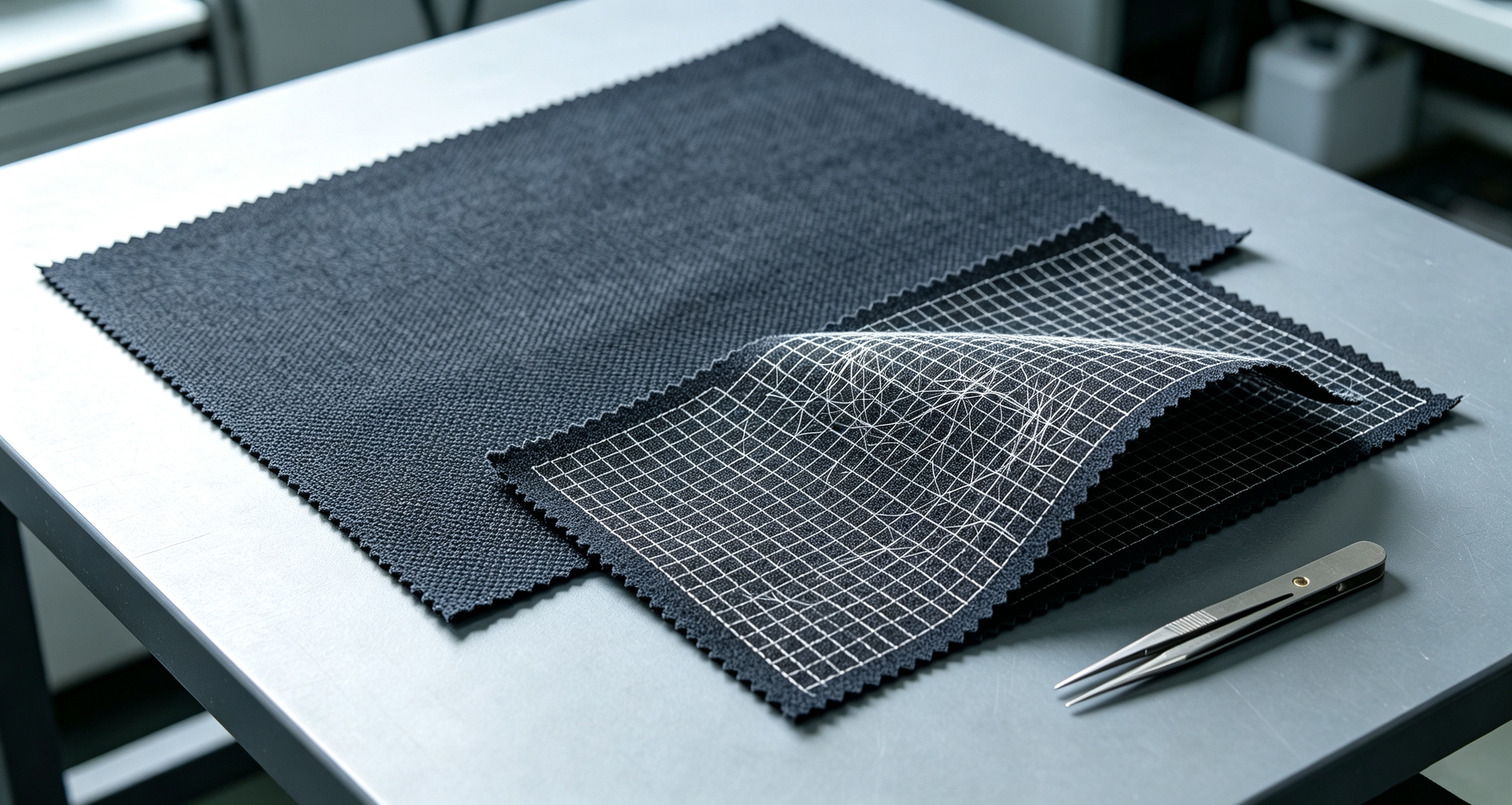
The first method is woven-in conductive filament grids. Fine conductive yarns are woven at regular spacing through polyester or polyolefin base fabric. This delivers long-lasting static performance because the static-control element is part of the weave rather than a coating. These fabrics are available in many woven textures and colourways, fitting contemporary hotel lounge aesthetics. The downside is that tight conductive grid structures may increase cost, and heavy abrasion can break individual conductive filaments if the base fabric is low quality.
The second option is static-dissipative coated vinyl or PU upholstery. A conductive filler is mixed into the polymer coating layer. This material is easy to wipe clean, highly stain-resistant, and popular for high-traffic food-and-beverage adjacent gaming zones. It can show scuff marks more visibly than woven textiles, and low-cost coated versions may see static performance drift with hydrolysis or repeated strong disinfectant use.
The third approach is impregnated or finished fabric, where a static-dissipative chemical treatment saturates the textile. This is the lowest-cost route, but it is the least reliable for permanent performance. Cleaning agents, heat, and friction gradually deplete the treatment. This category should only be considered for very low-traffic, short-term installations.
For most hotel media and gaming lounges, woven grid static-dissipative performance fabrics or high-quality ESD vinyl are the most balanced selections.
Additional Hospitality-Specific Requirements
Static control is only one layer of the specification. Seating in gaming lounges faces heavy multi-user use: guests lean back, rest controllers and drinks on cushion edges, drag backpacks across seats, spill soda, and leave food residue. The upholstery must combine static dissipation with the usual FF&E requirements for commercial spaces.
Stain resistance is especially important. Solution-dyed base fibres and sealed performance coatings help contain spills so housekeeping can wipe them before permanent staining. Water-based or stain-repellent finishes should be compatible with the static-dissipative technology; some repellent chemistries can interfere with surface resistivity.
Flame compliance is non-negotiable. Any static-control additive or coating must not compromise the required fire performance for upholstered furniture in commercial assembly spaces. Always cross-check that the full cushion assembly, foam plus fabric, meets local regulations, not just the fabric roll alone.
Acoustic performance is another bonus for media rooms. Dense woven static-dissipative fabrics can support sound absorption when paired with appropriate cushioning. This helps reduce chatter echo in shared media spaces and improves the experience for movie viewing and multiplayer gaming.
Frame and grounding details are often overlooked. If the specification requires grounding to stabilise static performance, the furniture frame must use continuous conductive pathways and proper earth bonding. A static-dissipative cover on an isolated plastic or non-conductive frame may still reduce shocks, but it will not perform to the full engineered ESD specification. The supplier must clarify whether grounding is required and provide installation guidance.
Layout and Operational Best Practices
Even the best static-dissipative upholstery cannot eliminate all static issues if the room environment is uncontrolled. Hotel facility teams should manage indoor humidity as part of the media lounge maintenance plan. Maintaining relative humidity between 40% and 55% helps naturally reduce static generation across all surfaces in the room.
Furniture layout should keep gaming consoles, receivers, and power adapters away from direct rubbing contact with upholstery wherever practical. Provide hard-surface side ledges and cable management channels so controllers and accessories do not slide continuously across cushion fabric. This reduces both fabric wear and triboelectric charging.
Housekeeping training should match the fabric specification. If the supplier approves only neutral pH cleaners, harsh solvent-based disinfectants should be avoided, as they can degrade conductive coatings and woven treatments. Inspections should include checking for fraying that breaks conductive yarns, especially on seat edges and armrests.
Common Specification Pitfalls
The most frequent error is accepting “anti-static” marketing language without the supporting test data. A fabric that feels slightly less static in a showroom on one humid day may fail in the dry winter conditions of the hotel.
A second pitfall is specifying conductive material when static-dissipative is the intended goal. Fully conductive upholstery is designed for specialised ESD workstations, not unsupervised guest lounges, and introduces extra grounding and safety obligations that are difficult to maintain in a hotel setting.
Third, buyers sometimes test only the fabric swatch, not the finished upholstered assembly. The foam, backing, adhesive, and frame can change the overall static behaviour. If the project depends on consistent static performance, a finished seating prototype test is recommended before bulk order release.
Finally, ignoring colour fastness and cleanability creates a maintenance trap. Dark or saturated performance fabrics may hide dust better, but they still need to survive repeated spot cleaning without streaking or losing their static properties.
Conclusion
Hotel media rooms and gaming lounges demand upholstery that balances guest comfort, electronic protection, cleanability, and long commercial service life. Static-dissipative upholstery fills this niche perfectly by safely managing electrostatic charge without the limitations of temporary anti-static sprays or the specialised requirements of fully conductive ESD materials.
Successful specification starts with clear classification: target the static-dissipative resistivity band, require charge decay and body voltage test results, and combine those static criteria with abrasion, fire, and stain performance required for hospitality FF&E. Woven conductive grid fabrics and high-grade static-control coated vinyl are the most dependable options for these high-touch entertainment zones.
When paired with sensible humidity management, good cable layout, and supplier-approved cleaning protocols, static-dissipative seating upholstery reduces guest shocks, protects sensitive AV and gaming hardware, keeps the lounge cleaner for longer, and preserves the polished experience that makes these media and gaming zones a standout hotel feature.
FAQ
Q: Is static-dissipative upholstery the same thing as anti-static upholstery? A: Not exactly. “Anti-static” is a broad term that can mean a temporary surface treatment. Static-dissipative refers to a defined range of resistivity and charge decay behaviour, usually built into the material for longer-term performance.
Q: Do gaming lounge chairs always need to be grounded? A: It depends on the supplier’s engineering and the risk level. Some static-dissipative fabrics reduce shocks without dedicated grounding, while tighter ESD specifications require a continuous conductive path to ground. Always confirm with the material data sheet.
Q: Can I use regular commercial vinyl and just spray an anti-static finish? A: It may provide short-term relief, but spray treatments degrade with cleaning and abrasion. This approach is not recommended for a hotel gaming lounge where consistent performance is expected over years.
Q: Will static-dissipative fabric stop all static shocks entirely? A: It greatly reduces the risk under normal operating conditions, especially when combined with reasonable humidity control. It cannot guarantee zero static events under every extreme combination of materials and environmental conditions.
Q: Does static-control fabric cost much more than standard performance upholstery? A: Premium woven static-dissipative fabrics carry a moderate premium, while some static-dissipative vinyls fit closer to standard commercial coated upholstery budgets. The cost should be weighed against reduced guest complaints and longer fabric service life.
Post time: Nov-25-2026