
 joyce@taisenfurniture.com
 0086 15356090777


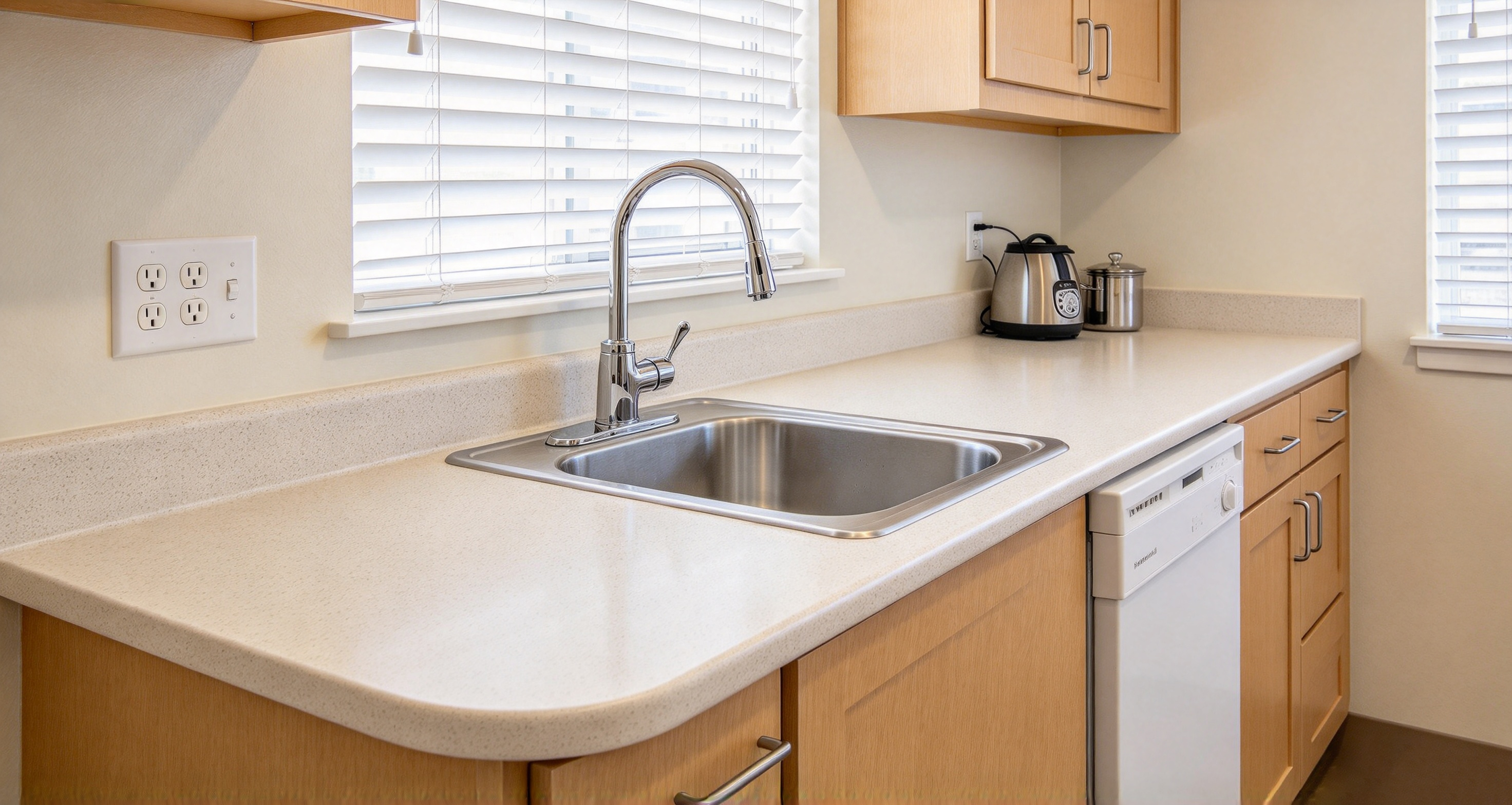
A hotel kitchenette is one of the most demanding environments for any piece of furniture in a guest room. Unlike a standard sleeping room, a kitchenette hosts cooking, meal preparation, hot plates, coffee makers, microwaves and the inevitable spills of daily use. A countertop in this space must survive a remarkable range of abuses: hot pans set directly on the surface, red wine and coffee left to soak, acidic juices, abrasive scrubbing, cleaning chemicals and the weight of appliances. Yet for many hotel operators, countertop specification receives far less attention than seating or beds, and this oversight leads to stained, burned and permanently damaged surfaces that must be replaced well before the intended lifecycle. For extended-stay properties, apartment-style hotels and any property with in-room kitchens, the countertop is a critical piece of furniture that defines both the guest experience and the maintenance budget. This article examines how hospitality buyers should specify stain and heat resistant countertop furniture for hotel kitchenettes, covering material options, performance standards, heat and stain resistance testing, edge and joint design, maintenance requirements and the procurement decisions that protect the asset over the long term.
Why Kitchenette Countertop furniture Deserves a Dedicated Specification
The Kitchenette Is the Most Abused Surface in the Room
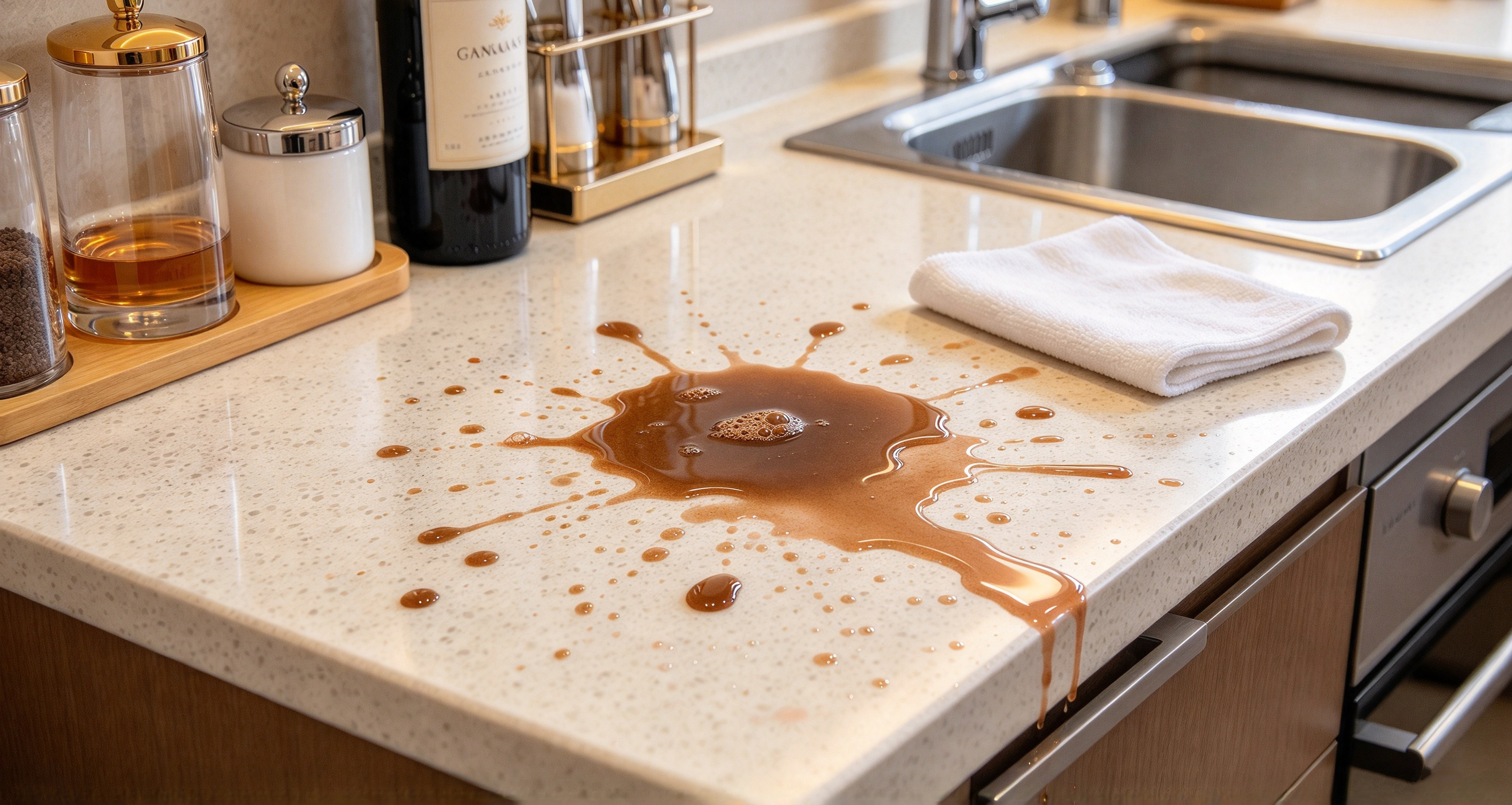
A guest room countertop in a hotel kitchenette is exposed to conditions that no residential countertop typically faces in the same concentrated period. Consider the daily sequence: a hot coffee carafe set down without a trivet, a microwave plate removed and placed directly on the surface, a damp dishcloth left to sit, a glass of red wine knocked over, tomato sauce spattered, and cleaning sprayed and wiped across the top. Over weeks and months, these repeated exposures accumulate. Without a stain and heat resistant specification, the surface develops rings, discoloration, scorch marks and permanent staining that reads immediately as a dirty or neglected room. The countertop is one of the first surfaces a guest sees in a kitchenette, and its condition shapes the guest’s perception of cleanliness, quality and care.
The Commercial Case for a Higher Specification
Selecting a cheap, low-performance countertop material saves money at the time of purchase but costs far more over the life of the furniture. A countertop that stains or burns within the first year requires replacement, which involves the cost of the new surface, installation labour, room downtime and the disruption of guest room inventory. For a property with hundreds of kitchenette rooms, replacing countertops early is a significant capital expense. By contrast, a slightly more expensive, high-performance countertop that resists stains and heat for the full seven to ten year lifecycle delivers a lower total cost of ownership. Durability, in other words, is a sustainability and budget strategy, not merely a material preference. The countertop is one piece of furniture where the upfront specification decision has an outsized impact on long-term operating cost.
Matching the Material to the Property Type
Different property types use kitchenettes differently, and the countertop specification should reflect this. An extended-stay hotel where guests cook full meals daily needs a countertop that withstands heavy, ongoing heat and abrasion. A boutique property with a simple kitchenette for breakfast and coffee needs a surface that resists coffee and food staining but may not require the same heat tolerance. A high-end apartment-style residence where guests entertain may need a premium look with high performance. The buyer must match the material, finish and performance level to the actual usage pattern of each property, rather than applying a one-size-fits-all specification.
Stain Resistance: The Material Matters Most
How Stains Develop on Countertop Surfaces
Staining occurs when a liquid or pigment penetrates the surface of a material, or when a chemical reaction between the spill and the surface changes its appearance. Porous surfaces absorb liquids, allowing pigments from coffee, wine, tea and food to settle below the surface where they are difficult or impossible to remove. Non-porous surfaces repel liquids, keeping pigments on the surface where they can be wiped away. The porosity of a material is therefore the single most important factor in its stain resistance. Dense, non-porous materials such as solid surface, quartz and certain laminates resist staining far better than porous materials such as raw timber, unfilled natural stone or low-quality particleboard.
Material Comparison for Stain Resistance
Different countertop furniture materials offer different levels of stain resistance. Laminates with a high-pressure surface are generally stain-resistant because the surface layer is dense and non-porous, but they can be damaged by heat and may stain at seams and edges where the laminate is joined. Solid surface materials are non-porous, stain-resistant and repairable, making them a strong choice for hotel kitchenettes. Quartz surfaces are non-porous, highly stain-resistant and durable, and they resist the most common kitchen stains. Natural stone such as granite resists many stains but must be sealed regularly, while marble is porous and stains readily. Wood countertops require regular sealing and are prone to both staining and heat damage. The table below compares these materials for stain resistance.
Table: Stain Resistance of Common Kitchenette Countertop Materials
| Countertop Material | Porosity | Stain Resistance | Heat Resistance | Repairability |
|---|---|---|---|---|
| High-Pressure Laminate | Low | Good | Moderate | Low |
| Solid Surface | None | Excellent | Good | Excellent |
| Quartz | None | Excellent | Good | Moderate |
| Granite (sealed) | Low | Good | Excellent | Moderate |
| Marble | High | Poor | Moderate | Moderate |
| Wood | High | Poor | Moderate | Moderate |
Heat Resistance: Protecting the Surface From Daily Abuse
What Heat Resistance Really Means
Heat resistance describes a countertop’s ability to withstand exposure to high temperatures without permanent damage such as scorching, discoloration, cracking or delamination. Different materials respond differently to heat. Some surfaces, such as stone and quartz, tolerate hot objects reasonably well but can crack under extreme thermal shock, such as a very hot pan placed directly on a cold surface. Others, such as laminate, can scorch or blister when a hot pan is set directly on the surface. Still others, such as solid surface, are heat-tolerant but can be damaged by sustained exposure to high temperatures.
Heat Damage Patterns to Avoid
The most common heat damage in hotel kitchenettes is thermal shock. When a very hot pan is placed directly onto a cold countertop, the rapid temperature difference can cause cracking or, in laminate, blistering and delamination at the edges. Scorching occurs when a surface is exposed to a hot object long enough to discolour or burn. For extended-stay hotels, where guests cook regularly, heat damage is a frequent cause of countertop failure. Buyers must understand that no material is fully immune to heat damage, and that the specification should combine a heat-tolerant material with clear guest guidance, such as trivets or designated hot-surface zones.
Setting Realistic Heat Specifications
For hotel kitchenettes, a practical specification requires the countertop to withstand the direct placement of a hot pan or coffee carafe for a short period without permanent damage, and to resist discoloration from repeated exposure to hot objects. Buyers should request documentation from the material manufacturer on heat performance, including any published temperature limits and test results. A material that tolerates heat well, such as quartz or solid surface, paired with proper guest guidance, delivers the best balance of performance and cost.
Edge and Joint Design: Where Stain and Heat Damage Hides
Seams and Joints Are Weak Points
Stain and heat damage rarely occurs in the middle of a clean countertop surface. It concentrates at seams, joints, edges and around fixtures. At a seam where two countertop sections meet, a poorly sealed joint can allow liquids to penetrate the substrate, causing swelling, delamination and staining from within. Around a sink cutout, the joint between the countertop and the sink is a constant exposure point for water, food and cleaning chemicals. The design of these joints determines whether the countertop remains intact or fails early.
Edge Profiles and Protection
Edge design affects both durability and cleaning. A sharp, square edge is more vulnerable to chipping and is harder to clean thoroughly. A rounded or eased edge resists chipping and is easier to wipe down. For hotel kitchenettes, a slightly rounded edge profile is recommended. Backsplashes that are integrated into the countertop, rather than added as a separate piece, eliminate a joint where stains and moisture accumulate. A raised or integrated backsplash protects the wall and prevents liquids from running behind the countertop.
Table: Recommended Edge and Joint Specifications for Kitchenette Countertops
| Design Feature | Recommended Specification | Reason |
|---|---|---|
| Edge Profile | Rounded or eased edge | Reduces chipping, easier to clean |
| Backsplash | Integrated raised backsplash | Eliminates a moisture-prone joint |
| Sink Joint | Sealed, continuous bond | Prevents water penetration |
| Seam Joint | Bonded and sealed | Prevents liquid ingress to substrate |
| Corner Radius | Generous radius | Reduces stress fractures and chipping |
Maintenance and Cleaning: Protecting the Investment
Correct Cleaning Products
Even the most stain and heat resistant countertop furniture requires correct cleaning to perform over its full lifecycle. Harsh abrasive cleaners, steel wool and bleach can damage the surface, create microscopic scratches that trap dirt and reduce future stain resistance. The correct approach uses a mild, non-abrasive cleaner appropriate for the specific material, applied with a soft cloth. Buyers should specify the cleaning products in the hotel’s housekeeping standards and provide clear guidance to housekeeping staff, so that the correct products are used consistently.
Protecting the Surface in Use
Prevention is as important as cleaning. Providing trivets or hot pads in the kitchenette reduces direct heat exposure. Providing cutting boards prevents knife scratches that can compromise a surface’s stain resistance. Establishing a simple rule that guests use these items, and ensuring they are present in the room, reduces the daily wear on the countertop. This proactive approach extends the life of the furniture and reduces the frequency of deep cleaning and repair.
Inspection and Early Intervention
Regular inspection of countertop surfaces identifies early damage before it becomes permanent. Housekeeping staff should be trained to notice rings, discoloration, scorch marks and edge damage during room turnover. Early intervention, such as prompt stain removal with the correct product or professional polishing of a solid surface, prevents damage from setting. A schedule of periodic professional maintenance, including resurfacing or polishing where appropriate, protects the investment over the full lifecycle.
Procurement Decisions: Selecting the Right Countertop furniture
Matching Material to Usage and Budget
The procurement decision balances performance, appearance and cost. For heavy-use extended-stay properties, a non-porous, heat-tolerant material such as quartz or solid surface is often the right choice despite the higher upfront cost, because it resists both stain and heat for the full lifecycle. For lighter-use properties, a high-quality laminate or sealed engineered surface may deliver adequate performance at a lower cost. Buyers should define the property’s usage pattern, set performance criteria, and then select the material that meets those criteria within budget.
Verifying Manufacturer Documentation
A reliable supplier should provide documentation of the countertop material’s stain and heat resistance, including any published performance ratings or test results. The supplier should confirm the material’s warranty, including coverage for staining, heat damage and delamination. Buyers should verify that the installation, including seams, joints and backsplashes, meets the recommended specifications, because a well-chosen material installed poorly will fail early. The supplier should also provide guidance on correct cleaning and maintenance to preserve the warranty.
Table: Decision Matrix for Kitchenette Countertop furniture
| Selection Factor | Heavy-Use Extended Stay | Light-Use Boutique |
|---|---|---|
| Recommended Material | Quartz or solid surface | High-quality laminate |
| Heat Resistance Priority | High | Moderate |
| Stain Resistance Priority | High | High |
| Maintenance Requirement | Low with correct cleaning | Moderate |
| Upfront Cost | Higher | Lower |
| Lifecycle Value | Excellent | Good |
Key Takeaways
- Hotel kitchenette countertops face more concentrated stain and heat abuse than any other furniture surface in the guest room.
- Selecting a low-performance countertop saves upfront cost but drives early replacement and higher lifecycle cost.
- Porosity is the single most important factor in stain resistance; dense, non-porous materials resist staining best.
- Quartz and solid surface materials offer excellent stain and heat resistance for heavy-use kitchenettes.
- Thermal shock, scorching and delamination are the most common heat damage patterns to specify against.
- Seams, joints, edges and sink cutouts are the weak points where stain and heat damage concentrates.
- Rounded edges, integrated backsplashes and sealed joints protect the countertop and ease cleaning.
- Correct cleaning products and guest-facing protections such as trivets and cutting boards extend the surface’s life.
- Matching the material to the property’s actual usage pattern balances performance, appearance and cost.
- Verifying manufacturer documentation and installation quality protects the warranty and the asset.
Frequently Asked Questions
What is the most stain-resistant countertop material for a hotel kitchenette?
Non-porous materials such as quartz and solid surface are the most stain-resistant, because they repel liquids and keep pigments on the surface where they can be wiped away.
Can laminate countertops handle hot pans?
Laminate can scorch or blister when a hot pan is placed directly on the surface. For kitchenettes where guests cook regularly, a heat-tolerant material such as quartz or solid surface is recommended.
How can I reduce heat damage to kitchenette countertops?
Provide trivets and hot pads in the room and guide guests to use them, select a heat-tolerant material, and ensure the specification includes a design that resists thermal shock.
What is the weakest part of a kitchenette countertop?
Seams, joints, edges and the sink cutout are the weak points where stain and heat damage concentrates. Proper sealing, integrated backsplashes and rounded edges protect these areas.
Do stain and heat resistant countertops still need special cleaning?
Yes. Even the most resistant countertop requires mild, non-abrasive cleaners. Harsh abrasives and bleach can damage the surface, create scratches that trap dirt and reduce future resistance.
Post time: Nov-02-2026