
 joyce@taisenfurniture.com
 0086 15356090777


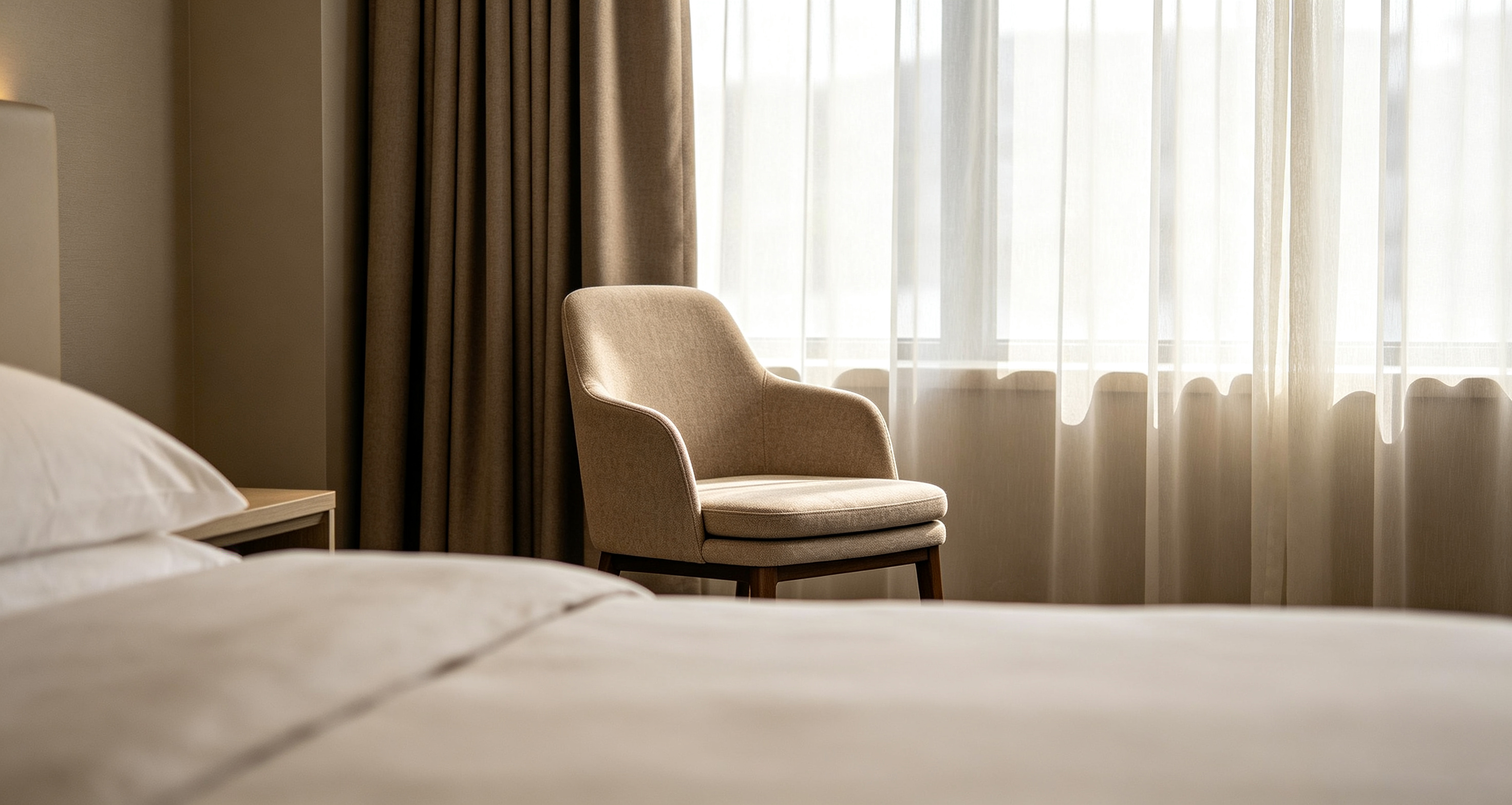
Hotel guestrooms demand flexible, space-efficient furniture that can adapt to shifting guest needs. Stackable guestroom chairs have become a staple in modern hotel FF&E packages because they solve a persistent operational pain point: limited storage space. A single guestroom may need extra seating for family groups, working travellers, or small in-room gatherings, yet the same room must remain uncluttered for standard two-person occupancy. When not in use, these chairs can be nested together and moved to storage closets, service corridors, or back-of-house areas, freeing up valuable floor space.
Many procurement teams treat stackable chairs as simple commodity items, comparing only unit price and visual style. This approach creates hidden risks. A chair that passes a basic static load test for a seated guest can still fail when stacked, as the weight of every upper chair presses down onto the frame, seat foam, contact bumpers and leg structure of the chairs below. Exceeding the manufacturer’s stack height limit leads to bent tubing, cracked plastic shells, crushed cushions, scratched frame finishes, unstable tipping stacks, and even workplace injury for housekeeping and setup staff. The difference between a safe, long-lasting stackable chair and a high-liability product lies in two core verified metrics: formal weight testing and enforceable stack height limits. This guide breaks down test protocols, performance benchmarks, material variables, storage planning, and procurement best practices for specifying stackable chairs for hotel guestrooms.
Why Guestroom Stackable Chairs Have Unique Testing Requirements
Stackable chairs used inside guestrooms operate under different conditions than banquet or event stacking chairs, even though they share the stacking function. Banquet chairs are stacked temporarily for events, often moved with dedicated dollies and stored in large purpose-built storage rooms. Guestroom stackable chairs face irregular, less controlled handling. Housekeeping staff may stack them quickly during turnovers, guests may attempt to stack extra chairs independently, and storage closets are often narrow, low-ceilinged, and packed with linens, amenities and cleaning supplies.
Guestroom chairs also need to balance comfort with stacking geometry. Most event stacking chairs are hard-shell or minimal padding, designed purely for short-term occupancy. Guestroom versions often include padded seats, slim backrest cushions, and soft upholstery that will compress under repeated stacking load. Foam density, fabric backing, and bumper placement all change how the vertical load transfers through the stack. A test that works for an unpadded polypropylene chair cannot automatically apply to an upholstered guestroom stackable chair.
There are two separate weight categories buyers must distinguish. The first is occupant weight capacity: the maximum live load the chair can safely support when a guest sits on it. The second is stack load capacity: the cumulative downward force that the lower chairs in a stack must withstand from the full weight of the chairs piled above. Many suppliers only advertise occupant weight ratings and omit stack load testing data entirely. This is a critical gap in specification. A chair rated for 150 kg seated occupancy can still deform permanently when stacked six or seven high, even if no guest is sitting on any of the chairs.
Core Weight Tests for Hotel Stackable Guestroom Chairs
Commercial seating standards such as BIFMA X5.4, EN 1728 and EN 16139 define the accepted test sequences for contract-grade stackable seating. For hotel FF&E procurement, samples should complete all relevant tests before mass production begins, and test reports must be tied to the exact frame thickness, foam formula, bumper material and upholstery specified in the order.
Static Seat Load Test
The static seat load test verifies the chair’s ability to support a seated guest. A uniformly distributed test load is applied to the seat surface and held for a set duration. For hotel guestroom use, the minimum recommended static seat load is 120 kg, while premium brands specify 150 kg for higher durability and wider guest accommodation. The test checks for frame deflection, weld separation, seat shell cracking, foam bottoming out, and fastener loosening. After the load is removed, the chair must not show permanent deformation that impacts stability or stacking alignment.
This test alone is not enough to approve stacking performance. It only simulates downward pressure from a person sitting on the chair, not the concentrated point loads that occur when one chair nests onto another. Stacking concentrates load onto small contact pads rather than spreading weight evenly across the whole seat.
Stack Compression Load Test
The stack compression test is the most important test for this furniture category. The test builds the stack up to the manufacturer’s claimed maximum stack quantity, then applies additional sustained vertical load to simulate long-term storage stress. The stack remains loaded for a defined holding period, usually 24 hours for hospitality-grade validation. Inspectors measure frame deflection, check welds, inspect compression of foam and bumpers, and verify that the chairs still nest smoothly after the load is removed.
A common failure mode in this test is soft rubber bumpers squeezing out of their mounting grooves, which changes the nesting geometry. Once bumpers shift, chairs lock unevenly, stacks become lopsided, and the risk of tipping rises sharply. Upholstered models also risk permanent foam compression marks on the seat cushion, which become visible blemishes once the chairs are unpacked and placed back in guestrooms.
Stack Drop and Impact Test
The stack drop test simulates real-world handling errors. Housekeeping staff may set a stack down heavily, or a stack may slip while being moved through narrow guestroom doorways or service corridors. Under EN 1728 protocols, a stacked set of chairs is lifted to a defined height and dropped onto a rigid test surface, repeating the cycle to check for structural failure. The test reveals weak welds, thin tubing that buckles under shock, brittle plastic shells, and poorly fitted glides or bumpers.
Many low-cost stackable chairs pass static load but fail impact testing. They look fine on the showroom floor, but after a few months of rough handling by housekeeping, stacks start to bend and wobble. For hotel projects with high room turnover rates, this test carries equal weight with static and compression testing.
Lateral Stability and Tip Test
Vertical load is only one hazard. Tall stacks are vulnerable to sideways tipping when bumped, pushed, or moved unevenly. The lateral stability test applies horizontal force to the top of a fully stacked pile to confirm the stack will not tip before individual chairs slide apart. This test directly informs the safe stack height limit. If a stack of 8 chairs tips under a moderate lateral load, the manufacturer’s advertised “8 high” rating is unsafe for hotel operational use, even if the chairs pass vertical compression.
This test also protects staff safety. A falling stack of metal or reinforced plastic chairs can cause serious injury, and hotel operators carry liability if they follow an unvalidated stacking specification.
Stack Height Limits: Variables and Standard Benchmarks
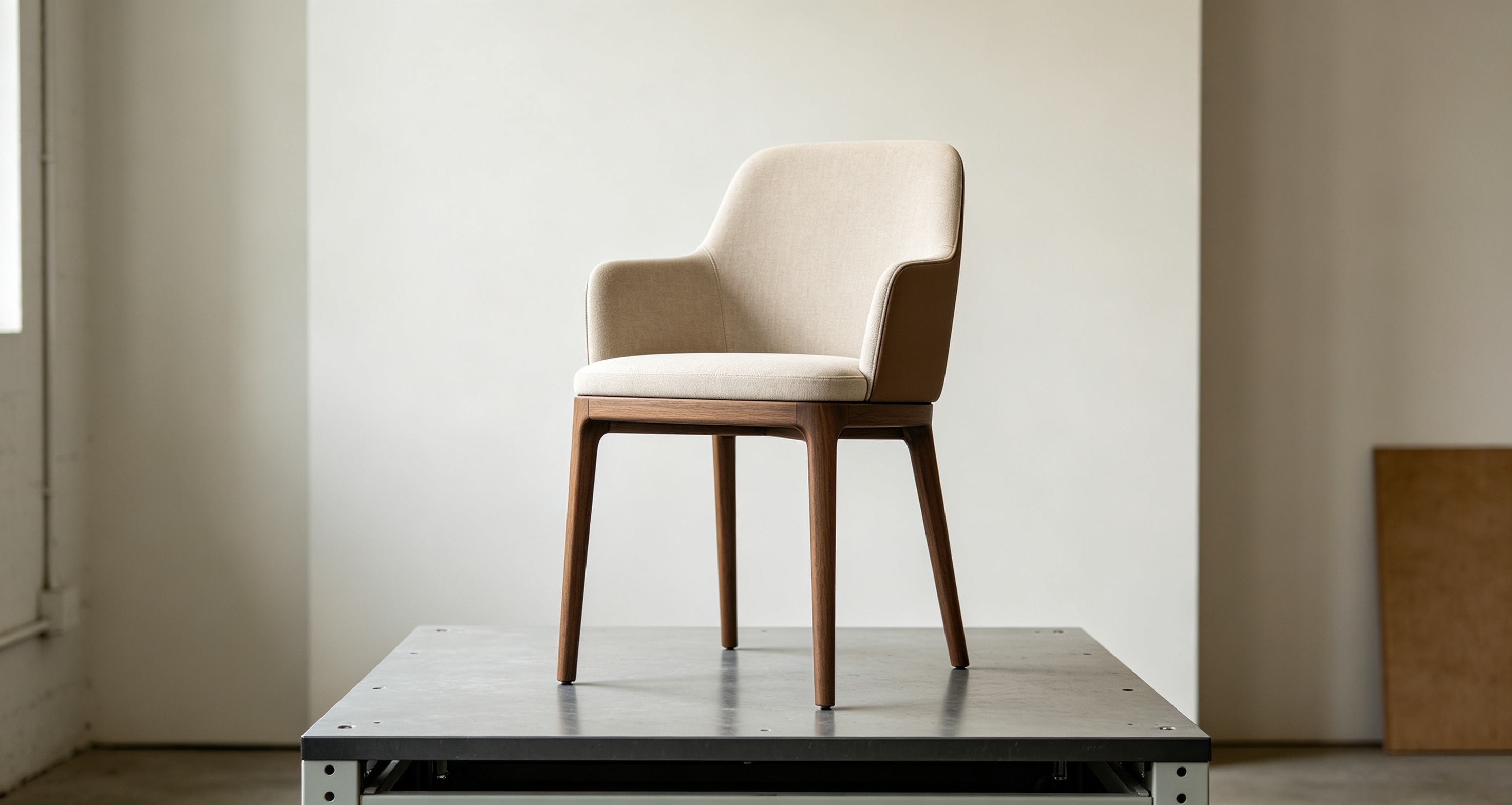
There is no universal stack height that applies to all guestroom stackable chairs. The safe limit depends on frame material, chair weight, whether the seat is upholstered, bumper design, sled or four-legged geometry, and overall chair profile. The table below summarises typical, test-verified stack ranges for guestroom-grade stackable chairs.
| Chair Type | Typical Material | Recommended Max Stack Height | Notes for Hotel Procurement |
|---|---|---|---|
| Unpadded polypropylene shell chair | Reinforced PP | 8–12 high | Light weight, good for storage closets; confirm UV stabilisation if used near windows |
| Slim metal frame, hard seat | Powder-coated steel / aluminium | 6–10 high | Aluminium stacks higher than thin-gauge steel; verify tube wall thickness |
| Upholstered padded seat stackable chair | Steel frame + foam + fabric | 4–6 high | Padding compresses under load; do not push to 7+ chairs unless independent stack test report supports it |
| Sled-base stackable guest chair | Continuous metal sled frame | 5–8 high | Sled bases improve lateral stability but require matching bumper spacing |
| Armrest stackable guest chair | Steel / PP | 3–5 high | Armrests limit nesting depth and create offset contact points; stacks are less stable |
Upholstered guestroom chairs are the most frequently mis-specified category. Designers often like padded stackable chairs for improved guest comfort, but they carry the lowest practical stacking limit. Foam acts as a compressible spring inside the stack. Over time, repeated stacking at excessive height creates permanent indentations, and the cushion no longer returns to its original shape. Guests will notice uneven seating surfaces, which leads to negative reviews about worn furniture.
Stack height also interacts with storage room dimensions. Buyers must calculate total stack height before ordering. If each chair adds approximately 120 mm when stacked, a stack of 6 chairs creates a vertical stack height of roughly 720 mm, plus clearance for lifting and dolly movement. Low-ceiling service closets often cannot accommodate 8 or 10 chair stacks safely, even if the chair is technically rated for that quantity. It is best practice to set the hotel operational limit one chair lower than the manufacturer’s absolute tested maximum, adding a safety margin for inconsistent handling.
How Frame and Bumper Design Control Stack Load Performance
The invisible components that determine stack success are the contact bumpers and nesting geometry. Stackable chairs transfer all vertical load through small, engineered contact points, not full surface contact. Hard plastic-on-plastic or metal-on-metal contact will scratch finishes, create noise during stacking, and concentrate stress at tiny points. High-quality guestroom chairs use dense elastomer or thermoplastic bumpers fixed at every nesting contact zone.
Bumper hardness is a key specification. Too soft, and the bumper compresses and deforms during stacking. Too hard, and it transmits shock directly into the frame tubing. Shore A hardness values between 60 and 75 are the standard sweet spot for hospitality stacking bumpers. Suppliers should not substitute cheaper foam bumpers for permanent stacking load, because foam bumpers degrade rapidly under repeated compression.
Frame tube wall thickness is another non-negotiable detail. Thin 0.8 mm steel tubing can support a seated guest, but multiple stacked chairs will gradually bend the top rail or leg structure. For guestroom stackable steel chairs, a minimum tube wall thickness of 1.2 mm is recommended for commercial use. Aluminium frames offer a better strength-to-weight ratio, but buyers must confirm alloy grade and wall thickness, as low-grade thin aluminium will fatigue and crack after repeated stacking cycles.
Sled-style bases are popular for guestrooms because they eliminate sharp leg points that can catch linens or scratch vinyl flooring. However, sled designs rely on perfectly aligned bumper placement. If bumpers are offset by a few millimetres, the stack will lean sideways, and stability falls dramatically. During sample approval, procurement teams should stack the chairs repeatedly by hand, inspecting alignment from the front and side of the stack.
Operational Risks of Ignoring Stack Height and Weight Limits
Cost pressure often pushes hotel operators to maximise storage capacity. Housekeeping teams may be instructed to stack chairs as high as possible to fit more seating into limited back-of-house space. This creates cascading operational problems.
First, premature furniture failure increases FF&E replacement cycles. Bent frames, cracked shells, and crushed cushions appear within 12–24 months instead of the expected 5–7 year service life. The cumulative replacement cost far exceeds the small savings from buying a lower-tested chair.
Second, guest experience suffers. Indentated cushions, wobbly frames, and scuffed finishes look neglected. Even if the chair remains functional, guests perceive worn furniture as a sign of poor maintenance. Guest reviews frequently mention broken or uncomfortable seating, and these reviews directly impact booking conversion.
Third, workplace safety liability rises. A tipping stack can injure housekeeping, maintenance, or event staff. Insurance providers and safety auditors will ask for test reports and stacking limits if an incident occurs. If the hotel was stacking chairs beyond the tested published limit, the operator’s liability exposure increases significantly.
Fourth, stacking damage creates maintenance bottlenecks. Scratched powder coating exposes bare metal to moisture, leading to rust, especially in humid coastal hotels. Maintenance teams spend extra time touching up frames or ordering replacement bumpers, diverting labour from higher-priority guestroom tasks.
Procurement Checklist for RFQ and Sample Approval
When adding stackable guestroom chairs to FF&E specifications, include these requirements in your RFQ document and verify them against pre-production samples and test certificates.
- Require separate test reports for occupant static load and stack compression load. Do not accept only a general seating load certificate.
- Confirm the maximum stack height is clearly printed on the product specification sheet, and the test report matches that exact stack quantity.
- Verify bumper material, shore hardness, and attachment method. Request spare bumper kits for ongoing maintenance.
- Request fatigue cycle data for upholstered models, specifically foam compression testing after repeated stacking cycles.
- Check frame tube thickness, alloy grade, and welding standards. All welds should be continuous and ground smooth for guestroom use.
- Perform on-site stacking stability tests with the approved sample. Test the advertised maximum stack height and observe lateral movement when gently nudged.
- Confirm replacement components are available for the full FF&E lifecycle, including seat shells, glides, and upholstery covers.
- Include a requirement that the supplier provide a simple operational label for storage areas, showing the safe stack limit for housekeeping staff.
Common Mistakes Buyers Make With Stackable Guestroom Chairs
The most widespread mistake is confusing event stacking chairs with guestroom stacking chairs. Event chairs are built for short-term occupancy and high stacking density, but they are rarely comfortable for guests who may sit while working, eating, or relaxing inside a guestroom. When buyers select cheap event chairs for guestrooms, they usually discover poor comfort alongside faster stacking failure.
The second mistake is trusting advertised stack height without independent test validation. Many suppliers print “stacks 10 high” on product images, but the claim is based on a single static visual stack, not a timed compression or impact test. The chair may stack neatly once, but fail under sustained storage load.
Third, buyers overlook floor protection tied to stacking. When a tall stack shifts, the bottom chair’s glides scrape flooring. Even a structurally sound chair can damage luxury vinyl, hardwood, or carpet in guest corridors. Matching glide material to the hotel’s floor finish is part of the full specification.
Fourth, designers overspecify upholstery on stacking chairs. Thick, high-loft cushions look luxurious, but they compress quickly in stacked storage. If padding is required, select high-resilience foam with a compression set rating below 10% for stacking applications.
Fifth, hotels fail to communicate stack limits to housekeeping teams. Even if the furniture is properly tested, staff who do not know the limit will stack chairs higher to save storage space. Simple visual signage and brief training reduce most stacking-related damage.
Long-Term Value of Properly Specified Stackable Guestroom Chairs
When weight testing and stack height limits are integrated into the FF&E specification process, stackable chairs become a highly reliable asset for hotel operations. They support flexible guestroom layouts, accommodate family and extended-stay guests, and reduce storage footprint without sacrificing safety or comfort.
A tested chair with a conservative stack rating has predictable maintenance costs. The hotel knows exactly how many chairs can be grouped together, how to store them, and what replacement parts to stock. Housekeeping workflows become safer, guestroom furniture stays in good condition longer, and the hotel avoids the reputational harm of worn, broken seating.
For modern hotel brands that regularly refresh guestroom layouts and adapt to changing traveller expectations, stackable guestroom chairs are more than a convenience item. They are a flexible furniture solution that balances design, operational efficiency, structural safety and guest comfort. The foundation of that balance is clear, verified weight testing and non-negotiable stack height limits.
FAQ
Q: Can I stack upholstered guestroom chairs to the same height as hard-shell plastic stackable chairs? A: No. Padded upholstered chairs have foam that compresses under vertical stack load. They almost always have a lower safe stack height, usually 4 to 6 chairs maximum, compared to 8–12 for reinforced polypropylene shell chairs. Always follow the stack compression test report for the padded version.
Q: What static seat load rating should I specify for standard hotel guestrooms? A: 120 kg minimum static seat load is the baseline for commercial guestroom use. Premium or upscale properties should specify 150 kg to accommodate a wider range of guests and add extra durability.
Q: Does a higher stack height rating always mean a better chair? A: Not necessarily. A high stack rating may be achieved by sacrificing comfort, padding or frame reserve strength. A chair with a moderate stack limit and robust test data is usually more suitable for guestrooms than a chair advertised to stack very high with limited supporting documentation.
Q: How often should I replace stacking bumpers? A: Bumpers are wear parts. Inspect them quarterly during routine FF&E checks. If bumpers are cracked, flattened, or missing, replace them immediately. Worn bumpers alter nesting geometry and create unstable stacks.
Q: Should housekeeping staff use stacking dollies for guestroom stackable chairs? A: Yes. Dollies reduce lateral shifting and drop impacts during transport. Even well-tested chairs will fail faster when stacks are carried manually or dragged across floors.
Post time: Nov-10-2026