
 joyce@taisenfurniture.com
 0086 15356090777


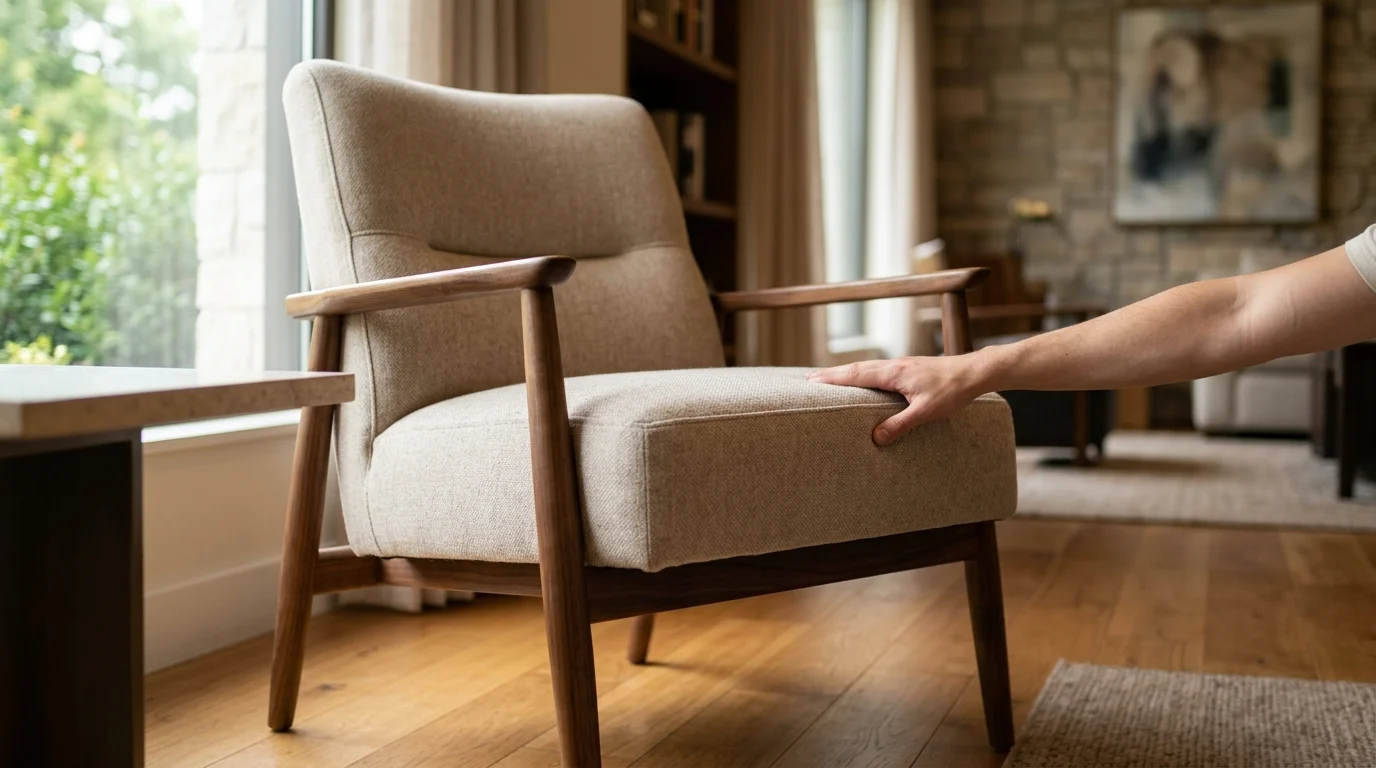
Why Seat Height and Cushion Density Matter
In the competitive hospitality sector, the physical comfort of a guest is inextricably linked to their perception of brand quality. While interior designers often prioritize silhouette, fabric, and color, the underlying biomechanics of lounge seating—specifically seat height and cushion density—dictate the actual user experience. These two ergonomic factors determine whether a chair facilitates relaxed socialization, comfortable dining, or awkward, unsupported posture.
When a guest sits in a hotel lounge, the chair must immediately accommodate their body weight without bottoming out, while the seat height must allow their feet to rest flat on the floor. Failing to optimize these dimensions results in concentrated pressure points, restricted circulation, and a fundamentally negative physical interaction with the environment.
Guest Comfort and Posture
The relationship between seat height and the popliteal fold (the back of the knee) is the foundation of seated comfort. If a seat is too high, the guest’s legs dangle, leading to pressure on the distal thighs and restricted blood flow. If a seat is too low—dropping below the standard 16 inches (40.6 cm)—the hip angle becomes acute. This forces the pelvis to rotate backward, flattening the lumbar spine and increasing disc pressure by up to 40%.
Cushion density works in tandem with height. A high-density foam prevents the pelvis from sinking too deeply into the chair frame. When guests sink below the intended seat plane, the ergonomic benefits of the chair’s backrest are nullified, forcing the user into a slouched posture that accelerates muscle fatigue.
Operational and Commercial Impact
Beyond individual comfort, ergonomic specifications carry measurable operational consequences. In food and beverage (F&B) integrated lounges, dwell time is a primary driver of revenue. Chairs optimized with a 17.5-inch seat height and supportive cushioning can extend guest dwell time by an average of 30 to 45 minutes, directly correlating with a 15% to 20% increase in secondary beverage or appetizer orders.
Conversely, overly soft or awkwardly proportioned seating complicates ingress and egress, particularly for older demographics or guests managing luggage. This friction reduces table turnover efficiency and increases the likelihood of negative reviews citing uncomfortable facilities. Investing in commercial-grade, ergonomically sound seating is therefore a direct investment in asset profitability.
Recommended Specifications by Hotel Area
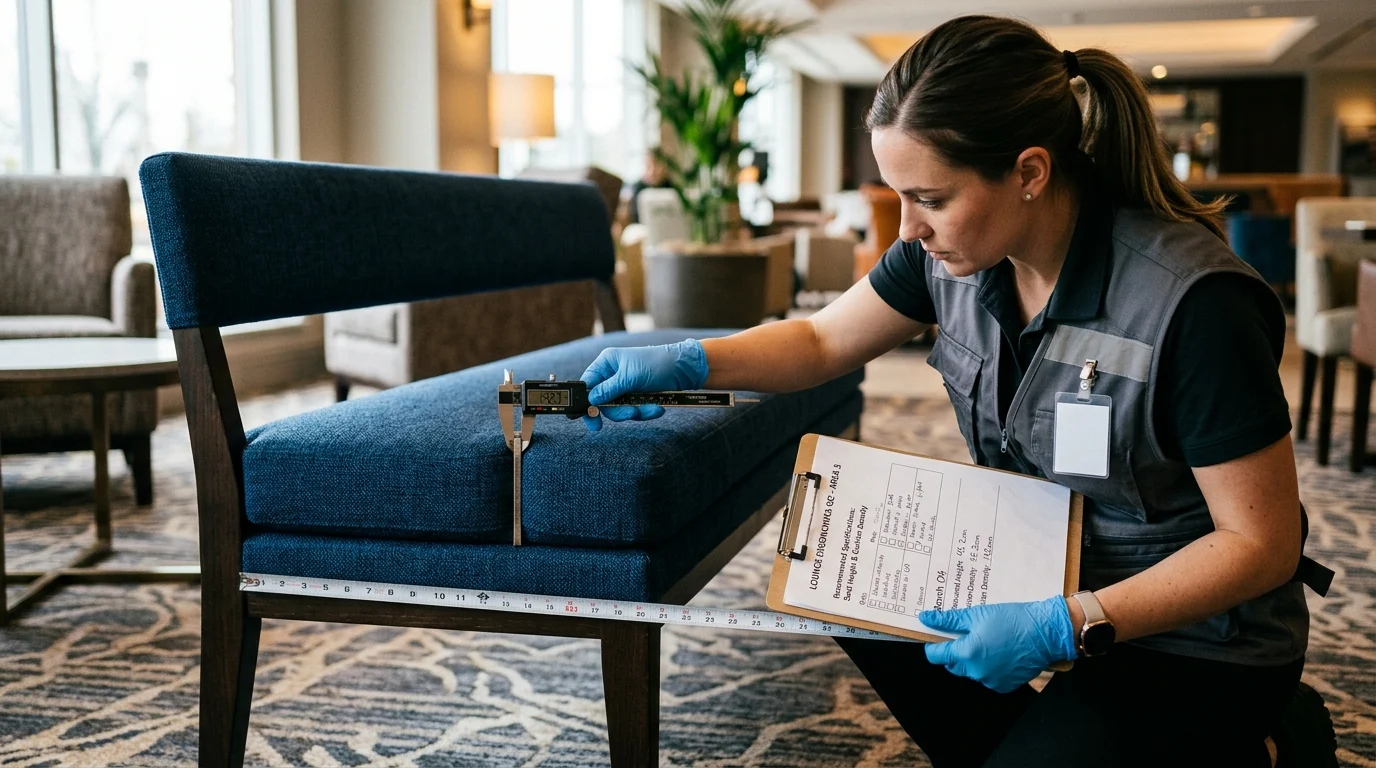
Lobby Lounges and Waiting Areas
Lobby lounges and transient waiting areas prioritize ease of movement. Guests in these zones are frequently transitioning from travel, often wearing outerwear, and carrying bags. Seating here must facilitate rapid sitting and standing.
For these areas, a higher seat height ranging from 17.5 to 18.5 inches (44.5 to 47 cm) is optimal. Cushion density should be strictly commercial-grade—typically 2.5 to 3.0 lbs/cu ft (40-50 kg/m³). This firmer specification prevents the guest from sinking, keeping their center of gravity elevated and making it biomechanically easier to stand up quickly when their transport or room is ready.
Bars, Clubs, and Premium Lounges
Premium lounges, bars, and club levels are designed for prolonged relaxation and socialization. Here, the ergonomic profile shifts to encourage a reclined posture and longer dwell times.
Seat heights in these zones can drop to between 15.0 and 16.5 inches (38 to 42 cm), paired with a deeper seat pan. To maintain comfort over several hours, the cushion architecture should utilize a dual-density approach. A firm base core (e.g., 2.5 lbs/cu ft) provides structural support, while a softer topper (e.g., 1.8 lbs/cu ft) or a down-alternative wrap offers an initial luxurious yield without sacrificing long-term spinal alignment.
Foam, Springs, and Webbing Options
The internal architecture of the chair dictates how cushion density performs in practice. High-resiliency (HR) polyurethane foam is the industry standard, but it must be supported by an appropriate suspension system.
| Zone | Optimal Seat Height | Recommended Foam Density | Back Pitch |
|---|---|---|---|
| Lobby / Transit | 17.5″ – 18.5″ | 2.5 – 3.0 lbs/cu ft | 100° – 105° |
| F&B / Cafe | 18.0″ – 19.0″ | 2.8 lbs/cu ft | 95° – 100° |
| Premium Lounge | 15.0″ – 16.5″ | Dual: 2.5 base / 1.8 top | 110° – 115° |
Pairing HR foam with 8-gauge sinuous springs or high-tension Pirelli webbing ensures the cushion maintains its structural integrity. When sourcing commercial furniture, procurement teams must verify that the webbing is stretched to a minimum 10% elongation to prevent the foam from prematurely sagging through the frame.
How to Compare Comfort and Performance
Evaluating the comfort and performance of hotel lounge chairs requires moving beyond subjective “feel tests” and relying on standardized, quantifiable metrics. Procurement and design teams must analyze specific engineering data to ensure the selected seating will perform under the rigorous demands of a 24/7 commercial environment.
Key Ergonomic Metrics
Seat height and density do not operate in a vacuum; they must harmonize with seat depth and back pitch. A standard commercial lounge chair features a seat depth of 20 to 22 inches (50.8 to 55.9 cm) and a backrest pitch between 105 and 115 degrees.
If the seat depth exceeds 22 inches, a standard 17-inch seat height will force shorter guests to slide forward, negating lumbar support and causing shear stress on the skin. Conversely, if the back pitch is too upright (under 100 degrees), a high-density cushion will feel excessively rigid, pushing the guest forward rather than cradling them.
Firmness, Resilience, and Support
To objectively measure firmness, the industry uses Indentation Force Deflection (IFD), which calculates the pounds of force required to indent a 4-inch foam sample by 25%. Standard hotel lounge seating requires an IFD rating of 35 to 45 lbs to ensure commercial durability and prevent the “bottoming out” effect.
Resilience is equally critical. The Support Factor (or compression modulus)—the ratio of 65% IFD to 25% IFD—should be 2.0 or higher. A foam with a 2.0+ Support Factor will feel comfortably soft upon initial contact but will firm up rapidly as more weight is applied, providing deep support for heavier guests.
Cleanability, Durability, and Weight
The density of the cushion directly impacts the overall weight of the chair, which has daily operational implications for housekeeping and banquet staff. A standard lounge chair built with a solid hardwood frame and 2.5 lbs/cu ft HR foam typically weighs between 45 and 60 lbs (20.4 to 27.2 kg).
Furthermore, the cushion’s resilience must be protected by highly durable upholstery. High-density foams exert more outward pressure against fabrics than softer foams. Therefore, the textile covering must possess high tensile strength, typically rated between 50,000 and 100,000 Wyzenbeek double rubs, to prevent premature seam slippage and fabric fatigue caused by the dense foam pushing back against the user’s weight.
Compliance, Testing, and Sourcing
Specifying the perfect ergonomic chair is only half the battle; ensuring that the product meets stringent commercial regulations and can be reliably sourced at scale is equally critical. Navigating the compliance landscape and implementing rigorous testing protocols protects the hotel from liability and premature capital expenditure.
Accessibility and Fire Safety Requirements
In many jurisdictions, seating must accommodate guests with limited mobility. The Americans with Disabilities Act (ADA) guidelines generally suggest that accessible seating should feature a seat height between 17 and 19 inches (43.2 to 48.3 cm) to facilitate safe transfers from wheelchairs or walkers.
Simultaneously, foam density and chemical composition must comply with local fire safety codes. In North America, polyurethane foam must pass the CAL 117-2013 smolder resistance test. In the UK and parts of Europe, the much stricter BS 5852 Crib 5 standard applies, which often requires the addition of combustion-modified high-resilience (CMHR) foam. CMHR foam tends to be inherently denser and firmer, which must be factored into the initial ergonomic calculations.
Mock-Ups, Samples, and Field Testing
Never commit to a large-scale procurement order without conducting a field test. Hotels should require manufacturers to provide a fully finished mock-up for a 90-day trial in a high-traffic back-of-house area or a controlled lobby zone.
During this period, facility managers should measure the foam compression loss. High-quality commercial foam should exhibit less than a 5% loss in height and firmness after 100,000 seating cycles. If the mock-up chair loses more than 0.5 inches of seat height during a 90-day trial, the density specification is insufficient for the property’s demands.
Supplier Evaluation Criteria
When evaluating suppliers, hotel groups must look beyond unit cost and assess the manufacturer’s operational capabilities. A reliable supplier should offer a minimum 5-year commercial warranty specifically covering foam resilience and frame integrity.
Additionally, procurement teams must confirm the Minimum Order Quantities (MOQs) for custom foam densities. While standard foams are readily available, specifying a precise dual-density HR foam layout might trigger MOQs of 20 to 50 units. Lead times for these customized ergonomic specifications typically range from 8 to 12 weeks, which must be integrated into the property’s critical path schedule.
How to Make the Final Selection
Bridging the gap between aesthetic vision and ergonomic reality requires a structured decision-making process. Cross-functional collaboration ensures that the final lounge chair selection satisfies the designer’s intent, the operator’s durability requirements, and the guest’s physical comfort.
Decision Matrix for Hotel Teams
To avoid subjective disagreements, hotel teams should utilize a weighted decision matrix during the final selection phase. This tool forces stakeholders to evaluate seating objectively against predefined commercial metrics.
| Selection Criterion | Weighting | Ideal Target Specification | Critical Red Flag |
|---|---|---|---|
| Ergonomic Fit | 35% | IFD 35-45 lbs, 17″-18″ height | IFD < 30 lbs (bottoming out) |
| Durability | 30% | HR Foam, >2.5 lbs/cu ft | Standard Polyurethane |
| Aesthetic Appeal | 20% | Matches brand narrative | Wrinkling upholstery over time |
| Total Cost of Ownership | 15% | 7+ year lifecycle, <$500/unit | < 3 year warranty |
By assigning a 35% weight to ergonomic fit and 30% to durability, the matrix prevents the procurement of visually stunning but structurally inadequate seating that will require replacement within a few fiscal cycles.
Guidance for Design and Procurement
Designers and procurement officers must align their schedules early in the FF&E (Furniture, Fixtures, and Equipment) phase. Upgrading from standard polyurethane foam to a high-resiliency, optimally dense foam typically incurs a 10% to 15% unit cost premium.
However, this upfront premium is a vital investment. Standard foams often degrade and lose their structural height within 2 to 3 years in a busy hotel lobby, leading to guest complaints and immediate replacement costs. In contrast, seating specified with the correct 2.5+ lbs/cu ft density and a 17-inch height baseline extends the replacement lifecycle to 7 years or more, drastically reducing the total cost of ownership while maintaining a superior standard of guest comfort.
Key Takeaways
- Specify lounge chair seat heights around 17.5 to 18.5 inches in lobby and waiting areas to support easier ingress and egress.
- Avoid seats below 16 inches because they can compress the hip angle, flatten the lumbar spine, and increase disc pressure.
- Use commercial-grade cushion foam around 2.5 to 3.0 lbs/cu ft to prevent bottoming out and maintain ergonomic support.
- Match seating specifications to each hotel zone because lobby waiting, social lounging, and F&B service require different posture and dwell-time support.
- Ergonomic lounge seating can extend guest dwell time by 30 to 45 minutes and may help increase secondary F&B orders by 15% to 20%.
Frequently Asked Questions
What is the ideal seat height for hotel lounge chairs?
For many hotel lounge settings, 17.5 to 18.5 inches is a practical range, especially in lobbies and waiting areas where guests need to sit and stand easily.
Why does cushion density matter in hotel seating?
Proper cushion density prevents guests from sinking too far into the chair, preserving posture, backrest support, and long-term comfort during extended use.
What happens if a lounge chair seat is too low?
A seat below about 16 inches can force the hips into a compressed angle, rotate the pelvis backward, flatten the lumbar spine, and increase disc pressure.
What cushion density is recommended for commercial hotel lounges?
Commercial-grade lounge seating commonly uses foam densities around 2.5 to 3.0 lbs/cu ft, offering durability and support for frequent guest use.
How can ergonomic lounge chairs affect hotel revenue?
Comfortable, well-proportioned seating can increase dwell time by 30 to 45 minutes, supporting additional beverage or appetizer orders in F&B-connected lounge areas.
Post time: Oct-12-2026