
 joyce@taisenfurniture.com
 0086 15356090777


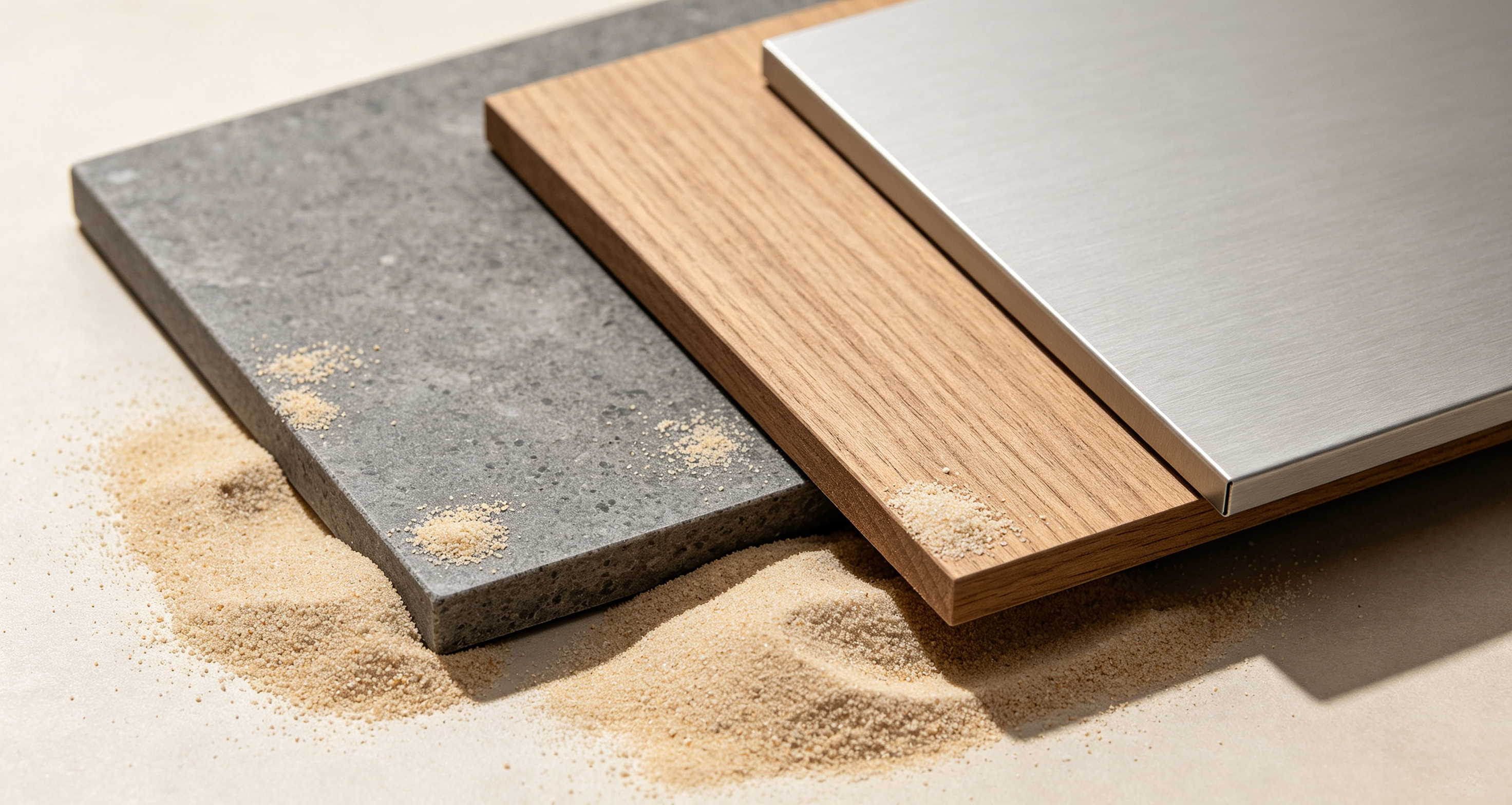
For FF&E procurement teams working on Middle East hotel projects, material selection cannot rely on standard specifications developed for temperate climates. The Gulf region presents a unique combination of extreme heat, intense ultraviolet radiation, frequent sandstorms, and large daily temperature swings that rapidly degrade ordinary contract furniture. Inland desert locations such as Riyadh face persistent fine abrasive sand and very low humidity, while coastal cities including Dubai, Doha and Jeddah add salt-laden sea mist to the environmental stressors. A furniture package that performs reliably in European or Southeast Asian hotels may develop faded finishes, cracked substrates, seized hardware and permanent surface scratches within 12 months after installation in the Middle East. This guide outlines core climate challenges, material grading standards, coating and hardware requirements, testing protocols, and procurement clauses for heat and sand resistant FF&E for hospitality projects.
Unique Climate Stressors for Middle East FF&E
Before reviewing material specifications, procurement teams must understand the four destructive forces that define the operating environment for hotel furniture across the GCC. Summer peak air temperatures often reach 45°C to 50°C, and surfaces exposed to direct sunlight such as terrace tabletops, poolside lounge frames and outdoor seating can exceed 60°C. The region also features dramatic thermal cycling: indoor spaces are cooled by year-round air conditioning, creating a temperature difference of 25°C to 30°C between air-conditioned lobbies and open outdoor zones. This repeated expansion and contraction loosens joints, breaks adhesive bonds and creates microcracks in paint and veneer surfaces.
Second, sand and dust from shamal and khamsin sandstorms act as a fine abrasive powder. Unlike ordinary household dust, desert silica sand scratches soft coatings, accumulates inside hinge tracks, drawer slides and lock mechanisms, and accelerates mechanical wear. If furniture hardware lacks sealed designs, sand particles will jam moving parts and cause squeaking, sticking and early failure.
Third, high UV radiation intensity breaks down organic coatings, fabric dyes, foam and plastic components. Without UV stabilizers, textiles fade unevenly, powder coating chalks, and synthetic woven materials turn brittle and split. Coastal sites add a fourth hazard: saline humidity. Salt particles penetrate tiny surface gaps and trigger galvanic corrosion on unprotected metal, even on indoor furniture near sea-facing balconies.
It is critical to separate inland desert specifications from coastal marine specifications. The same material that works for an inland city hotel may not meet the service life requirement for a beach resort, and this distinction must be clearly written into tender and BOQ documents.
Substrate Material Standards for Heat and Sand Resistance
Substrate selection is the foundation of durable FF&E in the Middle East. Many low-cost bids use standard MDF, particleboard or thin plywood, which are not suitable for this climate. Low humidity causes wood-based panels to lose moisture rapidly, shrink and crack, while sand abrasion quickly wears away unsealed edges.
Solid timber is permitted only under strict conditioning rules. Timber must be kiln-dried and pre-conditioned to match the destination’s equilibrium moisture content. For inland desert hotels, the target moisture range is 6% to 8%. For coastal projects, the target rises to 8% to 10%. Unconditioned solid wood will shrink or swell after shipment, opening veneer seams and creating gaps that trap sand. Natural rattan, seagrass and cane are not recommended for semi-outdoor or outdoor zones; they dry out, splinter and collect sand deeply within woven gaps.
High-density engineered boards with melamine or thermally fused laminate surfaces are the primary interior substrate choice. The board must be low-formaldehyde and dimensionally stabilized. Standard MDF is not acceptable; if MDF is specified, it must be moisture-resistant grade with full edge sealing on all four sides. Mineral-based substrates, fiber cement and sintered stone panels deliver superior thermal stability and sand abrasion resistance for high-wear horizontal surfaces.
Table 1: Substrate Material Grade Comparison for Middle East Hotel FF&E
| Substrate Type | Heat Stability | Sand Abrasion Resistance | Suitable Zone | Restrictions |
|---|---|---|---|---|
| Conditioned solid hardwood | Good | Medium | Indoor guestroom, majlis | Requires full sealing, not for outdoor |
| Moisture-resistant high-density MDF | Medium | Medium | Indoor cabinet, headboard | Must fully seal edges, forbidden for coastal balconies |
| Stabilized plywood | Good | Medium-High | Interior casegoods, back-of-house | PUR adhesive mandatory, no PVA glue |
| Sintered stone | Excellent | Excellent | Tabletop, vanity, outdoor counter | Higher cost, heavy weight |
| Particleboard | Poor | Low | Not recommended for any GCC hotel | Rapid edge breakdown, sand ingress |
| Marine-grade aluminum alloy | Excellent | High | Outdoor frames, terrace furniture | Requires certified powder coating |
Adhesive specification is non-negotiable for Middle East projects. PVA white glue will soften and fail under repeated high heat and low humidity. PUR reactive hot melt adhesive is the standard requirement. PUR maintains bonding integrity across -40°C to 120°C, resists dry shrinkage, and prevents veneer delamination even with large temperature swings. This clause must be added to every FF&E technical sheet, as many suppliers substitute cheaper glue to reduce quotation price.
Coating, Surface Finish and Upholstery Fabric Specifications
Surface finishes serve as the first defense against sand scratching and UV degradation. For wooden and engineered wood surfaces, multi-component acrylic polyurethane lacquer systems are preferred. The coating must include UV stabilizers and anti-abrasion additives. The minimum dry film thickness for interior top surfaces is 80 microns; semi-outdoor balcony furniture requires 100 microns or higher. Clear lacquer without UV additives will chalk and turn hazy within months after occasional sun exposure.
Powder coating for metal frames follows separate regional standards. Interior metal parts require a minimum coating thickness of 60 microns. Outdoor and coastal metal frames must reach 80–120 microns, with full chemical pretreatment including phosphating or chromate-free conversion coating before powder application. Polyester powder coating is the standard; cheaper epoxy powder is not suitable for outdoor GCC exposure because it degrades quickly under UV light.
For upholstery fabrics, procurement teams must specify ISO 105-B02 colour fastness to light, minimum grade 5. Fabrics should be tightly woven, high-performance solution-dyed polyester or olefin. Open-weave textiles trap sand between fibers and become extremely difficult to clean. Stain-resistant, closed-face fabrics simplify housekeeping work, as fine sand can be wiped or vacuumed away without embedding deep into the material. Foam cushions must be high-resilience, UV-stabilized polyurethane foam, density 35–45 kg/m³. Low-density foam will compress permanently and become brittle in high heat.
Sintered stone and large-format porcelain surfaces are ideal for tabletops, vanity tops and bar counters. They are non-porous, heat-shock resistant, scratch-resistant against silica sand, and do not require annual sealing. Quartz stone is not recommended for outdoor locations, as resin binders yellow and degrade under prolonged high temperature and UV exposure.
Hardware and Sealing Design for Anti-Sand Performance
Hardware failure is one of the most common FF&E warranty claims in Middle East hotels. Sand particles enter the sliding gaps of drawer runners, hinges, lock cylinders and pivot mechanisms, causing jamming, grinding and permanent wear. Hardware selection must be split between inland and coastal projects.
For inland desert hotels, 304 stainless steel hardware is acceptable if paired with sealed bearing structures. Within 20 km of the coastline, all exposed fasteners, hinges, slides and locks must upgrade to 316L marine-grade stainless steel. Standard zinc-plated or chrome-plated hardware will develop pitting corrosion in coastal saline air.
Sealed design is equally important as material grade. Drawer slides should be fully enclosed dust-sealed types, not open roller slides. Open tracks collect sand and cannot be fully cleaned by hotel housekeeping. Hinges need integrated dust covers, and lock mechanisms must include internal dust baffles. All screw holes and joint gaps on metal frames require silicone or EPDM sealing to stop sand from entering hollow tube cavities. Hollow metal frames without end caps trap sand inside, which rattles continuously when furniture is moved and creates noise complaints.
Table 2: Hardware Grading Standard for Inland vs Coastal GCC Hotel FF&E
| Hardware Item | Inland Desert Spec | Coastal Marine Spec | Mandatory Design Feature |
|---|---|---|---|
| Drawer slides | 304 stainless, sealed ball bearing | 316L stainless, sealed ball bearing | Fully enclosed dust shield |
| Cabinet hinges | 304 stainless with dust cap | 316L stainless with dust cap | Anti-sand cover over pivot |
| Frame fasteners | 304 stainless bolt and washer | 316L stainless bolt and washer | Thread locker + sealing washer |
| Lock cylinder | Brass internal with dust shutter | Marine grade brass | External dust flap |
| Bed and table leg feet | Rubber isolation cap | EPDM rubber cap | Fully sealed, no open cavity |
Many suppliers quote standard European hardware without dust sealing. It is not enough to write “stainless steel” in the specification; the dust-sealed feature must be explicitly required, and samples must be tested with sand exposure before mass production.
Required Testing and Third-Party Certification
Standard static load and fire tests are not sufficient to validate Middle East FF&E. Buyers need to require climate-specific accelerated testing reports from SGS, TÜV or other recognized independent laboratories.
First, UV ageing test following ISO 105-B02, minimum 500 hours exposure, no chalking, cracking or colour shift beyond acceptable delta E value. Second, sand abrasion test: Taber abrasion test for surface finishes, to confirm scratch resistance against silica sand. Third, thermal cycling test: 100 cycles alternating between 60°C and 18°C, to check for veneer delamination, coating cracking and joint loosening. Fourth, salt spray test for coastal hardware and metal frames, ASTM B117, minimum 1000 hours without visible corrosion.
Pre-shipment sample inspection should include a manual sand exposure check. Inspectors pour fine desert silica sand onto sliding hardware, operate the mechanism repeatedly, and verify that movement remains smooth without jamming. This simple practical test catches many design flaws that accelerated lab testing may not fully reproduce.
For GCC market compliance, materials must also align with relevant GSO standards, and flame spread certificates must meet local civil defence requirements. Fire safety compliance remains mandatory alongside heat and sand resistance.
Common Specification Mistakes in Middle East FF&E Projects
The first frequent mistake is using a single specification for inland and coastal locations. A project that covers both city guestrooms and beach cabanas cannot share the same hardware and coating standard. Cutting grade on coastal items leads to massive warranty claims.
Second mistake: ignoring edge sealing on wood panels. Sand invades exposed raw edges, causing panel chipping and moisture fluctuation damage. Many suppliers only spray front surfaces and leave edges bare to save time.
Third mistake: selecting open-weave fabric and loose cushion construction. Sand sinks deep into open fabric and between cushion seams, increasing housekeeping labour and shortening fabric life.
Fourth mistake: specifying epoxy powder coating for outdoor furniture. Epoxy powder has low UV resistance, and it will chalk and degrade quickly under Gulf sunlight.
Fifth mistake: relying on on-site maintenance to fix sand-related wear. Anti-sand performance must be built into the design and material selection at the factory, not solved by frequent lubrication or cleaning after installation. Lubricants trap fine sand and turn it into abrasive paste inside hardware tracks.
Procurement Checklist for Tender Documents
When drafting BOQ and technical specifications for Middle East hotel FF&E, embed these enforceable clauses:
- Classify all FF&E items into inland or coastal marine grade, clearly marked per building zone
- Ban PVA adhesive; specify PUR reactive hot melt for all wood veneer and panel bonding
- Define coating thickness, powder type and pretreatment method for all metal components
- Require sealed dust-proof hardware for all moving mechanisms, no open roller slides
- Request UV ageing, Taber abrasion and thermal cycling test reports for representative samples
- Confirm upholstery fabric light fastness grade minimum 5, solution-dyed closed weave
- Require end caps and cavity sealing for all hollow metal tubing frames
- Clarify acceptance criteria for salt spray test for coastal metal and hardware
- Confirm wood substrate moisture conditioning target matching project location
Core Takeaways
Middle East hotel FF&E procurement is fundamentally a climate-driven specification exercise. Heat, UV, abrasive sand and coastal salt mist work together to degrade standard furniture. The most reliable packages separate inland desert and coastal marine grades, use PUR adhesive for all wood assemblies, apply thick UV-stabilized coatings, select sintered stone for high-wear tops, and adopt fully sealed 316L hardware for seaside zones. Sand resistance is not just a surface finish feature; it must be built into hardware enclosure design, edge sealing and cavity protection. Procurement teams should reject generic temperate-climate quotations and enforce regional accelerated testing before mass production to reduce after-sales risk and extend furniture service life.
FAQ
Q1: Can I use 304 stainless hardware for beachfront resort furniture? A: Not recommended. Within 20 km of the coast, saline air will cause pitting corrosion on 304 stainless steel over time. 316L marine grade stainless is the correct specification for coastal projects.
Q2: What is the difference between polyester powder coating and epoxy powder coating for outdoor metal furniture? A: Polyester powder offers excellent UV resistance and is the accepted outdoor standard. Epoxy powder is cheaper but chalks and fades rapidly under strong sunlight, suitable only for fully shaded interior metal.
Q3: Is sintered stone necessary for all tabletops in desert hotels? A: For indoor guestroom desks and coffee tables, stabilized engineered board with high-grade PU finish is acceptable. Sintered stone is recommended for semi-outdoor, poolside and high-traffic bar tops where sand scratching and direct heat exposure are constant.
Q4: How do hotel housekeeping teams maintain sand-resistant FF&E? A: Vacuum closed-weave fabrics and sealed hardware regularly; avoid oily spray lubricants on drawer slides and hinges. Lubricants trap sand and accelerate abrasion. Sealed hardware is designed for dry cleaning only.
Q5: Does solid wood furniture have any place in Middle East hotel projects? A: Yes, but only after strict kiln drying and pre-conditioning to the local equilibrium moisture content, plus full sealing on all six sides. It is suitable for indoor majlis and guestroom feature pieces, not outdoor or balcony applications.
Post time: Nov-13-2026