
 joyce@taisenfurniture.com
 0086 15356090777


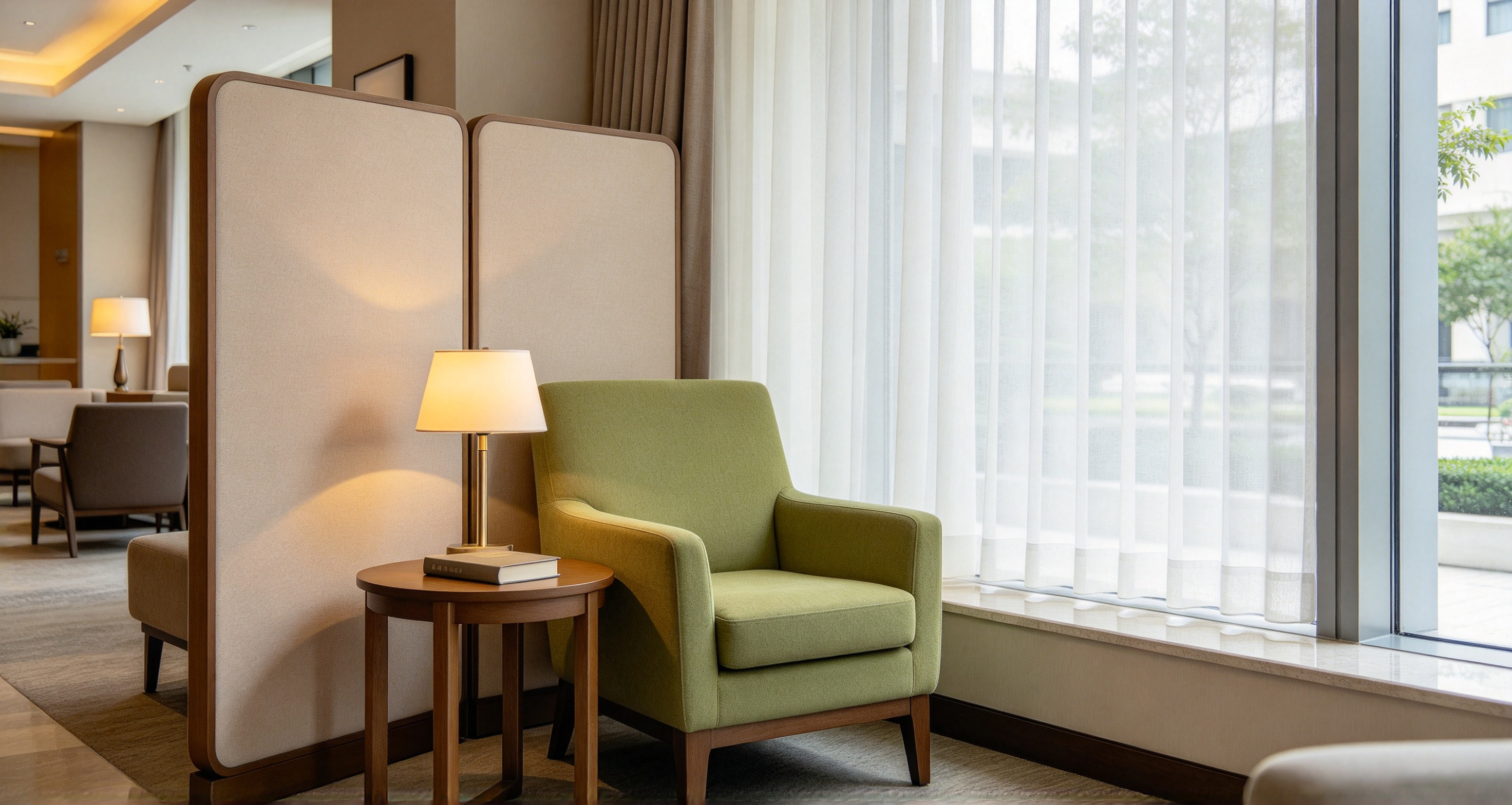
A quiet reading corner has slowly become a high-value hidden highlight in modern hotel public areas. Unlike busy lobby seating, restaurant booths or rooftop lounge zones, these small reading nooks are designed for low stimulation, focused rest and slow leisure. Guests who use reading corners often look for a break from noise, screen fatigue and hurried travel schedules. For hotel procurement and design teams, picking furniture for these spaces is not just about choosing attractive chairs and side tables. Every piece must balance acoustic performance, ergonomic comfort, visual calm, commercial durability, brand style and easy maintenance. Poorly selected furniture can turn a quiet reading corner into an uncomfortable, noisy space that guests avoid. Well-specified furniture, on the other hand, creates a memorable amenity that boosts guest satisfaction, positive reviews and repeat bookings. This guide walks through the core selection criteria, key furniture types, material rules, layout considerations and common mistakes to avoid when sourcing furniture for hotel quiet reading corners.
Core design goals for hotel reading corner furniture
Before diving into individual furniture specifications, it is important to clarify the functional priorities that separate reading corner furniture from ordinary lounge furniture. The first priority is noise reduction. The whole point of the space is quietness. Furniture should help absorb sound rather than reflect or amplify it. Hard, smooth surfaces such as solid polished stone, thin metal frames and glossy veneer bounce sound waves, making small corners feel echoey. Soft, dense upholstery and textured materials trap sound and soften the surrounding acoustic environment.
The second priority is sustained ergonomic comfort. Guests may stay in the reading corner for 20 minutes, one hour or longer. Short-term lounge seating that feels nice for five minutes often leads to sore backs, stiff necks or numb legs after extended sitting. Reading posture is different from casual chatting posture. Readers usually lean slightly forward to look at a book, e-reader or tablet, or lean back slowly while resting. The furniture needs to support both postures without forcing the body into awkward positions.
The third priority is low visual stimulation. Quiet reading zones should feel calm and uncluttered. Furniture with bold patterns, bright saturated colours, sharp flashing details or overly decorative shapes can distract readers. Neutral, muted tones, simple silhouettes and soft rounded edges are usually preferred.
The fourth priority is commercial durability and simple maintenance. Hotel public furniture faces heavy, unpredictable use. Spilled drinks, dust, occasional scratches and frequent wiping are normal. Fabrics must resist stains, frames must resist wobbling, and finishes should not show marks easily. Replacement parts should be available for long-term FF&E upkeep.
The fifth priority is flexible layout. Many hotels do not have a fixed large room for reading. Quiet corners are often carved out from leftover lobby space, beside stairwell landings, next to window walls or inside library-style small rooms. Furniture should be easy to rearrange, not overly heavy, and work well in compact footprint sizes.
Essential furniture types for hotel quiet reading corners
A complete reading corner set does not need many pieces. Overcrowding defeats the quiet atmosphere. The standard furniture list includes reading chairs, side tables, footrests, low book storage units, soft partition screens and small accent lighting stands. Each category has its own selection rules.
Reading chairs
The reading chair is the centrepiece of the whole corner. It is the most heavily tested item by guests and the most common source of complaints if poorly chosen. When comparing chair options, evaluate seat height, seat depth, backrest angle, head support, armrest design and foam density together.
Seat height should sit between 42 cm and 48 cm. This range lets most adult guests place their feet flat on the ground without slouching or dangling their legs. If the seat is too low, guests with longer legs will struggle to stand up, which creates inconvenience for older travellers. If the seat is too high, shorter guests cannot rest their feet properly, reducing circulation and comfort over time.
Seat depth is critical for reading posture. A seat depth of 50 cm to 58 cm works best for multi-user hotel environments. Too shallow, and guests cannot lean back comfortably. Too deep, and shorter guests will sink into the chair and lose lower back support. High-quality reading chairs usually include a built-in lumbar cushion or shaped back support instead of a flat slab of foam. A flat back forces the reader to hunch forward.
Backrest angles for reading chairs should fall between 100 degrees and 110 degrees. This is a gentle recline, not the deep tilt of a nap recliner. A fully upright 90-degree chair creates tension in the shoulders during long reading. Reclines steeper than 110 degrees encourage sleeping instead of reading, which may not fit the intended use of the quiet zone.
Armrests are strongly recommended. Armrests support the shoulders and forearms while holding a book or tablet. They should be padded, wide enough to rest arms naturally, and at a height that does not push the shoulders upward. Hard narrow metal armrests are uncomfortable for long sessions and should be avoided unless paired with thick padding.
Foam density is another non-negotiable specification. For hotel public reading chairs, seat foam density should be 30 kg/m³ to 38 kg/m³. Lower-density foam compresses quickly after repeated use, developing permanent dents and losing support within months. Higher-density foam feels overly firm and uncomfortable for relaxed reading. Backrest foam can be slightly softer, around 26 kg/m³ to 30 kg/m³, to balance support and softness.
Frame material choices include solid hardwood, plywood core and reinforced metal frames. Solid wood frames deliver a warm, natural look but require careful finish selection to prevent scuffs. Plywood cores covered with veneer offer stable performance and consistent pricing for large FF&E orders. Powder-coated steel frames are durable, lighter and easier to ship, but buyers must check that frame joints are fully welded and reinforced to avoid squeaking. Squeaky furniture is one of the biggest acoustic failures in quiet reading corners.
Side tables
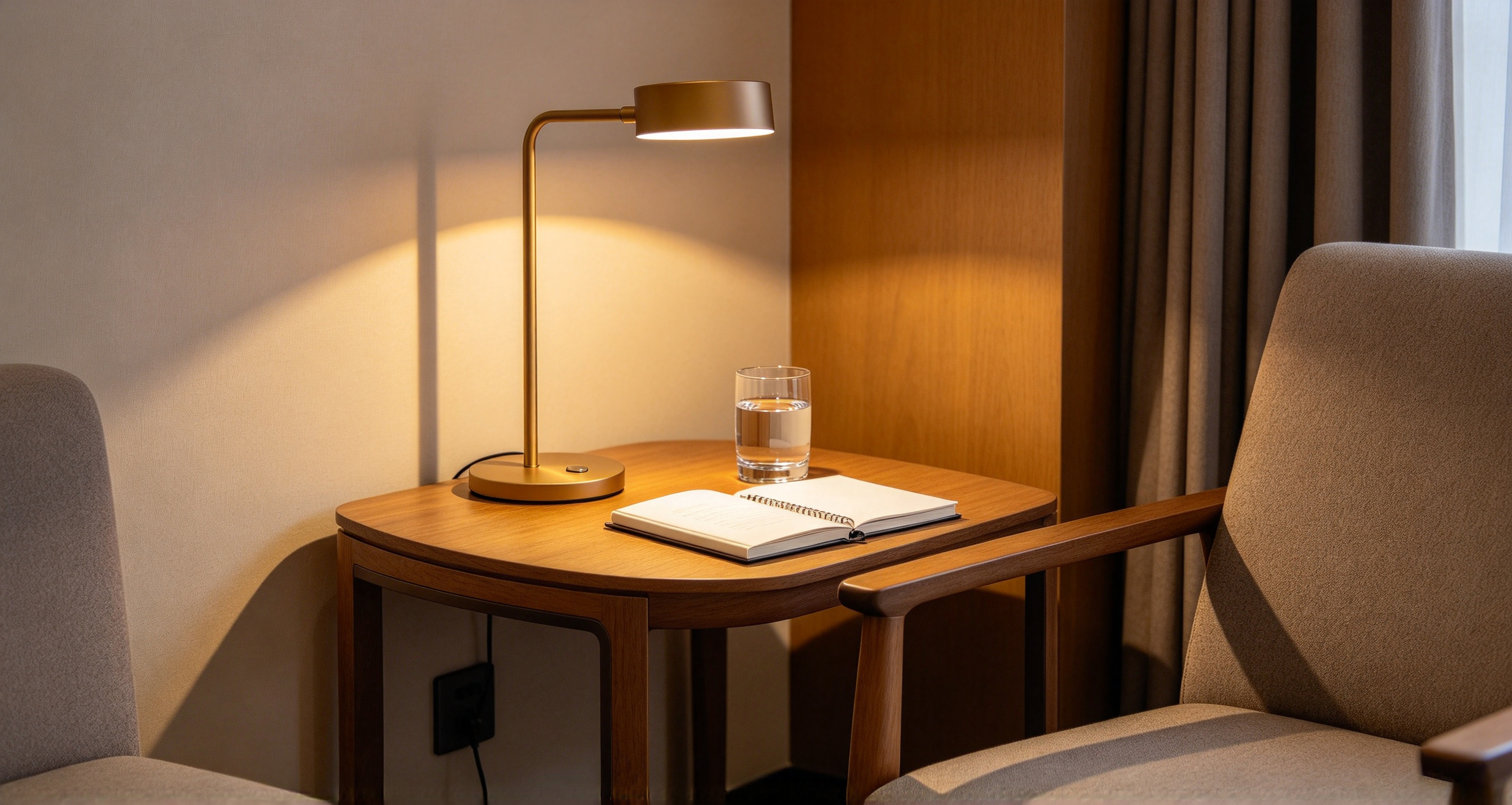
Side tables next to reading chairs hold books, e-readers, drinking glasses, small notebooks and reading lamps. Many designers make the mistake of choosing oversized coffee tables, which waste space and make the corner feel cramped. Side tables for reading nooks should have a compact footprint, usually 35 cm to 45 cm wide.
Table height must match the chair armrest height. The ideal table top sits 2 cm to 5 cm below the armrest. This allows guests to reach items without stretching upward or bending down constantly. If the table is too tall, it blocks arm movement; if too low, reaching for a drink creates fatigue.
Tabletop materials need to balance sound control and stain resistance. Solid wood with matte low-sheen finish is popular because it absorbs some sound and feels warm. Laminate surfaces are budget-friendly, stain-resistant and easy to wipe clean. Stone tabletops look premium but create sharp tapping noise when cups or books are set down. If stone is selected, pair it with soft felt pads on all accessories. Glass tabletops are not recommended for quiet reading corners. Glass reflects sound loudly and shows fingerprints and smudges very easily.
Table bases should be stable and free of wobble. Four-legged designs or single central heavy bases work well. Thin hairpin metal bases look stylish but can tip easily if guests lean on the table. For public hotel use, anti-tip hardware can be added, especially if the reading corner is located near children-friendly zones.
Footrests
Footrests are optional but highly recommended for premium hotel reading corners. A small ottoman or padded footstool lets guests elevate their legs and reduce pressure on the lower back and knees. Footrests should match the chair upholstery for visual consistency. The height of the footrest should be 20 cm to 28 cm. It should not be so tall that it forces the knees upward.
Avoid oversized footstools that block walkways. Many buyers select lightweight ottomans that guests can move in or out as needed. Removable, washable upholstery covers are a valuable feature for footrests, since they touch shoes and socks and collect dirt quickly.
Low book storage furniture
Book storage in reading corners does not need tall floor-to-ceiling bookshelves. Tall heavy shelving creates visual weight and may become a tipping hazard. Low, open book cabinets or floating low shelves are better suited. Height below 90 cm keeps the space open and maintains eye flow.
The storage furniture should have rounded front edges to prevent bumps. Closed cabinet doors can hide messy extra books and supplies, while open shelves display a small curated selection of books, magazines and decorative objects. If doors are included, use soft-close hinges. Standard slam hinges produce loud noise and ruin the quiet atmosphere.
Acoustic partition screens
In many hotels, reading corners sit inside open lobbies with no walls. Freestanding upholstered partition screens act as visual and sound barriers between the reading zone and the busy lobby. These screens are a form of functional furniture rather than simple decoration.
Effective acoustic screens have thick upholstery over sound-absorbing core material. Thin fabric screens only create visual separation and do almost nothing to reduce sound transfer. Screens should be at least 120 cm tall to block direct sound paths from standing guests nearby. Wide screens work better than narrow panels. Screens with heavy weighted bases will not tip over when brushed against.
Lamp stands
Floor reading lamps are part of the furniture package for reading corners. The lamp base must be heavy enough to resist tipping. Adjustable lamp heads are essential, so guests can direct light onto their reading material without shining bright light into adjacent seating. Warm colour temperature lighting, 2700K to 3000K, creates a calm atmosphere. Cool white 5000K light feels harsh and alerting, which conflicts with the relaxed purpose of the reading corner.
Material selection table for reading corner furniture
| Material Category | Recommended Options | Options to Avoid | Key Notes |
|---|---|---|---|
| Upholstery Fabric | OEKO-TEX certified woven polyester, performance linen blend, low-pile stain-resistant velvet | Thin shiny satin, loose open-weave fabrics, high-pile shag | Select Class 2 or Class 3 commercial abrasion rating, minimum 25,000 rubs |
| Frame Material | Reinforced plywood, solid oak, powder-coated welded steel | Thin hollow tubing, lightweight plastic frames | Check for squeak testing at factory sample stage |
| Tabletop Surface | Matte wood veneer, compact laminate | Clear glass, polished marble, high-gloss acrylic | Add felt pads as standard accessories for hard surfaces |
| Foam | 30–38 kg/m³ seat foam, 26–30 kg/m³ back foam | Ultra-low density soft foam | Request foam durability test report with FF&E samples |
| Finishes | Matte water-based low-VOC finish | High-gloss solvent-based paint | Low-VOC finishes support indoor air quality for enclosed reading spaces |
Acoustic rules that most buyers overlook
Quiet reading corners live or die by acoustic control, and furniture is the primary acoustic tool when dedicated wall insulation is not available. Hard, resonant furniture surfaces create reflective sound. Every time a guest sets a book down, shifts their body or moves a cup, the sound bounces across the small zone. Soft, porous upholstery captures sound energy and reduces echo.
A common mistake is mixing too many hard furniture items in one small corner. For example, a metal chair, glass side table and stone shelf together will make even a separated corner feel noisy. A balanced mix uses one or two hard surfaces at most, with upholstered chairs, ottomans and fabric screens to absorb sound.
Fabric selection directly affects sound absorption. Dense, tightly woven fabrics perform better acoustically than thin, loose fabrics. The fabric does not need to be extremely thick, but it should not be translucent. Suppliers can provide NRC (noise reduction coefficient) test data for upholstered furniture. For reading corner furniture, an NRC rating above 0.45 is desirable.
Also test for squeaking and creaking at the sample stage. Furniture joints, loose springs and poorly fitted foam will make noise when guests shift position. In a quiet corner, even small creaks become very noticeable. During sample inspection, ask multiple people to sit, shift weight and lean back repeatedly to check for unwanted sounds.
Colour and pattern guidance for calm reading spaces
Colour psychology plays a quiet role in how guests experience reading corners. The best colour palette leans toward muted, desaturated tones. Warm greys, soft sage, dusty blue, oat beige, light taupe and pale terracotta are all safe choices. These colours feel peaceful without drawing excessive attention.
Bright primary colours, large busy floral prints, geometric patterns with high contrast and neon accents are not suitable. They activate visual attention and make it harder to focus. If patterns are desired, use very subtle tone-on-tone textures rather than bold prints.
The furniture colour should coordinate with the wider hotel lobby palette, but it can sit slightly darker or softer to mark the reading corner as a separate zone. A small visual difference helps guests recognise that this is a quiet zone, even without signage.
Layout and furniture footprint planning
Even perfect furniture will fail if the layout is wrong. First, maintain clear circulation space. At least 75 cm of walking space should be kept between the reading corner furniture and the nearest walkway. If the path is too narrow, passing guests will brush against chairs and disrupt readers.
Single-seat reading nooks are the most popular format. One chair plus one side table works beautifully in small leftover spaces. Two-chair setups can be used, but they should be spaced apart enough to avoid conversation pressure. If two chairs are placed together, add a small acoustic divider between them so guests can read independently without feeling forced to interact.
Do not overcrowd a corner with too many furniture pieces. A single nook should serve one or two people only. Multiple reading zones can be spaced apart across the larger lobby instead of cramming all seating into one spot.
Furniture scale should match the space. High, bulky armchairs inside a tiny window recess will feel cramped. Slim-profile low-back chairs are better for compact areas. Larger, deeper chairs work well in generous, open bays away from heavy foot traffic.
Maintenance and procurement checklist for buyers
When sending specifications to furniture suppliers, include these requirements in the RFQ document to avoid post-delivery problems.
First, require commercial-grade performance documentation. Abrasion test reports for fabric, foam compression test data, finish scratch resistance reports and structural load test certificates should be supplied with pre-production samples.
Second, confirm replacement component availability. For hotel FF&E, it is important that replacement cushions, fabric covers and hardware can be ordered separately for years after installation. If the supplier discontinues the upholstery line quickly, a single stained chair cannot be repaired and must be fully replaced.
Third, confirm cleaning guidance. The supplier should provide clear instructions for stain removal. Water-cleanable fabrics are easier for hotel housekeeping teams. Fabrics that require only dry cleaning create operational difficulty in busy hotels.
Fourth, confirm stacking or moving options if the hotel needs flexible space. Some venues convert reading corners into event space occasionally. If reconfiguration is required, select lightweight furniture that can be moved safely by staff. Heavy fixed furniture is suitable only for permanent dedicated reading zones.
Fifth, include anti-tip requirements for tall storage furniture and freestanding screens. Even if the reading corner is not marketed for children, all public hotel furniture should meet basic stability standards.
Common mistakes to avoid when selecting furniture for reading corners
The first common mistake is selecting residential lounge furniture for hotel public use. Home reading chairs look comfortable in photos but lack the structural reinforcement, abrasion resistance and anti-squeak engineering required for daily public use. They wear out quickly and become noisy.
The second mistake is prioritising visual style over acoustic performance. Many designers fall in love with sleek metal and glass furniture sets, not realising these pieces destroy the quiet purpose of the reading corner.
The third mistake is choosing chairs that are too deep or too reclined. A deep nap chair looks luxurious, but it is not designed for active reading. Guests slip down and cannot maintain a good reading posture.
The fourth mistake is ignoring lighting integration. A beautiful chair paired with poor lighting makes the corner unusable. Lamp stands should be considered core furniture rather than an afterthought decoration.
The fifth mistake is placing reading furniture directly beside loud sources. Even the best acoustic furniture cannot fully block constant noise from front desks, bar service areas or main entry doors. Furniture selection cannot fix a bad location.
The long-term value of well-specified reading corner furniture
For hotels, quiet reading corners are a low-cost, high-impact amenity. Many travellers want a peaceful space away from work emails, loud family members and busy lobby activity. When the furniture is comfortable, quiet and visually calm, guests stay longer, relax more and remember the hotel positively. These guests often leave detailed positive reviews mentioning the quiet reading space, which attracts similar travellers who value slow, peaceful hospitality.
Well-specified furniture also reduces long-term operational costs. Durable, stain-resistant upholstery and stable frames reduce replacement frequency. Squeak-free, low-maintenance furniture cuts down on maintenance calls and guest complaints. The furniture supports the brand promise of thoughtful guest experience, not just filling empty floor space.
FAQ
Q: Can dining chairs be repurposed for reading corners to save budget? A: It is not recommended as a primary choice. Dining chairs are built for short upright sitting. They lack lumbar support, padded armrests and the foam density needed for long reading sessions. If budget is tight, use dining chairs only for secondary, low-usage corners and add thick after-market lumbar cushions.
Q: How many reading corners should a hotel lobby include? A: There is no fixed number. The rule is one seat per 25 to 40 square metres of lobby public space, separated into small individual nooks rather than grouped together. Spread-out small corners work better than one large reading zone.
Q: Is leather upholstery a good choice for reading chairs? A: Leather is durable and easy to wipe, but it has two drawbacks. It is slippery, so guests slide forward when reading, and it reflects sound more than woven fabric. If leather is selected, choose textured aniline leather and add thick lumbar cushions.
Q: Should reading corner furniture be fixed to the floor? A: Most reading furniture can be freestanding. Low book cabinets and acoustic screens should include anti-tip hardware. Chairs and side tables normally stay loose so guests can adjust their position slightly.
Q: What fabric rub count should I specify for reading corner upholstery? A: Aim for a minimum of 25,000 double rubs for commercial hotel public seating. For high-traffic lobbies with heavy use, specify 40,000 double rubs or higher.
Post time: Nov-09-2026