
 joyce@taisenfurniture.com
 0086 15356090777


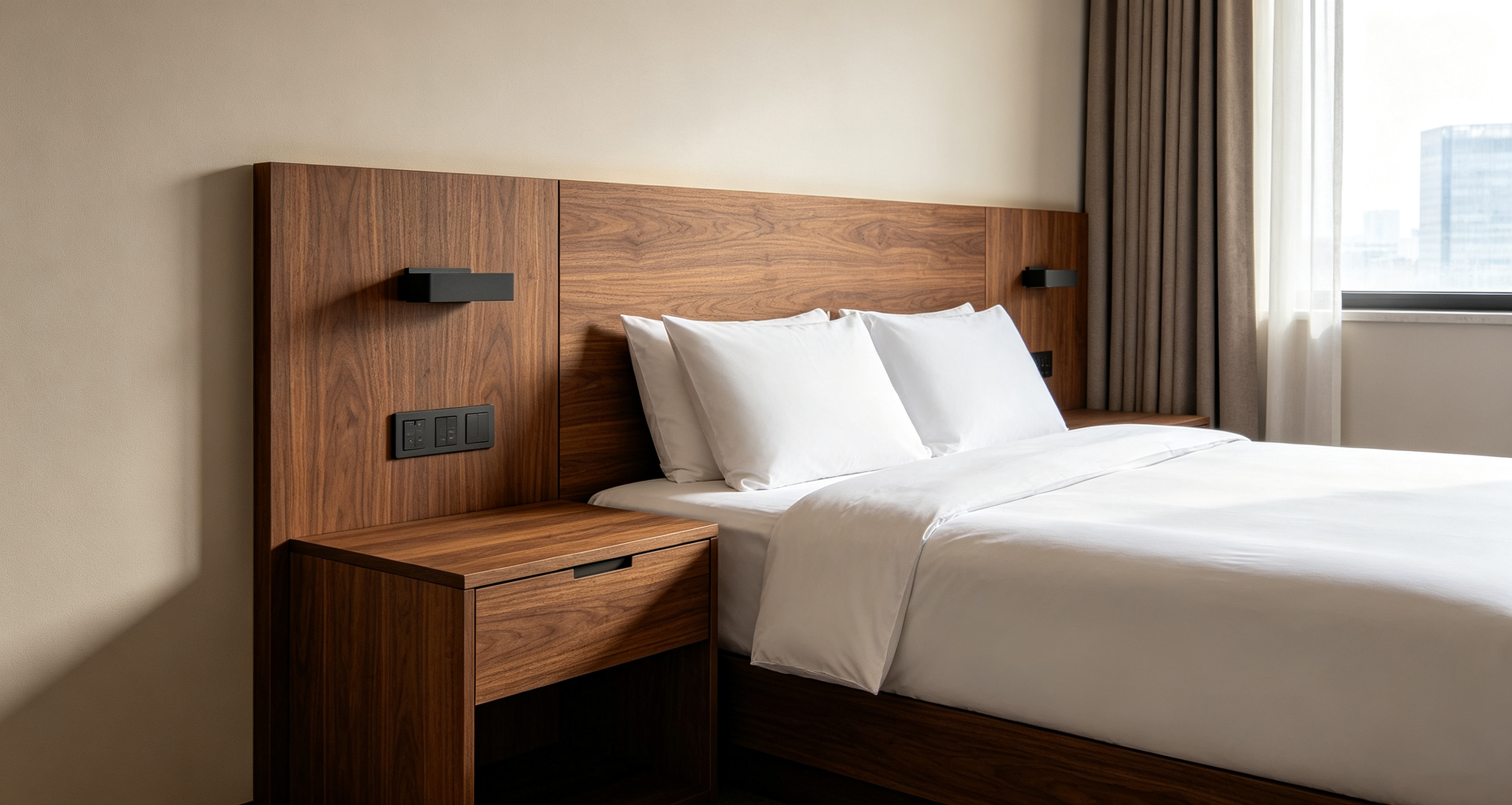
Hotel FF&E teams operating in arid zones face a recurring, costly issue: veneer cracking on casegoods, headboards, desks, wardrobes and wall panels. Unlike solid timber, thin veneer is extremely sensitive to rapid moisture loss. In dry climates, low relative humidity, continuous air conditioning, direct sunlight and heating pull moisture out of the wood grain quickly. The veneer shrinks faster than its substrate, creating tensile stress that leads to fine hairline cracks, grain checking, edge lifting and full delamination. Once cracking appears, repairs are visible, expensive, and rarely match the original finish. For hotel operators, this means premature replacement, negative guest reviews, and unplanned CAPEX spending. This guide breaks down the root causes, material selection rules, factory production controls, pre‑shipment conditioning, on‑site installation protocols, and long‑term maintenance standards that procurement teams must specify to protect veneered furniture in dry climates. It also includes practical testing benchmarks and common specification mistakes that regularly trigger veneer failure.
Why veneer cracks in dry hotel environments
Wood is hygroscopic. It continuously absorbs or releases moisture until it reaches equilibrium with the surrounding air. Veneer sheets are typically 0.6 mm to 1.5 mm thin, so their moisture content changes far faster than the engineered substrate underneath. When ambient relative humidity drops below 30% RH, wood cells lose bound water and shrink. The top veneer layer contracts, while the core panel remains more stable, and the stress creates cracks along the grain, at knots, at end grain edges, and around cutouts such as drawer openings and TV cutouts.
Dry climate hotel environments have unique aggravating factors. Many desert and high‑altitude locations naturally sit at 10–25% RH outdoors. Constant HVAC systems further dehumidify indoor air, pushing RH down to 20–28% for months at a time. Furniture placed near AC diffusers, radiators, large south‑facing windows, or glass curtain walls receives uneven drying. One side of a cabinet may lose moisture rapidly while the shaded side stays stable, creating uneven shrinkage stress.
A common misconception among procurement teams is that high‑quality veneer species alone will stop cracking. No veneer species is fully immune. Oak, ash, walnut and mahogany all have different shrinkage coefficients, but all will check if moisture swings are too aggressive. The difference is not invulnerability, but the rate of moisture exchange and the threshold at which visible cracks form.
Table 1: Shrinkage characteristic of common hotel veneer species for dry climate specification
| Veneer Species | Tangential Shrinkage Rate | Relative Cracking Risk | Best Fit for Dry Climate |
|---|---|---|---|
| White Oak | 7.8% | Medium | Yes, with full sealing and stable substrate |
| Walnut | 7.2% | Medium | Yes, avoid thin 0.6mm veneer |
| Ash | 8.5% | High | Use only 1.0mm+ veneer, not recommended for low‑humidity lobby zones |
| Teak | 5.2% | Low | Excellent, premium choice for dry climate FF&E |
| Sapele | 6.8% | Medium | Acceptable, requires strict moisture matching |
| Dyed recon veneer | 6.0% | Medium‑Low | Good value option, consistent grain stability |
This table helps buyers avoid selecting high‑shrinkage veneer for high‑risk locations such as sun‑exposed lobby consoles, hallway credenzas, and furniture directly under air vents.
Factory controls: moisture matching and acclimation before lamination
The single most important specification for dry‑climate veneered furniture is moisture matching between veneer, adhesive and substrate. Many veneer failures happen before the product leaves the factory, not after delivery. If the veneer is glued at 11–12% MC while the MDF, plywood or particleboard substrate is at 7–8% MC, the veneer will lose moisture and shrink once it arrives in a dry hotel space. The glue bond cannot absorb this differential movement, and cracks appear within weeks of installation.
Qualified hospitality furniture manufacturers must run climate conditioning chambers. Veneer batches and substrates need to be stabilized together in a controlled environment set to the target equilibrium moisture content of the project destination. For most dry climate hotel projects, the target finished product moisture content is 6–8%. The veneer and substrate must sit in the same conditioning room until their moisture readings differ by less than 1%. This is a non‑negotiable test point for procurement checklists.
Adhesive selection is equally critical. Standard white PVA glue is not ideal for extreme dry climate FF&E. Low‑moisture, flexible structural adhesives designed for veneer lamination should be specified. Rigid glue lines cannot accommodate minor dimensional movement. Flexible cross‑linking PU adhesives allow micro‑movement without transferring stress directly into the veneer surface. The glue spread rate also matters: too little creates voids; too much excess glue can lock veneer in place and trap internal stress.
Sand sequence and pre‑sealer coats form the next line of defence. Many factories rush finishing by applying topcoat directly after veneer sanding. Open grain pores act as fast moisture escape routes. A penetrating sealer coat, followed by a sanded sealer build, slows moisture transfer evenly across the whole surface. End grain sealing is frequently overlooked. End grain absorbs and releases moisture 3–5 times faster than face grain, so unsealed edges are the number one starting point for spreading cracks. All cut edges, mitre joints and machined openings must receive edge sealer before veneer application.
Table 2: Mandatory factory process checklist for dry‑climate veneer FF&E
| Process Step | Required Specification | Acceptance Threshold |
|---|---|---|
| Veneer conditioning | Stabilized at project target RH for minimum 72 hours | MC reading ±1% between veneer and substrate |
| Substrate selection | Low‑dimensional stability MDF, marine plywood or engineered core | No warpage after 24hr dry cycle test |
| Adhesive type | Flexible PU veneer adhesive, low water content | Pass veneer delamination test after dry cycling |
| Sealer system | Penetrating sealer + 2 sanded build coats before topcoat | No open grain or unsealed end grain |
| Post‑finishing conditioning | Finished furniture held in low‑RH conditioning chamber 48–72hr | No surface checking after accelerated dry test |
Substrate choice: not all panels perform equally in dry air
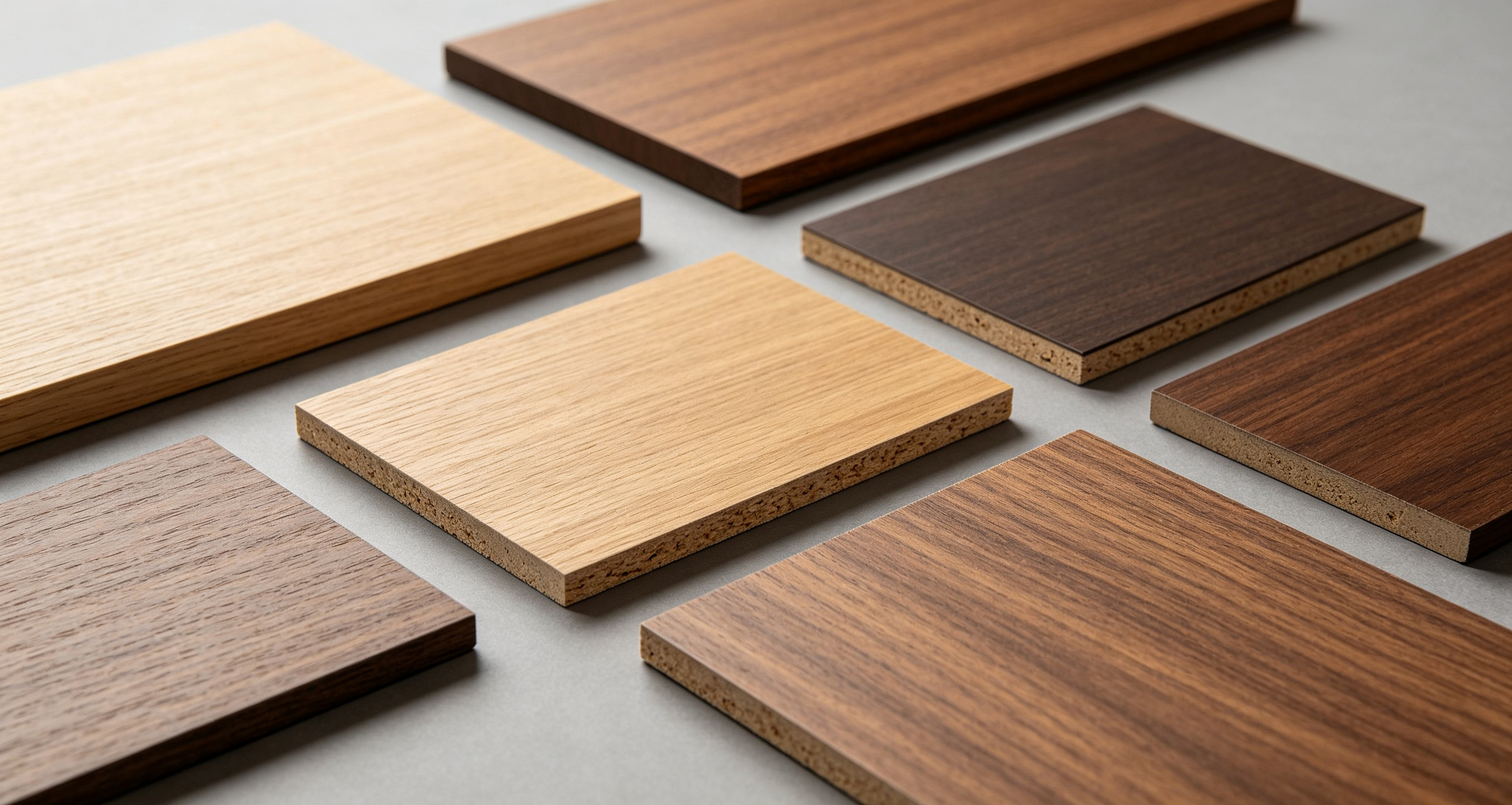
Procurement teams often focus only on veneer grade and finish, but the substrate is the backbone of dimensional stability. Solid timber substrate is rarely suitable for large veneered panels in dry climates. Even kiln‑dried solid cores will move unevenly and pull veneer apart.
Medium‑density fibreboard (MDF) is the most common substrate, but not all MDF grades are the same. Standard MDF can shrink significantly when RH drops below 30%. For dry climate projects, specify low‑shrinkage, moisture‑resistant MDF with a certified low linear expansion rating. Multi‑ply hardwood plywood is the next stable option, as cross‑laminated layers counteract directional shrinkage. Avoid lightweight particleboard for high‑visibility veneered casegoods in arid locations; its internal structure is prone to uneven shrinkage and core failure under repeated dry cycles.
For large panels such as headboards and built‑in wardrobe panels, movement allowance is essential. Even stable substrates move slightly. Factory drawings must include expansion gaps, floating panel construction, and slotted screw mounting points. Fully locked, rigid fixings prevent natural minor movement and concentrate stress into veneer cracks. Many hotel millwork vendors skip floating panel details to simplify production, which creates warranty headaches for the operator.
Veneer thickness also factors into durability. Thin 0.6mm veneer is widely used for cost‑sensitive hotel projects, but it has very little tolerance for moisture fluctuation. In dry climates, 1.0 mm minimum veneer is strongly recommended. Thicker veneer distributes shrinkage stress more gradually and resists checking better. Recon veneer is a reliable alternative when natural veneer cost is constrained; it has uniform density and consistent shrinkage behaviour, which reduces random cracking risk.
Finishing system: slow moisture transfer is the goal
The finish is not just decorative. It functions as a moisture barrier. A high‑performance finish slows the rate at which water vapour passes in and out of the veneer surface. The goal is not to fully stop moisture exchange, which is impossible, but to slow it down so that veneer and substrate change moisture at nearly the same speed.
Oil‑only finishes are poor for dry climate hotel furniture. Natural oils penetrate but do not form a continuous vapour barrier. They wear quickly under commercial cleaning cycles and require frequent reapplication. Single‑component lacquers also have limited performance. The best specification is a multi‑coat catalyzed conversion varnish or two‑component polyurethane system with low permeability. The coating must be flexible, not brittle. Hard, brittle topcoats will crack along with the veneer when wood shrinks, creating visible spiderweb checking across the surface.
Finish testing should include accelerated dry cycling. A sample panel is cycled between 25% RH and 45% RH repeatedly. The inspector checks for hairline cracks, finish crazing, edge lifting and grain checking. This test simulates years of seasonal HVAC fluctuation in a compressed timeframe. It is a simple test that filters out low‑quality finishing vendors before mass production starts.
Packaging, shipping and site acclimation: avoid shock drying
Many veneer cracking failures happen during transit and installation. Furniture built and finished in a humid factory environment, then shipped directly into a desert hotel, experiences extreme moisture shock. If unpacked immediately, the veneer rapidly loses moisture and cracks within days.
The correct process is phased acclimation. Crates should remain sealed after arrival at the hotel site. The furniture stays packaged inside the finished guestroom for 72–96 hours, allowing the veneer and substrate to slowly equalize to the site RH. The HVAC system must be stabilized before unpacking. Hotel construction teams often run the AC at maximum dry‑out mode during fit‑out, driving RH down to 15–20%. This is the worst possible condition for new veneered furniture. FF&E handover schedules should require the mechanical team to balance indoor RH to 40–45% before furniture delivery and unpacking.
Packaging materials also matter. Breathable wrapping, not fully airtight plastic, is required. Sealed plastic traps condensation inside the crate, and when opened, the furniture goes from high trapped humidity straight into ultra‑dry air. That rapid swing is one of the most common avoidable causes of veneer checking in new hotel openings.
On‑site installation rules and space planning
Placement strategy is a low‑cost, high‑impact control measure. The procurement and interior design team should mark furniture zones during construction documentation. Veneered casegoods should not be placed directly under AC supply vents, near heating units, or within 1.5 metres of unshaded glass windows. Curtains, blinds and window film reduce radiant heat and solar drying on veneer surfaces.
Fixed millwork such as built‑in vanities and wall panels must use floating installation. Installers should not caulk every joint tightly. Caulk can lock panels and stop natural movement. Slotted mounting brackets allow slow dimensional change without transferring stress into veneer faces. Installers should also avoid uneven site conditions. If one side of a wardrobe sits against a cold exterior wall and the other side faces warm dry room air, differential drying will create cracking.
Ongoing hotel operation and maintenance standards
Even perfectly manufactured veneered furniture will fail if the hotel runs extreme, unstable humidity year‑round. The target operating RH range for veneered FF&E is 40–45%. In dry climates, this means whole‑building humidification, not just portable room humidifiers. Many hotel operators resist humidification due to perceived mould risk, but stable moderate RH is far safer than rapid swings between 20% and 50%. Mould risk only rises above 60% RH, so controlled humidification inside the 40–45% window is safe.
Housekeeping teams also need training. Cleaners should avoid harsh alcohol‑based cleaners that strip finish and accelerate surface drying. Microfiber cloths with neutral pH wood cleaner are specified. Furniture polish with silicone builds a temporary shine but breaks down the varnish barrier over time, increasing vapour permeability. Maintenance logs should include monthly RH spot checks in guestrooms, lobby, corridors and restaurant zones.
Early warning signs allow intervention before cracks develop. Fine hairline checks along grain, slight lifting at veneer edges, and visible finish crazing are signals that RH is too low or fluctuating too fast. The engineering team should adjust HVAC humidification before widespread damage appears.
Common specification mistakes that buyers make
The first mistake is writing a veneer grade specification without writing moisture conditioning and dry‑cycling requirements. Vendors can supply premium veneer, but skip climate stabilization, and the product still fails. A second error is mixing different substrate types in the same project without matching their moisture targets. Third, buyers often approve thin 0.6mm veneer for high‑exposure dry areas, relying only on finish to protect it. Fourth, delivery schedules are coordinated with construction dry‑out, when indoor air is intentionally extremely dry. Finally, many FF&E purchase orders lack warranty language for veneer checking. The warranty should explicitly exclude failures caused by uncontrolled site RH, but require the factory to provide accelerated dry cycle test reports before shipment.
Final summary
Veneer cracking in dry climate hotels is driven by differential shrinkage between thin veneer and its substrate. Successful prevention is not a single fix, but a layered system: selecting stable veneer species and adequate thickness, matching moisture content at the factory, using flexible adhesive and multi‑coat vapour‑retardant finish, choosing low‑shrinkage substrates, building floating movement tolerances, controlling acclimation before unpacking, zoning furniture away from heat and air vents, and maintaining stable indoor relative humidity between 40–45%. For procurement teams, the most powerful tool is adding mandatory accelerated dry cycling and moisture matching reports as pre‑shipment approval gates. Hotels that implement these standards reduce veneer failure rates, cut repair and replacement costs, and preserve a consistent premium wood aesthetic across their FF&E portfolio for years.
FAQ
Q: Can I use natural veneer in desert hotel projects, or should I switch fully to recon veneer? A: Natural veneer is usable, but it requires stricter moisture conditioning and thicker veneer (1.0mm minimum). Recon veneer has more predictable shrinkage and is a safer value choice for large rollout projects.
Q: What RH level should I write into the hotel FF&E specification for dry locations? A: Target equilibrium moisture content 6–8% for finished furniture, with operating indoor RH maintained between 40–45%. Avoid sustained RH below 30%.
Q: Is it possible to repair veneer cracks once they appear? A: Fine hairline cracks can be filled and tinted, but the repair is visible. Once cracks form, the root moisture instability issue remains, so new cracks often appear nearby. Prevention is far more cost‑effective than repair.
Q: Does a thicker polyurethane topcoat completely stop veneer from moving? A: No finish can stop wood movement entirely. The finish only slows vapour transfer. Movement allowance in the panel construction is still required.
Q: Should I require humidification in every guestroom? A: Whole‑building balanced HVAC humidification is preferred. Portable humidifiers create uneven spot humidity and can introduce localized moisture spikes that cause other failures.
Post time: Nov-16-2026