
 joyce@taisenfurniture.com
 0086 15356090777


Introduction
Hotel furniture pricing in 2026 is shaped by more than style alone: material quality, manufacturing scale, durability standards, and project tier all affect the final budget. For developers, owners, and procurement teams, understanding these cost drivers is essential for planning FF&E spend and avoiding surprises during fit-out. This guide breaks down current price ranges across key furniture categories, explains how costs vary by hotel segment, and highlights the tradeoffs that influence long-term value.
Hotel Furniture Cost in 2026
Forecasting capital expenditure for hospitality properties requires precise data, particularly as global supply chains and raw material indices stabilize following years of volatility. In 2026, the baseline pricing for hotel furniture, fixtures, and equipment (FF&E) reflects a market that heavily penalizes inefficient procurement while rewarding lifecycle-focused investments. Current projections indicate that average FF&E expenditure accounts for roughly 10% to 15% of total hotel construction costs, making accurate budgeting critical for developers and asset managers.
Pricing baseline by furniture category
Establishing an accurate pricing baseline requires examining individual furniture categories. For standard commercial-grade applications, casegoods such as wardrobes, credenzas, and nightstands typically range from $800 to $2,200 per room, depending heavily on veneer quality and hardware specifications. Upholstered seating, which demands high-durability foams and performance textiles, generally falls between $350 and $900 per lounge chair. Bedding foundations and custom headboards average $500 to $1,400 per key. These baseline figures assume standard dimensions and moderate production runs, with economies of scale kicking in for orders exceeding 100 units.
Budget comparison by project type
Total room budgets scale dramatically based on the property’s market positioning. Economy segments rely on standardized, flat-pack compatible designs, whereas luxury tiers demand bespoke, site-specific manufacturing.
| Project Tier | Estimated Cost Per Key (USD) | Typical Lifespan |
|---|---|---|
| Economy / Budget | $2,500 – $4,500 | 5 – 7 years |
| Mid-Scale / Business | $6,000 – $9,000 | 7 – 10 years |
| Upper-Upscale / Luxury | $14,000 – $30,000+ | 10 – 15+ years |
These per-key estimates encompass the primary furniture package but exclude soft goods, lighting, and bathroom fixtures. When planning a 2026 budget, developers must also account for a 5% to 8% contingency fund to absorb localized currency fluctuations and raw material price spikes.
Key Cost Drivers of Hotel Furniture Pricing
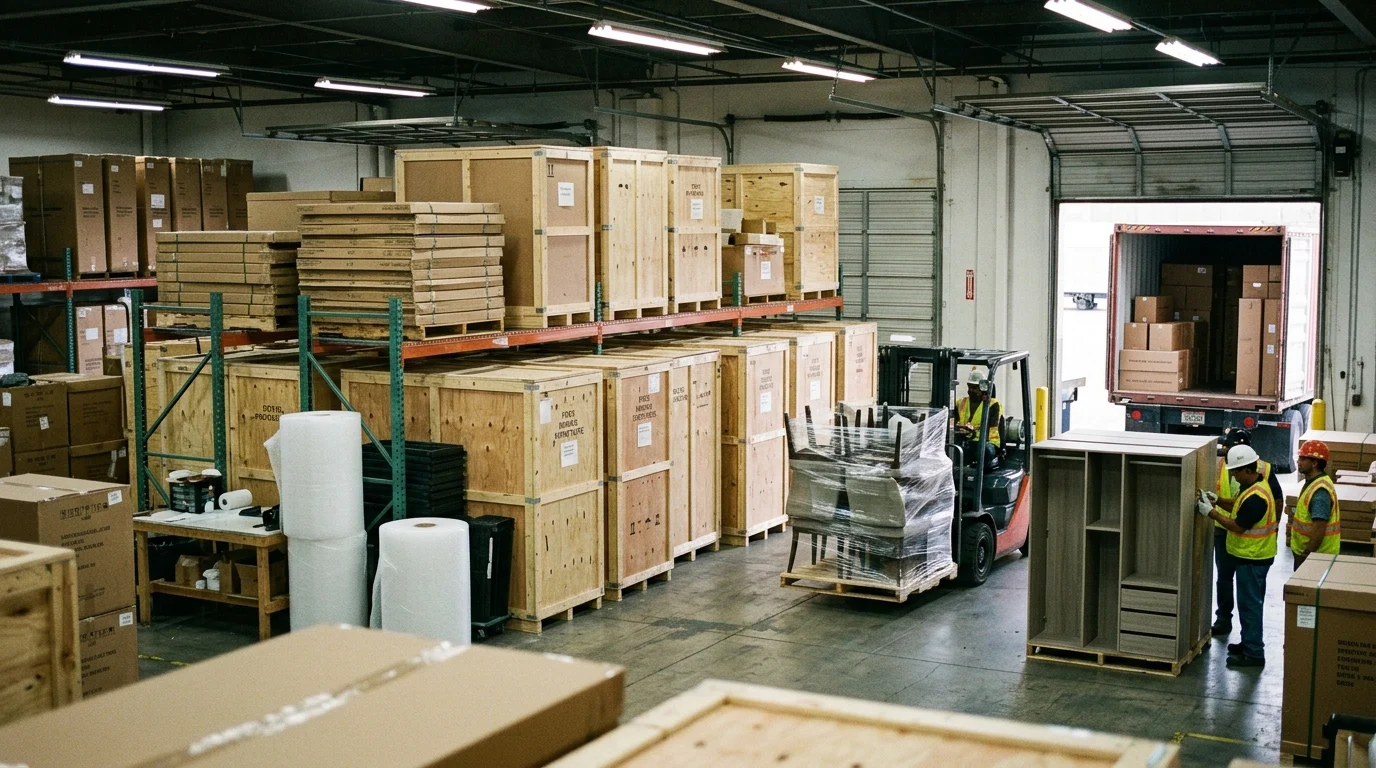
The final invoice for a hotel furniture package is rarely dictated by aesthetics alone. Underlying structural decisions, regulatory mandates, and complex logistics networks act as the primary levers that inflate or optimize total project costs.
Materials, construction, and compliance
Material selection dictates both upfront cost and long-term viability. Transitioning from solid wood or high-grade wood veneers to high-pressure laminates (HPL) or thermally fused laminates (TFL) can reduce casegood costs by 20% to 35% while simultaneously increasing scratch and moisture resistance. In upholstery, commercial environments require fabrics exceeding 50,000 double rubs on the Wyzenbeek scale, which typically adds a 15% to 25% premium over residential-grade textiles.
Compliance also introduces mandatory cost floors. Furniture must meet rigorous fire retardancy standards, such as CAL 117-2013 or BS 5852, depending on the jurisdiction. Furthermore, the growing mandate for ESG reporting in commercial real estate means that specifying FSC-certified woods or GREENGUARD Gold certified low-VOC finishes can introduce an additional 5% to 10% cost premium, though this is often offset by improved brand valuation and compliance with institutional investor requirements.
Sourcing, customization, freight, and installation
The geographic origin of manufacturing significantly impacts the final landed cost. While Southeast Asia and Eastern Europe remain highly competitive for raw manufacturing rates, ocean freight and inland drayage account for 12% to 18% of total FF&E expenditures. Customization further alters the pricing matrix; bespoke designs typically require minimum order quantities (MOQs) of 50 to 100 units to efficiently amortize engineering and tooling costs.
Installation and final mile delivery are frequently underestimated drivers. White-glove installation, which includes uncrating, staging, assembly, and debris removal, generally adds $150 to $350 per room. Projects utilizing non-union versus union labor in major metropolitan areas will see installation costs fluctuate by up to 40%, necessitating precise labor forecasting during the procurement phase.
How to Evaluate and Buy Hotel Furniture

Strategic procurement in 2026 requires shifting the evaluation paradigm from the initial purchase price to the total cost of ownership (TCO). Asset managers must deploy rigorous vetting protocols to ensure that aggressive upfront pricing does not mask underlying operational risks.
Comparison checks and total cost of ownership
Evaluating TCO involves calculating the anticipated replacement cycle against the initial capital outlay. For example, procuring a $300 task chair that requires replacement every three years ultimately costs more in capital and labor than a $600 chair engineered for a ten-year commercial lifecycle. Buyers must scrutinize warranty structures, accepting nothing less than a 5-year commercial warranty on casegoods and a 3-year warranty on upholstery frames.
Quality control metrics are equally critical. Institutional-grade manufacturers should demonstrate a historical defect rate of less than 2%. Procurement teams must request documented testing certificates for joint strength, finish durability, and foam density rather than relying on visual inspections alone.
Buying process to reduce cost risk
Structuring the purchasing timeline effectively mitigates hidden financial risks. Standard commercial lead times average 12 to 16 weeks, while bespoke luxury packages require 20 to 24 weeks. To prevent catastrophic mass-production errors, developers must mandate a model room mock-up. Although a mock-up room typically costs 1.5x to 2x the prorated standard unit price, it allows teams to verify ergonomics, spatial flow, and finish durability before authorizing the full production run.
Finally, staggered delivery schedules should be negotiated into the vendor contract. If construction delays occur, third-party warehousing for commercial furniture can rapidly accumulate costs, frequently running $1.50 to $2.50 per square foot monthly. Aligning manufacturing completion dates with phased on-site installation schedules ensures capital is deployed efficiently without incurring punitive storage overhead.
Key Takeaways
- The most important conclusions and rationale for Hotel Furniture
- Specs, compliance, and risk checks worth validating before you commit
- Practical next steps and caveats readers can apply immediately
Frequently Asked Questions
How much hotel furniture should I budget per room in 2026?
Plan about $2,500–$4,500 per key for economy, $6,000–$9,000 for mid-scale, and $14,000–$30,000+ for luxury, excluding soft goods and lighting.
What furniture items usually cost the most in a hotel room package?
Casegoods, custom headboards, and upholstered seating are major cost drivers. Typical ranges are $800–$2,200 for casegoods, $500–$1,400 for headboards and bases, and $350–$900 per lounge chair.
How can I lower hotel furniture costs without hurting durability?
Use HPL or TFL instead of premium veneer where appropriate. This can cut casegood costs by 20%–35% while improving scratch and moisture resistance for commercial use.
What extra costs are often missed when buying hotel furniture?
Commonly missed costs include freight, final-mile delivery, white-glove installation, and contingency. Add 5%–8% for contingency, and expect installation to cost about $150–$350 per room.
Can Taisen Furniture help with custom hotel furniture projects?
Yes. Taisen Furniture offers hotel furniture solutions and custom manufacturing support, which is especially useful for projects needing bespoke designs, commercial-grade materials, and coordinated large-order production.

Post time: May-08-2026