
 joyce@taisenfurniture.com
 0086 15356090777



Why Hotel Furniture Procurement Is Moving Toward Consolidation
The hospitality industry is experiencing a structural shift in how Furniture, Fixtures, and Equipment (FF&E) are sourced, moving away from highly fragmented supply chains toward integrated procurement models. Historically, outfitting a commercial property required managing a complex web of disparate manufacturers, freight forwarders, and installation teams.
For a standard 200-key property, project managers routinely juggle 15 to 20 different vendors to source casegoods, seating, lighting, and soft goods. This fragmentation introduces compounding risks at every project phase, driving developers and purchasing agents to seek comprehensive solutions that streamline operations and protect profit margins.
How a One-Stop Supplier Expands Procurement Scope
A true One-Stop Supplier fundamentally alters the procurement landscape by absorbing multiple manufacturing and sourcing disciplines under a single contractual umbrella. Rather than treating a guestroom as a collection of isolated products, these suppliers engineer the room as a cohesive ecosystem.
By consolidating casegoods, upholstered seating, architectural millwork, and decorative lighting, hotel owners and purchasing agents can significantly reduce administrative overhead. This efficiency is achieved by collapsing the standard procurement workflow, which often involves issuing dozens of purchase orders, down to just one or two master agreements, dramatically reducing the burden on accounting and project management teams.
Commercial Pressures Driving Supplier Consolidation
Macroeconomic pressures, including persistent inflation, volatile ocean freight rates, and skilled labor shortages, are accelerating the abandonment of fragmented purchasing. When project timelines are compressed, the administrative burden of coordinating multiple specialized factories often leads to cascading delays that jeopardize opening dates.
Consolidation serves as a direct hedge against these commercial pressures. By centralizing production, developers gain leverage in negotiating bulk material costs and secure priority production slots that smaller, scattered orders cannot command.
| Metric | Fragmented Procurement | Consolidated Procurement |
|---|---|---|
| Typical Vendor Count | 15–20 Vendors | 1–3 Vendors |
| Purchase Order Volume | Multiple POs per category | 1–5 Master POs |
| Freight Coordination | High Risk (LCL Shipments) | Optimized (FCL Shipments) |
| Administrative Overhead | High (Extensive tracking) | Low (Centralized reporting) |
How to Compare One-Stop Suppliers and Specialist Vendors
Cost, Control, and Accountability Factors to Review
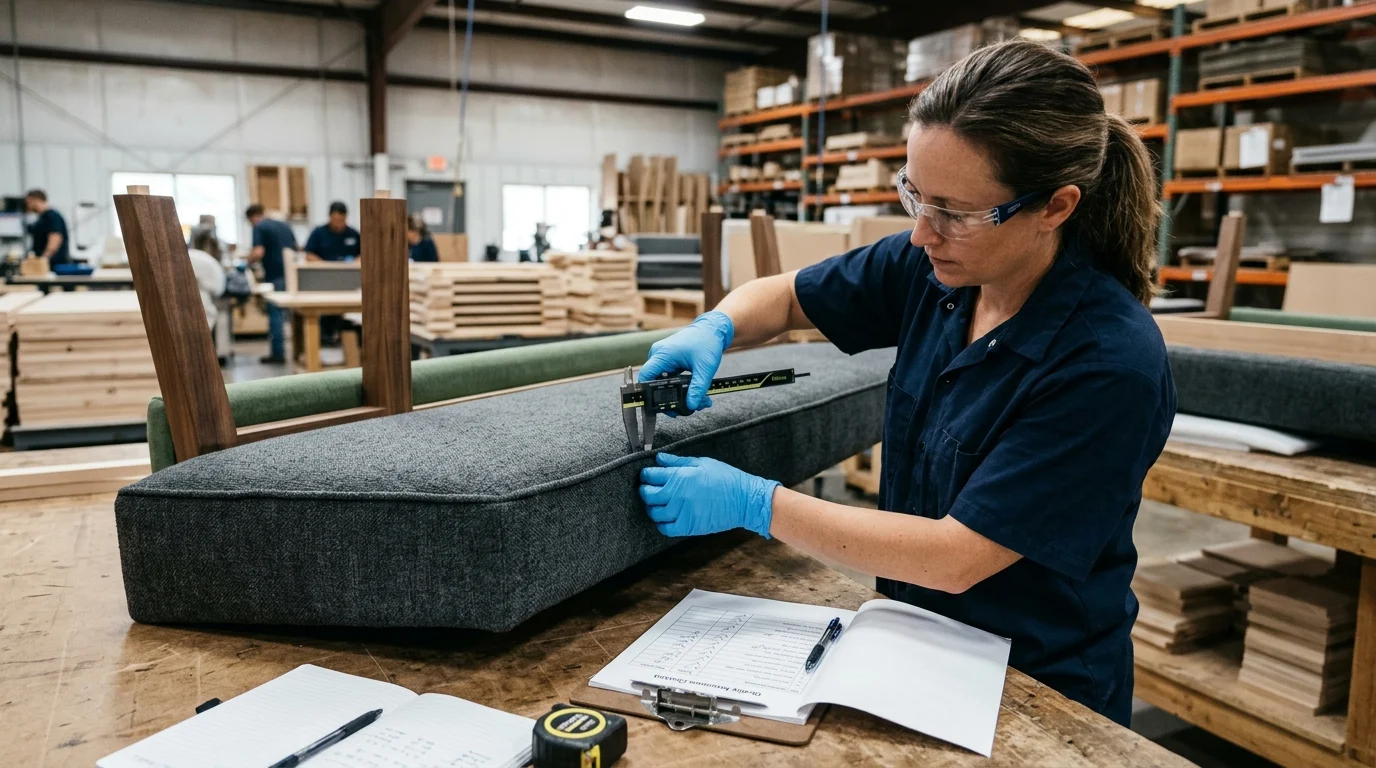
The primary advantage of consolidation is the establishment of a single point of responsibility. In a fragmented model, a 5mm tolerance mismatch between a custom nightstand and a wall-mounted reading sconce often results in finger-pointing between the casegoods manufacturer and the lighting vendor. A consolidated supplier absorbs this integration risk entirely, ensuring that all components are engineered to interface seamlessly before they leave the factory floor.
Cost efficiencies also materialize significantly in logistics. By utilizing a single vendor, logistics coordinators can optimize shipping containers by mixing dense casegoods with bulky upholstery. This container optimization routinely yields a notable reduction in aggregate shipping costs, maximizing the volumetric efficiency of a standard 40HQ container rather than relying on expensive Less than Container Load (LCL) shipments from multiple origins.
However, consolidation introduces its own risks that must be carefully managed. Relying on a single vendor creates a single point of failure; if the supplier faces capacity constraints or financial instability, the entire project schedule is jeopardized. Furthermore, buyers must be vigilant about hidden markups and undisclosed subcontracting. It is crucial to verify a supplier’s true vertical integration by auditing their facilities to ensure they are actually manufacturing the goods rather than simply brokering them to third-party factories.
When Specialist Vendors May Still Perform Better
Despite the compelling advantages of consolidation, specialist vendors maintain relevance in specific project tiers. Ultra-luxury properties or highly bespoke boutique hotels often incorporate signature design elements that demand niche manufacturing capabilities, such as hand-blown glass chandeliers or highly specialized ergonomic task seating.
Beyond general budget thresholds, decision criteria should include design complexity, intellectual property sensitivity, and iteration speed. When a project requires rapid prototyping of highly complex, custom pieces or involves sensitive proprietary designs, the agility and focused expertise of a specialist vendor often outweigh the logistical benefits of a consolidated supplier. In these scenarios, a hybrid model is frequently adopted. A master supplier handles the bulk of standard guestroom and corridor packages, while specialized artisans are retained for high-impact public spaces or exclusive suite upgrades where proprietary craftsmanship takes precedence. To prevent reintroducing the fragmentation risks this article warns against, buyers can require the master supplier to manage the structural and spatial coordination of the room, ensuring that specialist items plug seamlessly into the broader ecosystem without conflicting with standard installations.
Key Specifications and Quality Controls
Centralizing procurement does not absolve developers from rigorous specification oversight; in fact, it requires a highly structured approach to quality control. When a single entity is responsible for diverse product categories, purchasing agents must ensure that the supplier possesses the technical depth to uphold stringent standards across wood, metal, fabric, and lighting disciplines.
Coordinating Materials, Finishes, and Design Consistency
Achieving design cohesion across disparate materials is notoriously difficult when sourcing from multiple factories. A common failure point in fragmented procurement is the inability to match wood veneer stains or metal finishes across different product lines. For example, ensuring that the brushed brass on a desk lamp perfectly matches the metal inlay on a wardrobe requires exact plating specifications.
Partnering with a comprehensive One-Stop Supplier mitigates this risk through centralized finish libraries and cross-departmental coordination. A unified supplier can apply consistent Physical Vapor Deposition (PVD) coatings across all metal components, ensuring highly reliable finish matching and adherence to strict manufacturing tolerances across the entire guestroom suite.
Fire Safety, Sustainability, and Warranty Requirements
Regulatory compliance and lifecycle durability form the baseline of any hospitality contract. Regardless of the procurement model, all upholstered items must meet regional fire retardancy standards, such as CAL 117-2013 in North America or BS 7176 in the United Kingdom. Furthermore, sustainability mandates increasingly require FSC-certified wood and low-VOC finishes.
To ensure long-term performance, commercial warranties must be strictly negotiated. Standard casegoods should carry a minimum 3 to 5-year commercial warranty, while seating fabrics must withstand rigorous testing, typically requiring a minimum of 50,000 Wyzenbeek double rubs for heavy-duty public space applications.
| Specification Category | Standard Hospitality Requirement | Luxury/Custom Requirement |
|---|---|---|
| Fabric Durability | 30,000 Double Rubs | 50,000+ Double Rubs |
| Metal Plating | Standard Powder Coat | High-Grade PVD Coating |
| Drawer Glides | Standard Undermount (25kg capacity) | Soft-close Heavy Duty (40kg capacity) |
| Commercial Warranty | 1–2 Years | 3–5 Years |
How One-Stop Suppliers Improve Project Execution
Theoretical cost savings and design cohesion are meaningless without precise execution at the factory and on the project site. The true value of a consolidated procurement strategy is realized during the complex phases of production, shipping, and installation, where centralized control dramatically reduces friction.
Steps for Qualifying Suppliers Before Purchase
Due diligence is critical before awarding a master contract. Purchasing agents must audit a supplier’s operational capacity, looking for indicators such as substantial factory footprints (which industry sources suggest often exceed 50,000 square meters for tier-one suppliers), ISO 9001 quality management certifications, and robust financial liquidity to handle massive raw material purchases.
A mandatory step in this qualification is the production of a model room. This prototype phase, which typically requires an estimated 30 to 45-day lead time, allows the design and ownership teams to physically review ergonomics, verify finish tolerances, and approve construction methods before authorizing mass production for the remaining hundreds of keys.
Managing Logistics, Packaging, Lead Times, and Site Sequencing
Logistics management is where consolidated procurement models deliver outsized returns. Instead of receiving dozens of uncoordinated deliveries, a hotel receives sequenced Full Container Load (FCL) shipments tailored to the general contractor’s floor-by-floor installation schedule. This sequencing eliminates the need for expensive off-site warehousing and minimizes the double-handling of fragile goods. Because ocean freight and international manufacturing are frequently involved, buyers must also proactively address cross-border logistics. Factoring in import tariffs, customs clearance delays, and the availability of regional installation support is essential to maintain the schedule advantages of a consolidated shipment.
Packaging specifications are equally critical to successful execution. Consolidated suppliers standardize packaging protocols—such as mandating heavy-duty corrugated cartons reinforced with EPS foam and rigid edge protectors. These stringent packaging standards consistently minimize transit damage, ensuring that replacement orders do not compromise the final production and delivery timeline.
When a One-Stop Supplier Is the Right Choice
Determining the viability of a consolidated procurement strategy ultimately depends on project scale, brand positioning, and timeline constraints. While not a universal panacea for every hospitality development, specific project profiles stand to gain immense operational and financial leverage from this approach.
Hotel Project Types That Benefit Most
Mid-scale to upper-upscale properties—typically ranging from 150 to 500 keys—realize the highest return on investment from consolidation. These projects require high volumes of standardized, durable goods where economies of scale can be aggressively leveraged. At this volume, the administrative savings and freight optimizations compound significantly.
Franchised properties undergoing mandatory Property Improvement Plans (PIPs) are also prime candidates. Because these renovations operate under strict brand-approved design guidelines and tight execution windows, relying on a single, pre-vetted supplier ensures rapid compliance and prevents the property from losing revenue-generating room nights due to staggered, delayed deliveries.
Decision Criteria for Owners, Developers, and Procurement Teams
For owners and developers, the decision matrix hinges on risk tolerance and budget parameters. If a project is bound by a strict 12-month construction timeline and operates within an estimated FF&E budget of, for example, $10,000 to $25,000 per key, deploying a single-source supplier is highly recommended to protect both schedule and budget.
Transitioning from a fragmented purchasing model to a consolidated partnership requires a strategic shift. It demands moving away from purely transactional, line-item bidding toward evaluating the total cost of ownership—factoring in reduced administrative burdens, stabilized logistics, and the invaluable security of having a single entity accountable for the property’s final fit-out and successful opening.
Synthesizing this decision framework reveals that while consolidation is not a universal cure-all, it provides a formidable advantage for most commercial properties. By carefully vetting a master supplier and strategically deploying specialist vendors only when necessary, hospitality developers can achieve a streamlined, cost-effective procurement process that safeguards both design integrity and project timelines.
Key Takeaways
- For a standard 200-key hotel, consolidating FF&E procurement can reduce vendor management from roughly 15–20 suppliers to as few as 1–3 vendors.
- Use one-stop suppliers to reduce purchase order volume, centralize reporting, and relieve accounting and project management teams from excessive administrative tracking.
- Prioritize suppliers that can coordinate casegoods, upholstery, millwork, and lighting together to prevent tolerance mismatches and installation conflicts.
- Consolidated procurement can improve logistics efficiency by enabling fuller container planning, especially when dense casegoods and bulky upholstered items ship together.
- Evaluate one-stop suppliers against specialist vendors by comparing cost control, production capacity, design complexity, accountability, and risk mitigation.
- During periods of inflation, freight volatility, and labor shortages, centralized sourcing can help secure better material leverage and more reliable production scheduling.
Frequently Asked Questions
What is a one-stop supplier in hotel furniture procurement?
A one-stop supplier consolidates multiple FF&E categories, such as casegoods, seating, millwork, and lighting, under one sourcing and production framework. This reduces vendor management, improves coordination, and creates a single point of responsibility.
Why are hotels moving away from fragmented furniture procurement?
Fragmented procurement often requires managing 15 to 20 vendors for a 200-key property, increasing administrative work, freight complexity, and delay risk. Consolidation helps streamline purchasing, production, logistics, and accountability.
How does consolidated procurement reduce project risk?
A consolidated supplier manages product compatibility, timelines, and production coordination across categories. This helps prevent common issues such as tolerance mismatches, delayed components, and vendor disputes over responsibility.
Can a one-stop supplier lower hotel furniture costs?
Yes, savings can come from bulk material purchasing, fewer purchase orders, optimized container loading, and reduced project management workload. Cost control is especially valuable during inflation, volatile freight rates, and labor shortages.
When should a hotel use specialist vendors instead?
Specialist vendors may be preferable for highly bespoke items, unusual materials, or signature design features that require niche expertise. Many projects use a hybrid model, consolidating core FF&E while reserving select elements for specialists.
Post time: Aug-14-2026