
 joyce@taisenfurniture.com
 0086 15356090777


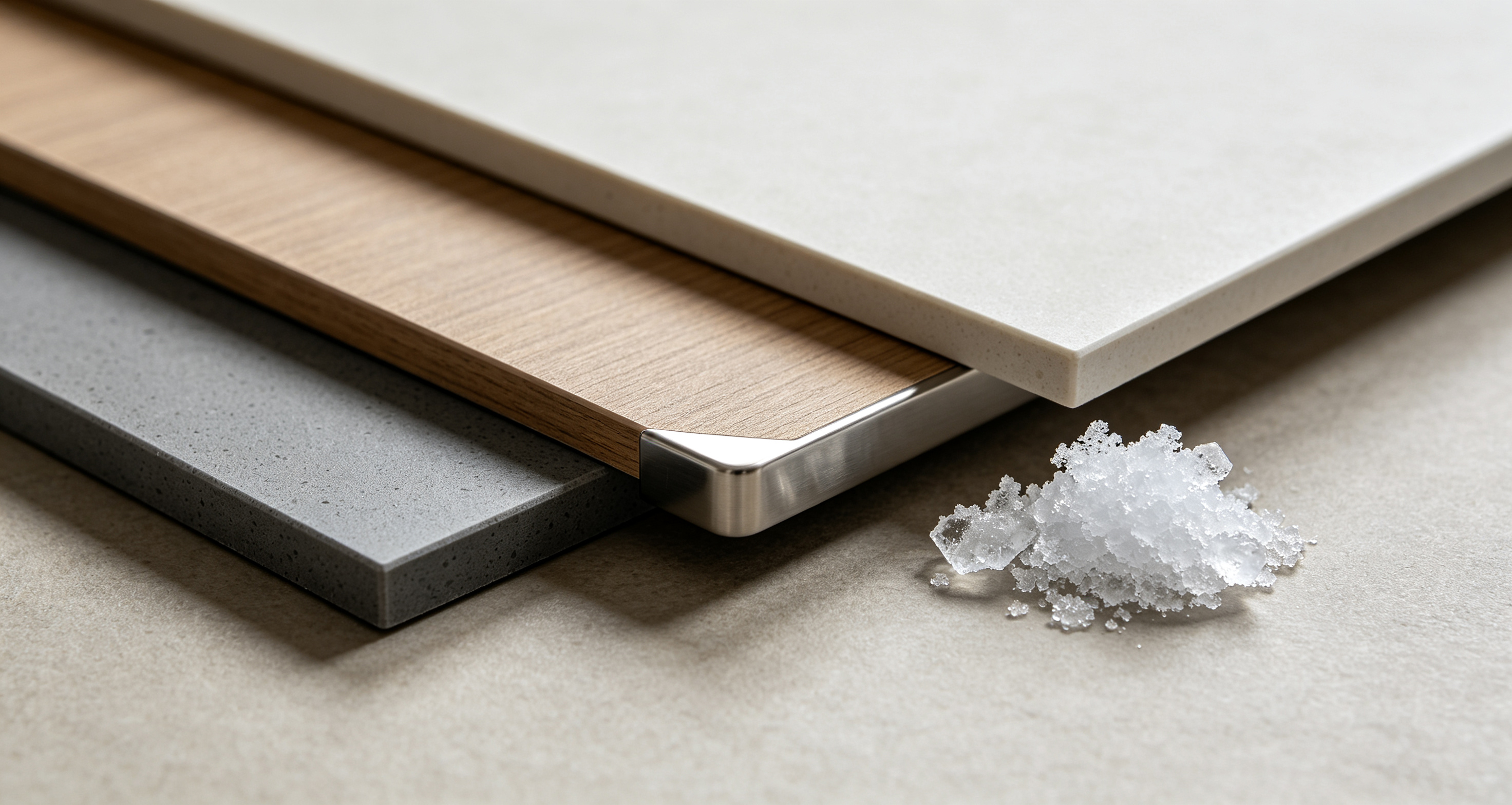
Hotel FF&E projects across Canada’s cold climate zones face a unique failure mode known as thermal shock. From the prairie provinces to northern Ontario, Quebec and mountain ski resorts, outdoor temperatures can drop rapidly to -30°C or lower, while indoor heating maintains guestrooms at 20–24°C. When guests enter from outdoors, snowmelt, cold air infiltration and rapid temperature swings hit furniture surfaces and internal structures. Furniture positioned near entrance vestibules, mudrooms, exterior windows, balcony doors and loading zones cycles between freezing cold and warm conditioned air repeatedly through the winter season. This rapid temperature shift creates differential expansion and contraction between veneer, substrate, adhesive, coating and metal hardware, leading to paint crazing, veneer cracking, laminate delamination, loose joinery, frozen moving hardware and foam degradation.
Many procurement teams focus only on indoor humidity control for Canadian hotel furniture, while overlooking thermal shock testing. Even furniture that passes dry-climate moisture testing can fail quickly under Canadian winter thermal cycling. The repair and replacement costs are substantial for hotel operators, especially in remote resorts with limited local trades. This guide explains the mechanics of thermal shock damage, material selection criteria, mandatory factory thermal cycling tests, construction rules, packaging and site acclimation protocols, and ongoing winter operation standards for FF&E in cold Canadian hotel environments. It also includes practical specification tables and common procurement mistakes that trigger early furniture failure.
What Is Thermal Shock for Hotel Furniture in Cold Winter Conditions
Thermal shock describes material stress caused by fast, extreme temperature change. Unlike gradual seasonal temperature drift, thermal shock happens in minutes: cold furniture panels are suddenly warmed by indoor heating, or warm furniture is exposed to frigid infiltrated air and melting snow at entry zones. Each material has its own coefficient of thermal expansion. Wood veneer, engineered wood core, PU adhesive, powder coating, steel hardware and foam padding expand and shrink at different rates. When the temperature changes rapidly, these layers cannot expand or contract in sync, creating internal tensile and shear stress.
Canadian hotels have several high-risk zones for thermal shock. Main entry mudroom benches, ski storage lockers, balcony patio furniture, cabinetry adjacent to exterior doors, and lobby casegoods beside large glass curtain walls receive the most frequent thermal cycling. Guestroom furniture near leaky windows also accumulates damage over multiple winters. Melted snow adds moisture into the equation: water trapped inside panel edges freezes, expands, and amplifies delamination risk. This freeze-thaw cycle combined with thermal shock is the primary driver of FF&E breakdown in Canadian cold-climate hospitality projects.
A widespread misconception is that solid hardwood is the best choice for cold-region hotels. Solid timber moves significantly with temperature and moisture shifts. Without engineered movement allowances, solid wood tabletops and panels will split, warp and pull away from supports during repeated thermal shock events.
Table 1: Material Thermal Performance Benchmark for Canadian Cold Climate Hotel FF&E
| Material Type | Thermal Shock Resistance | Freeze-Thaw Suitability | Best Placement Inside Hotel |
|---|---|---|---|
| Low-shrink MDF with flexible PU coating | Medium | Acceptable, protected indoor use | Guestroom desks, headboards away from exterior doors |
| Cross-band hardwood plywood | Medium-High | Good | Cabinet carcasses, built-in millwork |
| Phenolic HPL / TFL panels | High | Excellent | Mudroom benches, entry console tops, ski locker surfaces |
| Powder-coated 316 stainless steel | Very High | Excellent | Outdoor balcony furniture, entry zone hardware |
| Natural veneer (1.0mm+) | Medium | Limited, requires full sealing | Interior feature furniture, not near entryways |
| Recycled polyethylene solid surface | Very High | Excellent | Resort patio tables, snow-contact surfaces |
| Standard PU foam | Low | Poor, loses flexibility below -10°C | Never place in vestibule, mudroom or unheated zones |
This table helps buyers zone furniture correctly during design documentation. High-performance thermal-shock-resistant materials are reserved for transition zones where cold outdoor air and snowmelt contact furniture directly. Standard veneered casegoods are restricted to deep interior zones with stable temperature conditions.
Factory Thermal Shock and Freeze-Thaw Testing Requirements
Standard furniture durability tests do not replicate Canadian winter thermal cycling. For cold-climate hotel projects, the purchase specification must include accelerated thermal shock cycle testing before mass production. Test panels and finished sample units go through alternating cold and hot chambers, simulating the rapid swings seen at hotel entry vestibules.
A typical testing protocol for Canadian FF&E cycles samples between -28°C and +24°C, with a minimum of 30 minutes hold time at each temperature point, for 15 complete cycles. After the cycle sequence, inspectors check for veneer cracking, coating crazing, laminate edge lifting, adhesive delamination, joint opening, and hardware binding. If any defect appears, the material, adhesive or finish system must be revised before bulk manufacturing.
Adhesive selection is critical for thermal shock resilience. Ordinary PVA glue becomes brittle under repeated freeze cycles and loses bonding strength. Flexible cross-linking PU adhesive is required for veneer lamination and panel assembly. The adhesive must maintain elongation properties across the full design temperature range, so it can absorb micro-movement instead of transferring stress into the veneer or laminate surface.
Coating systems also need cold-flexibility certification. Hard, brittle nitrocellulose lacquers crack easily under thermal shock. Two-component flexible polyurethane conversion varnish is specified. The finish film must remain flexible at sub-zero temperatures without spider-webbing or chipping. Rigid ceramic coatings are only suitable for non-wood surfaces such as metal and phenolic panels.
Table 2: Mandatory Factory Thermal Shock Specification Checklist for Cold-Climate Hotel Furniture
| Specification Item | Required Standard | Acceptance Criteria |
|---|---|---|
| Thermal cycling test | -28°C to +24°C, 15 cycles | No cracking, delamination, crazing or joint separation |
| Adhesive type | Low-temperature flexible PU adhesive | Bond integrity maintained after freeze-thaw cycling |
| Edge sealing | Full perimeter edge sealer, end-grain sealing | No water penetration into panel core |
| Hardware selection | 304 / 316 stainless steel, cold-rated spring mechanisms | Slides, hinges operate smoothly after cold cycling |
| Foam cushion | Cold-resistant flexible polyurethane foam | No permanent compression set or brittleness at -20°C |
| Post-test inspection | Independent third-party lab report | Test report submitted for pre-shipment approval |
Structural Design Rules to Reduce Thermal Shock Stress
Material selection alone cannot eliminate thermal shock risk. Construction details must be engineered to allow controlled movement. Fully locked, rigid joinery will trap thermal expansion stress and cause splitting or veneer failure.
For large casegood panels, floating panel construction is required. Slotted mounting holes, expansion gaps and clearance tolerances are built into drawings. Cabinets and wall-mounted millwork should not be caulked tightly along every edge; continuous rigid caulk prevents natural thermal movement and concentrates stress.
Joinery design should avoid thin, short grain sections at exposed edges. Mitre joints are particularly vulnerable to thermal shock, as differential movement pulls the corner seam open. Where mitres are required for aesthetic reasons, flexible joint filler and reinforced backing blocks are added.
Metal-to-wood contact points are another failure hotspot. Steel and wood expand and contract at vastly different rates. Isolation gaskets or rubber buffers are placed between metal brackets and wood panels to reduce shear stress at connection points.
For upholstered seating in mudrooms and ski lounges, foam is a common failure point. Regular furniture foam turns stiff and brittle after repeated freezing cycles, leading to permanent compression and cracking. Cold-resistant, high-resilience foam is mandatory, paired with moisture-barrier backing fabric to stop melted snow from penetrating into the foam core.
Packaging, Shipment and Site Acclimation for Cold Winter Delivery
Many thermal shock failures happen during delivery and installation. Furniture manufactured in a warm factory environment, loaded into containers, and transported across Canada in sub-zero winter conditions experiences extreme thermal shock before it even arrives at the hotel. Sudden temperature swings during cross-country freight damage veneer, coatings and glue lines.
Phased acclimation is the correct protocol. After delivery, crates remain sealed on-site for 72 to 96 hours. The packaging acts as a thermal buffer, letting the furniture slowly adjust to site temperature. Unpacking furniture directly in freezing outdoor air or immediately inside a heavily heated guestroom creates rapid thermal shock. The hotel’s HVAC system should be balanced and running at stable setpoints before FF&E unpacking.
Packaging materials must be breathable and insulating. Bubble wrap alone is insufficient; insulated foam lining inside export crates slows temperature change. Fully airtight plastic wrapping is prohibited, as trapped condensation inside the crate will freeze and cause delamination once warmed.
Scheduling is also important. Whenever possible, avoid delivery during extreme cold snaps. If winter delivery cannot be avoided, the supplier must build pre-conditioning into production: finished furniture is stabilized in a climate chamber with temperature cycling before packing.
Zone Planning: Place Furniture According to Thermal Exposure
Interior design teams should create a thermal risk map for every hotel floor during construction documentation. Three distinct zones guide furniture placement:
- High-exposure transition zones: Entry vestibules, mudrooms, ski storage, balcony access areas. Only HPL, phenolic, solid polyethylene and 316 stainless steel furniture is permitted here. Veneered wood casegoods are excluded.
- Medium-exposure zones: Lobby areas near glass walls, corridor cabinetry beside exterior doors. Veneered furniture may be used, but with full edge sealing and flexible finish systems.
- Low-exposure interior zones: Guestrooms deep inside the building, away from exterior windows and doors. Standard veneered and upholstered furniture can be deployed with routine humidity control.
Window treatments are a supporting mitigation measure. Thermal blinds and heavy curtains reduce radiant heat loss at glass surfaces and minimize temperature swings for furniture placed near exterior glazing.
Winter Operation and Maintenance Protocols for Hotel Engineering and Housekeeping
Even properly engineered furniture will degrade if the hotel runs unstable winter temperatures. The ideal operating indoor temperature range is 20–22°C, with gradual temperature setback rather than sharp heating spikes. Many Canadian resorts set back heating drastically during off-season closures, which creates extreme thermal cycling when heat is restored. Phased heating recovery is required for closed properties: raise room temperature slowly over multiple days, instead of jumping from freezing to comfort temperature overnight.
Housekeeping teams must follow cleaning rules for cold-climate FF&E. Snowmelt and road salt residue are corrosive to metal hardware and can degrade coating systems. Salt deposits should be wiped away promptly with neutral pH cleaners; acidic de-icing chemicals must not be used on furniture surfaces.
Maintenance teams should perform quarterly winter inspection, focusing on early warning signs: fine cracks along finish lines, opening seams, stiff drawer slides, lifting laminate edges and permanent indentation on cushions. Early intervention, such as re-sealing exposed edges and lubricating cold-rated hardware, prevents small defects from escalating into full panel failure.
Common Specification Mistakes for Canadian Cold Climate FF&E
The most frequent mistake is writing specifications based on standard indoor furniture requirements, without adding thermal shock and freeze-thaw cycling test clauses. Vendors can supply premium veneer and high-grade hardware, but if the product has not passed cold cycling testing, failure is likely.
Second, buyers mistakenly approve veneered furniture for mudroom and vestibule transition zones. Natural veneer is not designed for repeated contact with snowmelt and rapid freezing. Third, purchasing teams select low-cost standard foam for ski lounge banquettes, which quickly becomes brittle in winter. Fourth, installers over-caulk millwork joints, locking thermal movement and creating internal stress. Finally, many FF&E contracts do not clarify warranty exclusions for thermal shock damage; the warranty should cover factory defects verified by lab testing, while damage caused by uncontrolled site temperature swings is excluded.
Final Summary
Thermal shock is the primary hidden threat to hotel furniture in Canada’s cold winter climate. Rapid swings between sub-zero temperatures and indoor heated air create mismatched expansion and contraction across veneer, substrates, adhesive, coatings and hardware. Successful mitigation is a layered system: zone furniture by thermal exposure, select freeze-thaw stable materials, enforce mandatory thermal cycling testing at factory, specify flexible cold-rated adhesive and finish, build floating movement tolerances into construction, implement insulated packaging and slow on-site acclimation, and maintain gradual, stable heating schedules throughout winter and seasonal shutdowns. Procurement teams that add thermal shock pre-approval testing reports as a shipment gate will drastically reduce winter FF&E failure, cut repair spend and preserve furniture appearance through years of Canadian winters.
FAQ
Q: Can natural veneer furniture be used in Canadian cold-climate hotels? A: Yes, but only for deep interior zones with stable temperature. Veneered furniture must be fully sealed and built with floating panels. It should never be placed in mudrooms, vestibules or near balcony doors.
Q: What temperature cycle should I write in the FF&E specification? A: Standard thermal shock test: -28°C to +24°C, 15 cycles, minimum 30 minutes hold at each extreme. Pass criteria: no cracking, delamination, crazing or joint opening.
Q: Is 304 stainless steel hardware sufficient for entry zones exposed to snow and road salt? A: 316 stainless steel is preferred for high-salt, high-freeze transition zones; 304 may develop surface corrosion over repeated winter salt exposure.
Q: What foam type is suitable for ski lounge seating in cold areas? A: Cold-resistant high-resilience polyurethane foam with moisture barrier backing. Standard foam will turn brittle and permanently compress under freeze cycles.
Q: How should resorts handle furniture during seasonal winter shutdowns? A: Avoid fully shutting off heat. Use gradual temperature setback, and restore heating slowly over several days when reopening, to prevent massive thermal shock.
Post time: Nov-18-2026