
 joyce@taisenfurniture.com
 0086 15356090777


Hotel Furniture: Best Materials for Bathroom Vanities in 2026
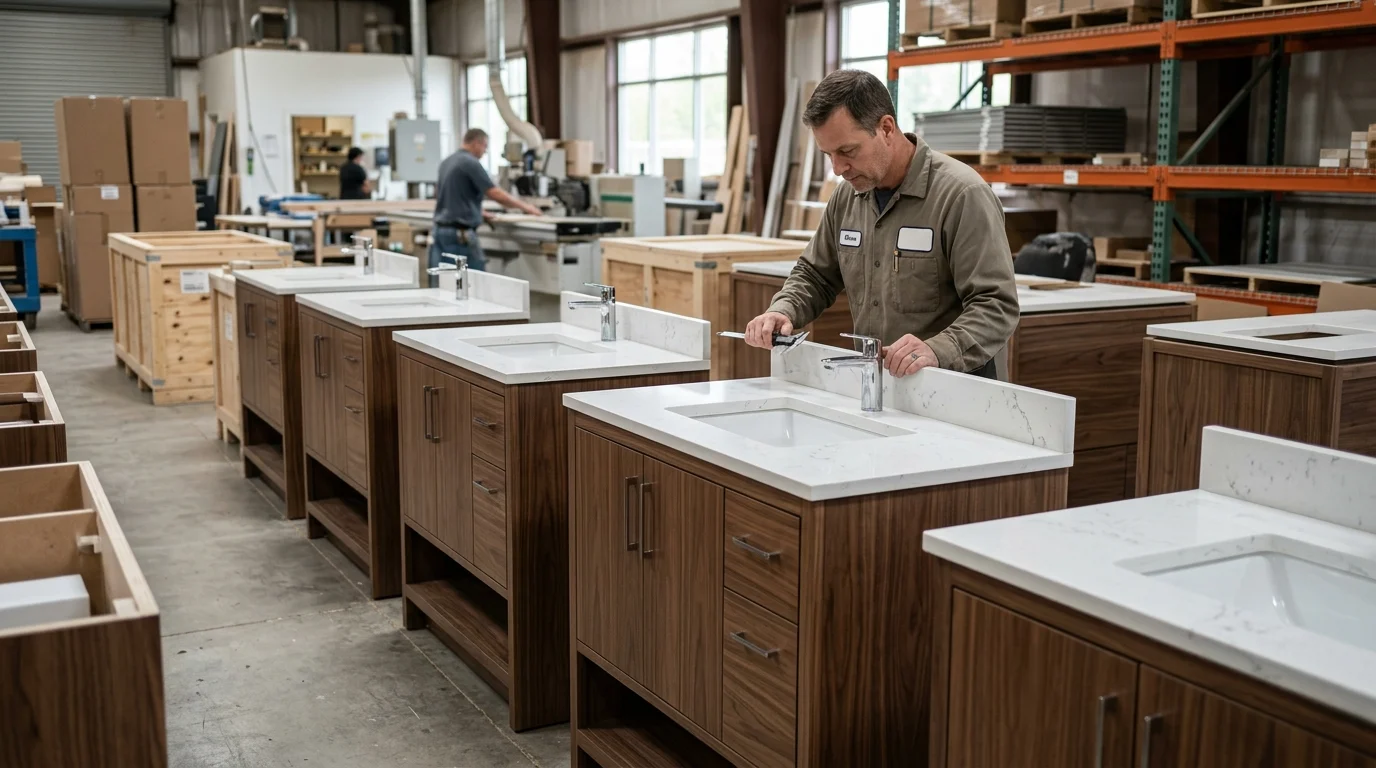
Why Bathroom Vanity Material Selection Matters in 2026
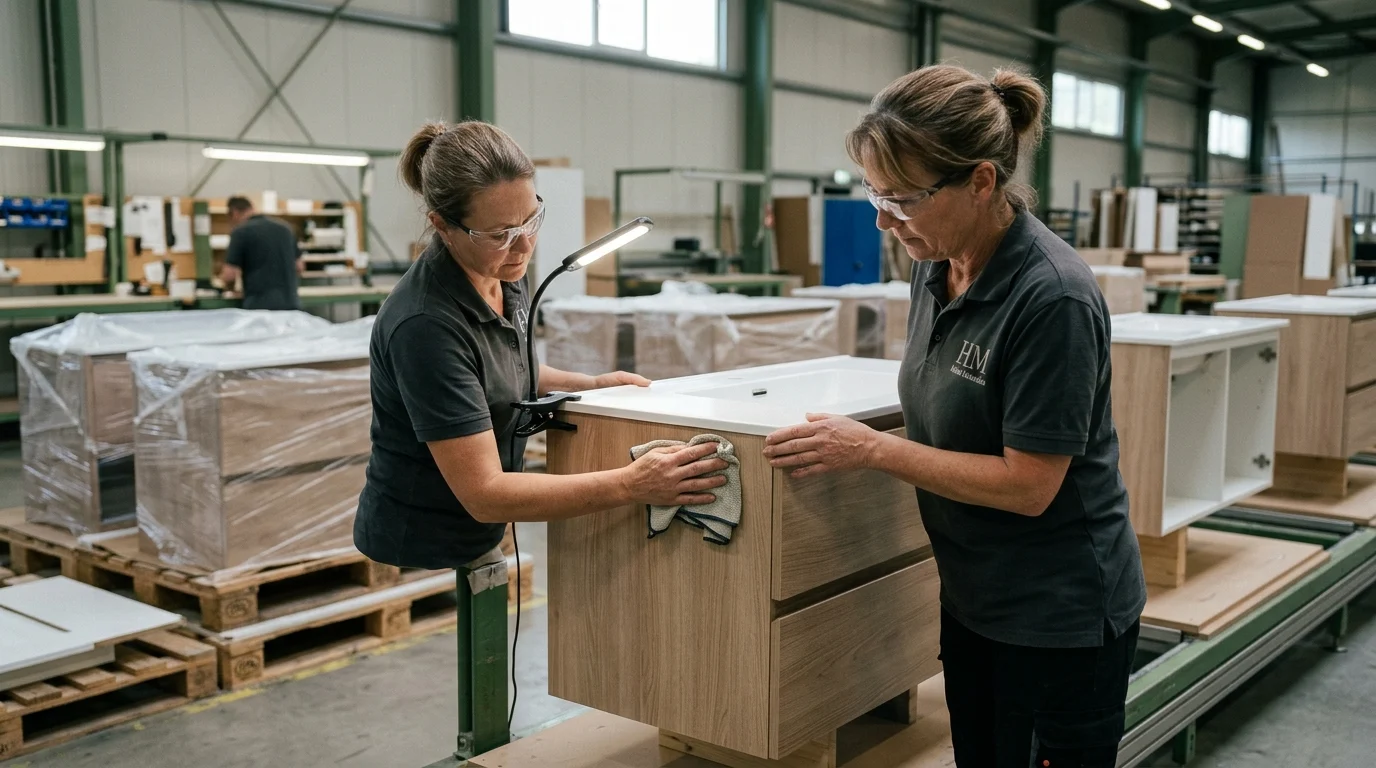
For B2B wholesale buyers, distributors, and hotel procurement teams, specifying hotel furniture is a high-stakes exercise in balancing upfront capital expenditure with long-term operational durability. As we look toward 2026, the hospitality sector is facing aggressive renovation schedules driven by deferred maintenance from previous years and updated brand standard rollouts. Bathroom vanities, in particular, represent a critical failure point in hotel casegoods due to their constant exposure to high humidity, standing water, and heavy guest usage.
Selecting the right materials for these fixtures is no longer just about aesthetics; it is a foundational component of a hotel’s risk management strategy. A poorly specified vanity substrate or an inadequately sealed edge can lead to rapid delamination, mold growth, and premature failure. When this happens, the financial impact extends far beyond the cost of the unit itself, encompassing lost room revenue during replacement and potential damage to the property’s reputation.
Renovation Cycles, Brand Standards, and Total Cost of Ownership
Hotel properties typically operate on a 5-to-7-year cycle for soft goods and a 10-to-14-year cycle for hard casegoods. However, bathroom vanities often bridge these two categories due to their extreme wear and tear. Leading hospitality groups are increasingly updating their brand standards to mandate highly durable, moisture-resistant materials that guarantee a lower Total Cost of Ownership (TCO) over a 10-year lifespan. Procurement teams must source materials that align with these stringent life-cycle expectations without breaking the FF&E (Furniture, Fixtures, and Equipment) budget.
2026 Procurement Pressures: Moisture Resistance, Lead Time, and Margin
In 2026, global supply chains demand a meticulous approach to lead times and landed costs. Buyers are pressured to maintain healthy margins despite fluctuating raw material costs. Sourcing highly moisture-resistant materials—such as marine-grade plywood or advanced sintered stone countertops—requires balancing premium material costs against the savings generated by fewer warranty claims and reduced shipping damages.
Why Material Choice Is a Commercial, Not Just Design, Decision
Designers may prioritize the look of a sleek floating vanity, but procurement professionals understand that material choice dictates commercial viability. The selection impacts freight weight, container utilization, installation labor, and daily housekeeping efficiency. Whether sourcing a standard hotel bedroom set or custom wet-zone fixtures, treating material specification as a commercial calculation prevents costly out-of-order room scenarios.
How to Define Vanity Material Specifications
Writing a precise Request for Quotation (RFQ) is the first step in successful overseas sourcing. Vague specifications lead to inconsistent bidding, where factories may substitute inferior substrates or low-grade hardware to win on price. To ensure apples-to-apples comparisons across different OEM and ODM suppliers, B2B buyers must define every layer of the vanity’s construction.
A comprehensive specification sheet serves as the primary legal and technical document governing the production run. It protects the buyer from "bait-and-switch" tactics and ensures that the final delivered product meets the exact demands of the hotel’s operating environment.
Core Specifications: Substrate, Surface, Countertop, Hardware, and Edge Sealing
A commercial vanity RFQ must explicitly detail five core components: the substrate (e.g., 18mm exterior-grade plywood), the surface finish (e.g., High-Pressure Laminate or thermally fused melamine), the countertop material, the internal hardware (e.g., 304 stainless steel soft-close hinges), and the edge banding method. For wet environments, specifying PUR (Polyurethane) edge banding over traditional EVA glue is non-negotiable, as PUR offers vastly superior water and heat resistance.
Performance Benchmarks: Humidity Tolerance, Cleanability, and Repairability
Beyond material names, buyers should specify performance benchmarks. This includes maximum water absorption rates for substrates, scratch and stain resistance ratings for countertops, and the ability to withstand commercial-grade cleaning chemicals (like bleach or heavy disinfectants). Repairability is also vital; materials that allow for on-site buffing or patching minimize the need for full unit replacements.
Project Variables: Hotel Tier, Guest Turnover, Wet-Zone Exposure, and Climate
Specifications must be tailored to the specific project environment. A beachfront resort in a tropical climate requires vastly different moisture and rust protections compared to an alpine lodge. Furthermore, high-turnover economy hotels demand maximum impact resistance to survive rapid housekeeping cycles, whereas luxury suites might prioritize seamless aesthetics and premium tactile finishes.
Top Bathroom Vanity Materials for Commercial Projects
The global manufacturing landscape for hotel furniture offers a wide array of raw materials, each with distinct advantages and cost profiles. Understanding the technical limitations and commercial benefits of these materials is crucial for procurement teams looking to optimize their purchasing strategy for 2026.
Selecting the right combination of cabinet housing and countertop surface dictates the manufacturing lead time, the packaging requirements, and the ultimate lifespan of the vanity. Below is a breakdown of the leading materials dominating commercial hospitality orders.
Cabinet Materials: Plywood, MDF, Particle Board, Stainless Steel, and Aluminum
Plywood remains the gold standard for midscale and upscale hotel vanities due to its excellent screw-holding capacity and resistance to warping. MDF (Medium Density Fiberboard) offers a smoother surface for painting but is highly vulnerable to swelling if water breaches the veneer. Particle board is the most economical but is generally discouraged for commercial wet zones unless heavily treated. Recently, powder-coated stainless steel and aluminum cabinets have gained traction in high-humidity regions, offering zero risk of rot, though at a higher price point.
Countertop Materials: Sintered Stone, Quartz, Cultured Marble, and Porcelain
Quartz has long been the industry standard for its non-porous durability and consistent patterning. However, sintered stone and large-format porcelain slabs are rapidly capturing market share in 2026 due to their lighter weight, extreme heat resistance, and imperviousness to chemical stains. Cultured marble remains a viable, cost-effective option for economy and midscale properties, offering the benefit of integrated sink bowls that eliminate caulk lines.
Comparison Framework: Cost, Durability, Moisture Resistance, and Replacement Complexity
| Material Category | Cost Tier | Moisture Resistance | Durability / Lifespan | Best Application |
|---|---|---|---|---|
| Plywood Substrate | High | Excellent (if sealed) | 10-15 Years | Upscale / Resort |
| MDF Substrate | Low/Med | Poor to Fair | 5-7 Years | Dry climates / Budget |
| Metal (Aluminum) | Premium | Absolute | 15+ Years | Tropical / Extreme Wet |
| Quartz Countertop | Medium | Excellent | 15+ Years | Midscale to Luxury |
| Sintered Stone | High | Absolute | 20+ Years | Luxury / High-abuse |
How B2B Buyers Should Source from OEM and ODM Suppliers
Sourcing commercial vanities requires vetting suppliers not just for their manufacturing capabilities, but for their specific experience in the hospitality sector. A factory that excels in residential kitchen cabinets may completely fail to understand the robust structural requirements and stringent brand compliance needed for a hotel project.
Buyers must engage suppliers who understand the nuances of hospitality FF&E, from producing scalable mock-up rooms to managing phased container shipments that align with the general contractor’s installation schedule.
Factory Qualification: Hospitality Experience, Capacity, QC, and Customization
When evaluating a new factory, buyers should demand to see a portfolio of completed hotel projects. Assess their production capacity to ensure they can handle bulk orders (e.g., 300+ rooms) without subcontracting to unvetted third parties. Review their internal Quality Control (QC) protocols and their ability to execute custom shop drawings. To learn more about identifying qualified manufacturing partners, buyers can review standard industry profiles like our about us page.
Commercial Terms: MOQ, Samples, Tooling, Finish Matching, and Standardization
Negotiating commercial terms goes beyond the unit price. Buyers must clarify the Minimum Order Quantity (MOQ), which typically ranges from 50 to 100 sets for custom finishes. Discuss who bears the tooling costs for custom cast sinks or proprietary hardware. Ensure the factory has a reliable process for finish matching, particularly if the vanities need to coordinate with existing room casegoods.
Risk Control: Shop Drawings, Material Swatches, Pilot Rooms, and Batch Consistency
Risk mitigation starts before a single board is cut. Mandate detailed CAD shop drawings and physical material swatches for approval. For large projects, purchasing a "pilot room" or mock-up sample is essential to test installation tolerances and plumbing alignments. Address batch consistency in the contract to ensure the veneer color of room 101 matches room 501 perfectly.
Compliance and Quality Checks for Vanity Materials
Importing furniture into North American, European, or advanced Asian markets requires strict adherence to environmental and safety regulations. Non-compliance can result in shipments being held at customs, massive fines, or the forced removal of installed products from a property.
Procurement teams must build compliance checkpoints into their purchasing contracts, requiring factories to provide verifiable proof of material safety before mass production begins.
Key Standards: Formaldehyde Emissions, Fire Requirements, and Chemical Safety
Composite woods used in vanity substrates must comply with formaldehyde emission standards such as CARB Phase 2 or EPA TSCA Title VI in the United States, or E0/E1 standards in Europe. Depending on the property’s location and height, fire retardant treatments may be required for specific substrates or surface laminates to meet local building and fire codes.
Required Documents: Test Reports, Inspection Protocols, and Warranty Terms
Never take a supplier’s word on compliance. Request third-party laboratory test reports (from agencies like SGS, Intertek, or TUV) for all core materials. Establish clear inspection protocols detailing the Acceptable Quality Limit (AQL) for defects. Furthermore, secure commercial warranty terms that specifically cover delamination, hardware failure, and countertop cracking under hotel use conditions.
Pre-Shipment Checks: Swelling, Delamination, Cracking, and Hardware Corrosion
Conduct rigorous pre-shipment inspections (PSI) at the factory. Inspectors should look for micro-cracks in stone countertops, test the adhesion of edge banding to ensure no premature delamination, and verify that all hinges and drawer glides are made from specified anti-corrosive materials (e.g., passing a 48-hour salt spray test).
Packaging, Logistics, and Installation Planning
The most perfectly manufactured vanity is useless if it arrives at the project site damaged. Bathroom vanities are inherently difficult to ship due to their combination of heavy, brittle countertops and bulky, hollow wooden cabinets.
A strategic approach to packaging and logistics not only protects the product but also optimizes container space, effectively lowering the landed cost per unit. Buyers must work closely with suppliers to engineer packaging that survives multi-modal transport and rough handling at the construction site.
Packaging Options: Flat-Pack vs Assembled, Foam Protection, and Crating
Buyers must decide between Ready-to-Assemble (RTA) flat-packs and fully assembled units. Flat-packs maximize container yield but shift labor costs to the installation site. Fully assembled units require robust packaging, including high-density EPE foam corner protectors and heavy-duty corrugated cartons. Stone and ceramic countertops must always be packed in fumigated wooden crates to prevent transit breakage.
Logistics Impact: Container Loading, Damage Rates, Site Access, and Installation
Efficient container loading plans (CBM calculations) are critical for maintaining profit margins. Buyers must factor in a 2-3% damage rate for fragile items during logistics planning. Furthermore, consider site access: pre-assembled 72-inch double vanities may not fit into standard hotel service elevators, necessitating modular designs that are joined on-site.
After-Sales Planning: Spare Parts, Replacement Panels, SKU Control, and Service Lead Times
Smart procurement includes ordering 3-5% overage on easily damaged parts like doors, drawer fronts, and hardware. Maintaining strict SKU control ensures that property managers can easily reorder matching components years down the line. When browsing products for a long-term portfolio, prioritize suppliers with proven after-sales service and reasonable lead times for replacement parts.
How to Choose the Right Material by Hotel Project Type

There is no one-size-fits-all solution for hotel bathroom vanities. The optimal material specification depends entirely on the hotel’s market positioning, target demographic, and expected room rate.
Procurement teams must align their sourcing strategies with the specific brand narratives and operational realities of the properties they are outfitting, ensuring that capital is deployed efficiently across different tiers of the hospitality spectrum.
Best-Fit Materials for Economy, Midscale, Upscale, Resort, and Extended-Stay Hotels
Economy and extended-stay properties benefit from highly durable, seamless solutions like cultured marble tops on melamine-faced plywood, which resist water and are easy to clean. Midscale brands often transition to standard quartz. For premium properties, sourcing a marriott hotel bedroom set or a hilton hotel bedroom set typically requires specifying upscale materials like solid wood veneers, sintered stone countertops, and architectural-grade metal accents.
Balancing Upfront Cost, Lifecycle Value, Brand Positioning, and Refurbishment Timelines
Procurement is a balancing act between CapEx (Capital Expenditure) and OpEx (Operational Expenditure). Spending 20% more upfront on a marine-grade plywood substrate can yield a 50% longer lifespan, delaying the next costly refurbishment cycle. Buyers must justify these material upgrades by calculating the lifecycle value and ensuring the aesthetic aligns with the brand’s market positioning.
Decision Matrix for Shortlisting Vanity Materials in 2026
When shortlisting materials, use a simple decision matrix:
- Budget & High Turnover: Particle board (if dry) or basic MDF + Cultured Marble.
- Mid-Tier & High Moisture: Exterior-grade Plywood + Quartz Countertop + PUR edge banding.
- Luxury & Design-Forward: Aluminum/Stainless Steel or Solid Wood + Sintered Stone + Premium Soft-close hardware.
Key Takeaways and FAQ
Navigating the global supply chain for commercial hotel furniture requires deep material knowledge and strict vendor management. By prioritizing moisture resistance, demanding compliance documentation, and optimizing packaging, B2B buyers can secure high-quality vanities that protect their margins and satisfy stringent hotel brand standards.
Best Material Choices for Durability, Compliance, and Margin
For the best balance in 2026, exterior-grade plywood paired with sintered stone or quartz offers the highest durability and compliance, protecting long-term margins by eliminating early replacement costs.
Most Moisture-Resistant Cabinet Materials for Hotel Bathrooms
Powder-coated aluminum and stainless steel offer absolute moisture resistance. In wood products, marine-grade plywood sealed with PUR edge banding provides the highest level of protection against humidity and standing water.
Typical MOQ, Lead Time, and Packaging Terms for Wholesale Orders
Wholesale orders typically require an MOQ of 50 to 100 units. Production lead times average 35 to 45 days after shop drawing approval, plus 30 days for ocean freight. Packaging should always mandate wooden crating for stone tops and EPE foam for cabinetry.
Documents to Request Before Placing a Bulk Order
Always request CARB Phase 2/EPA TSCA Title VI certificates for wood substrates, SGS/Intertek performance test reports for countertops, detailed CAD shop drawings, and a signed warranty agreement covering commercial hospitality usage.
Related Reading: Home
Key Takeaways
- Wholesale sourcing and supply-chain implications for Hotel furniture
- Specifications, compliance, and commercial terms buyers should validate
- Actionable recommendations for distributors and procurement teams