
 joyce@taisenfurniture.com
 0086 15356090777


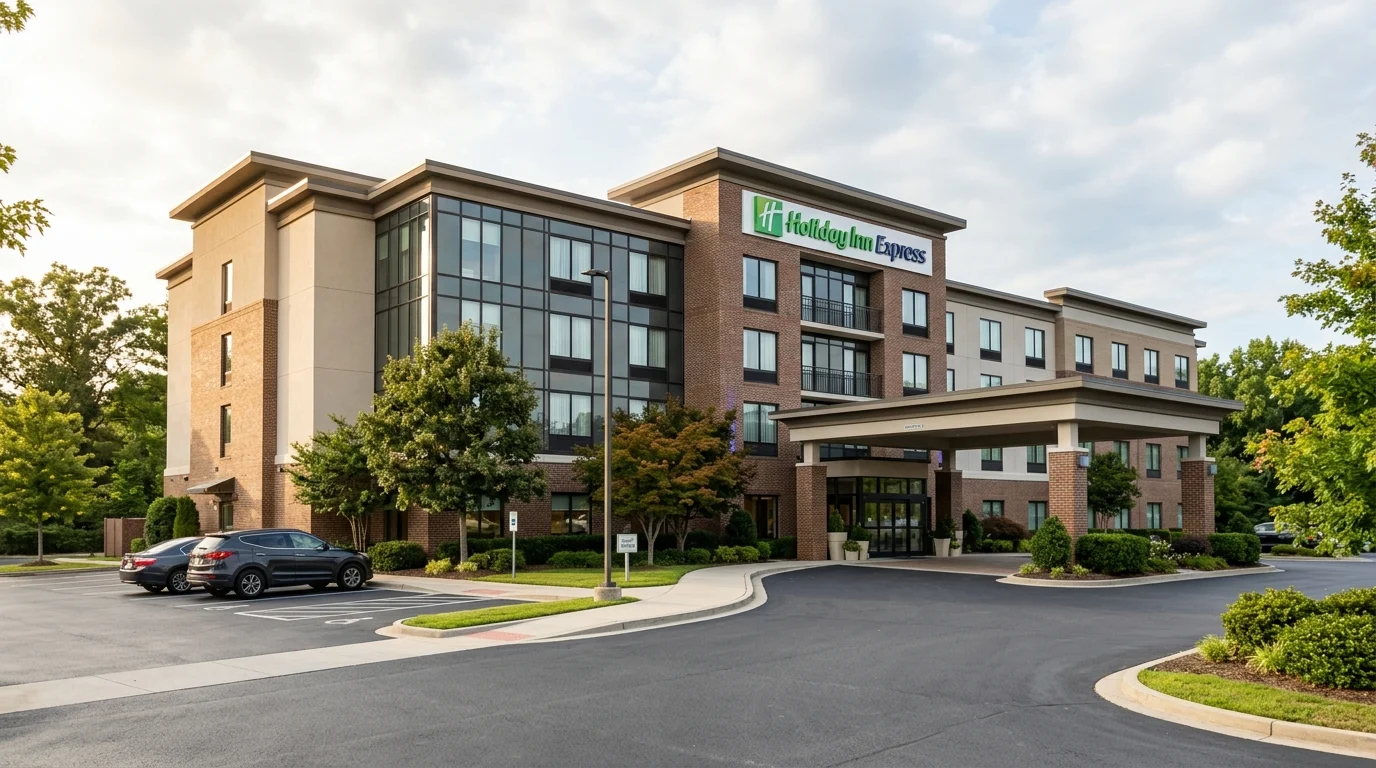
Interpreting Holiday Inn Express Brand Standards
Franchisees executing a Holiday Inn Express property improvement plan (PIP) or embarking on a new build must navigate a comprehensive set of brand design guidelines. The brand’s interior schemes, such as the widely adopted Formula Blue, outline spatial configurations and material requirements designed to optimize the guest experience and operational efficiency. Because IHG interior schemes are updated periodically (typically every 5 to 7 years), the specific scheme and its corresponding FF&E specifications may evolve. Adherence to current standards is monitored by IHG during typical renovation cycles (often mandated every 7 to 14 years depending on PIP terms). Procurement teams and hoteliers must understand the nuanced differences between mandatory brand mandates and localized design flexibility to avoid costly rework.
Commercial Objectives and Prototype Assumptions
The primary commercial objective behind the brand’s interior architecture is maximizing return on investment through durable, multi-functional furniture that appeals to the modern traveler. Prototype assumptions are generally based on standard guestroom footprints ranging from 300 to 350 square feet. Within this footprint, furniture is engineered to reduce visual clutter, enhance perceived spatial volume, and facilitate rapid housekeeping turnaround (often targeting a 10% to 15% reduction in cleaning time, or roughly 2 to 3 minutes saved per room). For example, floating vanities, wall-mounted headboards, and open-closet wardrobe systems help eliminate dead zones where dust accumulates. This modular approach speeds up installation during construction and aims to lower daily maintenance costs and housekeeping labor hours over the asset’s lifecycle.
Required vs. Recommended Specifications
Procurement specialists and purchasing agents must meticulously distinguish between required and recommended specifications to manage project budgets effectively. Required specifications—often detailing dimensions of signature items like mobile working desks, ergonomic profiles of task chairs, or specific bedside power hubs (frequently requiring a minimum of two 110V outlets alongside modern 5V/2.1A USB-A and USB-C charging capabilities)—generally permit little to no deviation. Conversely, recommended specifications often apply to secondary finishes, localized artwork packages, or soft goods where franchisees have slight latitude, provided the overarching aesthetic aligns with the brand narrative. Maintaining a near-perfect compliance rate (typically 98% to 100%) on core Furniture, Fixtures, and Equipment (FF&E) is typically necessary to pass the final punch list and secure brand authorization.
Key Guestroom Material Specifications
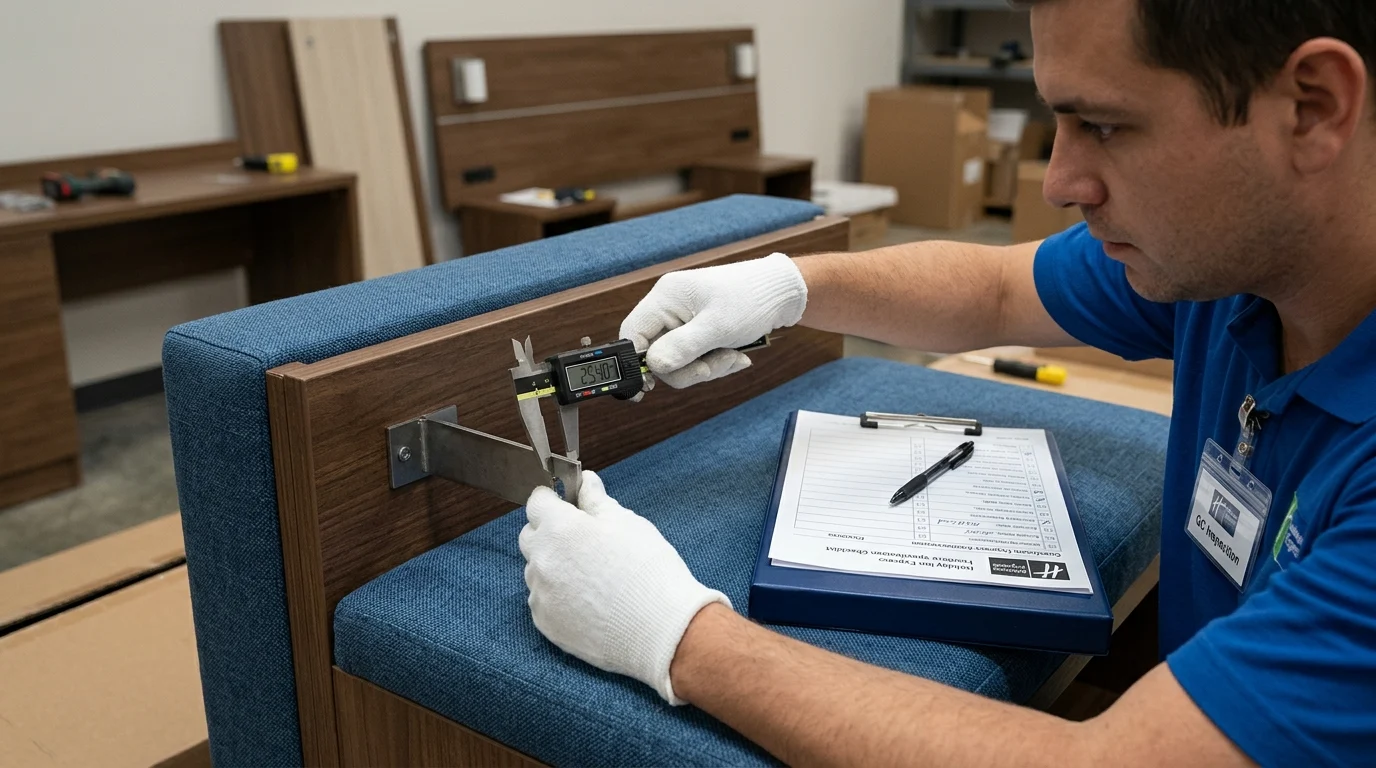
The material palette selected for Holiday Inn Express guestrooms prioritizes robust performance under heavy commercial use. Specifiers and manufacturers must source materials that inherently resist impact, moisture penetration, and chemical degradation while consistently maintaining a welcoming residential aesthetic that aligns with guest expectations.
Casegoods, Headboards, Seating, Vanities, and Finishes
Casegoods, headboards, and vanities must meet strict dimensional, structural, and compositional criteria. Casegoods predominantly utilize High-Pressure Laminate (HPL) rather than traditional wood veneers, as HPL (typically 0.028″ to 0.048″ thickness) is highly effective at withstanding luggage impacts, scratches, and liquid spills. Exposed edges on desks and nightstands typically require heavy-duty 2mm to 3mm PVC edge banding applied with moisture-resistant adhesives to prevent delamination. Furthermore, drawer hardware generally features heavy-duty, full-extension ball-bearing glides rated for substantial dynamic loads (commonly 75 to 100 lbs), ensuring longevity in high-turnover environments. Bathroom vanities mandate non-porous surfaces, typically engineered quartz or solid surface acrylics (often 20mm to 30mm thick), to prevent microbial growth and resist structural water damage.
| Furniture Category | Primary Material Standard | Typical Performance Specification |
|---|---|---|
| Casegoods & Desks | High-Pressure Laminate (HPL) | 0.028″–0.048″ thickness, 2mm–3mm PVC edge banding |
| Bathroom Vanities | Engineered Quartz / Solid Surface | 20mm–30mm thickness, non-porous certification |
| Upholstered Seating | Commercial-Grade Textile | 50,000–100,000+ Wyzenbeek double rubs |
| Drawer Hardware | Steel Ball-Bearing Glides | 75–100 lbs dynamic load capacity |
Durability, Cleanability, and Fire Performance
Upholstered seating, bedding substrates, and window treatments are heavily regulated by internal brand standards and stringent municipal fire codes. Lounge chairs, sleeper sofas, and task seating must utilize commercial-grade textiles rated for high Wyzenbeek double rubs (typically 50,000 to 100,000+ cycles) to prevent premature fraying. Furthermore, these fabrics typically carry a “W” (water-based) or “W/S” (water/solvent) cleaning code, allowing housekeeping staff to utilize commercial disinfectants without degrading the material’s structural integrity. It is crucial to note that fire codes, accessibility requirements (such as ADA), and regional standards vary significantly by jurisdiction and may override or supplement brand-level guidelines. Generally, seating foams and fabrics must comply with recognized smolder resistance standards (such as CAL 117-2013 in the US), while window treatments must pass applicable vertical burn tests (like NFPA 701) to ensure life safety compliance.
Managing Furniture Procurement and Compliance
Successfully executing a Holiday Inn Express FF&E package requires rigorous supply chain management and precise logistical coordination. Hoteliers, purchasing agents, and general contractors must synchronize manufacturing schedules (which often span 10 to 14 weeks) with construction timelines to prevent costly delays, storage fees, or missed revenue prior to the property’s grand opening.
Submittals, Samples, and Approval Steps
The approval process for custom or alternative supplier furniture begins with comprehensive submittals. Vendors must provide exhaustive shop drawings outlining joinery methods, hardware specifications, internal blocking, and exact dimensions for every item. Following the approval of these drawings, physical control samples of all finishes—including HPL chips, metal powder-coat strike-offs, and fabric swatches—must typically be submitted to the brand’s designated design review board. This review cycle is a standard industry practice and requires adequate lead time per iteration (generally 2 to 4 weeks). For fully custom seating, complex modular casegoods, or first-time vendor approvals, a complete physical prototype room (model room) review is often required 12 to 16 weeks before mass production authorization can be granted.
Balancing Brand Compliance, Lead Time, and Cost
Balancing brand compliance with favorable project economics hinges on proactive, strategic procurement methodologies.
Key Takeaways
- Verify the current IHG Holiday Inn Express design package before procurement because interior schemes are typically updated every 5 to 7 years.
- Plan guestroom furniture around 300- to 350-square-foot prototype assumptions to preserve circulation, reduce clutter, and support brand consistency.
- Separate mandatory FF&E specifications from recommended finishes early to avoid rework during PIP reviews and final brand punch lists.
- Prioritize commercial-grade HPL, moisture-resistant substrates, and durable finishes for casegoods, headboards, vanities, and high-touch guestroom furniture.
- Use modular, wall-mounted, and open furniture configurations to improve housekeeping efficiency and potentially reduce cleaning time by 10% to 15%.
- Confirm electrical integration details, including 110V outlets and USB-A/USB-C charging, before manufacturing bedside units, desks, and power hubs.
Frequently Asked Questions
Is this interpretation an official IHG standard?
No. It is a general industry interpretation. Owners should confirm final requirements through current IHG Holiday Inn Express Brand Standards and official owner resources.
How often do Holiday Inn Express interior schemes change?
IHG interior schemes are commonly refreshed every 5 to 7 years, while renovation or PIP cycles may occur every 7 to 14 years depending on property terms.
What guestroom size do many furniture specifications assume?
Many prototype assumptions are based on standard guestrooms of about 300 to 350 square feet, so furniture must be compact, modular, and operationally efficient.
Which furniture specifications usually allow the least flexibility?
Core FF&E items such as headboards, desks, task chairs, power hubs, wardrobes, and vanities usually require close compliance with brand dimensions, finishes, and functionality.
Why is HPL commonly used for casegoods?
High-Pressure Laminate is favored because it resists impact, moisture, and chemical cleaning better than many decorative wood veneers in high-use hotel environments.
Post time: Jul-13-2026