
 joyce@taisenfurniture.com
 0086 15356090777


Family resort FF&E carries a unique safety burden that standard hotel furniture does not. Unlike regular guestroom furniture designed for adult guests, pieces in family resorts, kids’ suites, indoor play zones and connected family cabins are constantly used by toddlers, preschoolers and young children who run, climb, fall, bite and pull furniture without awareness of risk. For hotel owners, FF&E specifiers and procurement teams, safety is not an optional add-on feature or a marketing selling point. It is a core compliance requirement that reduces injury risk, limits liability claims, and supports brand reputation for family-focused hospitality.
Many family resort projects make a common mistake: they only add adhesive foam corner guards after furniture arrives on site. Removable stick-on bumpers are easy for children to peel off, tear apart and put into mouths, creating a secondary choking hazard. True child-safe resort furniture builds protection into the original structure, edge profile, substrate, finish and hardware at the factory stage. This guide covers corner and edge geometry rules, international safety standards, non-toxic material screening, structural anti-tip and anti-pinch rules, fabric and foam requirements, pre-shipment testing protocols, and procurement checklists for family resort furniture. It includes two authoritative specification tables aligned with CPSC, ASTM, GREENGUARD and relevant European standards, and clarifies the most frequent specification gaps that lead to safety failures in family-focused hospitality spaces.
Core Injury Risks in Family Resort Furniture Environments
Children’s injury patterns in resort spaces fall into four main categories: impact collision against sharp corners and hard edges, choking from small detachable parts, toxic exposure from lead, phthalates and formaldehyde, and entrapment or crushing from tipping furniture, pinching drawers and gaps.
Toddlers between 1 and 5 years old have higher centres of gravity, poorer balance and faster movement speeds. They frequently trip over rugs, run across guestroom floors and collide head-first or face-first into table corners, cabinet edges, bed footboards and window sills. Medical data from child injury surveillance shows that head and facial contusions, lacerations and concussions linked to furniture edges are the most common injury type in family accommodation.
Choking hazards are equally critical. Small screws, loose decorative knobs, peel-off corner guards, tiny plastic ornaments and loose foam fragments can become choking risks. Any component that fits inside a small-parts test cylinder must be eliminated from accessible areas of family resort furniture.
Chemical exposure is often overlooked. Young children frequently touch surfaces and put hands, fingers or even furniture edges into their mouths. Low-quality paint, solvent-heavy finishes, uncertified MDF and phthalate-containing flexible plastics release volatile compounds. Over extended stays, poor indoor air quality and surface contamination create health concerns that can trigger parent complaints and third-party audit failures.
Finally, dynamic structural hazards: unsecured dressers, toy chests, changing tables and bunk bed ladders can tip over when children climb them. Drawers with hard, unregulated closing slides trap fingers. Gaps between slats, bed rails and cabinet frames can catch fingers, wrists or limbs.
Standardised Corner & Edge Specification for Child‑Safe Resort Furniture
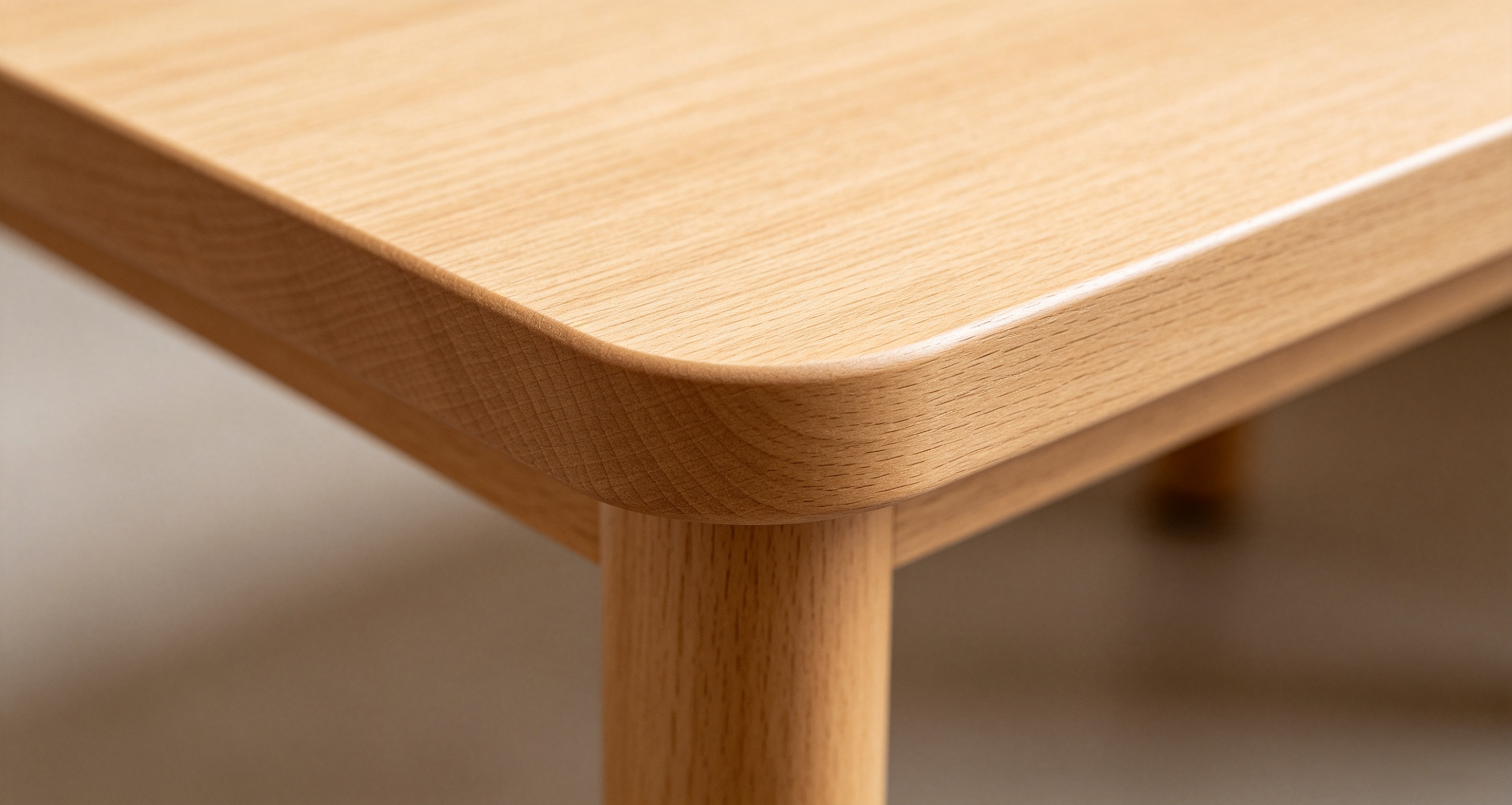
The safest design strategy is integral rounding, not aftermarket padding. All exposed corners and edges within 1200 mm of finished floor level are considered child-accessible zones. This covers dining tables, activity desks, nightstands, cabinet fronts, bed rails, bench edges, changing stations, play shelving and window surround trim.
For permanent factory machining, the minimum radius for all external corners is R10 mm. Edges must be fully radiused or heavily chamfered, with no sharp transition lines. Smaller radii such as R3 or R5 are acceptable only for low‑force decorative trim and are not permitted for tabletops, desk corners and cabinet front corners where high‑speed collisions happen. All machined profiles must be sanded smooth and sealed, with no splinters, burrs or raised grain.
Removable adhesive corner guards are classified as temporary accessories and are not accepted as the primary safety solution for commercial family resort FF&E. If a hotel still chooses to add supplementary protective padding, it must be commercial-grade, tear-resistant, non-peelable, secured with mechanical fasteners rather than adhesive, and tested to confirm no small fragments break away under pulling and biting abuse.
Table 1: Corner & Edge Safety Specification by Furniture Zone
| Furniture Zone | Required Corner Radius | Edge Treatment | Special Restrictions |
|---|---|---|---|
| Guestroom activity tables, dining tables, play desks | R10 mm minimum full radius | Continuous rounded edge, no flat sharp shoulder | No inset hard plastic decorative corners |
| Nightstands, low storage cabinets, toy storage | R8–R10 mm | Rounded or wide chamfer, fully sealed | No exposed metal hardware protruding beyond surface |
| Bed rails, bench tops, window sills | R6–R10 mm | Smooth continuous radius | Gaps between rails must avoid finger trapping |
| Wall-mounted high shelving above 1200 mm | R3 mm minimum | Deburred and smooth | Not within primary child collision zone |
| Aftermarket stick-on corner bumpers | Not acceptable as primary protection | N/A | Only permitted as secondary temporary supplement, must pass small-part test |
Inspectors and third-party auditors will use radius gauges and sharp-edge test tools to verify compliance. A common failure is furniture that appears rounded in product photos but only has a tiny cosmetic chamfer, still sharp enough to cut skin on impact.
Approved Material & Finish Standards for Family Resort Furniture
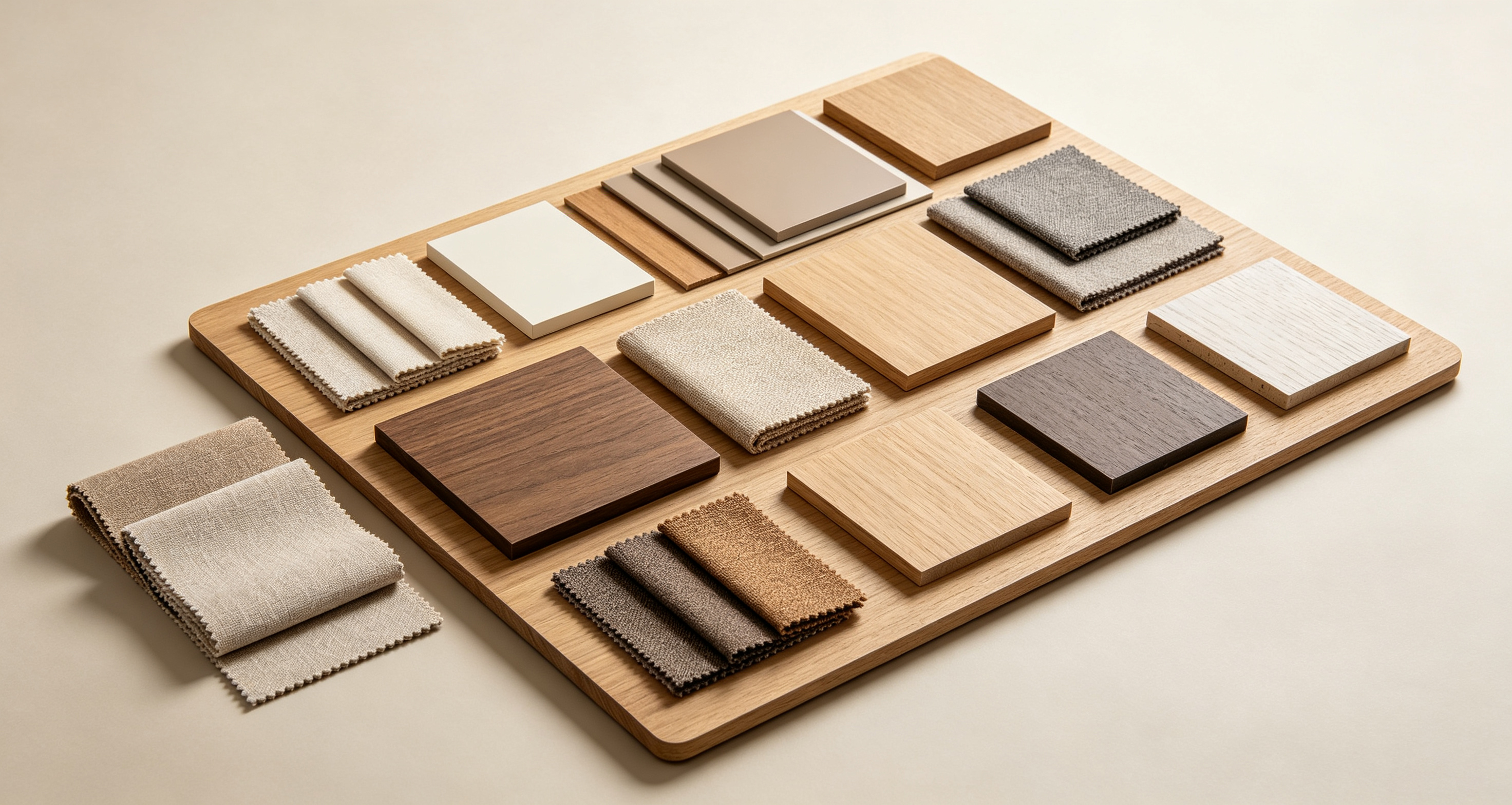
Material selection follows three core priorities: non-toxic chemical compliance, splinter resistance, and cleanability. Family resort furniture sees heavy spills, food stains, juice, sunscreen, wet hands and repeated sanitising with disinfectant sprays and wipes. The material must be safe for mouthing contact, durable under frequent cleaning, and low-emission for indoor air quality.
For wood substrates, solid hardwood or formaldehyde-reduced engineered panels are preferred. Standard low-grade MDF with high urea-formaldehyde glue is not recommended for kids’ suites. Acceptable substrates include E0/E1 plywood, low-emission particleboard, acetylated wood and FSC-certified hardwood. All wood surfaces must be sanded and sealed to prevent splintering.
Surface coatings are one of the most heavily tested components. Paints, stains and topcoats must meet CPSC lead limits (lead content below 90 ppm in surface coating), comply with ASTM F963 heavy metal migration rules, and pass EN 71-3 for soluble heavy metals. Water-based polyurethane finishes are the standard choice. Solvent-rich lacquers are restricted because they release high VOCs and can create persistent odours in enclosed guestrooms.
Soft upholstery materials and foam must also be screened. Fabrics must meet flame resistance standards such as NFPA 701 or BS 5852, free of harmful phthalates. Flexible vinyl and plastic components must use phthalate-free formulations, with DEHP, DBP, BBP restricted. Foam filling should be high-density, tear-resistant and covered with a tightly woven barrier fabric to stop foam from breaking into small ingestible chunks.
GREENGUARD Gold certification is strongly recommended for all furniture in kids’ zones. This certification validates ultra-low VOC emissions, suitable for sensitive users including children, and is widely recognised by family resort brands and third-party hospitality auditors.
Table 2: Material Certification Checklist for Family Resort Child‑Safe Furniture
| Material Category | Mandatory Certification / Standard | Key Limit Requirement |
|---|---|---|
| Surface paint & finish | CPSC 16 CFR, ASTM F963 | Lead <90 ppm, 8 soluble heavy metal limits |
| Wood composite substrate | E0 / E1, GREENGUARD Gold | Formaldehyde emission controlled |
| Flexible plastic, vinyl trims | CPSIA, REACH Annex XVII | No restricted phthalates |
| Upholstery fabric | NFPA 701, stain-resistant commercial grade | Flame retardant, wipeable, no loose fibres |
| Foam padding | Cal 117-2013 | Fire safety, low fragmentation under abuse test |
| Hardware | Stainless steel or zinc alloy with locking fasteners | No free-falling small hardware when pulled |
Hidden Mechanical Safety Rules: Anti-Tip, Anti-Pinch and Gap Control
Even perfectly rounded corners and non-toxic materials cannot prevent serious accidents if furniture is structurally unstable or designed with trapping hazards. Anti-tip anchoring is mandatory for all tall freestanding storage units, dressers, toy chests and changing tables. Every unit must ship with included metal anti-tip brackets, wall anchors and installation instructions. The procurement specification should state that anti-tip hardware is factory supplied, not an optional extra purchased separately by the hotel maintenance team.
Drawers and cabinet doors require soft-close, anti-pinch slides and hinges. Slow-close mechanisms prevent fingers from being crushed between drawer fronts and cabinet frames. The specification must exclude cheap, unregulated spring slam slides that close rapidly. Knobs and pulls should be large, fixed, non-removable and securely locked with thread-locking adhesive. Small screw-on knobs that can be unscrewed by children are prohibited.
Gap and spacing rules are critical for bunk beds, bed rails and slatted furniture. Gap sizes must avoid the 6–12 mm and 30–75 mm trap zones, where fingers or limbs can become wedged. Toy chests need counterbalance or spring lid supports to prevent lid slamming on heads and hands. Lid supports must stay functional after repeated cleaning and humidity cycling.
Climbing risk must be considered in the design phase. Children will use drawer fronts as steps to climb tall cabinets. Anti-tip hardware works alongside drawer weight limits to reduce this hazard, but the best practice is to avoid stacking shallow, easy-to-grab drawers on tall dressers in kids’ suites.
Factory Testing, Pre-Production Samples and On-Site Inspection
Family resort furniture needs a layered testing workflow before mass production and shipment. The first stage is pre-production sample testing. Suppliers must submit finished samples for third-party lab testing covering sharp edge and corner testing, small parts test, heavy metal migration, VOC emission, phthalate screening, and anti-tip load stability testing.
Abuse testing is especially important for hospitality use. Unlike residential children’s furniture, resort pieces receive repeated rough handling: kicking, jumping, pulling, biting and aggressive cleaning. Samples should undergo impact testing on corners, pull testing on knobs and hardware, and sanitisation cycling testing to confirm the finish does not degrade, peel or expose raw substrate after hundreds of wipe-downs with disinfectant.
Once delivered to the resort, the installation team should verify all anti-tip brackets are correctly fixed to wall studs, not just drywall. Maintenance schedules should include quarterly visual checks: inspecting for chipped paint, loose knobs, cracked corner profiles, failed soft-close slides and loose anti-tip fixings. Chipped paint exposes raw wood and may break the chemical safety barrier, so touch-up kits matching the factory finish should be included with each furniture shipment.
Common Specification Mistakes in Family Resort FF&E
The most frequent error is writing “child-safe furniture” as a vague marketing requirement without defining radius, testing standards or certification. Vendors may deliver furniture with cosmetic soft tape and no integral rounding, which quickly fails once the padding is removed.
Second, buyers treat anti-tip hardware as optional. Many low-cost furniture packages exclude brackets, leaving the hotel liable if a unit tips over.
Third, mixing adult-grade and children-grade materials in the same suite. A family suite may have a certified safe kids’ table paired with a standard dresser using high-VOC paint and untested MDF.
Fourth, ignoring cleaning compatibility. Some child-safe finishes pass chemical emission tests but break down quickly under bleach or quaternary disinfectants, creating peeling surfaces and exposure risks.
Fifth, forgetting bunk bed and play zone gap rules. Beautiful slatted decorative furniture can create hidden finger entrapment hazards that corner rounding alone cannot solve.
Final Summary
Family resort furniture safety is a fully integrated system, not just rounded corners. The specification must combine factory-machined radiused edge geometry, non-toxic low-VOC finishes, certified substrates and fabrics, anti-tip anchoring, anti-pinch soft-close hardware, controlled gap spacing, third-party abuse testing and regular on-site maintenance. Removable foam bumpers are only secondary supplements, never the primary safety solution.
Procurement teams that lock in clear radius values, reference ASTM, CPSC and GREENGUARD standards, and require complete test reports before shipment will reduce guest injury risk, cut liability exposure, and deliver furniture that satisfies family travellers while matching the resort’s decorative vision. Safety specifications can coexist with attractive, playful resort design; the best family FF&E feels welcoming and fun, while every hidden structural detail protects young guests.
FAQ
Q: What is the minimum corner radius required for family resort dining tables?
A: R10 mm full radius is the standard specification for all tabletops and activity desks within child reach.
Q: Can I use stick-on foam corner guards instead of factory rounded edges?
A: No. Peelable adhesive guards are not accepted as primary safety protection, as children can remove them and create choking hazards.
Q: What certification is best for indoor air quality in kids’ suites?
A: GREENGUARD Gold is the preferred standard for low VOC emissions for children’s spaces.
Q: Do all dressers in family rooms need anti-tip brackets?
A: Yes. All freestanding tall storage units must ship with factory-supplied anti-tip hardware and installation guides.
Q: Are soft-close drawers mandatory for child-safe resort furniture?
A: Yes. Soft-close slides reduce finger crushing risk and are a baseline mechanical safety requirement.
Post time: Nov-19-2026