
 joyce@taisenfurniture.com
 0086 15356090777


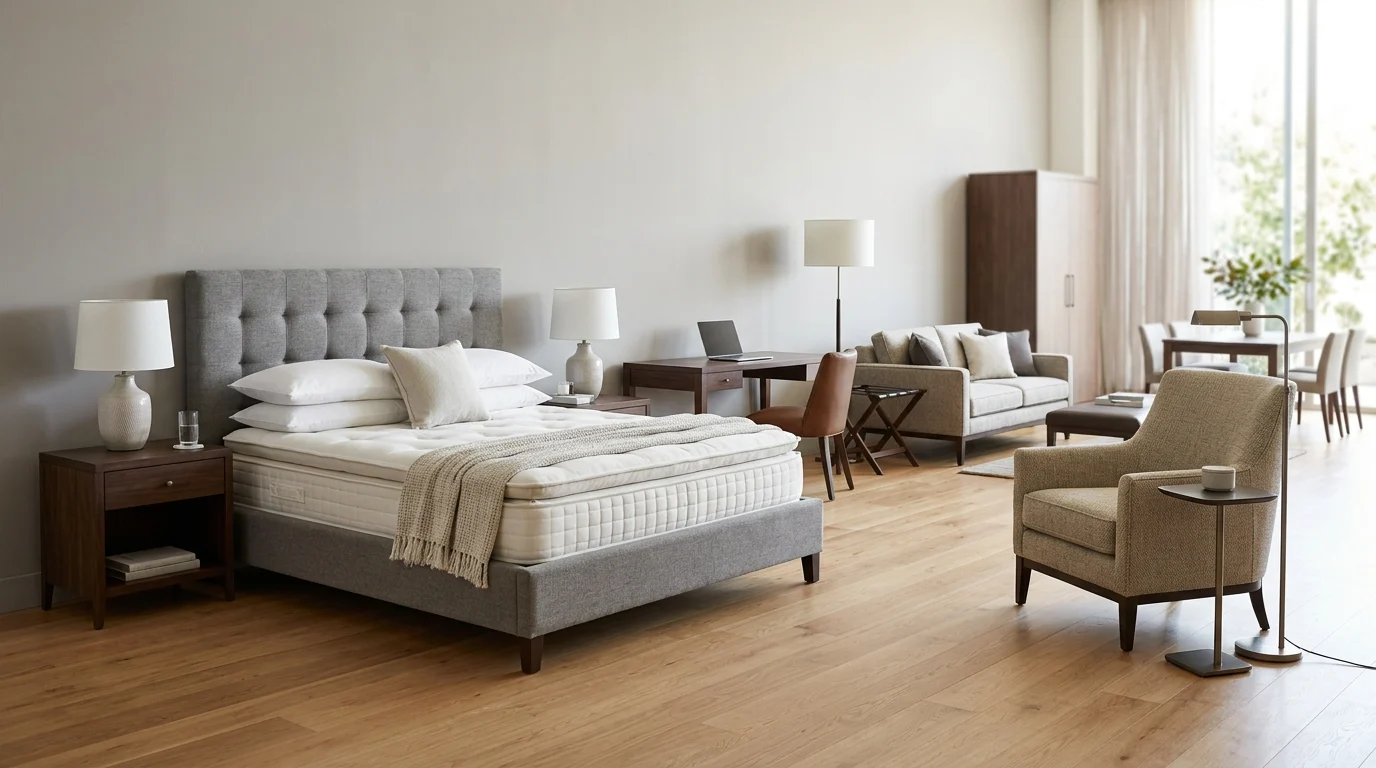
Start Procurement with Lifecycle Value
Procuring furniture for budget hospitality properties requires a rigorous evaluation of lifecycle value. Asset managers and procurement officers benefit from looking beyond the initial capital expenditure (CapEx) to understand the long-term operational expenditure (OpEx) implications.
In the economy and mid-scale sectors, profit margins are exceptionally tight. This makes it essential that every dollar spent on Furniture, Fixtures, and Equipment (FF&E) yields maximum utility without inflating the overarching development or renovation budget.
Define Durability Requirements
Budget hotels typically experience high turnover and guest traffic, often operating at consistently high occupancy rates—sometimes ranging from 70% to 85%, depending on the market and year. This density accelerates wear and tear on all physical assets. To combat this, durability specifications remain a top priority from the outset, though exact requirements should always be validated against specific brand standards and project briefs.
Upholstery fabrics often target an indicative benchmark of 50,000 Wyzenbeek double rubs to withstand constant use without premature fraying or pilling. For casegoods, high-pressure laminate (HPL) surfaces are highly recommended to resist scratching, heat, and moisture penetration. Ensuring the FF&E survives the standard 5- to 7-year renovation cycle typical of the economy sector helps prevent the catastrophic costs of mid-cycle emergency replacements.
Compare Total Cost Drivers
Total cost of ownership (TCO) extends far beyond the factory-gate price. Freight, tariffs, warehousing, and installation can easily add an estimated 20% to 40% to the initial unit cost of hotel furniture, depending on the region and current economic conditions. Procurement teams need to model these secondary expenses accurately to avoid budget overruns.
| Cost Driver | Upfront Focus Strategy | Lifecycle Value Strategy | Impact on 7-Year Cycle |
|---|---|---|---|
| Unit Price | Lowest available | Mid-tier, highly durable | Higher initial CapEx, lower TCO |
| Replacement | High probability (Years 2-3) | Low probability | Illustrative 30% to 50% cost reduction |
| Maintenance | Frequent repairs required | Stain/scratch resistant | Lower operational disruption |
| Freight & Install | Unoptimized shipping | Flat-pack or optimized CBM | Potential 10% to 15% logistics savings |
Furthermore, specifying inferior materials increases the probability of room downtime. Evaluating total cost drivers ensures that the selected FF&E provides a stable return on investment throughout the property’s operational lifespan.
Balance Specifications, Quality, and Sourcing
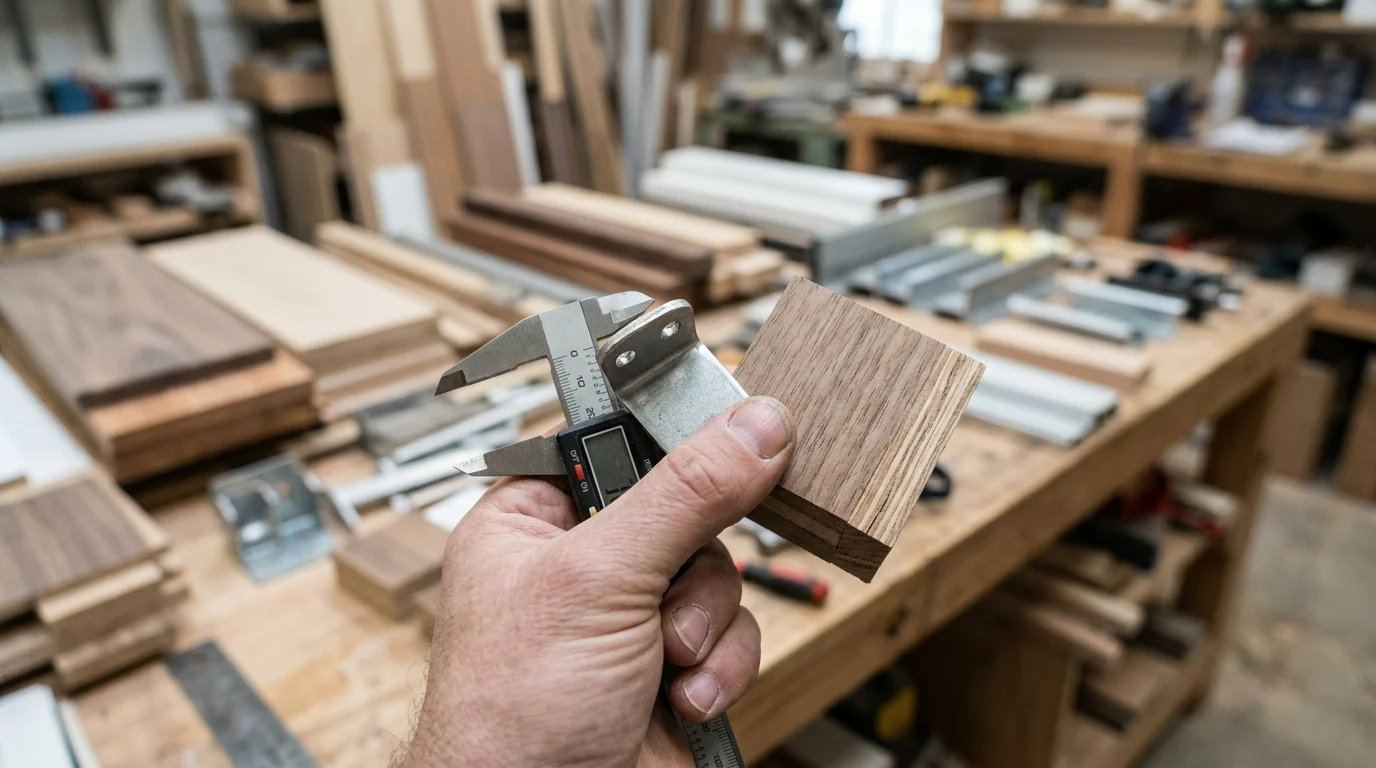
Balancing strict technical specifications with an intelligent sourcing strategy dictates the ultimate success of the procurement cycle. Value engineering is a common practice in budget hotel projects, but it requires systematic execution to ensure cost-cutting does not compromise the structural integrity or safety of the furniture.
Set Material and Construction Standards
Establishing rigid construction standards is a primary defense against premature furniture failure. Specifications often call for 18mm exterior-grade plywood or engineered panels with moisture-resistant cores over standard low-density particleboard for structural frames. It is important to note that standard medium-density fiberboard (MDF) is moisture-sensitive and generally not exterior-grade, so material selections should always account for the property’s specific climate. Additionally, specifying low-emission materials that meet CARB or EPA certifications supports indoor air quality.
Kiln-dried solid wood components generally target an 8% to 12% moisture content as a baseline to prevent warping, cracking, or splitting. Edge-banding on desks and nightstands is typically specified at 2mm PVC, applied with hot-melt polyurethane (PUR) adhesive to prevent peeling in humid environments. Furthermore, drawer boxes benefit from robust joinery and heavy-duty, full-extension ball-bearing glides rated for a minimum of 75 pounds of dynamic load.
Compare Domestic and Overseas Suppliers
The decision between domestic and international manufacturing carries significant logistical and financial weight. Overseas manufacturers, particularly in Asia, often require an indicative Minimum Order Quantity (MOQ) of 50 to 100 rooms. In return, they may offer unit cost savings ranging from 30% to 45%, depending on the product category.
However, international lead times routinely stretch to 12 to 16 weeks, increasing exposure to supply chain disruptions, customs delays, and volatile ocean freight rates. Sourcing overseas also introduces complexities regarding regulatory compliance (such as local fire codes and flammability standards), communication barriers, and a larger carbon footprint. Conversely, domestic suppliers generally offer lower MOQs (often 10 to 20 rooms) and faster turnarounds (6 to 8 weeks). While domestic sourcing commands a premium price, it drastically reduces transit risks, simplifies after-sales service, and lowers warehousing fees, making it highly attractive for tight project schedules or phased renovations.
Use a Practical Process to Control Cost
Establishing a disciplined procurement workflow mitigates financial risk and prevents schedule overruns. A structured, step-by-step approach helps ensure that the theoretical quality outlined in the specifications aligns perfectly with the final delivered product on the property.
Follow Steps from Mock-Up to Delivery
The model room or mock-up phase is a critical risk-management tool. Procurement teams typically allocate 4 to 6 weeks for the production, delivery, and review of a prototype. This vital step allows stakeholders to test ergonomics, verify dimensions against actual room footprints, and approve finish colors under actual hotel lighting.
Once mass production begins, diligent oversight is highly recommended. Implementing third-party quality control inspections at the factory level—often targeting an Acceptable Quality Limit (AQL) of less than 2.0 for major defects and 4.0 for minor defects—helps catch issues before any container loading is authorized. Upon arrival, coordinating closely with FF&E logistics providers to stage deliveries ensures installation sequences align with the general contractor’s finishing schedule.
Choose Value Over the Lowest Bid
Selecting a vendor purely on the lowest submitted bid often results in hidden downstream costs, such as delayed hotel openings, compromised warranties, or high defect rates. Every day a hotel opening is delayed due to rejected furniture, the property loses thousands of dollars in potential Revenue Per Available Room (RevPAR).
Evaluating a supplier’s financial stability through credit checks, trade references, and factory audits is just as important as reviewing their product.
Key Takeaways
- Evaluate hotel furniture by total cost of ownership, not only unit price, because freight, tariffs, warehousing, and installation can add 20% to 40% to the factory-gate cost.
- Specify durable materials such as HPL surfaces and upholstery near 50,000 Wyzenbeek double rubs to withstand high occupancy and frequent guest turnover.
- Plan FF&E around the typical 5- to 7-year budget hotel renovation cycle to avoid expensive mid-cycle replacements and operational disruption.
- Use lifecycle value engineering carefully, reducing unnecessary cost without weakening structural integrity, safety, or brand-standard compliance.
- Consider logistics efficiency, including flat-pack design and optimized cubic meter loading, because smart shipping can potentially reduce logistics costs by 10% to 15%.
Frequently Asked Questions
Why should budget hotels evaluate furniture by lifecycle value?
Lifecycle value shows the real cost of furniture over years of use, not just the purchase price. Durable FF&E can reduce repairs, replacements, room downtime, and disruption across the typical 5- to 7-year renovation cycle.
What durability benchmarks matter most for budget hotel furniture?
Common priorities include upholstery rated around 50,000 Wyzenbeek double rubs, scratch- and moisture-resistant HPL surfaces, and sturdy structural panels such as 18mm plywood or moisture-resistant engineered boards.
How much can freight, tariffs, warehousing, and installation add to furniture costs?
Secondary costs can add an estimated 20% to 40% to the initial unit price, depending on region, tariffs, shipping method, storage needs, and installation complexity.
Is the lowest-priced hotel furniture always the best choice?
No. Very low upfront pricing can lead to higher total cost if furniture fails early, requires frequent repairs, or causes room downtime. A mid-tier durable specification often performs better over the full operating cycle.
How can procurement teams reduce logistics costs?
They can specify flat-pack or space-optimized furniture, consolidate shipments, plan warehousing early, and work with suppliers that understand hotel FF&E packaging and installation requirements.
Post time: Jul-06-2026