
 joyce@taisenfurniture.com
 0086 15356090777


Introduction
Material selection has a direct impact on how hotel furniture performs under constant guest use, frequent cleaning, and long replacement cycles. For buyers, durability is not just about appearance; it affects maintenance costs, brand consistency, and the total value of every FF&E decision. This guide explains which materials hold up best in hospitality settings, what performance factors matter most, and how to compare options for casegoods, seating, and surfaces with greater confidence. With that context, the next sections examine the specific material categories and the practical trade-offs behind each one.
Why material choices determine long-term hotel furniture performance
Selecting materials for hospitality environments transcends aesthetic appeal; it is a fundamental capital expenditure strategy. High-traffic commercial spaces demand robust construction to prevent premature asset degradation, maintain brand standards, and protect the bottom line.
When procurement teams and hotel operators specify Furniture, Fixtures, and Equipment (FF&E), understanding the underlying mechanics of material performance becomes critical. The right material choices directly mitigate the risks of structural failure, surface damage, and continuous maintenance overhead.
How to define durability for hotel furniture
Hospitality environments subject furniture to significantly more wear than residential settings. Durability in this sector is defined by a material’s capacity to withstand continuous impact, chemical cleaning agents, and environmental stressors while retaining its original finish and structural integrity.
Industry standards dictate that hotel casegoods must survive a lifecycle of 10 to 12 years before requiring replacement, whereas soft goods typically undergo a 5 to 7-year renovation cycle. Achieving these operational milestones requires specifying materials engineered specifically for high-traffic commercial use, where daily interactions with luggage, housekeeping equipment, and varied guest behavior are the norm.
Which performance metrics matter most
To evaluate potential longevity objectively, procurement specialists rely on standardized performance metrics rather than manufacturer claims. For upholstered seating, the Wyzenbeek test is paramount; hospitality-grade fabrics must exceed a minimum threshold of 50,000 double rubs to qualify for public area use, with some high-traffic lounge environments requiring 100,000 double rubs.
Hard surfaces are evaluated using the Taber abrasion test, where commercial laminates must withstand at least 400 cycles without finish degradation. Additionally, stone and solid surfaces are measured by Mohs hardness. A rating of 6 or higher is highly recommended for vanity tops, nightstands, and high-use tables to prevent scratching and gouging from daily guest activities.
Best materials for durable hotel furniture
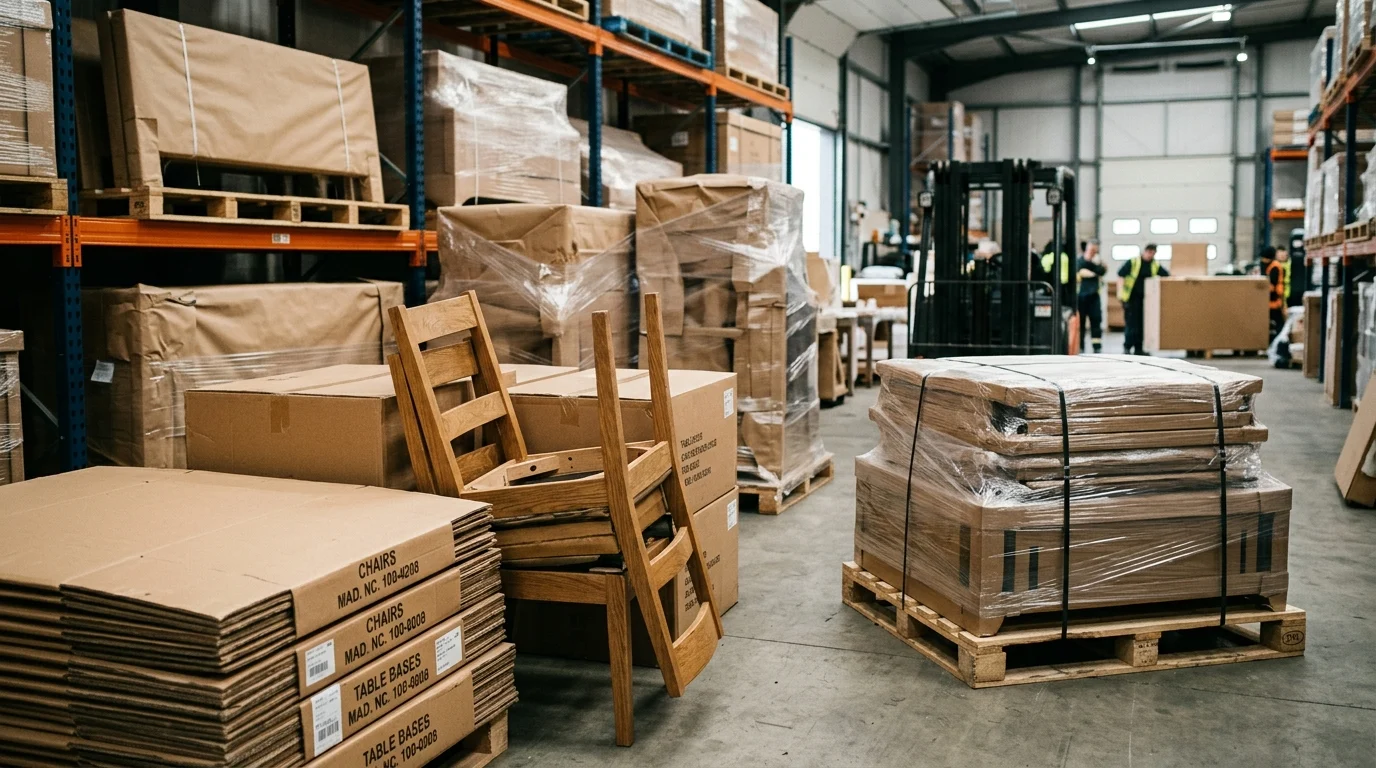
The hospitality furniture market relies on a core group of materials, each offering distinct advantages in terms of structural integrity, cost-efficiency, and design flexibility.
Navigating these options requires balancing the architectural intent of a space with the rigorous physical demands placed on commercial furniture.
How solid wood, engineered wood, metal, laminate, and stone compare
The selection between wood, metal, laminate, and stone dictates both the manufacturing process and the ultimate resilience of the piece.
| Material | Ideal Application | Expected Lifespan | Relative Cost |
|---|---|---|---|
| Solid Wood | Premium boutique seating, accent tables | 15+ years | High |
| High-Pressure Laminate (HPL) | Guestroom casegoods, desks, wardrobes | 10-12 years | Medium |
| Powder-Coated Metal | Outdoor furniture, structural frames | 15+ years | Medium |
| Engineered Quartz | Vanity tops, nightstand surfaces | 20+ years | High |
Solid hardwoods like ash and oak offer superior joinery strength for seating but are often cost-prohibitive for entire guestroom suites. Consequently, commercial casegoods heavily utilize engineered wood cores (plywood or medium-density fiberboard) wrapped in High-Pressure Laminate (HPL). Commercial-grade HPL, typically specified at a thickness of 0.8mm to 1.2mm, provides exceptional resistance to moisture and impact. Metal components, particularly powder-coated aluminum, dominate outdoor and structural applications due to their high tensile strength and corrosion resistance. For horizontal surfaces exposed to liquids, engineered quartz has largely replaced porous natural stones like marble, offering a non-porous, stain-resistant alternative.
What comparison criteria buyers should use
When comparing these materials, buyers must evaluate the Total Cost of Ownership (TCO) rather than strictly the upfront unit price. A common pitfall is specifying residential-grade wood veneers to reduce initial capital expenditure, which frequently leads to premature delamination and costly mid-cycle replacements.
Structural criteria are equally critical for ensuring safety and longevity. For instance, commercial lounge seating must be engineered to support a minimum static load capacity of 300 pounds. Maintenance requirements also heavily drive material selection. Surfaces that require specialized polishing or are susceptible to degradation from industrial-grade sanitizing chemicals should be avoided in favor of non-porous, chemically inert alternatives that streamline housekeeping operations.
How to specify and approve hotel furniture materials

Moving from a design concept to mass production requires a strict specification protocol. This phase ensures that the finalized materials meet aesthetic expectations, budgetary constraints, and rigorous commercial performance standards.
A structured approval process protects hotel owners from supply chain disruptions and guarantees that the delivered FF&E performs reliably over its projected lifespan.
How procurement teams can validate materials
Procurement teams must validate every material component before authorizing full-scale production. This validation process begins with reviewing material control sheets, technical specifications, and independent laboratory testing certificates.
For upholstered items, teams must verify compliance with strict fire safety regulations, such as the CAL 117-2013 flammability standard. Wood products should be accompanied by Forest Stewardship Council (FSC) certifications or equivalent documentation to ensure sustainable sourcing. Furthermore, procurement teams must verify that wood moisture content is strictly controlled between 8% and 12% during manufacturing to prevent warping in climate-controlled hotel environments. Establishing these stringent quality control parameters during specification helps maintain a defect rate of less than 2% upon final site delivery.
How owners and operators can make final selections
The final selection phase hinges on the physical evaluation of a fully furnished model room. Owners and operators use this prototype phase to assess how materials respond to actual lighting conditions, spatial constraints, and standard housekeeping procedures.
During this stage, stakeholders must also align material choices with global supply chain logistics. Custom offshore FF&E production and shipping typically require lead times of 12 to 16 weeks. If a specific exotic veneer or custom-cast metal component threatens to extend this timeline and delay a property launch, operators must pivot to readily available, pre-approved material alternatives. Ultimately, final material approval represents a calculated balance between maintaining the integrity of the brand’s design narrative and ensuring reliable, cost-effective execution.
Key Takeaways
- The most important conclusions and rationale for Hotel Furniture
- Specs, compliance, and risk checks worth validating before you commit
- Practical next steps and caveats readers can apply immediately
Frequently Asked Questions
What is the most durable material for hotel guestroom casegoods?
High-pressure laminate over plywood or MDF is often the best balance of durability and cost. For hotels, specify commercial HPL around 0.8–1.2mm to resist impact, moisture, and daily housekeeping wear.
How many double rubs should hotel upholstery fabric have?
For public-area seating, choose at least 50,000 double rubs on the Wyzenbeek test. In very busy lounges or lobbies, 100,000 double rubs is a safer target for longer service life.
Is solid wood better than engineered wood for hotel furniture?
Not always. Solid wood is strong and premium for seating or accent pieces, but engineered wood with commercial HPL is often better for casegoods because it controls cost and resists surface damage more consistently.
Why is quartz often preferred over marble in hotel rooms?
Engineered quartz is non-porous and more stain-resistant, so it handles guest spills and cleaning chemicals better. It is a practical choice for vanity tops, nightstands, and other horizontal surfaces.
How can buyers verify hotel furniture materials before ordering from a supplier like Taisen Furniture?
Request material specs, performance test data, and finish samples first. Confirm HPL thickness, fabric double rubs, load capacity, and surface ratings, then approve a production sample before full hotel FF&E orders.
Post time: May-19-2026