
 joyce@taisenfurniture.com
 0086 15356090777


Introduction
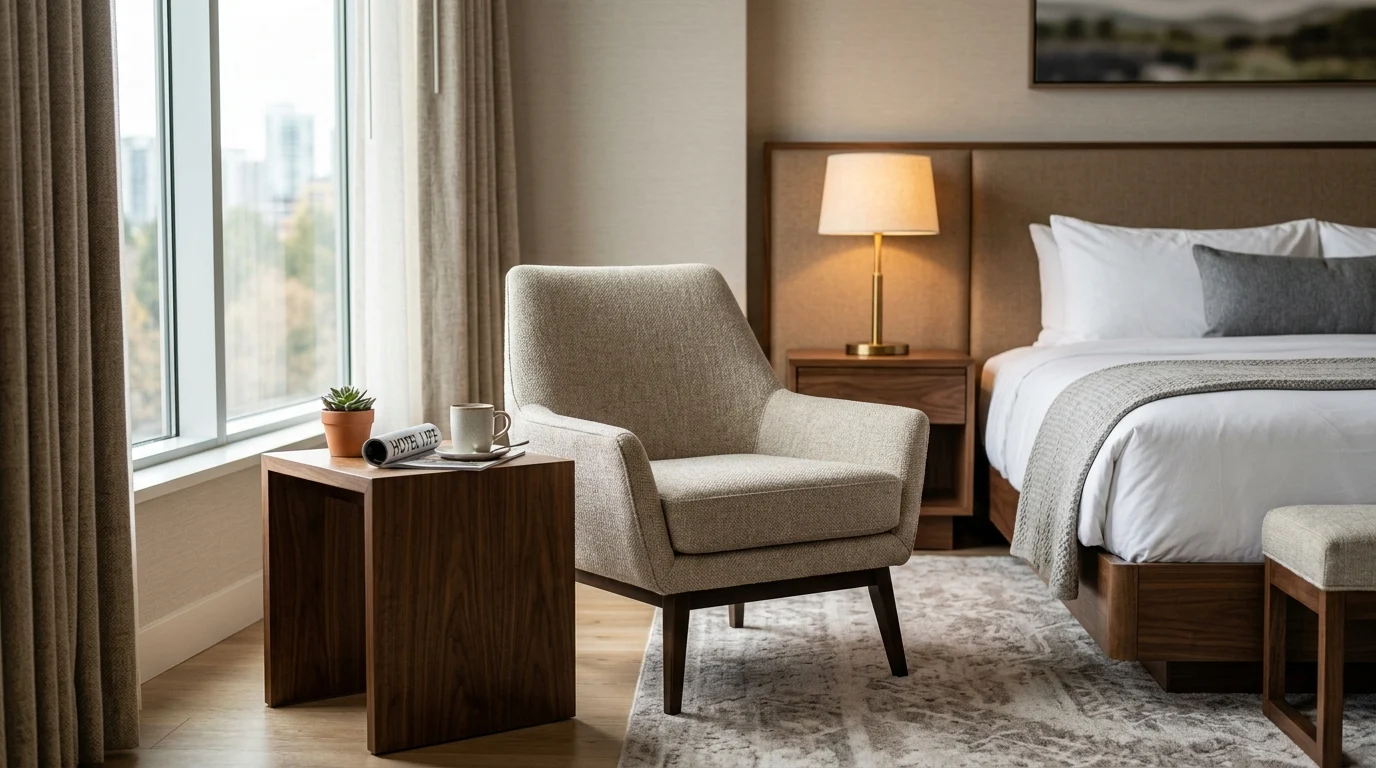
Choosing hotel furniture materials is less about appearance alone and more about how each surface, frame, and finish performs under constant guest use, frequent cleaning, and long replacement cycles. This guide outlines which materials hold up best in guestrooms, lobbies, and dining areas, and explains the tradeoffs between cost, maintenance, and long-term durability. You’ll see how factors such as abrasion resistance, moisture tolerance, structural strength, and construction quality affect real-world performance, helping you compare options more confidently before specifying, sourcing, or replacing hospitality furniture.
Assessing Hotel Furniture Durability
Procuring hotel furniture demands a rigorous evaluation of durability standards that far exceed residential use. Hospitality environments subject fixtures to relentless wear, requiring procurement teams to prioritize material integrity, structural resilience, and lifecycle longevity.
Key durability criteria for high-traffic hospitality use
Commercial-grade upholstery and finishes must meet strict quantitative thresholds. For seating fabrics, the Wyzenbeek or Martindale abrasion tests are industry standards; heavy-duty hospitality environments require a minimum of 50,000 double rubs, while public lobby seating often demands 100,000 double rubs or more. Beyond textiles, hard surfaces must resist moisture, thermal shock, and chemical degradation from commercial cleaning agents. Load-bearing capacities also differentiate commercial fixtures, with standard hotel seating requiring structural integrity certified to support a minimum of 350 pounds per seat under ANSI/BIFMA X5.4 standards. Additionally, high-resiliency polyurethane foam used in seat cushions should possess a minimum density of 2.0 to 2.5 pounds per cubic foot to prevent structural bottoming-out over a standard five-year commercial cycle.
How brand and construction affect long-term performance
The underlying construction methodology dictates a product’s operational lifespan as much as the visible material. High-quality casegoods rely on robust joinery techniques, such as English dovetail drawers, mortise-and-tenon frame connections, and screwed corner blocks, rather than simple glued dowels or staples. Finishes play an equally critical role; a catalyzed polyurethane or conversion varnish applied at a thickness of 2 to 3 mils provides superior resistance to scratching and liquid penetration compared to standard nitrocellulose lacquers. Reputable commercial brands back these construction methods with robust warranties ranging from 5 to 10 years, reflecting a verified manufacturing defect rate of less than 1.5% across high-volume deployments.
Comparing Hotel Furniture Materials
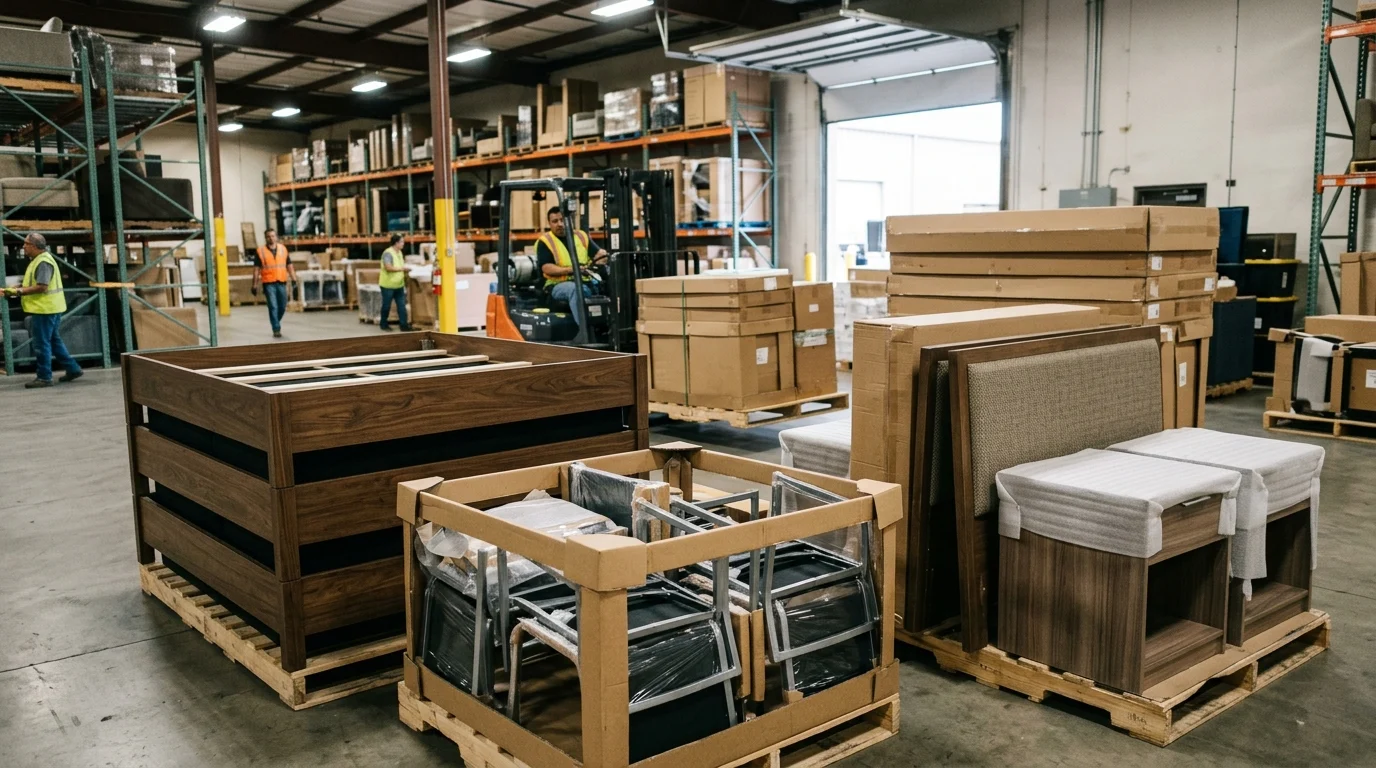
Selecting the optimal substrate involves balancing aesthetic intent with the harsh realities of guestroom and public space utilization. Procurement specialists must evaluate substrates based on tensile strength, moisture resistance, and unit cost.
Solid wood, engineered wood, metal, laminate, and stone compared
Different materials offer distinct advantages for hospitality applications. Solid wood provides premium aesthetics but is susceptible to humidity fluctuations and requires higher maintenance. Engineered woods, specifically marine-grade plywood or high-density fiberboard (HDF), offer superior dimensional stability at a lower price point. High-pressure laminate (HPL) remains the industry workhorse for horizontal surfaces due to its exceptional impact and scratch resistance. Metals, such as powder-coated aluminum or 304-grade stainless steel, deliver maximum structural yield strength, while stone surfaces like quartz offer non-porous, stain-resistant durability.
| Material | Primary Application | Relative Cost | Expected Lifespan | Maintenance Level |
|---|---|---|---|---|
| High-Pressure Laminate (HPL) | Desks, Nightstands | Low-Medium | 7-10 Years | Low |
| Engineered Wood (Veneer) | Headboards, Casegoods | Medium | 5-8 Years | Moderate |
| Solid Hardwood | Accent Chairs, Legs | High | 10-15+ Years | High |
| Quartz / Engineered Stone | Vanity Tops, Bar Tops | High | 15-20 Years | Low |
| Powder-Coated Metal | Outdoor, Base Frames | Medium | 10-15 Years | Low |
How to weigh durability, maintenance, and cost
Material specification directly influences long-term operational expenditures. While solid hardwood and natural marble carry a premium upfront cost—often exceeding $1,200 per guestroom casegood package—their maintenance requirements can inflate the total cost of ownership. Conversely, HPL and engineered stone reduce daily housekeeping labor and resist degradation from industrial solvents. When calculating Return on Investment (ROI), hoteliers must align material selection with standard Property Improvement Plan (PIP) cycles. Midscale to upscale properties typically undergo soft goods renovations every 5 to 7 years and full casegood replacements every 12 to 14 years. Specifying a material engineered to last 20 years may result in unnecessary capital expenditure if the brand mandate requires a complete aesthetic overhaul at year 12.
Choosing the Right Hotel Furniture Materials
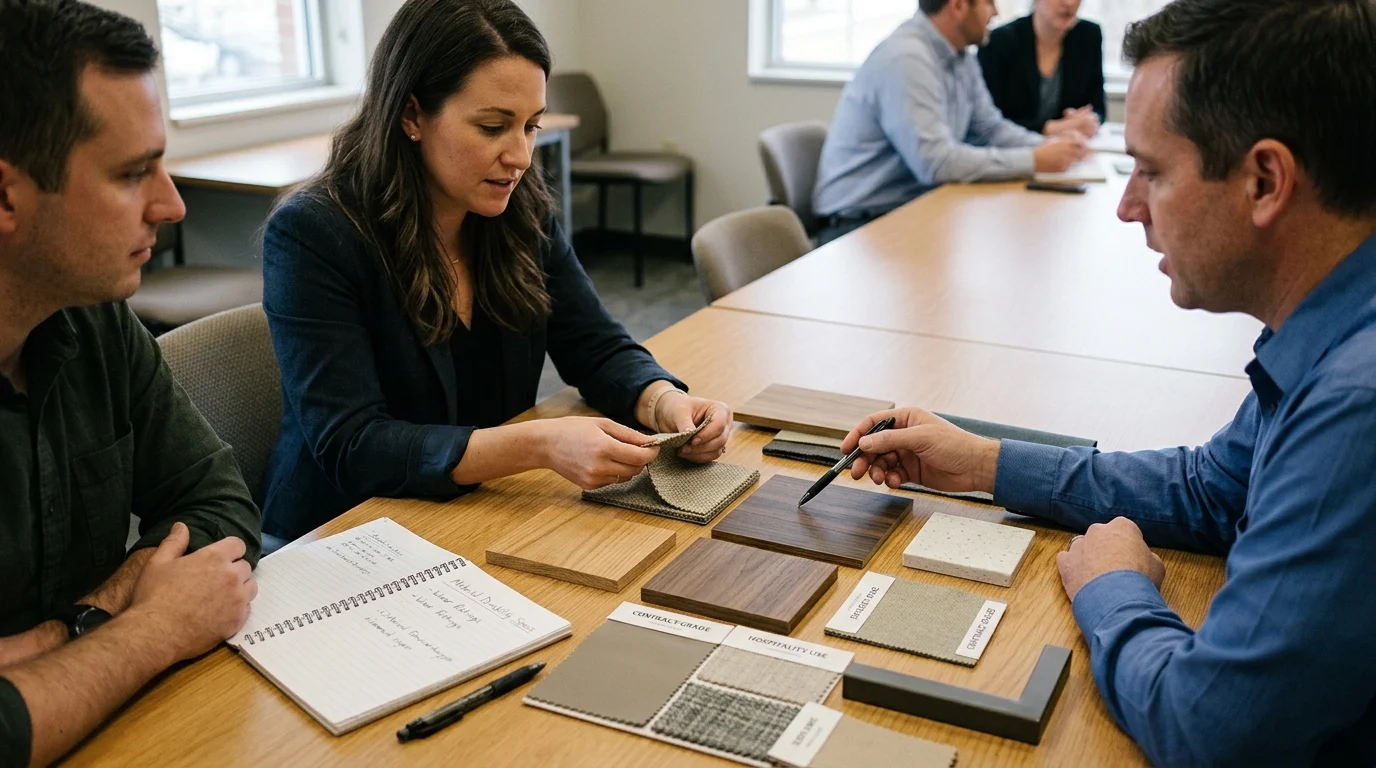
Translating material knowledge into a successful procurement strategy requires meticulous specification and strategic vendor alignment. Buyers must navigate manufacturing constraints, shipping logistics, and strict brand standards.
Practical sourcing and specification steps
The sourcing process begins with precise technical specifications. FF&E (Furniture, Fixtures, and Equipment) specifiers must clearly define substrate grades, veneer thicknesses (typically 0.6mm for commercial use), and hardware tolerances. When engaging offshore manufacturers, buyers should anticipate Minimum Order Quantities (MOQs) generally ranging from 50 to 100 pieces per SKU, which can complicate mock-up room approvals. Lead times are another critical metric; custom hospitality furniture requires an average production and transit window of 12 to 16 weeks. To mitigate risk, procurement teams should mandate physical prototypes, allowing stakeholders to conduct localized stress tests and verify that the specified materials perform as intended before authorizing mass production. Furthermore, sourcing materials with FSC (Forest Stewardship Council) certification or low-VOC GREENGUARD finishes ensures compliance with increasingly stringent environmental regulations, a standard requirement for LEED-certified hotel developments.
A decision framework for matching materials to project needs
A robust decision framework aligns material specifications with the property’s market tier, target demographic, and geographic location. For luxury resorts, authentic materials like solid oak and natural quartzite justify their high initial costs by commanding higher Average Daily Rates (ADR). In contrast, high-turnover airport or convention hotels should prioritize damage-resistant synthetics like HPL and solution-dyed acrylic fabrics to minimize operational downtime. Environmental factors also dictate material viability; a beachfront property must specify 316-grade stainless steel rather than standard 304-grade to prevent saline-induced corrosion. By cross-referencing aesthetic brand guidelines with concrete durability metrics and a maximum acceptable defect rate of 2%, buyers can engineer a furniture package that maximizes both visual impact and financial performance.
Key Takeaways
- The most important conclusions and rationale for Hotel Furniture
- Specs, compliance, and risk checks worth validating before you commit
- Practical next steps and caveats readers can apply immediately
Frequently Asked Questions
What material is best for durable hotel casegoods?
High-pressure laminate on commercial-grade engineered wood is often the best balance of durability, cost, and low maintenance for hotel desks, nightstands, and dressers.
How durable should hotel upholstery be?
For guestrooms, specify at least 50,000 double rubs; for lobbies and other heavy-use areas, aim for 100,000 or more.
Is solid wood better than engineered wood for hotel furniture?
Not always. Solid wood looks premium, but engineered wood offers better dimensional stability, lower cost, and reliable performance in changing hotel environments.
What finish works best for hotel furniture surfaces?
Catalyzed polyurethane or conversion varnish is a strong choice because it resists scratches, moisture, and common commercial cleaning chemicals better than basic lacquer.
How can buyers verify hotel furniture quality from a supplier like Taisen Furniture?
Ask for material specs, abrasion ratings, construction details, warranty terms, and photos or samples of finishes before approving production.

Post time: May-09-2026