
 joyce@taisenfurniture.com
 0086 15356090777


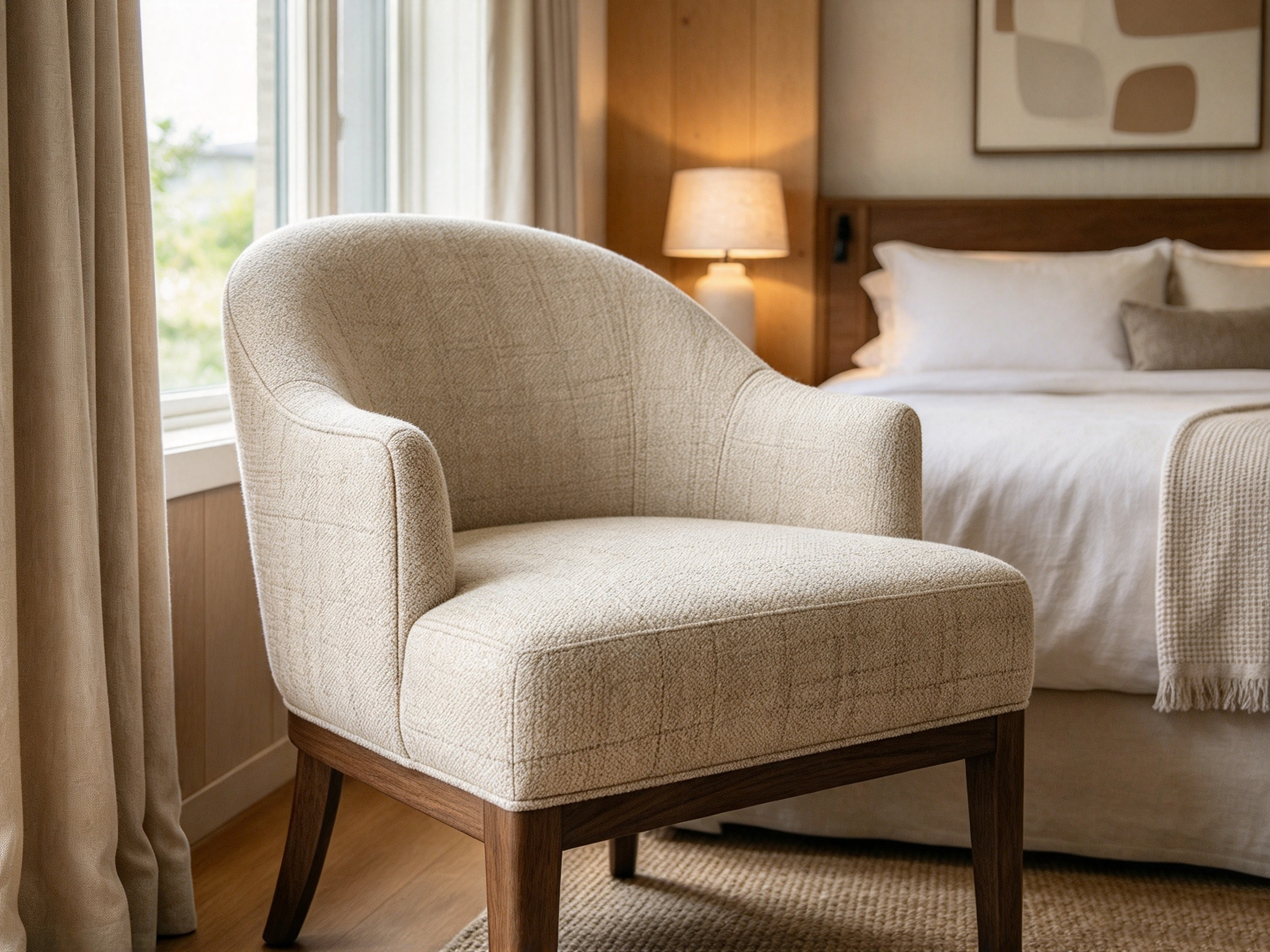
Why Anti-Slip Seat Base Design Matters in Hotels
The operational efficiency of hospitality environments relies heavily on the durability of their interior assets. In high-traffic zones, commercial hotel furniture must withstand rigorous use while preserving the surrounding infrastructure. One frequently overlooked component in this ecosystem is the seat base or floor glide. Improperly specified bases lead to accelerated floor degradation, safety risks, and increased maintenance overhead.
When facility managers evaluate capital expenditures, seating maintenance often represents a disproportionate drain on operating budgets. By engineering and specifying the correct anti-slip seat base design at the procurement stage, hotels can dramatically reduce the labor hours spent on floor repairs, frame tightening, and glide replacement.
How Chair Movement Creates Maintenance Issues
Chair movement generates substantial kinetic energy. When guests drag chairs across hard flooring, the lateral shear forces can exceed 150 pounds of pressure per square inch (PSI) on the leg terminals. Over a standard fiscal year, this repetitive friction strips floor finishes, gouges engineered hardwoods, and scuffs luxury vinyl tile (LVT).
This continuous abrasion necessitates premature stripping and waxing cycles that can inflate janitorial budgets by up to 20%. Furthermore, excessive friction creates structural torque on the chair’s joinery. When a chair grips the floor too aggressively during dragging, the kinetic energy transfers directly into the mortise and tenon joints, leading to premature frame loosening and the need for constant structural maintenance.
Where Seat Base Design Fits in Furniture Performance
Seat base design acts as the critical interface between the structural load of the furniture and the architectural flooring. Effective bases distribute dynamic loads evenly, mitigating point-source stress that causes both floor damage and leg terminal splitting.
When a 250-pound dynamic load shifts as a guest sits or stands, an optimized base absorbs and disperses the micro-impacts. This load distribution extends the mean time between failures (MTBF) of the chair frame. Without a properly engineered base, the rigid materials of the chair leg clash directly with the floor substrate, transmitting shockwaves up through the frame that degrade adhesives and mechanical fasteners over time.
Which Hotel Areas Need Stronger Slip Control
Slip control requirements vary drastically by functional zone within a hotel. Food and beverage (F&B) outlets, which often see 40 to 60 chair movements per day per seat, require moderate slip to allow guests to position themselves comfortably, yet enough grip to prevent accidental displacement when leaning.
Conversely, lobby lounge seating, heavy armchairs, and waiting area benches demand high-friction bases to remain entirely stationary. These pieces must not creep into traffic paths or ADA-compliant walkways under incidental contact. Guest room desk chairs require a hybrid approach, offering enough mobility for ergonomic workspace use without risking uncontrolled slides on smooth tile or hardwood transitions.
What Defines an Effective Anti-Slip Seat Base
An effective anti-slip seat base is a precision-engineered component designed to manage the coefficient of friction (COF) between two distinct materials under highly variable loads. It is not merely a cap or a pad, but a functional shock absorber and friction regulator.
Understanding the mechanics of static friction (the force required to initiate movement) and kinetic friction (the force required to sustain movement) is essential for evaluating seat base efficacy in commercial hospitality settings.
Key Functional Requirements for Hotel Chairs
Commercial environments dictate strict functional minimums for seating hardware. Seat bases must support static loads exceeding 300 pounds per leg without crushing, deforming, or losing their frictional properties. They must also exhibit high chemical resistance, as hotel floors are frequently treated with aggressive cleaning agents, including quaternary ammonium compounds and industrial degreasers.
Acoustic performance is another non-negotiable requirement. In luxury dining rooms and quiet lounge spaces, ambient scraping noise must be minimized. High-quality anti-slip bases are engineered with dampening cores that keep dragging acoustics below the 45-decibel (dB) threshold, preserving the acoustic comfort of the environment.
How Geometry, Contact Area, and Glide Profile Affect Stability
The geometry of the base dictates its pressure distribution and stability. A flat profile maximizes surface contact, increasing static friction and preventing heavy items from sliding, but it requires a perfectly level floor. Articulating or swivel bases adapt to floor anomalies, maintaining constant contact area to prevent point-loading that gouges hard surfaces.
| Base Profile Type | Surface Contact Area | Pressure Distribution | Optimal Hospitality Application |
|---|---|---|---|
| Flat Base | High | Low (<50 PSI) | Heavy lounge seating, level floors |
| Domed Base | Low | High (>150 PSI) | Uneven tile, thick carpets |
| Articulating / Swivel | Variable | Moderate (75-100 PSI) | Angled legs, sloped flooring |
By matching the glide profile to the specific flooring topography, designers can ensure consistent friction. A domed base on a hard floor creates a tiny contact point, reducing friction to allow sliding but increasing the risk of denting softer woods. An articulating base solves this by keeping a flat pad flush against the floor regardless of the leg angle.
Common Failure Modes to Prevent
Engineers must design against several common failure modes that plague hospitality furniture. Adhesive failure is highly prevalent when felt or rubber pads are subjected to thermal cycling between 65°F and 85°F, causing the bonding agent to shear under lateral loads.
Delamination of dual-density glides and the embrittlement of cheap plastics under UV exposure or chemical attack are other primary concerns. Specifying mechanically fastened bases—such as screw-in glides, nailed-in bases with retaining rings, or over-molded thermoplastic caps—eliminates the estimated 30% premature failure rate associated with adhesive-only attachments.
Best Materials and Base Systems for Anti-Slip Performance
The tribological performance of a seat base depends entirely on its material composition. Selecting the correct polymer, elastomer, or composite dictates the critical balance between grip, acoustic control, and operational longevity.
Material science in furniture glides relies heavily on durometer ratings to classify hardness, which directly correlates to both floor protection and slip resistance.
Rubber, TPE, Polyurethane, and Felt-Based Options
Rubber offers the highest coefficient of friction, making it ideal for stationary lobby pieces, though natural rubber can leave carbon scuff marks on vinyl floors. Thermoplastic Elastomers (TPE) provide a modern, non-marking alternative with excellent grip, UV stability, and chemical resistance.
Polyurethane (PU) strikes a highly durable balance, offering extreme abrasion resistance ideal for high-turnover dining chairs. Felt-based inserts remain the gold standard for acoustic dampening on engineered hardwood floors, but they require specialized high-density wool-synthetic blends to survive commercial wear without flattening.
How to Compare Hardness, Durability, Noise, and Floor Protection
Material hardness is measured on the Shore durometer scale, providing a quantitative metric for comparing glide options. Softer materials grip better and absorb more sound, but they degrade faster under heavy use.
| Material Type | Shore Hardness | Noise Reduction | Estimated Lifespan (Drag Cycles) |
|---|---|---|---|
| High-Density Felt | N/A | Excellent (>15 dB drop) | 25,000 – 40,000 |
| TPE (Thermoplastic) | 70A – 85A | Good (10 dB drop) | 100,000 – 150,000 |
| Polyurethane (PU) | 85A – 95A | Moderate (5 dB drop) | 150,000 – 200,000 |
| Nylon / HDPE | 65D – 75D | Poor (0-2 dB drop) | 250,000+ |
Lower Shore A ratings (softer elastomers) maximize slip resistance and floor protection. High Shore D materials (like High-Density Polyethylene or Nylon) last almost indefinitely but offer zero anti-slip properties, actively amplifying scraping noise and increasing the risk of guest slips when leaning on chairs.
How Floor Type Influences Material Selection
Flooring substrates dictate the optimal base material. High-pile carpets require smooth nylon or polished steel glides to allow intentional movement without snagging fibers or tearing carpet backing.
Luxury Vinyl Tile (LVT), polished concrete, and terrazzo demand TPE or PU bases. These materials prevent micro-scratching while maintaining a dynamic coefficient of friction (DCOF) between 0.30 and 0.42. This specific friction band ensures that guests can pull chairs out from tables without excessive exertion, while still preventing the chair from shooting backward abruptly.
How Hotels Should Specify, Test, and Source Seat Bases
Transitioning from design theory to mass procurement requires rigorous specification and testing protocols. Hospitality buyers must codify seat base requirements into their vendor contracts to ensure consistency across hundreds or thousands of units.
Relying on default factory glides is a frequent oversight that leads to rapid post-installation maintenance issues. A proactive specification strategy ensures that the bases arrive engineered for the hotel’s specific environment.
Performance Specifications to Include in Procurement
Procurement documents should reference established commercial standards, such as ANSI/BIFMA X5.1 for general-purpose office and hospitality seating. Specifications must explicitly detail the required glide material, the durometer rating, and the mechanical attachment method.
Contracts should mandate a minimum abrasion resistance standard, such as surviving 100,000 cycles on a standardized abrasion testing machine without losing more than 10% of base thickness. Furthermore, specifications should demand a static load capacity of 500 pounds per chair to account for dynamic impact loads when guests drop into seats.
Practical Testing Steps Before Bulk Purchase
Before authorizing a multi-thousand-dollar bulk purchase, procurement teams should conduct in-situ testing. This involves outfitting a mock-up room with the proposed chairs and subjecting them to real-world floor maintenance routines.
Using a portable tribometer, testing teams can verify that the kinetic friction remains within the target 0.35 to 0.45 range even after the bases are exposed to commercial floor strippers and waxes. Acoustic testing using a calibrated decibel meter during repeated chair dragging across the actual hotel flooring is also highly recommended to prevent post-opening acoustic complaints.
How Supplier Tolerances Affect Long-Term Performance
Manufacturing tolerances play a disproportionate role in seating stability. A variance of just ±1.0 millimeter in leg length or base thickness creates an uneven stance, resulting in immediate chair wobble.
This wobble forces the guest to shift their weight constantly, multiplying the shear forces on the remaining three bases and accelerating joint wear. Specifying strict dimensional tolerances of ±0.5 millimeters for the seat bases ensures even load distribution, maximizes the contact area for anti-slip performance, and protects the structural integrity of the chair frame over its lifecycle.
When to Retrofit or Replace Hotel Chairs
Facility managers continually face the capital expenditure dilemma: maintain, retrofit, or replace. The condition of the seat bases, the flooring, and the underlying chair frame dictates the most financially sound path forward.
Establishing a data-driven lifecycle framework prevents hotels from throwing good operational budget at failing assets, while also avoiding premature capital expenditures on furniture that simply needs functional upgrades.
When Retrofitting Is the Better Option
Retrofitting is the optimal choice when the chair’s structural integrity remains uncompromised, the joinery is tight, and the upholstery is either pristine or economically cleanable. In these cases, the failure is isolated to the floor interface.
Upgrading from standard nylon glides to premium articulating TPE bases typically costs between $4.00 and $12.00 per chair in parts and labor. If this minor intervention prevents floor damage that would otherwise cost $2.00 to $4.00 per square foot to resurface, the return on investment (ROI) is often realized within a single fiscal quarter.
When Replacement Should Be Prioritized
Replacement becomes mandatory when the furniture frame exhibits signs of fatigue that cannot be mitigated by installing new bases. If mortise and tenon joints have loosened significantly due to years of excessive lateral friction, inserting a high-grip anti-slip base may actually exacerbate the structural failure.
Furthermore, if the leg terminals are split or hollowed out, new mechanical fasteners will fail to anchor properly. As a general rule, if the cost of retrofitting bases, combined with necessary structural gluing and upholstery touch-ups, exceeds 40% of the cost of a brand-new unit, complete replacement is the fiscally responsible decision.
A Decision Framework for Cost, Safety, and Durability
Establishing a lifecycle decision framework streamlines maintenance operations across hotel portfolios. Chairs under 5 years old with isolated base failures should almost always be retrofitted using mechanically fastened glides to extend their useful life.
For assets approaching the 7-to-10-year mark, managers must assess the total cost of ownership (TCO). If a specific chair model requires more than $50 in maintenance labor and replacement parts annually just to remain stable and safe, capital should be redirected. Budget should be allocated toward procuring modern seating that is engineered with integrated, commercial-grade anti-slip technology from day one, permanently lowering the property’s baseline maintenance burden.
Key Takeaways
- Specify anti-slip seat bases during procurement to reduce long-term labor spent on floor repairs, frame tightening, and glide replacement.
- Match seat base friction to each hotel zone because F&B chairs need controlled mobility, while lobby lounges and benches require higher grip.
- Protect hard flooring by using bases that distribute load and reduce point-source pressure from repeated chair dragging.
- Avoid overly aggressive grip that transfers dragging force into mortise and tenon joints, adhesives, and fasteners.
- Prioritize optimized load distribution for chairs exposed to dynamic loads, such as guests sitting, shifting, and standing repeatedly.
Frequently Asked Questions
Why do hotel chairs need anti-slip seat bases?
Anti-slip seat bases reduce unwanted chair movement, protect floor finishes, and limit stress on chair joints. In high-traffic hotel areas, the right base can lower repair frequency and reduce labor spent on floor and furniture maintenance.
Which hotel areas benefit most from stronger slip control?
Lobby lounges, waiting areas, benches, and heavy armchairs need strong slip control to prevent creeping into walkways. F&B areas need balanced grip and movement, while guest room desk chairs often require a hybrid design.
How does chair movement damage hotel flooring?
Dragging chairs creates lateral shear forces at the leg terminals, which can scuff luxury vinyl tile, strip floor finishes, and gouge engineered hardwood. Repeated abrasion may increase stripping and waxing cycles.
Can the wrong seat base damage the chair frame?
Yes. If the base grips too aggressively or fails to absorb impact, dragging forces transfer into the frame, loosening joinery, adhesives, and mechanical fasteners over time.
What should hotels consider when specifying chair glides?
Hotels should match the glide material and friction level to the floor type, chair weight, usage frequency, and location. The goal is controlled movement without excessive grip, abrasion, or instability.
Post time: Oct-13-2026