
 joyce@taisenfurniture.com
 0086 15356090777


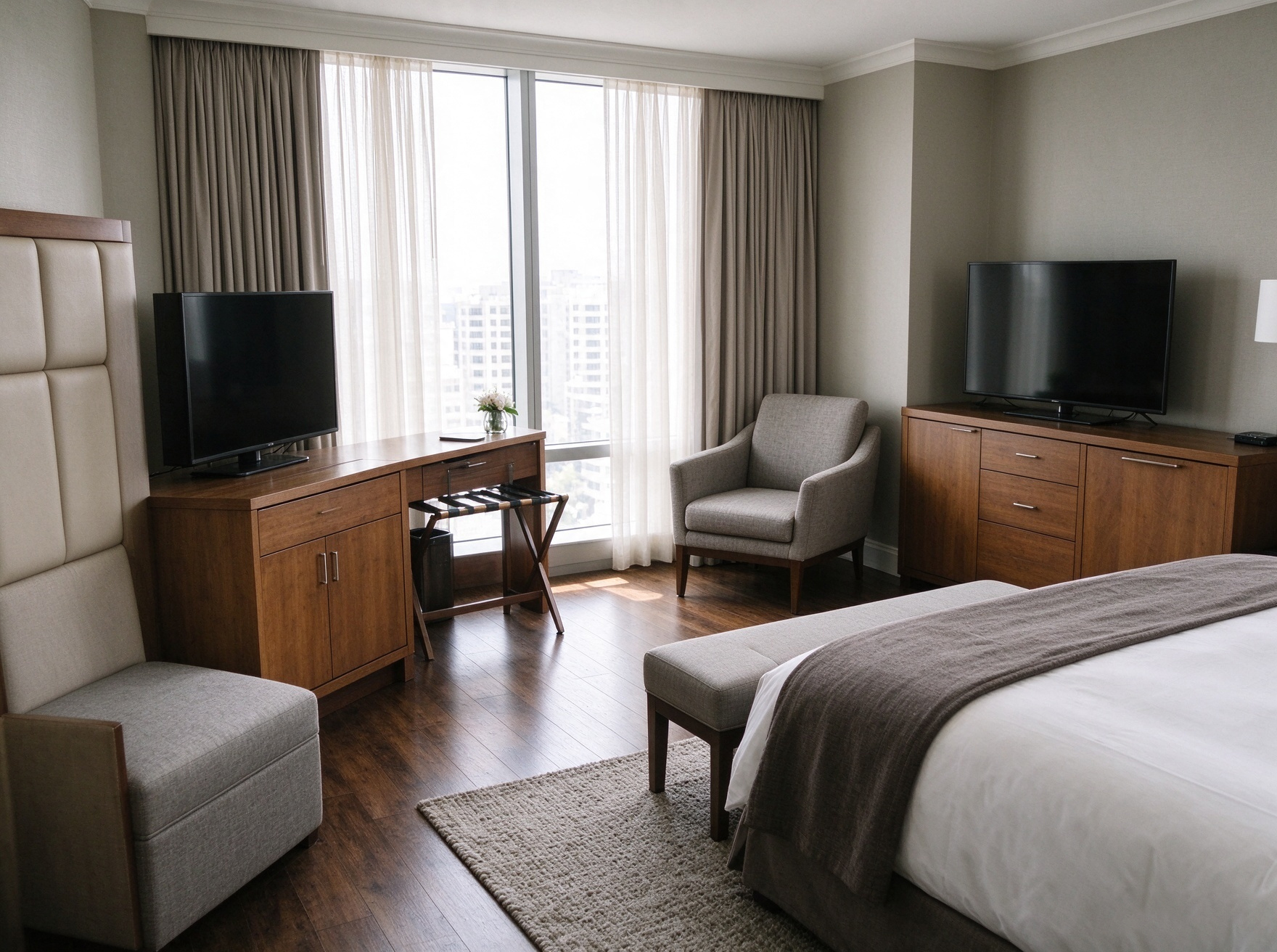
A hotel’s atmosphere is shaped as much by sound as it is by lighting, colour palette and furniture styling. For lobbies, restaurants, bar lounges and open guest zones, hard surfaces such as glass, tile and polished timber create sharp reverberation that pushes guests to speak louder, amplifying background noise and hurting the overall guest experience. Acoustic hospitality furniture solves this challenge. It is not merely decorative seating or casegoods; it is a functional FF&E solution that controls reverberation, improves speech clarity and creates quiet microzones, while staying aligned with the brand’s interior design vision. A well-specified acoustic furniture package balances measurable acoustic performance, commercial durability, fire safety standards and cohesive visual design. This article guides procurement and design teams through the core principles of acoustic furniture, key performance metrics, material selection, space planning, compliance checks, and how to avoid the common trade-off where noise control comes at the cost of aesthetic appeal.
What Makes Acoustic Furniture Essential for Hospitality Spaces
Open-concept layouts have become the dominant design trend for modern hotels. Large, unbroken lobbies, open dining rooms and shared co-working zones feel spacious and premium, but they carry a built-in acoustic penalty. Sound waves bounce off hard, non-porous surfaces, creating long reverberation times. When reverberation rises, conversation becomes difficult. Guests raise their voices, and the whole space builds into a self-feeding noise cycle. This does not just create discomfort; it directly impacts dwell time, F&B revenue and online review scores. Many negative hotel reviews cite “too noisy lobby” or “hard to hold a conversation at dinner” as core complaints, even when the space looks visually stunning.
Traditional acoustic fixes often rely on ceiling baffles or wall panels, which can feel industrial and clash with carefully curated interior concepts. Acoustic furniture shifts the strategy. It integrates sound absorption directly into seating, booths, high-back lounge chairs, divider screens, upholstered headboards and banquettes. These pieces work double duty: they serve as usable furniture for guests, and they passively manage sound energy. This integrated approach lets designers preserve the clean, luxurious aesthetic the brand wants, without adding obvious, utilitarian acoustic hardware.
Acoustic furniture is not one-size-fits-all. Performance targets differ widely by space type. A fine-dining restaurant needs low reverberation for private conversation. A casual bar requires moderate absorption to keep energy lively without making speech unintelligible. A lobby or check-in zone needs targeted sound control around the front desk, so guest conversations with staff stay private. Guest rooms, meanwhile, use acoustic headboards and upholstered seating to reduce cross-room noise and soften mechanical hum from HVAC systems. Every specification must tie acoustic goals to the function of the space.
Key Acoustic Metrics FF&E Buyers Need to Understand
Procurement teams cannot rely on vague supplier claims such as “this chair is acoustic.” Valid acoustic performance is measured with standardized testing, and buyers must understand these benchmarks to compare products fairly.
The most widely used metric is Noise Reduction Coefficient, or NRC. NRC is a value from 0 to 1.0, representing the average fraction of incident sound energy absorbed across common speech frequencies. An NRC of 0 means the material reflects nearly all sound; an NRC of 1.0 means it absorbs nearly all incoming sound. For hospitality seating, a baseline NRC of 0.50 is considered entry-level acoustic performance. Premium acoustic upholstered furniture for busy restaurants and lobbies typically targets NRC 0.70 to 0.85. Buyers should note that NRC measures absorption, not sound blocking. Absorption reduces echo and reverberation inside a room, while transmission loss blocks sound from travelling through a partition to an adjacent room. High-back acoustic chairs and booth dividers combine both effects: their padded surfaces absorb sound, and their height creates a partial barrier to contain conversation.
Reverberation time, measured in seconds, is the target outcome for most hospitality spaces. This is how long sound lingers after the source stops speaking. For hotel lobbies, the ideal reverberation range is generally 1.2 to 1.8 seconds. Fine dining spaces perform best between 0.8 and 1.2 seconds. Bars and casual dining can safely sit between 1.5 and 2.2 seconds to retain ambient energy. Acoustic furniture contributes to lowering reverberation, but it must be calculated as part of the full room acoustic model, alongside flooring, window treatments, wall finishes and ceiling treatments.
Another important specification is the absorption class, defined by ISO 11654. Class A is the highest performing absorber, followed by Class B, C and D. Many high-performance acoustic foams and upholstery composites fall into Class A or B. Buyers should ask suppliers for third-party lab test reports, not self-estimated NRC values. Testing should follow ASTM C423, the standard method for measuring sound absorption in materials.
A critical distinction buyers must remember: acoustic performance and aesthetics are tied together in the upholstery layer. Tight, low-porosity vinyl or leather reflects more sound and delivers lower NRC, even when the foam inside is high-performance acoustic grade. Open-weave, textured woven fabrics allow sound waves to penetrate into the foam core and deliver much stronger absorption. This creates the first major design tradeoff that procurement and design teams need to resolve early in the specification phase.
Material Selection: Acoustic Performance, Durability and Design Flexibility
Every layer inside an acoustic hospitality furniture piece affects three variables: sound absorption, commercial wear resistance, and visual style. The frame, foam core, substrate, upholstery fabric and finish all need to be specified together.
Foam Core
The foam is the primary sound-absorbing layer. Standard residential polyurethane foam is not optimized for acoustics. Open-cell acoustic foam has a porous internal structure that traps sound waves. However, pure open-cell foam is often too soft for high-traffic hotel seating. Most commercial acoustic furniture uses a layered foam construction: a firmer support base foam for structural longevity and a softer open-cell acoustic top layer optimized for sound capture. Typical foam density ranges from 2.5 to 3.0 lbs/cu.ft for the structural base layer, paired with acoustic foam layers tuned for mid-range speech frequencies. This layered design balances BIFMA structural requirements, 7–10 year commercial lifecycle expectations and acoustic performance. Suppliers that cut corners by using single-density foam will either sacrifice durability or acoustic results.
Upholstery Fabrics
Fabric is the design-facing layer, and it acts as the gatekeeper for sound. Fabrics with tight coating, high vinyl content or dense non-porous backing will block sound from reaching the foam, crippling NRC performance. For acoustic applications, the fabric must be acoustically transparent. That does not mean thin or fragile. Commercial-grade woven fabrics can be engineered to pass Wyzenbeek abrasion tests of 50,000 double rubs or higher while retaining the porosity required for sound absorption. Fire compliance remains non-negotiable. All upholstery must meet CAL 117-2013 for guest rooms, and public lounge and dining seating often requires CAL 133 or BS 5852. Buyers should test fabric swatches with two questions: does it meet fire and abrasion standards, and does the lab report confirm the fabric does not degrade the published NRC rating of the furniture assembly.
Frames and Acoustic Divider Components
Hard solid timber, metal and plywood frames are sound-reflective. The frame itself does not contribute absorption, so acoustic performance comes from padded upholstered panels and cushions. Tall acoustic booth dividers, high-back lounge chairs and partition screens use padded vertical panels to create local privacy zones. Curved furniture shapes also change acoustic behaviour. Smooth convex surfaces scatter sound gently, while flat hard panels create sharp reflections. This gives designers another aesthetic tool: curved acoustic banquettes and rounded lounge groups can soften the soundscape while delivering a contemporary luxury look.
Substrates and Composite Panels
For built-in banquettes and fixed acoustic seating, manufacturers may use perforated composite substrates backed with acoustic felt or foam. Perforated wood panels are a popular premium option: they retain the warm natural timber aesthetic, while perforations let sound penetrate into the absorbing layer behind them. This is one of the most effective ways to deliver acoustic control without the “soft upholstery only” look, ideal for modern minimalist or luxury boutique hotel concepts.
Space Planning: How to Deploy Acoustic Furniture Without Ruining the Design Layout
Adding acoustic furniture randomly will not deliver consistent results. Successful acoustic design starts at the space planning stage, before furniture is selected.
First, identify high-noise hotspots. These are typically host stands, bar counters, communal dining tables and lobby seating clusters near glass entry doors. These zones get the highest priority for high-NRC acoustic seating, booths and divider screens. Low-traffic decorative zones can use standard furniture with lower acoustic performance, preserving budget for the highest-impact areas.
Second, use furniture zoning to create acoustic separation. High-back lounge chairs and partial-height acoustic dividers break large open rooms into smaller conversation pockets. Guests do not need full private walls; a 1200mm to 1400mm tall padded screen is enough to contain most speech noise. This maintains the open, airy layout that the design team wants, while reducing cross-talk between seating groups.
Third, avoid overcrowding soft acoustic furniture in one corner. Absorption needs to be distributed reasonably evenly across the room. Concentrating all acoustic treatment in one spot leaves other areas with long reverberation. The acoustic engineer on the project should provide a target absorption budget, and the FF&E package should be specified to hit that total absorption value across the space.
Fourth, align furniture layout with hard reflective surfaces. Glass walls, large tile feature walls and polished stone floors are strong sound reflectors. Place upholstered acoustic seating opposite these hard surfaces to intercept reflected sound waves. This simple layout strategy improves performance without extra cost.
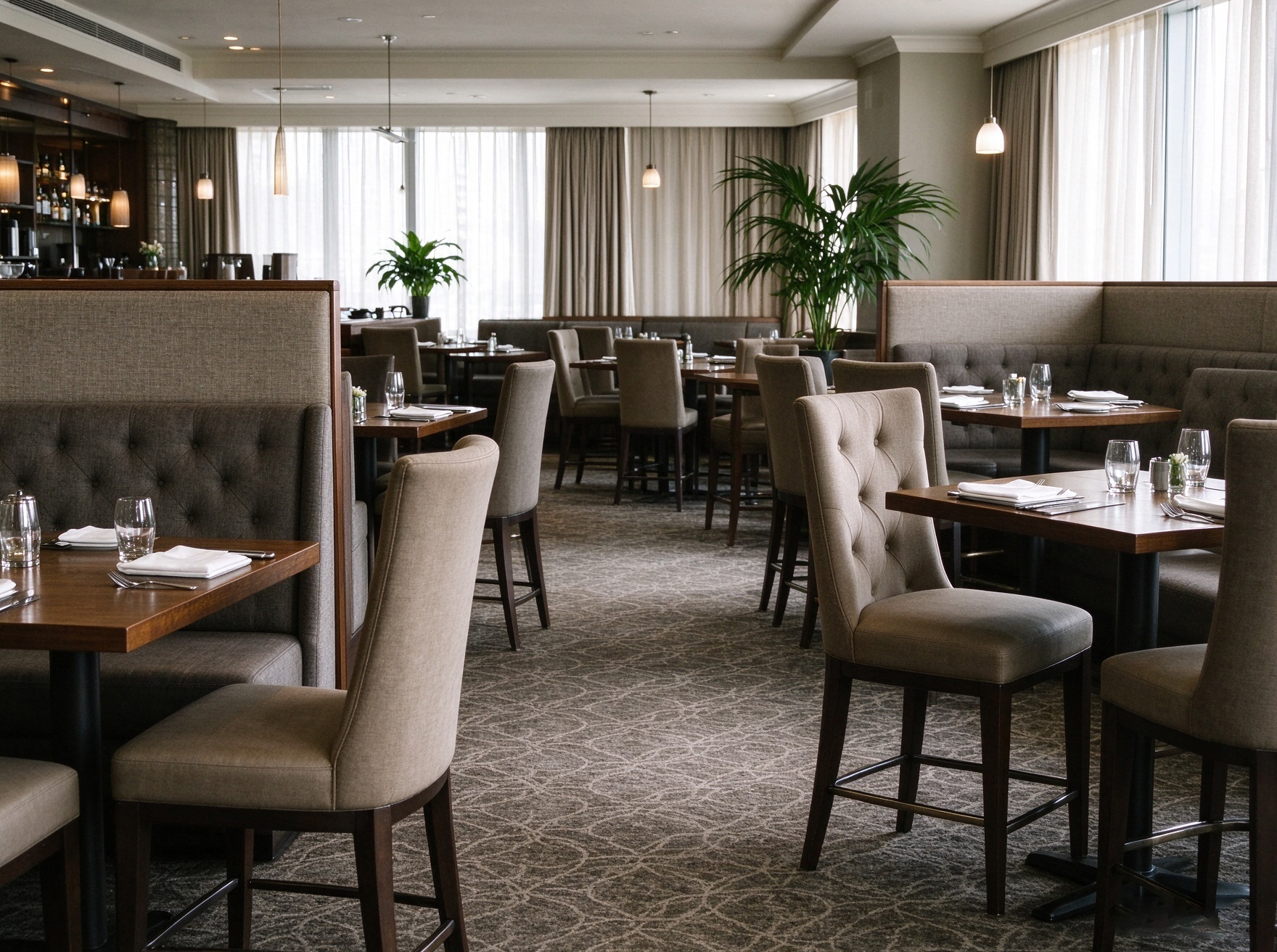
Compliance, Testing and Documentation for Acoustic FF&E
Acoustic furniture sits at the intersection of acoustic engineering, commercial furniture safety and interior design. The procurement package must collect specific documentation to verify both performance and compliance.
First, third-party acoustic test reports. The report should reference ASTM C423, list the full furniture assembly including fabric and foam layers, and state the NRC value and absorption class. A report that only tests foam in isolation is not sufficient, because the final upholstery choice can change the real-world performance.
Second, fire and durability documentation. The same upholstery fabrics selected for acoustic transparency must carry fire certification, Wyzenbeek abrasion data and stain resistance specifications for hospitality use. Acoustic performance cannot be used as an excuse to relax commercial-grade durability rules.
Third, shop drawing and mock-up review. The mock-up room or sample booth is the critical checkpoint. Design teams review colour, texture and silhouette, while acoustic consultants can conduct simple on-site checks to confirm the finished assembly matches the lab-reported NRC. Changes to fabric, foam thickness or padding depth after mock-up approval will alter acoustic performance, so all finish selections must be locked before mass production.
Buyers should also watch for greenwashing and acoustic marketing claims. A chair labelled “acoustic” may only have a thin layer of foam with NRC 0.25, offering negligible real-world benefit. Any supplier selling acoustic furniture must separate marketing language from standardized test data. If a vendor cannot provide an independent lab report for the exact assembly specified, the acoustic claim should be treated as unproven.
Balancing Brand Aesthetics and Acoustic Performance
The biggest concern from interior designers is that acoustic furniture will look bulky, dated or visually heavy. Modern manufacturing has removed this limitation, but it requires intentional specification.
There are multiple aesthetic pathways. The first is soft upholstery aesthetic: slim-profile high-back lounge chairs, curved banquettes and modular upholstered dividers, available in unlimited fabric colours, textures and weave patterns. This fits contemporary, warm, boutique and resort-style hotels. The second pathway is timber acoustic design: perforated wood panels, slatted wood screens with hidden acoustic backing, for minimalist, Scandinavian or luxury traditional properties. The third pathway is low-profile integrated acoustic furniture: acoustic ottomans, padded headboards and bench seating that reads as simple decor while adding absorption.
Customization is a core advantage. Acoustic furniture can be built to match the brand’s existing furniture family, matching leg profiles, wood stains, metal finishes and cushion proportions. It does not need to look like a separate acoustic add-on. Many brands successfully specify acoustic seating that blends seamlessly with non-acoustic casegoods and tables, so guests cannot visually distinguish which pieces are managing sound.
Design teams can also layer acoustic furniture with other soft treatments. Drapery, acoustic rugs and decorative wall panels work alongside acoustic seating to hit reverberation targets. This shared load means the furniture does not need to carry all acoustic responsibility, opening up more visual choices for each individual piece.
The Commercial Business Case for Acoustic Furniture
Acoustic specification is not a design luxury; it drives measurable operational and financial outcomes for hotel operators.
The first benefit is improved guest satisfaction and review performance. Noise complaints are among the most common negative feedback points for open-concept hotels. Spaces with controlled reverberation feel calmer, and guests stay longer in lobbies, bars and restaurants. Longer dwell time correlates with higher secondary spending on drinks, appetizers and desserts, just as ergonomic seating does.
Second, acoustic privacy supports premium service. At front desks, business co-working zones and private dining nooks, good acoustic control keeps guest conversations confidential. This is particularly valuable for luxury brands, business hotels and conference properties.
Third, it reduces the need for expensive retrofits. Adding ceiling baffles or wall panels after opening is disruptive, costly and requires closing sections of the property. Integrating acoustic furniture during the original FF&E phase builds sound control into the budget from the start, with minimal site disruption during installation.
Fourth, acoustic design supports brand differentiation. Many competing hotels use identical open layouts, but few tune the soundscape intentionally. A hotel that delivers beautiful spaces that also sound quiet and comfortable creates a memorable, premium guest experience that stands out from competitors.
Common Pitfalls When Specifying Acoustic Hospitality Furniture
The first common mistake is selecting fabric first, then discovering it kills acoustic performance. Design teams fall in love with a coated vinyl or tight performance fabric, only to find the NRC drops dramatically. The correct workflow is to shortlist acoustically transparent fabric options first, then select aesthetic finishes from that approved pool.
The second pitfall is confusing sound absorption with sound insulation. Acoustic furniture absorbs echo inside the same room. It cannot fully block sound travelling through walls or between floors. Buyers with cross-room noise issues need separate wall, floor and door acoustic solutions, alongside acoustic furniture inside each guest space.
Third, ignoring foam durability for acoustic performance. Some ultra-soft open-cell acoustic foams have low compression resistance and will bottom out quickly under heavy commercial use. The specification must combine acoustic testing with foam fatigue testing and load testing to BIFMA standards.
Fourth, treating acoustic furniture as a universal fix. A huge marble lobby with glass walls cannot be fully quieted by chairs alone. Furniture is one component of a full acoustic strategy, and the design team should work with a qualified acoustic consultant to set realistic reverberation targets.
Key Takeaways
- Acoustic hospitality furniture controls reverberation and speech noise in lobbies, restaurants, bars and guest rooms, while preserving the visual design intent of the hotel interior.
- NRC (Noise Reduction Coefficient) is the primary standardized metric, with premium hospitality seating typically reaching NRC 0.70–0.85, tested to ASTM C423.
- Open-cell foam cores and acoustically transparent woven fabrics deliver sound absorption; tight coated fabrics and leather often reduce acoustic performance even with high-quality foam inside.
- High-back chairs, padded banquettes and partial-height acoustic dividers create private conversation microzones within open layouts, without closing the space visually.
- All acoustic furniture must satisfy commercial fire ratings, Wyzenbeek abrasion standards and structural durability rules, just like standard hotel FF&E.
- Always request third-party lab test reports for the exact finished assembly, not standalone foam or fabric test data, to avoid unproven acoustic marketing claims.
- Layout strategy matters: distribute acoustic furniture evenly, target noisy hotspots, and place absorptive seating opposite hard reflective surfaces such as glass and stone.
- Acoustic furniture raises guest satisfaction, extends dwell time, supports F&B revenue and reduces costly post-opening acoustic retrofits.
- Aesthetic variety is broad: upholstered soft seating, perforated timber panels, modular dividers and integrated headboards can match nearly every hotel brand style.
Frequently Asked Questions
What is the difference between NRC and sound insulation?
NRC measures sound absorption, which reduces echo and reverberation inside the same room. Sound insulation or transmission loss blocks sound from travelling through a barrier into another room. Acoustic furniture primarily delivers absorption, not full transmission blocking.
Can leather upholstery work for acoustic furniture?
Genuine leather and most coated vinyl are low-porosity and reflect sound. They will produce much lower NRC ratings. If leather is required for design reasons, the acoustic consultant must adjust the rest of the room’s acoustic package to compensate.
Do acoustic hotel chairs need separate fire testing?
Yes. All upholstered hospitality seating must meet local fire codes such as CAL 117-2013 or CAL 133. Acoustic performance does not exempt furniture from fire safety requirements.
Can acoustic furniture replace ceiling and wall acoustic panels?
Not always. It depends on the room size, hard surface area and reverberation target. Acoustic furniture is an excellent complementary solution, but large spaces with extensive glass and tile often need a combined package.
How do I confirm the acoustic performance before mass production?
Ask for the full third-party ASTM C423 test report for the exact fabric, foam and cushion build. A physical mock-up can also be reviewed by your acoustic consultant to validate real-world performance before approving the production order.
Post time: Oct-27-2026